 Palestine
About
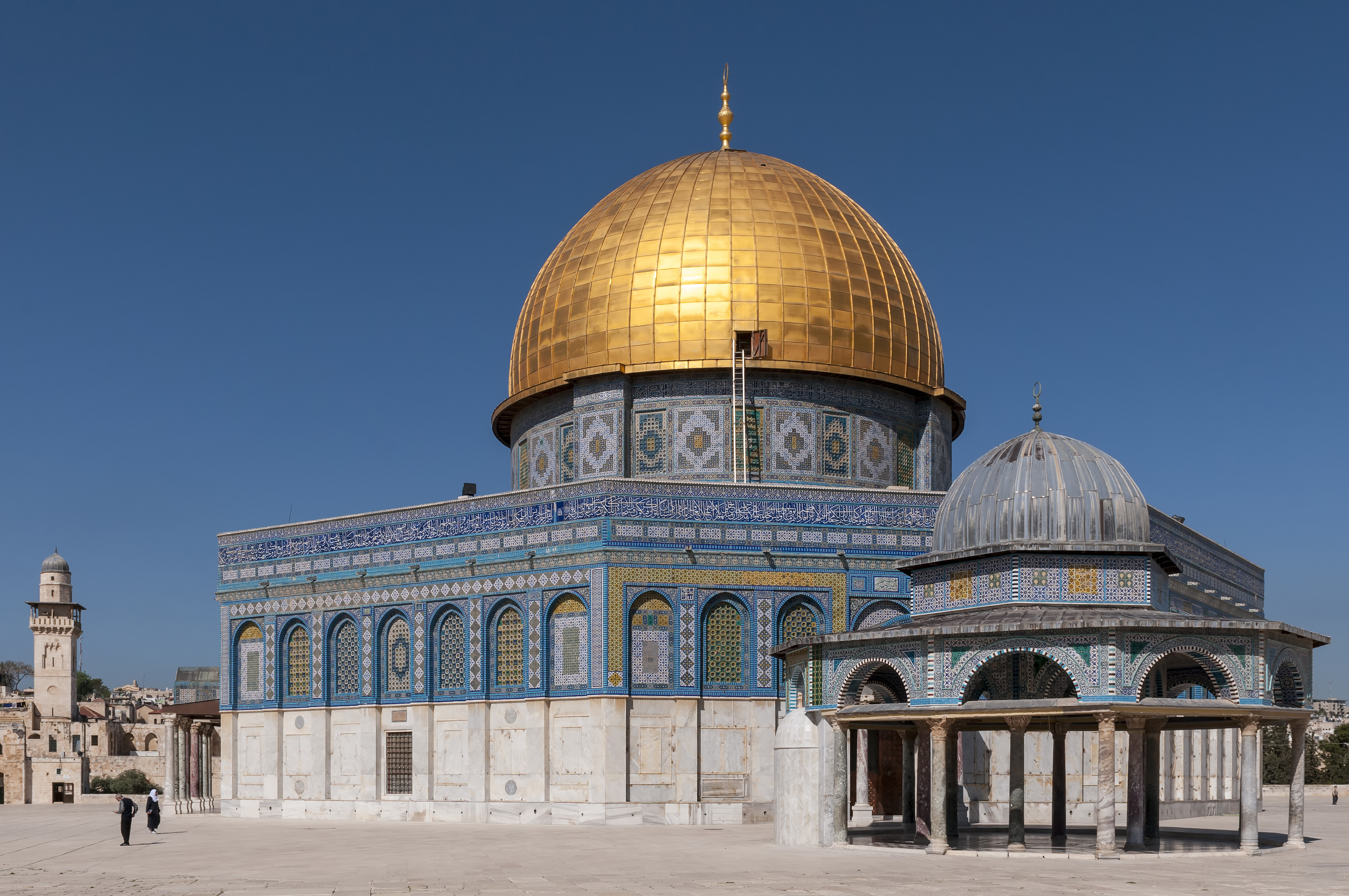
The Dome of the Rock is an octagonal Islamic shrine that stands at the heart of the Al-Aqsa mosque compound on the Temple Mount in Jerusalem's Old City. It is the oldest surviving work of Islamic architecture, the earliest religious structure built by a Muslim ruler that archaeologists have confirmed, and it carries some of the earliest inscriptions proclaiming Islam and the prophet Muhammad. The Umayyad Caliphate began its construction, and the building has remained a powerful symbol of faith and politics for over 1,300 years.
While no director or cast applies to a monument, the shrine's creation is credited to Caliph Abd al-Malik, who commissioned it around 691 CE. Its design, with a golden dome and intricate mosaics, drew on Byzantine and Sassanian influences, yet it established a distinctly Islamic aesthetic. The building's scale is modest compared to later mosques, but its artistic and religious impact is immense. It is not a mosque but a shrine, protecting the rock from which Muslims believe Muhammad ascended to heaven during the Night Journey.
The Dome of the Rock is part of the broader Haram al-Sharif, a site sacred to both Muslims and Jews, and its location has made it a flashpoint in the Israeli-Palestinian conflict. Despite its political weight, the shrine remains a masterpiece of early Islamic art and a testament to the architectural ambitions of the Umayyad dynasty. Its mosaics, marble, and tilework have been restored multiple times, most recently in the 20th century, and it continues to draw millions of visitors and worshippers each year.
Mission
The Dome of the Rock was built to commemorate the Foundation Stone, a site holy to both Jews and Muslims. For Muslims, it marks the spot from which the Prophet Muhammad ascended to heaven during the Night Journey. Caliph Abd al-Malik also intended it as a religious and political focal point for his supporters during the early Umayyad period, giving it a dual purpose that has echoed through the centuries.
History
The Dome of the Rock was built between 685 and 691 CE by order of Caliph Abd al-Malik, the fifth Umayyad ruler. He chose the Temple Mount, a site that had lain largely abandoned for centuries after the Roman destruction of the Second Temple in 70 CE. The location was already sacred to Jews as the spot of the First and Second Temples, and to early Muslims who associated it with Muhammad's Night Journey.
Abd al-Malik's motives were both religious and political. He was consolidating Umayyad power while competing with a rival caliph in Mecca, and the shrine gave his supporters a distinct place of worship in Jerusalem. The building's design drew on Byzantine and Sassanian precedents, but its octagonal plan and the great golden dome were unprecedented in Islamic architecture. It became the model for later domed mosques across the Muslim world.
Over the centuries, the structure has survived earthquakes that damaged other buildings on the mount, partly because it sits on bedrock. The mosaics and marble have been restored multiple times, most notably during the Ottoman period when Sultan Suleiman the Magnificent added new tiles. In the 20th century, extensive restorations were carried out to preserve the golden dome and the intricate interior.
Notable People
Abd al-Malik
Umayyad Caliph · 685–705
Commissioned the construction of the Dome of the Rock
Milestones
685–691
Construction by Caliph Abd al-Malik
1099
Crusaders captured Jerusalem and converted the Dome into a Christian church
1187
Saladin recaptured Jerusalem and restored the shrine to Islam
1958–1964
Major restoration of the dome and mosaics under Jordanian rule
1983
UNESCO recognized the Old City of Jerusalem, including the Dome, as a World Heritage Site
Sources
Organization Info
- Founded
- 691 CE
- Headquarters
- Old City of Jerusalem
- Country
- Palestine
- Parent
- Jerusalem Islamic Waqf
- Type
- Religious
- Architectural style
- Early Islamic
- Dome diameter
- 20.4 m
Join the community
fans discussing