“Leone's films are not about the West but about the movies' version of the West. He uses the form to create a hyper-real world where every gesture is exaggerated.”
Roger Ebert
RogerEbert.com
 Italy
Italy"A trilogy of spaghetti westerns that redefined the genre."
User Score
850000 votes
Part of a Collection
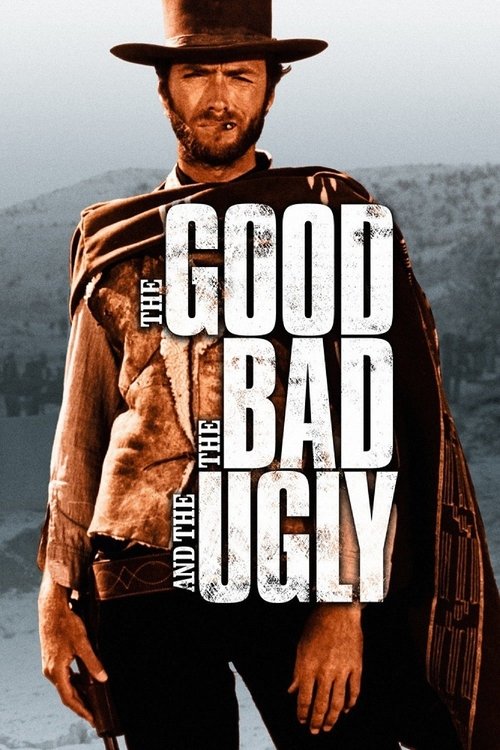
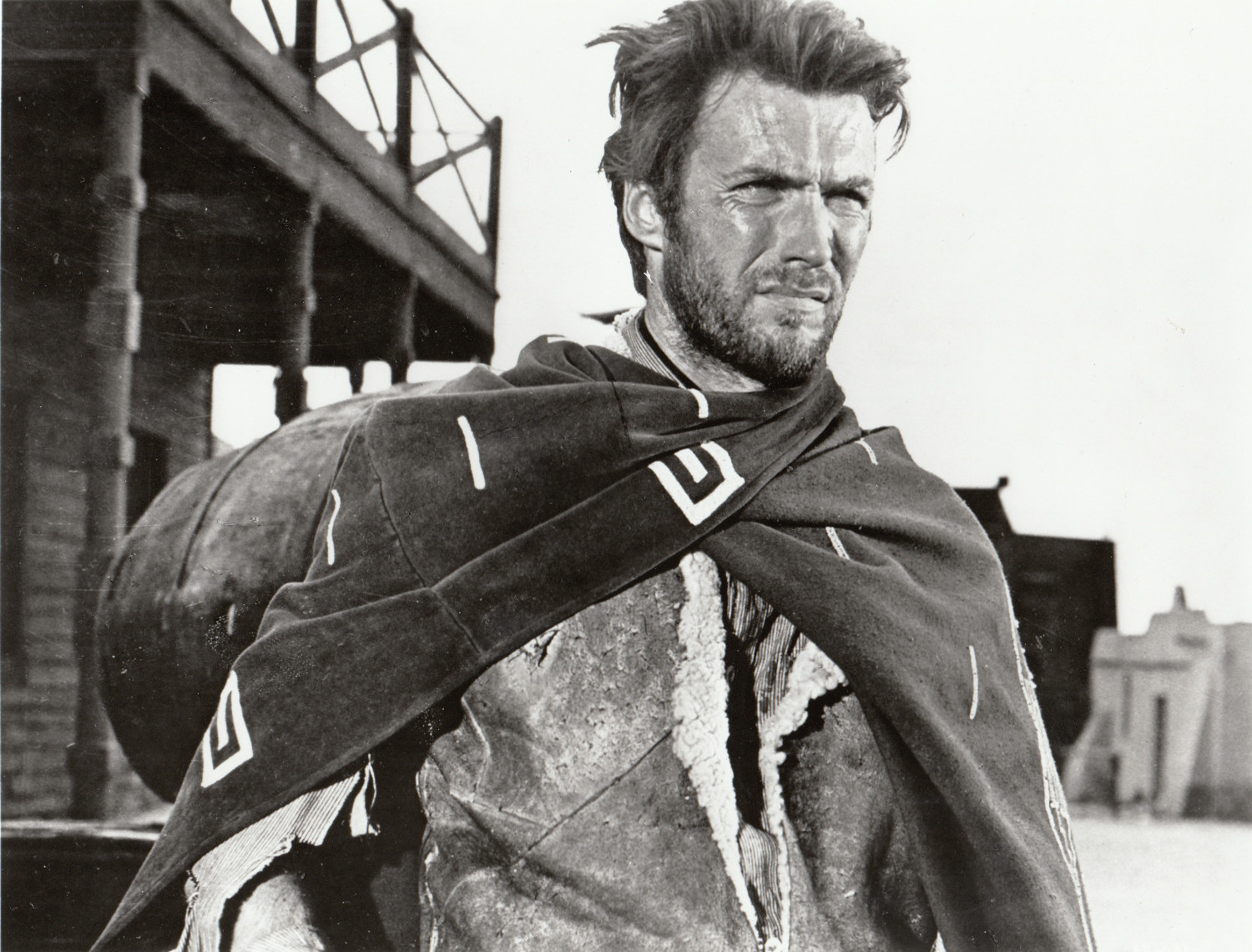
Sergio Leone's three spaghetti westerns starring Clint Eastwood are often grouped together as the Dollars Trilogy, though they share no continuous story. The films are A Fistful of Dollars (1964), For a Few Dollars More (1965), and The Good, the Bad and the Ugly (1966). Eastwood plays a mysterious drifter known as the Man with No Name, a marketing invention by United Artists to sell the trilogy. In each film, his character has a different name: Joe, Manco, and Blondie.
Leone's operatic direction, Ennio Morricone's iconic scores, and gritty antiheroes redefined the western genre. The films were shot in Italy and Spain on modest budgets but became massive international hits. All three consistently rank among the greatest westerns ever made, with The Good, the Bad and the Ugly often cited as a masterpiece.
Availability and pricing can change. Confirm on the provider's site before purchasing.
A Fistful of Dollars introduces Eastwood as Joe, a lone gunslinger who rides into the Mexican border town of San Miguel. The town is caught between two warring factions: the brutal Rojo brothers, led by Ramón Rojo, and the corrupt Baxter family, headed by Sheriff John Baxter. Joe quickly sees an opportunity to profit by playing both sides. He sells information and services to each gang while secretly undermining both. His scheme grows riskier as he forms an alliance with innkeeper Silvanito and becomes entangled with Marisol, a woman held captive by the Rojos. The feud escalates, forcing Joe to confront the full violence of both gangs.
For a Few Dollars More shifts to a broader canvas. Eastwood plays Manco, a bounty hunter with a reputation for cold efficiency. He discovers that another bounty hunter, the older Colonel Douglas Mortimer, is pursuing the same targets: a band of outlaws led by the psychopathic El Indio. Initially rivals, Manco and Mortimer form an uneasy partnership after realizing they stand a better chance together. El Indio carries a $10,000 bounty. Their pursuit leads across the frontier to the Bank of El Paso, where El Indio plans a robbery. The central conflict pits the two hunters' differing motivations against El Indio's chaotic evil.
The Good, the Bad and the Ugly expands the scope to the Civil War era. Eastwood plays Blondie, an opportunistic gunslinger who teams up with the cunning Tuco in a con scheme: Blondie turns Tuco in for bounties, then rescues him at the last moment. Their partnership sours when Blondie abandons Tuco in the desert. Meanwhile, the sadistic Angel Eyes learns of a stolen Confederate gold stash buried in a cemetery. When Tuco discovers that Blondie knows the name on the grave where the gold is hidden, the two are forced to reunite. The narrative becomes a three-way race across war-torn landscapes, each man seeking the treasure while navigating the chaos of the Civil War.
Critical Consensus
The Dollars Trilogy revolutionized the western genre with operatic violence, dark humor, and morally complex antiheroes. Ennio Morricone's iconic scores, Leone's masterful widescreen compositions, and Eastwood's stoic performance created a cinematic landmark. The Good, the Bad and the Ugly is widely regarded as a masterpiece.
“Leone's films are not about the West but about the movies' version of the West. He uses the form to create a hyper-real world where every gesture is exaggerated.”
Roger Ebert
RogerEbert.com
“Sergio Leone's spaghetti western is a masterpiece of style and cynicism, a film that reinvented the western for a new generation.”
Peter Bradshaw
The Guardian
“Leone's operatic direction, combined with Ennio Morricone's unforgettable score, creates a film of epic proportions that transcends its genre.”
Todd McCarthy
Variety
“Leone's genius lies in his ability to transform the western into a formalist exercise, where the landscape becomes a canvas for moral ambiguity.”
Richard Brody
The New Yorker
“The Dollars Trilogy remains a benchmark of genre filmmaking, a testament to Leone's vision and Eastwood's magnetic screen presence.”
Glenn Kenny
The New York Times
Clint Eastwood
Joe / Manco / Blondie
Lee Van Cleef
Colonel Douglas Mortimer / Angel Eyes
Gian Maria Volonte
Ramón Rojo / El Indio
Eli Wallach
Tuco Benedicto Pacífico Juan María Ramírez
Marianne Koch
Marisol
José Calvo
Silvanito
Wolfgang Lukschy
John Baxter
Sieghardt Rupp
Esteban Rojo
Antonio Prieto
Don Miguel Rojo
Margarita Lozano
Consuelo Baxter
Mara Krupp
The Woman
Luis Rodríguez
The Hunchback
Aldo Sambrell
Cuchillo
Lorenzo Robledo
Tomaso
Mario Brega
Niño
Luigi Pistilli
Father Pablo Ramirez
Al Mulock
One-Armed Bounty Hunter
Antonio Casale
Bill Carson / Jackson
Director
Sergio Leone
Writers
Sergio Leone, Duccio Tessari, Fernando Di Leo, Agenore Incrocci, Furio Scarpelli, Luciano Vincenzoni
Composer
Ennio Morricone
Cinematographers
Massimo Dallamano, Tonino Delli Colli
Producers
Arrigo Colombo, Giorgio Papi, Alberto Grimaldi, Fulvio Morsella
Academy Awards (1967)
Best Original Score: Nominated
David di Donatello Awards (1966)
Special David Award: Won
Italian Golden Globe Awards (1965)
Best Cinematography: Won
Nastro d'Argento (1966)
Best Score: Won
National Film Registry (2009)
Culturally, historically, or aesthetically significant: Inducted
AFI's 100 Years...100 Movies (10th Anniversary Edition) (2007)
Ranked #98: Listed
AFI's 100 Years...100 Thrills (2001)
Ranked #49: Listed
AFI's 100 Years...100 Scores (2005)
Ranked #20: Listed
Join the community
fans discussing