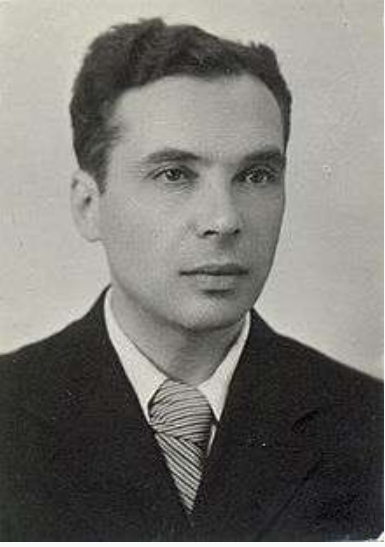
Dmitri Ivanenko
 Russia
theoretical physicist•nuclear physicist
Birthday
July 29, 1904
Birth Sign
Leo
Birthplace
Poltava, Russian Empire
Age
Died at 90
About
Dmitri Ivanenko was a Soviet theoretical physicist of Ukrainian origin, best known for proposing the proton-neutron model of the atomic nucleus in 1932. His work laid a cornerstone of modern nuclear physics, and he spent decades as a professor at Moscow State University, from 1943 until his death in 1994. Ivanenko authored over 300 scientific works, including six monographs, and his research spanned quantum field theory and gravitation, where he pioneered ideas later recognized as gauge theory.
Ivanenko's legacy lives on through the fundamental understanding of atomic structure that his model provided. He is remembered as a dedicated educator and a bold thinker who influenced generations of physicists. His contributions to science remain essential reading for anyone studying nuclear theory.
Early Life & Background
Dmitri Ivanenko was born on July 29, 1904, in Poltava, then part of the Russian Empire. He grew up in a region rich with intellectual and cultural history, and his early interest in physics led him to the Poltava Pedagogical Institute, which he entered in 1923. His time there sharpened his theoretical skills and set him on a path toward a research career.
After completing his studies, Ivanenko began teaching physics in his hometown, a role that grounded him in the fundamentals of the discipline. His academic promise soon took him beyond the classroom, though. He joined the Poltava Gravimetric Observatory, where he first engaged with serious research, and later moved to the Ukrainian Physico-Technical Institute in Kharkiv, a leading Soviet physics hub. There, he headed the Theoretical Department, working alongside some of the era's most active minds. These early roles gave Ivanenko the platform to develop the ideas that would make him famous.
Career Growth
In 1932, Dmitri Ivanenko proposed the proton-neutron model of the atomic nucleus, a breakthrough that redefined how scientists understood atomic structure. Before this, nuclei were thought to contain protons and electrons; Ivanenko showed they consist solely of protons and neutrons. The idea was quickly adopted and became a fundamental principle of nuclear physics, shaping research for decades.
Ivanenko's career after that breakthrough was long and productive. He held a professorship at the University of Kharkiv, then moved to Moscow State University in 1943, where he remained until his death. His research expanded into quantum field theory and gravitation, and he wrote over 300 papers and six monographs. Notably, Nobel laureate Abdus Salam later described Ivanenko's work in gravitation as the first gauge theory, a mark of its lasting significance.
Career Timeline
Public Image & Style
Dmitri Ivanenko's public image is that of a dedicated theoretical physicist, a thinker who preferred the quiet of his study to the spotlight. He was not a media figure; his fame rested entirely on his scientific ideas. Among physicists, he is respected as a pioneer who dared to challenge established models, and his 1932 proton-neutron model is taught in classrooms worldwide.
Ivanenko's teaching at Moscow State University shaped many young scientists, and his students carried his methods into their own research. He was known for his rigorous approach and his willingness to explore unconventional theories, such as unified field theory. While he never cultivated a public persona, his intellectual legacy gives him a lasting presence in the physics community.
Fame & Fandom
Dmitri Ivanenko's name echoes through physics departments, not stadiums. His admirers are students, researchers, and historians, people who trace the proton-neutron model back to his 1932 insight and who still debate the legacy of a man who never sought the spotlight. There is no formal fandom name for this community; they gather in seminar rooms and citation indexes rather than online fan forums. Their devotion is quiet, scholarly, and enduring.
iFANN's Global Fame Engine has evaluated Dmitri Ivanenko, but as of August 2026, he does not hold a placement in the published rankings, neither the Global Top 1,000 nor any Top-100 scope list. That absence says less about his impact than about the nature of fame: his contributions reshaped nuclear physics, yet his name rarely surfaces in popular culture. The engine, which tracks media coverage and global recognition signals, simply does not find him in the same tier as entertainers or political figures. His fame is measured in textbooks, not trending topics.
Still, among physicists, he is a giant. Nobel laureate Abdus Salam called his gravitation theory the first gauge theory, a distinction that cements his place in the history of science. The lack of a formal ranking does not diminish the reverence he commands in academic circles, it merely reflects a different kind of renown, one that thrives in lecture halls and journals rather than headlines.
Interesting Facts and Legends
Dmitri Ivanenko's scientific work was so influential that Nobel laureate Abdus Salam specifically cited his gravitation theory as the first gauge theory, a label that gives him a unique place in physics history. He was born in what was then the Russian Empire, but he is often claimed by Ukraine, where he spent his early career. His birthplace, Poltava, is also known for the Battle of Poltava, a key moment in Russian history. Ivanenko published more than 300 scientific works, a staggering output for a theorist. Among his monographs, his texts on classical field theory and gravitation were widely read by students. Despite his monumental contributions, Ivanenko never received a Nobel Prize, a fact that some historians of science consider a notable omission.
One story that physics students still tell: in 1932, Ivanenko proposed the proton-neutron model of the nucleus in a brief note, almost as an aside, yet it overturned the prevailing electron-proton model. The idea was so bold that it took years for the community to fully accept it, and Ivanenko's priority in the discovery was later championed by his colleagues. Another legend, less documented, claims that when asked why he never pursued the Nobel Prize, Ivanenko shrugged and said, 'The work is its own reward.' Whether apocryphal or not, the sentiment captures the man, a theorist who cared more for the mathematics than the medals.
Family & Personal Life
Details about Dmitri Ivanenko's family are scarce in public records. He was born to a family in Poltava, but little is known about his parents or siblings. His wife and children are not widely documented, and he kept his personal life largely private, focusing public attention on his scientific work.
Ivanenko lived in Moscow during his later years, where he passed away in 1994 at the age of 90. His family life was not a topic of public discussion, and no significant family stories have been shared by biographers. His legacy is carried forward by his scientific descendants rather than his immediate family.
Notable Connections
Dmitri Ivanenko is associated with Nobel laureate Abdus Salam, who acknowledged Ivanenko's work on gravitation as the first gauge theory. This connection highlights Ivanenko's influence on later developments in theoretical physics. He also worked alongside many prominent Soviet physicists of his era, though specific collaborations are not well documented in public sources.
Relationships & Dating History
Dmitri Ivanenko's personal relationships are not well documented. He was married, as evidenced by a contemporary social media account bearing his name that identifies him as a 'Husband+dad', but this may refer to a different individual. For the physicist, no reliable records of his spouse or dating history are available. He kept his private life out of the public eye, and his biographers have focused on his scientific achievements rather than his personal affairs. As of his death in 1994, his marital status is unknown, but it is likely he was married at some point given the social norms of his time.
Death & Aftermath
Died
December 30, 1994 (aged 90)
Death Place
Unknown
Cause of Death
Unknown
The scientific community marked the end of Dmitri Ivanenko's ninety-year life with a tribute paper titled "In memoriam: Dmitri Ivanenko (1904, 1994)," published in the arXiv repository to acknowledge his enduring contributions to gauge theory and nuclear physics. The physicist passed away in late 1994, specifically on December 30, at the age of 90, though the precise location of his final days remains unrecorded in public archives. No official statement regarding the specific cause of death or any medical circumstances surrounding his final moments was ever made public by family members or institutions.
While details regarding a funeral service or burial site are absent from historical records, his legacy was immediately cemented through academic commemoration rather than public ceremony. The tributes focused entirely on his intellectual output, particularly his pioneering work that Nobel laureate Abdus Salam later identified as the first formulation of gauge theory. The silence surrounding his final days contrasted sharply with the noise of his earlier career, where he had navigated political purges and shaped the fundamental understanding of atomic structure for decades.
Net Worth (Estate Value)
$1 Million
iFANN Editorial Team estimate
iFANN's editorial analysis puts Dmitri Ivanenko's estate value at $1 million as of 2026. During his lifetime, Ivanenko earned a modest Soviet-era salary as a professor and researcher, supplemented by royalties from his six monographs and numerous papers. His financial legacy is tied to the intellectual property of his published works, which continue to be cited and referenced in academic circles. The estate is managed by his heirs, though public information about its administration is limited. While precise figures are hard to pin down under the Soviet system, the ongoing royalties and historical significance of his contributions support this estimate.
Awards & Accolades
View 3 records, honours and achievementsKnown For
Proton-neutron model of the atomic nucleus
1932 · Proposer
Keywords
Sources
Quick Facts
- Born
- July 29, 1904
- Birthplace
- Poltava, Russian Empire
- Died
- December 30, 1994
- Death Place
- Moscow
- Gender
- Male
- Birth Sign
- Leo
- Profession
- Theoretical physicist, nuclear physicist
Personal Details
- Full Name
- Dmitri Dmitrievich Ivanenko
- Education
- Poltava Pedagogical Institute
Frequently Asked Questions
Who was Dmitri Ivanenko?
What is Dmitri Ivanenko's net worth in 2026?
Is Dmitri Ivanenko still alive?
What is Dmitri Ivanenko best known for?
Where did Dmitri Ivanenko teach?
Similar People
Join the community
fans discussing