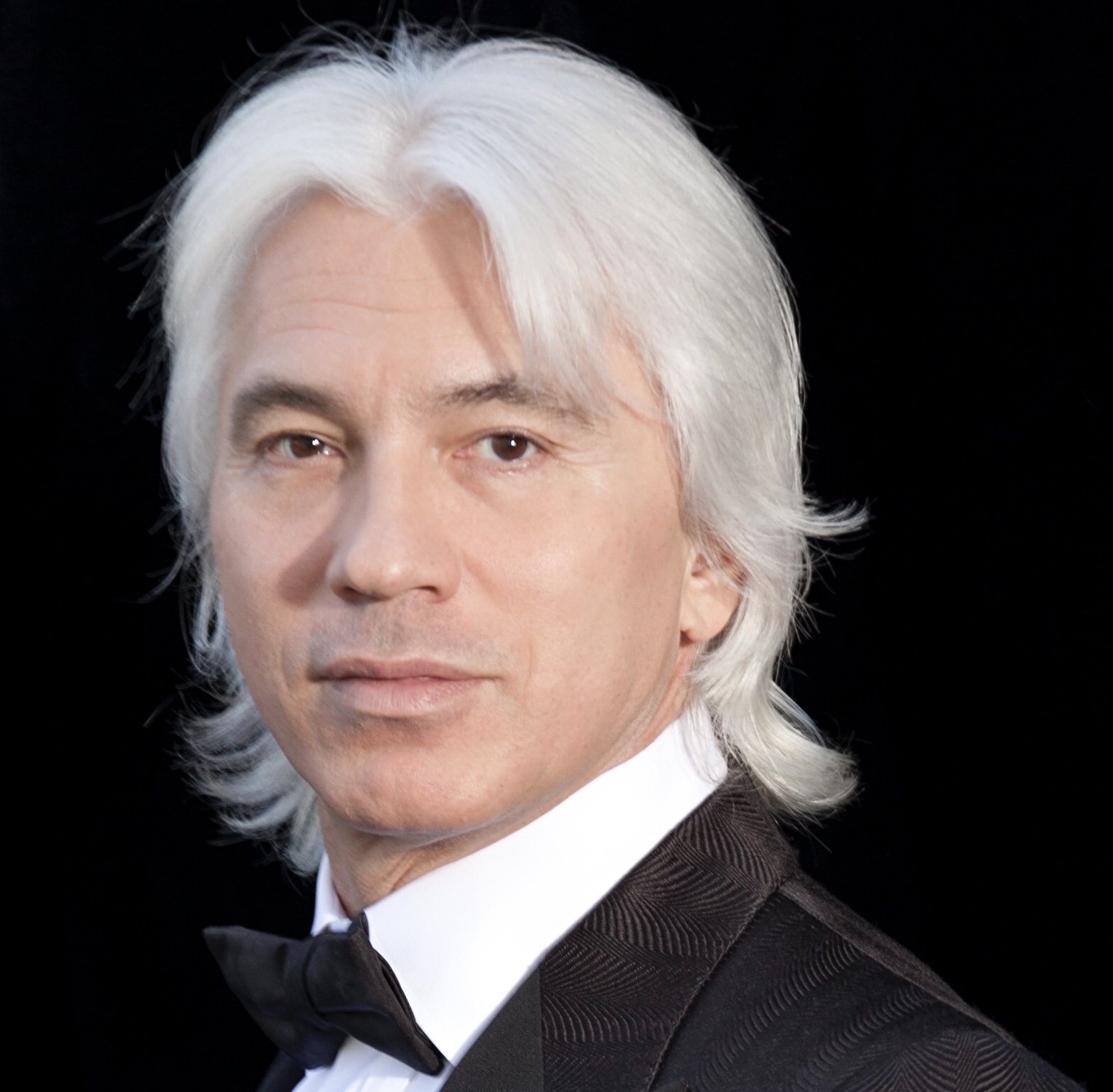
Dmitri Hvorostovsky
 Russia
Also known as: Velvet Siberian baritone, Siberian Express, Russian prince, Elvis of Opera
Birthday
October 16, 1962
Birth Sign
Libra
Birthplace
Krasnoyarsk, Siberia, Soviet Union
Age
Died at 55
Height
6 ft 4 in (193 cm)
About
Dmitri Hvorostovsky was a celebrated Russian operatic baritone, renowned worldwide for his commanding stage presence and a rich, dark-toned voice that captivated audiences. Born on October 16, 1962, in Krasnoyarsk, Siberia, he rose to global stardom after winning the prestigious 1989 BBC Cardiff Singer of the World competition. His interpretations of both Russian repertoire, including Prince Yeletsky in Tchaikovsky's The Queen of Spades and the title role in Eugene Onegin, and Verdi operas such as Il Trovatore and La Traviata, earned him widespread acclaim.
Hvorostovsky was a fixture in the world's leading opera houses, including the Metropolitan Opera, the Royal Opera House, La Scala, and the Vienna State Opera. Beyond his operatic achievements, he was a highly sought-after concert artist and recitalist, performing globally and collaborating with renowned orchestras and conductors. His performances were characterized by profound emotional depth and a striking stage persona. He was posthumously awarded the Kammersänger title in 2018.
Dmitri Hvorostovsky passed away on November 22, 2017, in London at the age of 55, after a courageous two-and-a-half-year battle with brain cancer. His legacy continues through his extensive discography, his influence on subsequent generations of singers, and the enduring memory of his electrifying artistry. He is remembered for his unique vocal quality, described as 'brilliant, yet deceptively dark-hued,' and his ability to connect deeply with his audience.
Early Life & Background
Dmitri Aleksandrovich Hvorostovsky was born in Krasnoyarsk, Siberia, on October 16, 1962. He grew up in this Siberian city, which was largely closed to foreigners during the Soviet era. As an only child, he was primarily raised by his maternal grandmother, who nurtured his early interest in Russian folksongs, while his grandfather, a war veteran, struggled with alcoholism. His parents, a chemical engineer father and a gynecologist mother, had demanding careers that limited their time at home, leading to his grandmother playing a significant role in his upbringing.
Hvorostovsky began singing at the young age of four and started piano lessons at seven, demonstrating an early aptitude for music. After his formal music education, he briefly became involved with street gangs, engaging in drinking and fighting. However, he managed to pull himself back from this path, dedicating himself fully to his musical aspirations. He pursued formal music education at the Krasnoyarsk Arts School under the tutelage of Yekaterina Iofel, who became a crucial lifelong mentor.
His professional career commenced at the Krasnoyarsk Opera House, where he made his debut as Marullo in Verdi's Rigoletto. He gained national recognition by winning the prestigious Russian Glinka Competition in 1987, followed by winning the Toulouse Singing Competition in 1988. These early successes served as a vital stepping stone, setting the stage for his eventual international breakthrough.
Career Growth
The pivotal moment in Dmitri Hvorostovsky's career arrived in 1989 when he triumphed at the BBC Cardiff Singer of the World competition. In a memorable final round, he defeated local favorite Bryn Terfel, performing Handel's 'Ombra mai fu' and Verdi's 'Per me giunto...O Carlo ascolta' from Don Carlos. This groundbreaking victory launched his Western career, leading to significant debuts, including Paisiello's Figaro in London and Eugene Onegin at La Fenice in Venice.
Following his international breakthrough, Hvorostovsky became a highly sought-after performer at major opera houses worldwide. He made his debut at the Metropolitan Opera in 1995 as Prince Yeletsky in The Queen of Spades and became a regular presence at the Royal Opera House, La Scala, and the Vienna State Opera. His signature roles included Yeletsky and Eugene Onegin, with The New York Times proclaiming he was 'born to play' the latter. He also achieved considerable success in Verdi roles, such as Count di Luna in Il Trovatore and Germont in La Traviata.
Beyond his operatic endeavors, Hvorostovsky maintained a vibrant career as a concert artist and recitalist, touring extensively and captivating audiences with Russian art songs and folk music. He also ventured into film, appearing in the 2008 movie The Passenger and in opera films of Il Trovatore and La Traviata. His final public performance was a surprise appearance at the Metropolitan Opera's 50th anniversary gala in May 2017, a testament to his dedication even while battling illness.
Career Timeline
Public Image & Style
Dmitri Hvorostovsky cultivated an image as a charismatic and striking baritone, distinguished by his prematurely silver hair and an electrifying stage presence. His elegant stage attire, often favoring all-black ensembles, and his intense gaze contributed to his memorable persona. He was affectionately nicknamed the 'Siberian Express' and the 'Russian prince' by fans and the media, reflecting both his Siberian origins and his regal, commanding bearing on stage.
His voice was frequently described as 'brilliant, yet deceptively dark-hued,' and he was celebrated for the profound emotional depth he brought to his recitals, particularly in Russian art songs. He commanded a devoted following, especially among Russian-speaking audiences, who deeply admired his authentic interpretations of their national music.
Hvorostovsky was widely regarded as a cultural ambassador for Russia on the international stage and held the esteemed title of People's Artist of Russia. He actively used his platform and influence to support emerging talent, frequently mentoring young singers through masterclasses and competitions, thereby contributing to the future of classical music.
Fame & Fandom (iFAMOUS Rankings)
The community surrounding Dmitri Hvorostovsky was defined not by a formal moniker but by an intimate, global family that traveled across continents to witness his artistry. Known affectionately as the 'Hvorostovsky family' by the singer himself, this group distinguished itself through deep emotional investment and organized charity work during his battle with glioblastoma. Their devotion transformed into a powerful force following his passing in 2017, mobilizing streaming marathons and social media campaigns using #DmitriHvorostovsky to honor his legacy. Fans celebrated his distinctive silver mane and smoldering stage presence as visual trademarks, creating digital memorials and participating in tribute concerts worldwide without needing a centralized club structure. This collective reverence cemented his status as a bridge between traditional Russian training and international stardom, ensuring his music remained accessible through enduring respect from the classical music community. His influence persists through the continued popularity of his recordings and the nurturing of young talent by the foundation he left behind. The scale of his global attention is reflected in the latest iFANN Global Fame Rankings. Dmitri Hvorostovsky is currently the 87th most famous person in Classical, a position reflecting his enduring impact on the genre. This ranking represents a rise from 88th place in the previous cycle, underscoring the sustained resonance of his career even years after his death.
Interesting Facts and Legends
Dmitri Hvorostovsky's striking prematurely silver hair earned him a spot on People magazine's list of the 50 Most Beautiful People in the world. He carried several memorable nicknames throughout his life, including 'Velvet Siberian baritone,' 'Russian prince,' 'Siberian Express,' and 'Siberian tiger.' Fans and media occasionally dubbed him the 'Elvis of Opera,' a comparison he met with humility by suggesting that Elvis Presley might have become a great opera singer had he pursued formal training. His first wife was ballet dancer Svetlana, whom he adopted her daughter Mariya with, and they later had twins named Danila and Aleksandra. He married Florence Illi, a Swiss-born singer, in 2001, remaining together until his death. A legendary moment in his career involved his 2006 Metropolitan Opera HD Live broadcast of Verdi's La Traviata, where his portrayal of Germont captivated millions of cinema viewers globally. Another enduring story concerns his courageous decision to continue performing after his 2015 brain cancer diagnosis, singing with renewed intensity until months before his passing. Fans often retell the tale of his discovery by conductor Valery Gergiev while working as a taxi driver in Krasnoyarsk, adding a rags-to-riches chapter to his biography. His mastery of Russian art songs remains a defining legend, with critics noting the authentic 'Russian soul' he brought to performances of Tchaikovsky and Rachmaninoff.
Notable Quotes
“We are given only one life, which we must live without drafts, on the first try, trying to make a contribution and be happy. Because you will have no chance afterwards.”
“As long as I can continue doing what I love, I don't care how I'm described. Maybe I should be flattered – after all Elvis was a kind of revolutionary. Actually, if he had trained he might have been a great opera singer.”
Family & Personal Life
Dmitri Hvorostovsky was an only child, significantly influenced by his maternal grandmother who sang Russian folk songs to him. His father worked as a chemical engineer and his mother as a gynecologist; both parents had demanding careers that required long hours, leaving them with limited time for active parenting during his formative years.
Hvorostovsky became a father to five children. His first marriage produced three children: an adopted daughter named Mariya, and twins, son Danila and daughter Aleksandra. With his second wife, Florence Illi, he had two more children, a son named Maksim and a daughter named Nina. Florence was a constant source of support and remained by his side throughout his illness.
In his final years, Dmitri Hvorostovsky resided in London with Florence and their younger children, where he was undergoing treatment for brain cancer. He often spoke of the profound gratitude he felt for his family's unwavering support, emphasizing that the love and strength he drew from his children were instrumental in facing his health challenges.
Notable Connections
Hvorostovsky collaborated with many of the world's leading conductors, including James Levine, Bernard Haitink, Claudio Abbado, Lorin Maazel, Zubin Mehta, Yuri Temirkanov, and Valery Gergiev. He frequently performed alongside soprano Renée Fleming and tenor Jonas Kaufmann.
His victory at the 1989 Cardiff Singer of the World competition brought him into direct competition with Bryn Terfel, who became a friendly rival and colleague. Hvorostovsky also worked with directors like Franco Zeffirelli and had a close artistic relationship with the Metropolitan Opera, where he appeared in over 70 performances.
Relationships & Dating History
Dmitri Hvorostovsky was married twice during his lifetime. His first marriage was to Svetlana Khvorostovskaya, a ballet dancer. They were married in 1991 and together had three children: his adopted daughter Mariya, and twins Danila and Aleksandra. This marriage concluded with a divorce in 2001.
In June 2001, Hvorostovsky married Florence Illi, who is a Swiss-born singer. Their union resulted in two children, a son named Maksim and a daughter named Nina. Florence provided steadfast support to Hvorostovsky throughout his battle with brain cancer and remained his devoted partner until his passing.
While Hvorostovsky generally maintained a private personal life, he frequently expressed deep affection for his children and credited Florence with providing him with essential stability during challenging times. At the time of his death, he was married to Florence Illi.
- MarriedSvetlana Khvorostovskaya1991 - 2001First wife, ballet dancer; had three children together, including adopted daughter Mariya and twins Danila and Aleksandra.
- MarriedFlorence Illi2001 - 2017Second wife, singer; had two children, Maksim and Nina; remained married until his death.
Death & Aftermath
Died
November 22, 2017 (aged 55)
Death Place
Unknown
Cause of Death
Brain tumor
Dmitri Hvorostovsky suspended his opera performances in December 2016 to dedicate himself fully to treatment for a brain tumor, which he had publicly announced in June 2015. His final major public appearance occurred just weeks before his passing at the Wortham Center in Houston, Texas, where he delivered a powerful performance with a booming voice despite his declining health. The renowned Russian baritone died on November 22, 2017, at the age of 55, following two years of battling the cancer that was confirmed by family statements and hospital announcements consistent with his prior disclosures.
The reaction to his death was immediate and widespread across the globe, with tributes pouring in from peers, institutions, and officials. The Metropolitan Opera, the Royal Opera House, and the BBC observed moments of silence and released statements honoring his legacy, while fan vigils gathered at opera houses in London, New York, and Moscow. A notable surge in streaming and sales of his recordings followed the announcement, with his discography climbing charts globally on platforms like Spotify and Apple Music. Memorials included digital murals and dedications in concert programs, reflecting his status as one of the most charismatic figures in classical music.
A private funeral service was held shortly after his death, attended by close family and colleagues with the gravity befitting a national icon. His estate is managed by his wife, Irina Khakamada, who serves as the primary spokesperson for the family. Posthumous honors include the documentary titled Dmitri Hvorostovsky: An Inspiration produced to commemorate his life, while his family continues to support young artists through the Dmitri Hvorostovsky Foundation.
Net Worth (Estate Value)
$10 Million
iFANN Editorial Team estimate
Per iFANN's editorial analysis, Dmitri Hvorostovsky's estate is valued at $10 Million following his passing in 2017. This substantial wealth accumulated over a long and highly successful career as a leading operatic baritone. His income derived from extensive performances at world-renowned opera houses such as the Metropolitan Opera, La Scala, and Covent Garden, as well as from his numerous recordings, solo recitals, and television appearances. Following his death, Hvorostovsky's estate has continued to generate revenue through royalties from his extensive discography. This includes critically acclaimed albums featuring Russian songs and opera arias. Posthumous releases and reissues of his work ensure his music remains accessible to a global audience. The management of his estate and ongoing projects, such as tribute concerts and archival initiatives, has been overseen by his widow, Florence Illi. The value of Hvorostovsky's estate remains stable, sustained by ongoing royalties and licensing agreements. His recordings continue to achieve significant sales, and his enduring legacy is actively preserved through initiatives like the Dmitri Hvorostovsky Foundation, which is dedicated to supporting and nurturing young operatic talent.
Awards Won (4)
Dmitri Hvorostovsky won numerous prestigious awards throughout his career, including the BBC Cardiff Singer of the World competition in 1989, which launched his international career. He was named People's Artist of Russia in 1995 and received the Order of Alexander Nevsky in 2015. He also won the Order 'For Merit to the Fatherland' in 2017 and was honored as a Kammersänger.
1989 · Main Prize
1995 · Honorary Title
Known For
Eugene Onegin
1990 · Eugene Onegin
The Queen of Spades
1995 · Prince Yeletsky
Il Trovatore
2002 · Count di Luna
La Traviata
2004 · Germont
The Passenger
2008 · Himself
Keywords
Sources
Quick Facts
- Profession
- Opera singer (baritone)
- Born
- October 16, 1962
- Birthplace
- Krasnoyarsk, Siberia, Soviet Union
- Died
- November 22, 2017
- Death Place
- London, United Kingdom
- Gender
- Male
- Height
- 6 ft 4 in (193 cm)
- Children
- 5
Personal Details
- Full Name
- Dmitri Aleksandrovich Hvorostovsky
- Height
- 6 ft 4 in (193 cm)
- Spouse
- Florence Illi
- Children
- 5 (Mariya, Danila, Aleksandra, Maksim, Nina)
- Education
- Krasnoyarsk Arts School; studied under Yekaterina Iofel
Filmography
10
Total
2
Film
8
TV
Frequently Asked Questions
Who was Dmitri Hvorostovsky?
What was Dmitri Hvorostovsky's net worth at the time of his death?
How did Dmitri Hvorostovsky die?
Who were Dmitri Hvorostovsky's wives?
What was Dmitri Hvorostovsky best known for?
Social Media
Similar People
Join the community
fans discussing