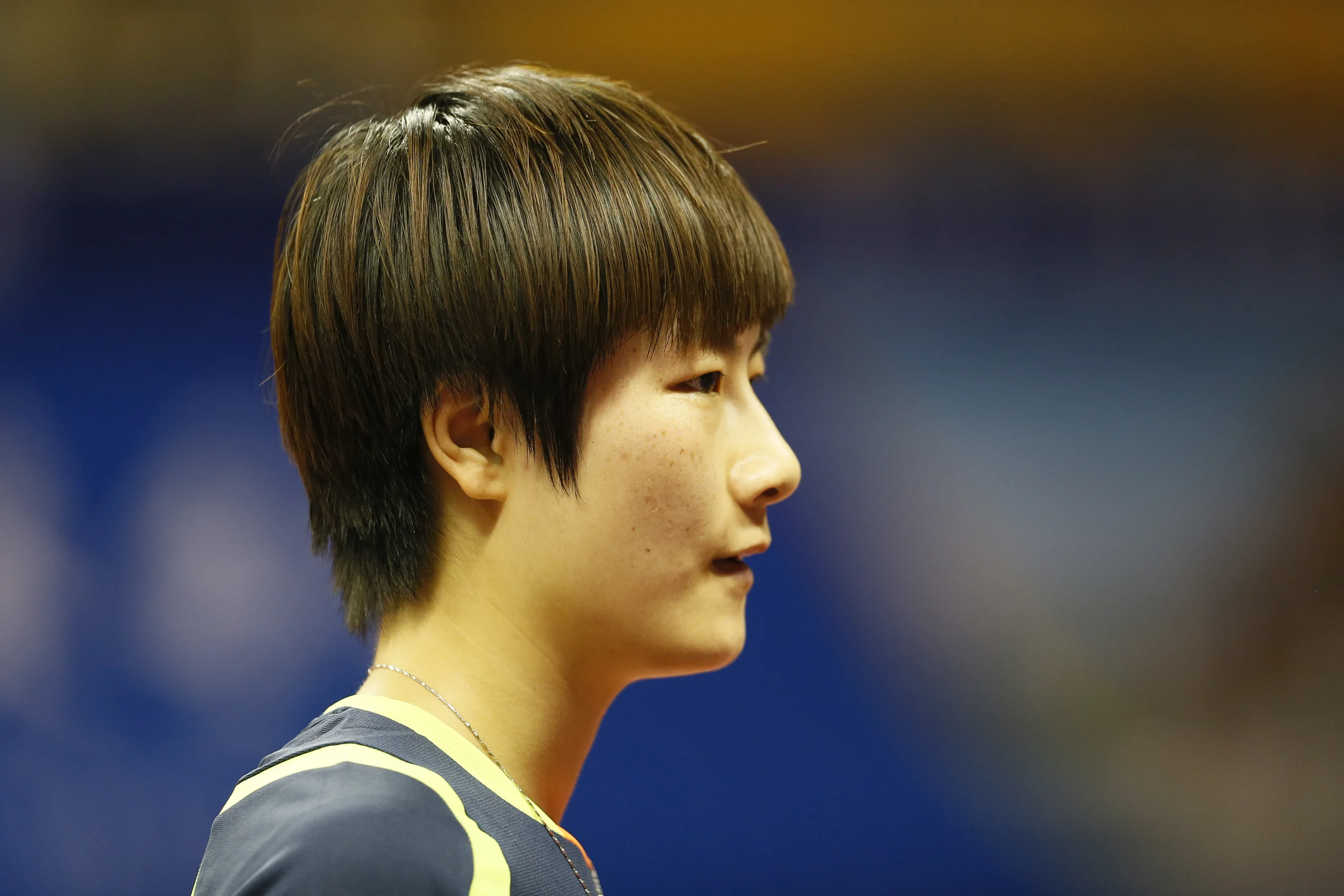
Ding Ning
 China
ChinaBirthday
June 20, 1990
Birth Sign
Gemini
Birthplace
Daqing, Heilongjiang, China
Age
36 years old
Height
5 ft 6 in (168 cm)
About
Ding Ning, born on June 20, 1990, in Daqing, Heilongjiang Province, is a retired Chinese table tennis player and one of the most decorated athletes in the history of the sport. A member of the Chinese Communist Party and an International Master of Sports, she dominated international table tennis from 2011 until her retirement in September 2021. She is widely recognized for completing the "Career Grand Slam" by winning the Olympic Games, World Table Tennis Championships, and ITTF World Cup in women's singles, joining an elite group of female players to achieve this feat twice. Standing approximately 1.68 meters tall, Ding Ning was known for her compact, agile playing style and powerful forehand. Her fierce competitiveness and ability to perform under pressure earned her the moniker "Heart of a Champion." Following her competitive career, she transitioned into academia and administration, enrolling in a master's program at Peking University and later serving as the principal of the Xiannongtan Sports School in Beijing. As of 2026, she remains an influential figure in the sport, actively mentoring young athletes and advocating for their welfare.
Ding Ning's legacy is secure as one of the greatest table tennis players of all time. Her journey from a young talent in Daqing to an Olympic champion and now a mentor illustrates a life dedicated to excellence. In 2026, Pantheon's Historical Popularity Index ranks her #30 globally among all athletes. She maintains a presence on Instagram under the handle @realdingning, where she shares updates about her new role as a school principal. Her impact on the sport extends beyond her medals, influencing the next generation through her administrative work and public advocacy.
Early Life & Background
Ding Ning was born in Daqing, a city in northeastern China known for its oil industry, where she grew up developing her athletic talents before moving to Beijing for specialized training. Her father was a table tennis coach, which provided her with early exposure to the sport. At age six, she began playing table tennis, quickly displaying exceptional hand-eye coordination and tactical intelligence. By age nine, she had joined the local sports school, and at 11, she was selected for the Heilongjiang provincial team. Her pivotal move came when she was scouted for the national youth team, leading her relocation to Beijing. During her teenage years, she trained rigorously under the Chinese national system, characterized by grueling daily schedules that included technical drills, physical conditioning, and match play. Before her international breakthrough, she won multiple junior titles, including the Junior World Championships in 2007, which solidified her status as a future star. These early years laid the foundation for her decade of sustained dominance in the professional circuit.
Career Growth
Ding Ning's professional career is defined by a decade of sustained dominance and a remarkable collection of titles. Her major milestones include winning the Junior World Championships in girls' singles in 2007. In 2011, she secured her first World Championship title in women's singles in Rotterdam, defeating Li Xiaoxia in the final. This victory announced her as a top contender. At the 2012 London Olympics, she won the silver medal in women's singles after a controversial final against Li Xiaoxia, where Ding received three yellow cards for illegal serves. She also won gold in the women's team event. In 2013, she won the World Cup in women's singles in Changzhou, becoming the third woman to complete the Career Grand Slam. In 2015, she captured the World Championship title in Suzhou, defeating Liu Shiwen in a dramatic five-game final, and also won the World Cup that year.
The pinnacle of her career came at the 2016 Rio Olympics, where she achieved the gold medal in women's singles, defeating Li Xiaoxia in another all-Chinese final. Upon winning, she collapsed to the floor in tears of joy, a moment captured globally and symbolizing her resilience. She added a second team gold medal to her collection. Ding defended her World Championship title in Düsseldorf in 2017, defeating Zhu Yuling in the final. She won the World Cup again in Tokyo in 2018. In 2019, she reached the World Championship final in Budapest but lost to Chen Meng. Notably, during this tournament, she became famous for a wardrobe malfunction where she forgot her shorts. She announced her retirement in September 2021, citing the need to focus on education and personal development. Her trophy cabinet includes two Olympic singles medals, three World Championship singles titles, four World Cup titles, and multiple Asian Games golds.
Career Timeline
Public Image & Style
Ding Ning is known for her fierce competitiveness and distinctive playing style. She is often described as having a "heart of a champion" due to her ability to perform under pressure and bounce back from setbacks. Her rivalry with Li Xiaoxia added drama to the sport and showcased her resilience. After retiring, she has cultivated an image of dedication and service, focusing on education and mentoring young athletes. Her public persona is grounded and professional, reflecting her commitment to the sport's future. She is frequently cited among the top female table tennis players ever, often placed in the top 5 or top 10 lists by the International Table Tennis Federation (ITTF) and various sports analysts. Her election as Chair of the Olympic Council of Asia (OCA) Athletes' Committee in June 2024 further cemented her status as a respected leader in the sporting community. She continues to advocate for athlete welfare, participating in forums to drive change for Asian athletes.
Fame & Fandom (iFAMOUS Rankings)
Ding Ning's fanbase is a devoted, global community, though it has never coalesced under a formal name. Her supporters are part of the broader Chinese table tennis fandom, known for its intense national pride, but Ding's own fans haven't adopted a distinct moniker that's documented anywhere. What they share is a deep affection for a player who combined fierce competitiveness with a relatable, human side. That humanity shone through in a moment fans still love to recall: at the 2019 World Championships in Budapest, Ding famously forgot her shorts before a match and had to dash back to the locker room, delaying play. The world's No. 1 player, momentarily flustered, delighted fans who found it endearing rather than embarrassing. This incident sparked a wave of supportive messages from fans who appreciated her vulnerability.
As of August 2026, iFANN's Global Fame Engine has evaluated Ding Ning, but she does not currently hold a placement in the published rankings (Global Top 1,000 or a Top-100 scope list). This is a neutral statement of her current evaluated status, not a reflection of her enduring legacy. Her fame is undeniable, built on a decade of dominance and a career grand slam, yet the engine's current assessment places her outside the ranked lists. Fans often refer to her simply as "Ding Ning" or "The Queen of Table Tennis." Her fanbase is known for organizing tribute campaigns, particularly around her retirement and her new role as a principal.
Ding has always given back to her fans. She's been a vocal advocate for athletes' welfare, participating in the Olympic Council of Asia Athletes' Forum in September 2025 to drive change for Asian athletes. In October 2025, she became principal of the Xiannongtan Sports School in Beijing, the very school where her career began, a move her fans widely celebrated as a fitting continuation of her legacy. In December 2025, she reflected on this new chapter, describing it as returning "where the dream started," a sentiment that resonated deeply with her supporters. Additionally, in August 2026, she appeared at the 2nd World Humanoid Robot Games in China, rallying alongside robots to promote technological innovation in sports, further engaging her diverse fanbase.
Interesting Facts and Legends
Ding Ning is the only female player to have completed the Career Grand Slam twice. She was the first woman to win the World Cup three times consecutively from 2013 to 2017. Her signature serve is known for its deceptive spin and speed. Despite her success, she never missed a major final until her retirement, showcasing incredible consistency. She is a member of the Chinese Communist Party, a common distinction for top athletes in China. At the 2019 World Championships, she famously forgot her competition shorts before a match, a moment that humanized her to fans worldwide. Her legacy is secure as one of the greatest table tennis players of all time, with a unique achievement of winning the Grand Slam twice in the modern era. She stands approximately 1.68 meters (5 feet 6 inches) tall.
Notable Quotes
“Returning to the Xiannongtan Sports School feels like going back to where the dream started.”
“I want to use my experience to help the next generation of players.”
Family & Personal Life
Ding Ning has maintained a notably private personal life throughout her career and retirement. There are no public records or credible reports of any romantic relationships, dating history, engagements, marriages, or children. Unlike many high-profile athletes who share their personal lives extensively, Ding Ning has consistently kept her romantic status out of the media spotlight. Her father was a table tennis coach, which provided her with early exposure to the sport. As of 2026, she is considered single, with no confirmed partners. Her focus has been entirely on her career, her academic pursuits, and her role in mentoring the next generation of athletes. Despite her global fame, she has never allowed her private life to overshadow her professional achievements or her dedication to the sport's development.
Notable Connections
Li Xiaoxia, Liu Shiwen, Zhu Yuling, Chen Meng
Relationships & Dating History
Ding Ning has maintained a notably private personal life throughout her career and retirement. There are no public records or credible reports of any romantic relationships, dating history, engagements, marriages, or children. Unlike many high-profile athletes who share their personal lives extensively, Ding Ning has consistently kept her romantic status out of the media spotlight. Her focus has been entirely on her career, her academic pursuits, and her role in mentoring the next generation of athletes. As of 2026, she is considered single, with no confirmed partners. Her privacy has been a defining characteristic of her public life, allowing her to maintain a clear separation between her professional achievements and her personal existence.
Salary, Net Worth In 2026
$1 Million
iFANN Editorial Team estimate
Specific net worth figures for Ding Ning are not publicly disclosed in detail, as she is a state-supported athlete in China and her income sources differ from Western celebrities. However, estimates suggest her net worth is modest compared to commercial superstars, likely ranging between $500,000 and $1.5 million USD. Her income is derived from government stipends, prize money, endorsement deals with Chinese brands such as sports equipment companies, and her current salary as a school principal. There are no reports of major business ventures or real estate holdings outside of standard athlete compensation. iFANN currently estimates Ding Ning's net worth at approximately $1 Million based on available data regarding her earnings and assets. Her financial profile reflects the typical structure for top-tier Chinese state athletes who prioritize service over commercial accumulation.
Awards Won (13)
Ding Ning has won numerous prestigious awards throughout her career, including Olympic gold medals, World Championship titles, and World Cup victories. She is one of the few female players to complete the Career Grand Slam. Her accolades include gold medals at the 2012 and 2016 Olympics, three World Championship titles, and four World Cup wins. She has also received multiple Asian Games and Asian Table Tennis Championships titles.
2016 · Women's Singles
Rio Olympics
2016 · Team Event
Rio Olympics
2012 · Team Event
London Olympics
2012 · Women's Singles
London Olympics
Known For
Rio 2016 Olympics
2016 · Gold Medalist
World Table Tennis Championships
2011 · Champion
ITTF World Cup
2013 · Champion
Keywords
Sources
Quick Facts
- Profession
- table tennis player
- Born
- June 20, 1990
- Birthplace
- Daqing, Heilongjiang, China
- Gender
- Female
- Birth Sign
- Gemini
- Height
- 5 ft 6 in (168 cm)
Personal Details
- Full Name
- Ding Ning
- Height
- 5 ft 6 in (168 cm)
- Children
- Education
- Peking University (Master's in Physical Education)
Frequently Asked Questions
How old is Ding Ning?
Is Ding Ning married or does she have kids?
What did Ding Ning do after retiring from table tennis?
Did Ding Ning win an Olympic gold medal?
Why is Ding Ning famous for forgetting her shorts?
Social Media
Similar People
Join the community
fans discussing