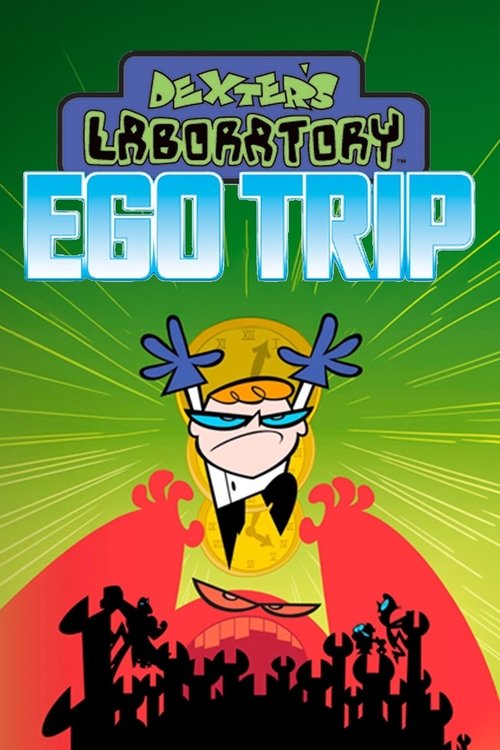
Dexter's Laboratory: Ego Trip
 United States
"It's about time."
Overview
A 50-minute television movie that first aired on Cartoon Network in December 1999, Dexter's Laboratory: Ego Trip sends the boy genius on a tour of his own future after a squad of robots arrives at his lab with orders to destroy the one who saved the future. That would be Dexter. Genndy Tartakovsky, who created the series, directs this feature-length special, which serves as a bridge between the show's original run and its later revival.
Christine Cavanaugh voices Dexter along with his older and elderly counterparts, while Eddie Deezen handles four distinct Mandark variants, from the sniveling schoolyard rival to a corporate titan and a full-blown overlord. The supporting cast includes Kath Soucie as Mom, Jeff Bennett as Dad and a handful of robots, Kat Cressida as Dee Dee, and Tom Kenny in a grab bag of bit parts. Hanna-Barbera produced it, and the animation keeps the show's angular, retro-futurist look while stretching it to cinematic scale.
The tone is pure comic sci-fi: slapstick, gadgetry, and a surprisingly melancholy streak about growing up. Fans have kept its rating around 7.5 out of 10, a strong score for a cable special. The film also introduces the Neurotomic Protocore, a device that becomes the engine of the plot and the reason Dexter's future selves are worth visiting.
Where to Watch
Stream
Free with ads
Availability and pricing can change. Confirm on the provider's site before purchasing.
PlotSpoiler-free
Dexter is a small boy genius with a giant secret laboratory hidden behind the bookshelf in his bedroom, a fortress of chrome, pulsing lights, and doomsday-grade gadgetry that his clueless parents and his hyperactive, ballet-obsessed older sister Dee Dee are never supposed to discover. He is arrogant, meticulous, and convinced that his intellect places him above everyone around him, especially his sniveling, equally brilliant schoolyard rival Mandark, who schemes endlessly to one-up or destroy him.
The story kicks off when a squad of robot assassins materializes inside the lab with a single, baffling directive: destroy the one who saved the future. That person, the robots make clear, is Dexter himself. The problem is that Dexter has no idea what they are talking about. He hasn't saved the future yet. Rather than wait around to be obliterated, he does what any self-respecting boy genius would do: he fires up his time machine and travels forward through his own timeline to find out exactly how, when, and where he becomes a hero, so he can get the credit and, ideally, avoid the robots.
What follows is a tour of Dexter's possible futures, and it is not flattering. He encounters a succession of older selves, each more compromised than the last: a hunky, muscle-bound adult Dexter; a bitter, doddering old man Dexter; and a frail, ancient Dexter clinging to life. Each version has drifted from the pure scientific ambition of the original, and each has a complicated history with Mandark, who in the future has evolved from a whiny rival into a corporate titan and, ultimately, a full-blown overlord ruling a dystopian world. The film's engine is the Neurotomic Protocore, a device central to the plot and the reason Dexter's future selves are worth visiting. It is the thing that determines who wins the future and what kind of world results.
Along the way Dexter must navigate a fractured timeline, an army of robots, and the uncomfortable realization that his future is entangled with his nemesis in ways he never imagined. The tone is pure comic sci-fi: slapstick, gadgetry, rapid-fire visual gags, and Tartakovsky's angular retro-futurist design stretched to a more cinematic scale. Underneath the jokes is a surprisingly melancholy streak about growing up, compromise, and what ambition costs. Dee Dee, Mom, and Dad appear but take a back seat. The emotional and narrative core is the Dexter-Mandark relationship across decades. The film stops short of its final revelations here, but the journey is a comic tour of ego, legacy, and the futures we build for ourselves.
Ending ExplainedSpoilers
Trailers
Cartoon Theatre - Dexter's Lab Ego Trip Promo (4K)
Critical Reception
Critical Consensus
No aggregated critic score exists for this cable special, which was not theatrically reviewed at scale. IMDb users rate it around 7.4 out of 10. Retrospectives and fan discussion treat it as a cult favorite and one of the more underrated animated films of its era, though no major-outlet review consensus has formed.
Top Cast
Christine Cavanaugh
Dexter / D22 / Old Man Dexter (voice)
Eddie Deezen
Mandark / Executive Mandark / Overlord Mandark / Braindark (voice)
Jeff Bennett
Mandark Robot / Dad / Robot #1 / Officer 9412 (voice)
Kath Soucie
Mom / Head Secretary (voice)
Kat Cressida
Dee Dee (voice)
Tom Kenny
Curator / Village Man / Robot #2 / Computer / Man (voice)
Crew
Director
Genndy Tartakovsky
Writers
Chris Savino, John McIntyre, Craig McCracken, Genndy Tartakovsky, Amy Keating Rogers
Composers
Thomas Chase, Steve Rucker
Keywords
Sources
Facts
- Status
- Released
- Original Language
- EN
- Director
- Genndy Tartakovsky
- Production
- Hanna-Barbera Cartoons
Join the community
fans discussing