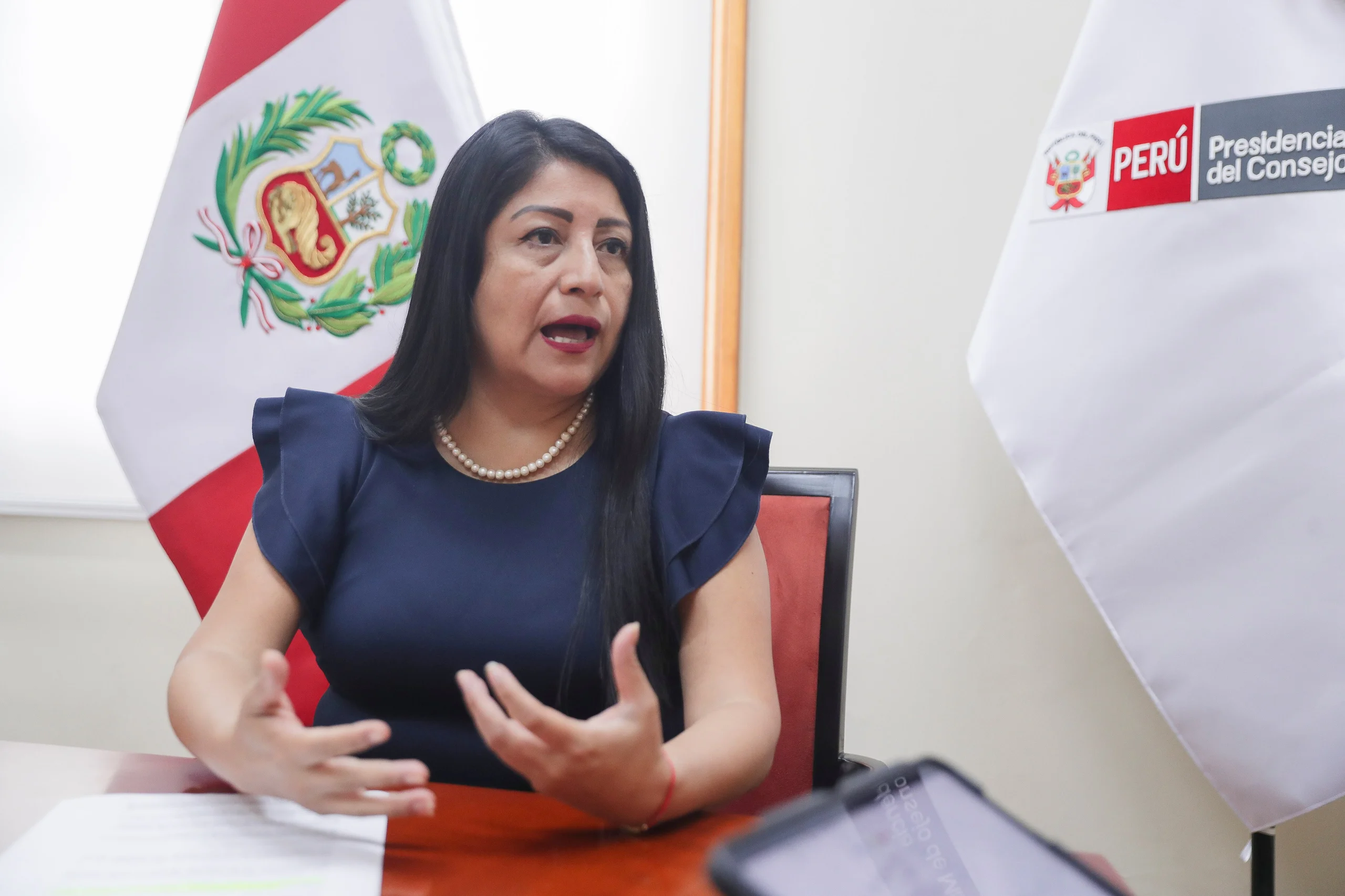
Denisse Miralles
 Peru
PeruAlso known as: Denisse Azucena Miralles Miralles
Birthday
November 8, 1976
Birth Sign
Scorpio
Birthplace
Lima, Peru
Age
49 years old
About
Denisse Miralles is a Peruvian engineer and economist who stepped into the national spotlight as Prime Minister of Peru in early 2026, a role she held for just 21 days. Before that, she served as Minister of Economy and Finance from 2025 to 2026, where she shaped fiscal policy during a delicate economic period. Her technical background sets her apart in a political landscape often dominated by career politicians.
Miralles built her reputation on a foundation of engineering economics and public policy, with more than two decades in the public sector. She is known for translating complex economic theory into practical, actionable policy, particularly in investment and development. Her brief but intense time at the top of Peru's government made her a figure of interest across Latin America, even as she returned to a quieter professional life afterward.
As of 2026, Miralles is no longer in government. She keeps a low profile, with a private Instagram account and little public presence beyond her professional work. For those who follow Peruvian politics, she remains a symbol of technocratic governance and the volatility of the country's political scene.
Early Life & Background
Denisse Azucena Miralles Miralles was born on November 8, 1976, in Lima, Peru. Growing up in the capital, she showed an early aptitude for math and problem-solving, which led her to pursue engineering. She enrolled at the National University of Engineering in Lima, one of the country's most prestigious technical schools, and earned a degree in Engineering Economics. That blend of technical and economic thinking became the cornerstone of her career.
Seeking a global perspective, Miralles moved to Japan for graduate studies. She completed a Master's in Public Policy and Taxation at Yokohama National University, an experience that shaped her understanding of fiscal systems and governance. Returning to Peru, she entered the public sector, where she spent over 22 years focused on investment and economic development. Her early roles involved analyzing and promoting public investment projects, work that laid the groundwork for her later ministerial positions.
Before her cabinet appointments, Miralles served as Director of Decentralized Investment at PROINVERSIÓN, Peru's private investment promotion agency. In that role, she worked on attracting investment to regions outside Lima, a mission that aligned with her interest in balanced national development. It was this deep technical background that eventually caught the attention of the country's leadership.
Career Growth
Miralles's breakthrough came in 2025 when she was appointed Minister of Economy and Finance under President José María Balcázar. In that role, she oversaw fiscal policy during a period of economic strain, focusing on maintaining stability and investor confidence. Her tenure was marked by a cautious approach to public spending and an emphasis on strategic investment.
On February 24, 2026, in a surprise move, Balcázar named her Prime Minister, replacing Hernando de Soto, who had been sidelined. The appointment was unexpected, as Miralles was less politically prominent than her predecessor. As Prime Minister, she led the cabinet and faced immediate pressure from a fractured Congress. Her time in office lasted only 21 days. On March 17, 2026, she resigned ahead of a mandatory congressional confirmation vote, a step that many saw as a preemptive move amid likely rejection. General Luis Enrique Arroyo succeeded her.
Following her resignation, Miralles also left the Ministry of Economy and Finance. Her short-lived premiership became a talking point in Peruvian politics, illustrating the instability of the Balcázar administration. Since then, she has stepped back from the public eye, with no announced political or professional roles as of 2026.
Career Timeline
Public Image & Style
Denisse Miralles is perceived as a technocrat rather than a typical politician. Her image is that of a quiet, analytical economist who rose through the ranks based on expertise rather than charisma. In a political environment often dominated by flashy personalities, she stood out for her measured, data-driven approach. Media coverage during her brief premiership focused on her technical credentials and her unexpected elevation, painting her as a competent but politically untested figure.
Fans of Peruvian politics, especially those who follow economic policy, have shown interest in her work, but she has not cultivated a broad public following. Her low-key demeanor and lack of social media presence have kept her out of the celebrity-adjacent sphere that some politicians occupy. Instead, she is respected in policy circles for her knowledge and her commitment to sound fiscal management.
Fame & Fandom (iFAMOUS Rankings)
Denisse Miralles has been evaluated by iFANN's Global Fame Engine and does not currently appear in the published rankings, neither the Global Top 1,000 nor any Top-100 scope list. For a figure who briefly held Peru's second-highest office, her footprint beyond policy circles is remarkably slight. That absence of a ranking is itself a kind of distinction: a prime minister whose name generates almost no measurable cultural noise.
Her fanbase, such as it is, has no formal name, no community, no coordinated campaigns, no inside jokes. Her private Instagram account, with its 567 followers, is less a platform than a closed door. The people who follow her career are not fans in the celebratory sense; they are observers of Peruvian politics, economists, and the occasional curious citizen who noticed a quiet technocrat suddenly standing at the center of a storm.
What fame Miralles does possess is situational and fleeting, tied to the 21 days she spent as Prime Minister. In that compressed window, she became a subject of national and international coverage, not for charisma or scandal, but for the sheer oddity of her elevation and swift resignation. The coverage was respectful, puzzled, and then gone. There are no viral moments, no fan-made tributes, no mythology. Her legacy, if it forms, will be built in policy papers and economic histories, not in the collective memory of a fanbase that never quite existed.
Interesting Facts and Legends
Miralles's private Instagram account has just 567 followers, a rarity for someone who held the second-highest political office in Peru. She studied in Japan, which is unusual for Peruvian politicians, and she often credits that experience with shaping her views on taxation and public policy. Her name, Miralles Miralles, is a double surname common in Spanish-speaking countries, reflecting both paternal and maternal family lines. Before entering politics, she spent over two decades in the public sector, almost entirely behind the scenes, which made her sudden rise to Prime Minister all the more surprising to observers. She was the third Prime Minister appointed by President Balcázar within a single year, highlighting the political turbulence of the period.
The story of her appointment is already becoming a minor legend in Peruvian political circles: President Balcázar had initially sidelined economist Hernando de Soto for the role, only to reverse course and swear in Miralles in a surprise move. The reversal was read as a signal of political instability, and it made her elevation all the more startling. Then, just three weeks later, she resigned, ahead of a congressional confirmation vote, a decision that stunned observers and left the government scrambling for a successor. General Luis Enrique Arroyo took over, but the image of Miralles, a quiet engineer who stepped into the spotlight and then stepped out just as quickly, has lingered as a symbol of the era's unpredictability.
Family & Personal Life
Details about Denisse Miralles's family are scarce, as she has kept her personal life largely out of the public record. No information is available about her parents, siblings, or children. She has not publicly discussed her family in interviews or official statements, and her social media presence offers little insight. Her focus has consistently been on her professional and public service roles, and she appears to prefer keeping her private life separate from her political career.
Notable Connections
Denisse Miralles is associated with President José María Balcázar, who appointed her to both ministerial and prime ministerial roles. She also worked alongside Hernando de Soto, the economist she replaced as Prime Minister. Her successor, General Luis Enrique Arroyo, is another figure in her professional circle. Internationally, her time in office drew attention from news outlets like Reuters and AP, though she has no known personal associations with celebrities or public figures outside politics.
Relationships & Dating History
There is no public information about Denisse Miralles's romantic relationships. She has not been linked to any partner, spouse, or significant other in the media or in official records. Her personal life remains private, and she has never spoken publicly about a relationship. As of 2026, her relationship status is unknown.
Salary, Net Worth In 2026
Public financial information for Denisse Miralles is not available. As a career public servant, her earnings would have come from government salaries, which in Peru are modest by international standards. The Ministry of Economy and Finance and the Prime Minister's office do not make individual compensation public in a way that allows for a reliable estimate. Given the lack of data, any specific net worth would be speculative.
Awards & Accolades
Known For
Prime Minister of Peru
2026 · Prime Minister (21 days)
Minister of Economy and Finance
2025-2026 · Minister
Keywords
Sources
Quick Facts
- Profession
- Economist and politician
- Born
- November 8, 1976
- Birthplace
- Lima, Peru
- Gender
- Female
- Birth Sign
- Scorpio
- Education
- National University of Engineering; Yokohama National University
- Prime Minister
- Feb 24 - Mar 17, 2026
Personal Details
- Full Name
- Denisse Azucena Miralles Miralles
- Education
- Degree in Engineering Economics from the National University of Engineering; Master's in Public Policy and Taxation from Yokohama National University, Japan
Frequently Asked Questions
Who is Denisse Miralles?
When was Denisse Miralles born?
Why did Denisse Miralles resign as Prime Minister?
What is Denisse Miralles's educational background?
Is Denisse Miralles still active in politics in 2026?
Social Media
Similar People
Join the community
fans discussing