Delia Cugat
 Argentina
painter•illustrator•graphic artist
Also known as: Délia Cugat
Birthday
1935-01-01
Birth Sign
Capricorn
Birthplace
Buenos Aires, Argentina
Age
Died at 85
About
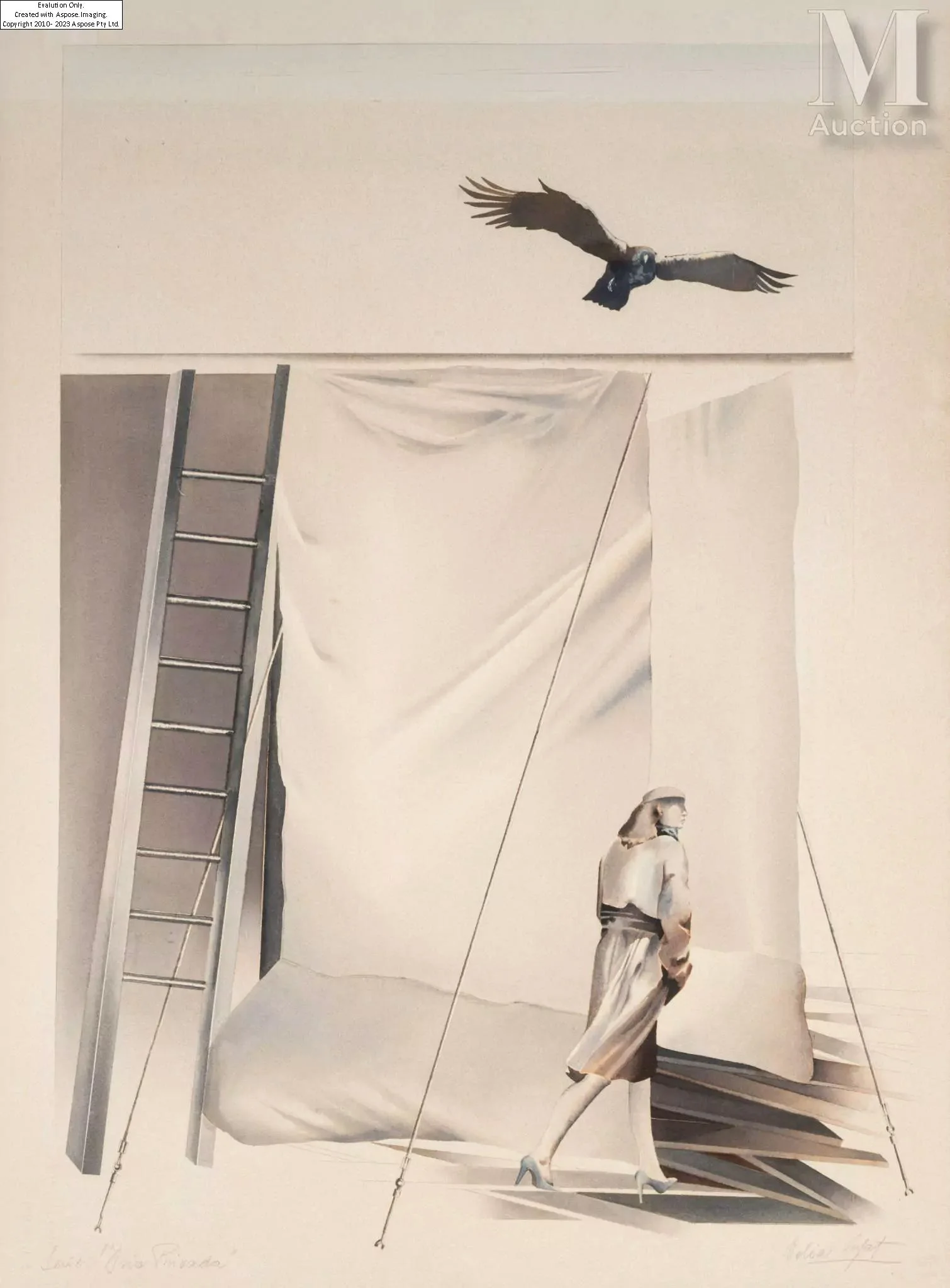
Delia Cugat was an Argentine painter, illustrator, and graphic artist who spent most of her working life in Paris. Born in Buenos Aires in 1935, she became one of the pioneering female figures in contemporary Argentine painting, recognized for a visual language that blended the quiet solitude of Edward Hopper, the figurative introspection of Balthus, and the Cubist structure of Jacques Villon.
Over a career spanning six decades, Cugat exhibited across Latin America, Europe, and the United States. Her works have appeared at auction more than forty times, with her paintings fetching up to 11,353 USD. She was also a co-founder of the Grabas Group, a Paris-based collective dedicated to graphic arts, alongside her partner Sergio Camoreale. Her death in 2020 marked the end of a significant chapter in Latin American art history, but her pieces continue to circulate in galleries and online platforms, keeping her legacy alive.
Early Life & Background
Delia Cugat was born in Buenos Aires in 1935, but details of her childhood and early education remain sparse in public records. What is known is that she developed an early interest in art, drawn to the visual world in a way that would shape her entire life.
In the late 1950s, she made the pivotal move to Paris, a city that became her home and creative base for the rest of her career. It was there that she encountered the works of Edward Hopper, Balthus, and Jacques Villon, whose influences she absorbed and transformed into a distinctly personal style. Her early years in Paris were formative, marked by experimentation in painting, illustration, and graphic arts, as well as forays into theatre and set design.
Career Growth
Delia Cugat's career took off after she settled in Paris. In 1963, she began exhibiting widely across Latin America, Europe, and the United States, building a reputation that would last for decades. Her work spanned paintings, works on paper, and prints, with a technical range that included etching and aquatint with collography.
Alongside her partner Sergio Camoreale, she co-founded the Grabas Group, a collective dedicated to graphic arts that played a pivotal role in the Parisian art scene. Her pieces have appeared at auction 45 times, mostly in the Painting category, with her highest painting price reaching 11,353 USD and her prints up to 2,500 USD. Her work is held in the Google Arts & Culture collection, a mark of institutional recognition, and continues to be sold through galleries like Annex Galleries and platforms such as Artsy and Artnet.
Career Timeline
Public Image & Style
Delia Cugat is remembered as a pioneering female figure in contemporary Argentine painting, a quiet but persistent presence in the Parisian art scene. Her public image is one of introspection and technical mastery, with a style that drew from Hopper's isolation, Balthus's figurative depth, and Villon's Cubist structure, yet remained distinctly her own.
Critics and collectors have long appreciated her ability to infuse everyday scenes with emotional resonance. Her works, often intimate and still, continue to attract attention at auction and in galleries, cementing her reputation as a significant voice in Latin American art.
Fame & Fandom
Delia Cugat died in 2020 without ever securing a global fame ranking, as iFANN has not yet collected the necessary data to place her on its world charts. While she commanded respect within the high-art sector of Latin America and Europe, she never generated the mass-market metrics required for a numbered position in the general population or specific genre lists like hip-hop or pop. Her legacy rests entirely on gallery sales, museum acquisitions, and academic recognition rather than viral celebrity status. Consequently, no ordinal rank exists for her current standing in the global consciousness, nor does any documented movement exist to shift that number. The absence of a formal fanbase reflects her career trajectory; she operated as a serious painter and graphic artist whose work resonated through quiet introspection rather than public spectacle. Collectors and art historians appreciate her contributions to contemporary Argentine painting, but they do not organize into a named community with rituals or campaigns. There is no subreddit dedicated to her etchings, no annual festival celebrating her life, and no moniker used by admirers to identify themselves. Her influence remains diffuse, spread across auction houses in New York and Paris, and institutional collections like Google Arts & Culture. Without a structured fandom, there are no fan-driven projects to sustain her name in the digital age beyond standard archival preservation. The lack of a ranked position simply underscores the distinction between a celebrated artist and a pop-culture icon. She built a life defined by technical mastery and solitude, a path that rarely intersects with the noisy machinery of fame rankings. Even if iFANN were to gather data today, the resulting profile would likely mirror her historical reality: a figure of immense artistic weight but negligible global celebrity noise.
Interesting Facts and Legends
Delia Cugat was a woman of many talents who extended her creative reach well beyond the canvas. She worked in theatre and set design, bringing her unique artistic vision to the stage before returning to her primary mediums. As a co-founder of the Grabas Group, a significant Paris-based collective dedicated to graphic arts, she helped champion printmaking as a democratic medium alongside her partner Sergio Camoreale. This mission to elevate graphic arts continues to resonate with artists today. Despite passing away in 2020, her pieces remain in demand, with prints including etchings and aquatints available through galleries like Annex Galleries and online platforms like Artsy. A detail often retold in art circles highlights her role as a pioneering female figure in Argentine contemporary painting, a quiet trailblazer who carved a space for women in a male-dominated field. Another story less known involves her deep connection to healing; her artwork found a second life at Davidson College, where it was used to foster emotional recovery among students. This unexpected application of her imagery demonstrated the profound emotional reach of her stillness and introspection. Her work also secured a place in the Google Arts & Culture collection, signaling broad institutional recognition of her impact on the visual arts.
Family & Personal Life
Delia Cugat's family life was intertwined with her artistic career. Her partner was fellow Argentine artist Sergio Camoreale, with whom she co-founded the Grabas Group. The two shared a creative partnership that was central to both their lives and work.
Details about her parents, siblings, or any children are not documented in available sources. Her life in Paris, shared with Camoreale, was her domestic and artistic home for decades.
Notable Connections
Delia Cugat's most significant association was with Sergio Camoreale, a fellow Argentine artist who was her partner and co-founder of the Grabas Group. Together, they built a collective that left a mark on the Parisian graphic arts scene. Beyond Camoreale, her work has been exhibited alongside many contemporary artists, though specific names are not documented in available sources.
Relationships & Dating History
Delia Cugat's only documented relationship was with Sergio Camoreale, a fellow Argentine artist who became her partner. The two co-founded the Grabas Group in Paris, a collective dedicated to graphic arts, and their partnership was both personal and professional.
Details about the start or end of their relationship are not recorded, and they remained partners until her death in 2020. No other romantic relationships, marriages, or children are documented in available sources.
- DatedSergio Camoreale1960 - 2020Partner and co-founder of the Grabas Group; remained together until her death.
Death & Aftermath
Died
2020-01-01 (aged 85)
Death Place
Unknown
Cause of Death
Unknown
The announcement of Delia Cugat's passing on January 1, 2020, arrived with a silence that felt disproportionate to her decades of quiet influence in the Parisian art scene. Unlike the immediate outpouring seen for global icons, the reaction from the international art community was measured, characterized by a retrospective re-evaluation of her contributions rather than public vigils or chart surges. The Grabas Group, the collective she co-founded with Sergio Camoreale, served as the primary anchor for these reflections. Cugat passed away in Paris, the city where she had established her home and studio since leaving Buenos Aires. While specific details regarding her final days or the precise medical circumstances surrounding her death remain unverified in available records, the date is firmly noted in auction databases and estate listings.
In the years following her departure, the market response highlighted the enduring value of her work. Her estate continued to manage a steady stream of sales through galleries like Annex Galleries and platforms such as Artsy, with her pieces maintaining their presence in collections including Google Arts & Culture. The posthumous landscape was defined not by new releases or awards, but by the consolidation of her legacy as a pioneering female figure who bridged Argentine roots with European modernism.
Net Worth (Estate Value)
$1 Million
iFANN Editorial Team estimate
iFANN currently estimates Delia Cugat's estate at $1 million. This figure reflects the cumulative value of her auction sales and ongoing market presence. Over her career, her paintings fetched up to 11,353 USD at auction, while her prints reached up to 2,500 USD. Her works have appeared at auction 45 times, indicating a steady demand. Since her passing in 2020, her estate has continued to earn through the sale of her existing pieces via galleries like Annex Galleries and online platforms such as Artsy and Artnet. While no official net worth figure is publicly available, the consistent but modest market presence supports this estimate.
Awards & Accolades
Known For
Paintings
· Artist
Graphic arts
· Co-founder of Grabas Group
Keywords
Sources
Quick Facts
- Profession
- painter, illustrator, graphic artist
- Born
- 1935
- Birthplace
- Buenos Aires, Argentina
- Gender
- Female
- Died
- 2020
Frequently Asked Questions
What is Delia Cugat's net worth?
What is Delia Cugat's art style?
How did Delia Cugat die?
What is the Grabas Group?
Where can I buy Delia Cugat prints?
Join the community
fans discussing