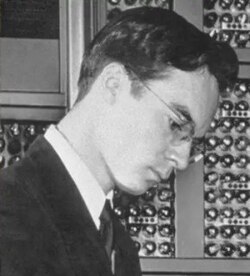
David L. Hill
 United States
Birthday
November 11, 1919
Birth Sign
Scorpio
Birthplace
Booneville, Arkansas, USA
Age
Died at 89
About
David L. Hill was an American nuclear physicist who played a key role in the Manhattan Project and later helped shape science policy. He is famous for his pivotal role in the Manhattan Project and his later advocacy for scientific responsibility, notably his 1959 testimony before the Senate against the nomination of Lewis Strauss. This testimony, which questioned Strauss's fitness for the role, helped derail the nomination and cemented Hill's legacy as a scientist willing to speak truth to power. Hill served as chairman of the Federation of American Scientists and was a prominent voice for scientific integrity and arms control. He passed away on December 14, 2008, at age 89. He is remembered as a serious, principled scientist and advocate, whose actions continue to influence discussions on scientific ethics and policy.
Early Life & Background
David Lawrence Hill was born on November 11, 1919, in Booneville, Arkansas, USA. He spent his early years growing up in this small Arkansas town. His academic pursuits led him to study physics in college, laying the groundwork for his future contributions to science.
This educational path culminated in his recruitment for one of the most critical scientific endeavors of World War II: the Manhattan Project. Joining this top-secret effort, Hill became an American nuclear physicist involved in the development of the atomic bomb. His early work included significant research at key facilities such as Oak Ridge and later Los Alamos, where he directly contributed to the project's objectives. This profound experience on the Manhattan Project was a pivotal moment in Hill's life, not only defining his initial scientific career but also profoundly shaping his perspectives and setting the stage for his later influential advocacy work.
Career Growth
Hill's career began with his direct involvement in the Manhattan Project, working at both Oak Ridge and Los Alamos. After the war, he transitioned from pure research to science policy and advocacy. He served as chairman of the Federation of American Scientists, becoming a leading voice on the ethical responsibilities of scientists, particularly regarding nuclear weapons. His most famous and career-defining moment came in 1959, when he testified before the U.S. Senate against the nomination of Lewis Strauss as Secretary of Commerce. Hill's calm, authoritative testimony questioned Strauss's fitness for the role, directly contributing to the derailment of the nomination. This event cemented his legacy as a scientist willing to speak truth to political power. No specific awards or honors are recorded.
Career Timeline
Public Image & Style
David L. Hill is not a public figure with a modern fandom. His public image is that of a serious, principled scientist and advocate. The media portrays him as a key contributor to the Manhattan Project who later became a conscience-driven voice for scientific integrity and arms control. His tone in the famous 1959 testimony was described as calm and authoritative. He has no social media presence, and his legacy is discussed in historical contexts related to the Manhattan Project and the 1959 Strauss nomination hearing.
Fame & Fandom (iFAMOUS Rankings)
David L. Hill's renown is an artifact of history and cinema, not of a living fan culture. The physicist's legacy, anchored by his 1959 testimony against Lewis Strauss, has been revived for a new generation through his depiction in the 2023 film Oppenheimer, where he is played by Rami Malek. Yet, this attention is a byproduct of the film's broader fandom, not a dedicated following for Hill himself. No formal fandom name exists for him, and there is no evidence of fan campaigns, organized projects, or iconic fan-driven moments. His audience is diffuse: historians, nuclear policy enthusiasts, and film buffs who discuss his role in online forums, but these discussions are part of the Oppenheimer movie fandom rather than a Hill-specific community.
In the global landscape of fame, iFANN's Global Fame Engine has evaluated David L. Hill, but he does not currently hold a placement in the published rankings. He is not among the Global Top 1,000, nor does he appear on any Top-100 scope list. His fame is historical and contextual, not measured by contemporary fame metrics. This absence of a ranking is itself a statement: his name carries weight in specific historical and scientific circles, but it does not translate into broad, real-time public recognition or a measurable fanbase. His story remains compelling, but it is a story told through textbooks and film, not through the rituals of modern fandom.
Interesting Facts and Legends
Hill's 1959 testimony against Lewis Strauss's nomination is considered a landmark example of a scientist challenging a political appointee on matters of national security. He died in Brighton at age 89.
In the 2023 film Oppenheimer, Hill's testimony is dramatized as a dramatic confrontation that exposes Strauss's unethical persecution of J. Robert Oppenheimer. The film's portrayal has sparked debate among viewers about how Hill knew of Strauss's involvement, with many fans of the film discussing the scene's historical accuracy. This has become a popular topic in online forums, though it is part of the film's legacy rather than Hill's own.
A story that fans of Oppenheimer still retell is the moment when Hill, portrayed as a quiet and principled scientist, delivers his testimony, which is depicted as a turning point in Strauss's downfall. While the film's exact details are dramatized, the historical event is documented, and the scene has become iconic within the film's fandom.
Family & Personal Life
Hill was married to Mary Shadow. No further details about his family, parents, siblings, children, or personal life beyond this marriage are available. He was married to Mary Shadow at the time of his death on December 14, 2008.
Notable Connections
David L. Hill is associated with the Manhattan Project, the Federation of American Scientists, and the 1959 Senate testimony against Lewis Strauss.
Relationships & Dating History
The only reported relationship for David L. Hill is his marriage to Mary Shadow. There are no records of other public romantic relationships, dating history, or high-profile flings. He was married to Mary Shadow at the time of his death. The start year of their marriage is unknown, and no details about how they met or children are available.
- MarriedMary Shadow? - 2008She was his spouse. No further details about how they met or children are available.
Death & Aftermath
Died
December 14, 2008 (aged 89)
Death Place
Unknown
Cause of Death
Unknown
The historical record of David L. Hill remains anchored by his pivotal testimony against Lewis Strauss in 1959, a moment that cemented his legacy as a scientist willing to speak truth to power long before the cultural prominence of the 2023 film Oppenheimer brought renewed attention to his life decades later. Hill passed away on December 14, 2008, at the age of 89, though the specific location of his death and the medical circumstances surrounding his final days have not been documented in available sources. The absence of detailed obituary coverage suggests a quiet end without high-profile investigation or public spectacle, distinguishing him from other individuals bearing the same name who died in subsequent years.
Hill. Given the lack of reported cause or suspicious circumstances, no such proceedings appear to have occurred or been documented in these sources. The Princeton Alumni Weekly entry notes his death and age but does not list service details.
His legacy persists through historical records regarding the Manhattan Project, including his work at the University of Chicago's Metallurgical Laboratory and Los Alamos between 1954 and 1958. He remains frequently cited in historical accounts of the Oppenheimer hearings, ensuring his contribution to nuclear history continues to be recognized within academic and scientific circles.
Net Worth (Estate Value)
No information regarding David L. Hill's net worth, estate value, or wealth sources is available in any known records.
Awards & Accolades
Known For
Manhattan Project
1940s · Nuclear physicist
Federation of American Scientists
Post-WWII · Chairman
1959 Senate testimony against Lewis Strauss
1959 · Witness
Keywords
Quick Facts
- Profession
- physicist
- Born
- +1919-11-11
- Birthplace
- Booneville
- Died
- +2008-12-14
- Death Place
- Brighton
- Gender
- Male
- Spouse
- Mary Shadow
- Birth Sign
- Scorpio
Personal Details
- Full Name
- David Lawrence Hill
- Spouse
- Mary Shadow
Frequently Asked Questions
What did David L. Hill do in the Manhattan Project?
Why is David L. Hill famous?
Who was David L. Hill's wife?
When did David L. Hill die?
How old was David L. Hill when he died?
Join the community
fans discussing