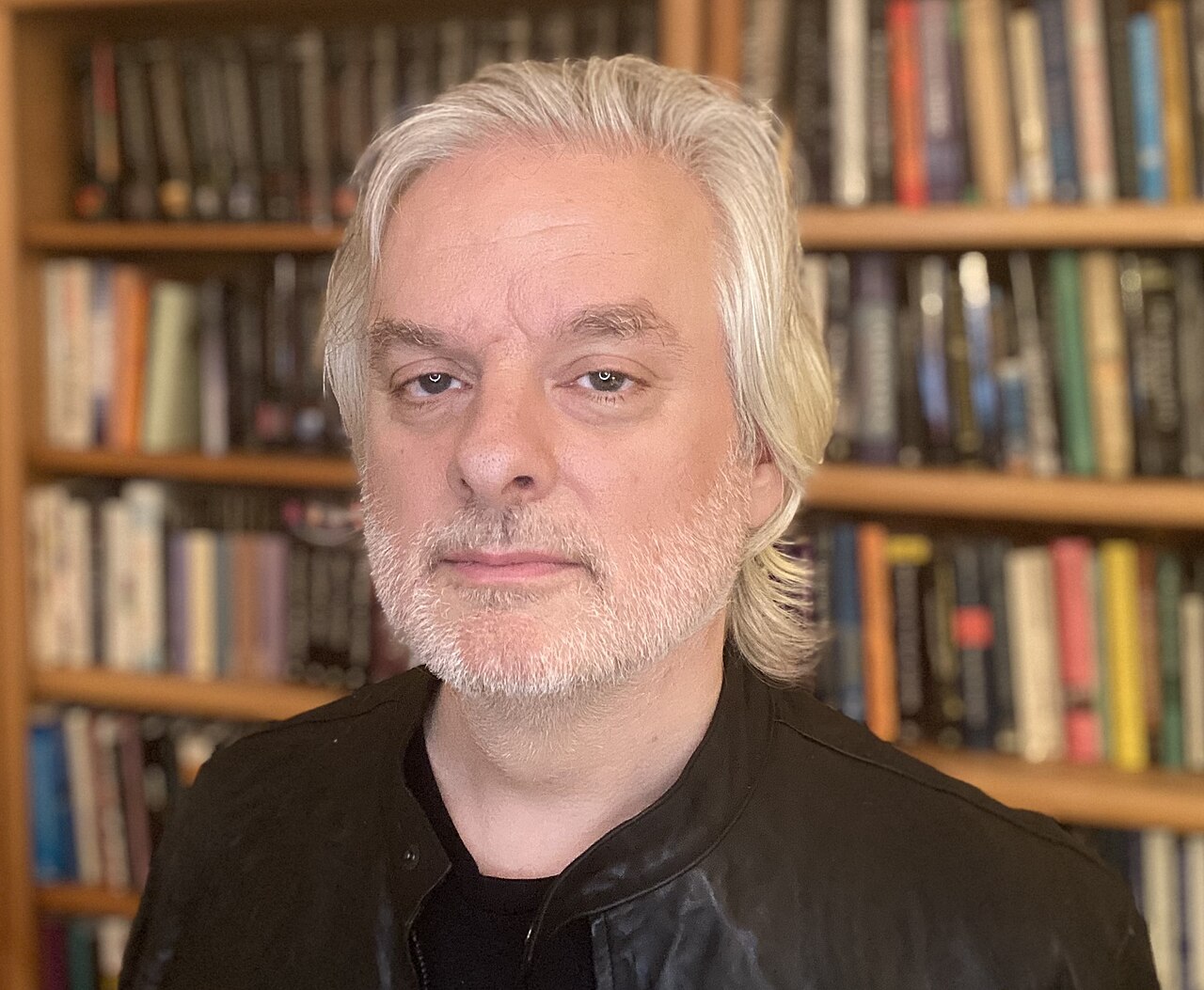
David Chalmers
 Australia
philosopher•university teacher•academic
Also known as: David John Chalmers
Birthday
April 20, 1966
Birth Sign
Taurus
Birthplace
Australia
Age
60 years old
Height
5 ft 10 in (178 cm)
About
David Chalmers is an Australian philosopher and cognitive scientist, widely regarded as one of the most influential philosophers of mind of his generation. He is University Professor of Philosophy and Neural Science at New York University and co-director of the Center for Mind, Brain and Consciousness. Chalmers is best known for formulating the "hard problem of consciousness," the question of how and why physical processes in the brain give rise to subjective experience. His work bridges philosophy, cognitive science, and neuroscience, and he has written extensively on artificial intelligence and virtual reality.
Chalmers is the author of the seminal book The Conscious Mind (1996) and the popular work Reality+ (2022), which argues that virtual reality is genuine reality. He co-founded PhilPapers, the leading online database for philosophy. As of 2026, he remains an active voice in debates about AI consciousness, giving talks and engaging with the public through his social media and personal website.
Early Life & Background
David John Chalmers was born on April 20, 1966, in Australia and grew up in Adelaide, South Australia, where his father worked as an engineer. From a young age, he showed a strong aptitude for mathematics and science, which led him to pursue an undergraduate degree in mathematics at the University of Adelaide, graduating in 1986. His path into philosophy was unconventional; he became fascinated with questions about consciousness that mathematics could not answer, prompting him to apply for a Rhodes Scholarship.
Chalmers won the scholarship and studied at the University of Oxford, where he completed a second undergraduate degree in philosophy. He then moved to Indiana University, where he earned his PhD in philosophy and cognitive science in 1993 under the supervision of Douglas Hofstadter, author of Gödel, Escher, Bach. His doctoral dissertation, "Toward a Theory of Consciousness," laid the groundwork for his later work on the hard problem.
Career Growth
Chalmers's breakthrough came in 1995 with the publication of his paper "Facing Up to the Problem of Consciousness" in the Journal of Consciousness Studies, where he introduced the term "hard problem of consciousness." The paper became one of the most discussed works in modern philosophy of mind. In 1996, he expanded these ideas in his book The Conscious Mind: In Search of a Fundamental Theory, which argued that consciousness is a fundamental feature of the universe, irreducible to physical processes.
Over the following decades, Chalmers held positions at the University of California, Santa Cruz, the University of Arizona, and the Australian National University, where he directed the Centre for Consciousness from 2004 to 2009. In 2009, he joined New York University as University Professor. That same year, he co-founded PhilPapers with David Bourget, creating an indispensable research tool for philosophers worldwide.
In 2010, Chalmers published "The Singularity: A Philosophical Analysis," exploring the implications of machine superintelligence and mind uploading, a paper that gained renewed attention in the 2020s. His 2022 book Reality+ brought his ideas about virtual reality to a broader audience, arguing that virtual worlds are genuine realities. As of 2026, Chalmers continues to engage with AI and consciousness debates, giving talks such as "When We Talk to AI, What Are We Talking To?" at UC Berkeley.
Career Timeline
Public Image & Style
Chalmers is widely respected as a clear and accessible writer, able to explain complex philosophical ideas to both academic and popular audiences. He is known for his engaging public talks, which often incorporate thought experiments and examples from technology and popular culture. In media portrayals, he is frequently presented as a leading voice on consciousness and the philosophical implications of artificial intelligence. He has a significant following among philosophy students, cognitive scientists, and AI researchers, though he does not have a formal fandom name. On social media, particularly X (formerly Twitter), he engages with current debates and shares his views on a range of topics, from consciousness to virtual reality.
Fame & Fandom (iFAMOUS Rankings)
David Chalmers commands a distinct sphere of global attention, his influence measured not by mass celebrity but by profound impact within the specific domains of artificial intelligence and philosophy. His intellectual stature has secured him a prominent position in contemporary cultural metrics, placing him as the 26th most famous person in AI, a ranking that has held steady through recent assessment cycles. This placement reflects the enduring relevance of his work on consciousness and its intersection with machine learning, drawing scrutiny from media coverage, academic discourse, and public consumption signals worldwide. While his reach extends to general audiences through popular science writing, his primary resonance remains concentrated among scholars and technologists rather than the broader entertainment demographic. Regarding his fanbase, there is no official or documented name for his followers; his audience consists primarily of students, researchers, and philosophers who engage with his ideas through lectures and publications rather than organized fan clubs or campaigns. The concept of a traditional fandom does not apply to an academic figure whose legacy is built on rigorous argumentation rather than pop culture performance.
Interesting Facts and Legends
David Chalmers holds an undergraduate degree in mathematics, having turned to philosophy only after recognizing that mathematical formalism could not resolve questions regarding subjective experience. He was awarded a Rhodes Scholarship to Oxford University following his initial studies, where he later pursued advanced research. During his time at Indiana University, he studied under Douglas Hofstadter, the author of Gödel, Escher, Bach. Chalmers is credited with popularizing the philosophical zombie thought experiment, which posits a being physically identical to a human yet devoid of conscious experience, serving as a primary argument against physicalist theories. He also coined the term "the hard problem of consciousness," establishing it as a foundational pillar in modern philosophy of mind. In 2022, he published Reality+, arguing that virtual reality constitutes genuine reality, a thesis that challenges conventional views on existence. Recent intellectual developments include significant debates in 2026 where physicists questioned the validity of his core concepts, while he continued to participate in high-profile discussions regarding AI sentience at institutions like UC Berkeley. These ongoing dialogues have cemented his status as a central figure in the ethics of technology.
Notable Quotes
“The really hard problem of consciousness is the problem of experience. When we think and perceive, there is a whir of information-processing, but there is also a subjective aspect.”
“Consciousness is the most familiar thing we know, and the most mysterious.”
“Virtual reality is genuine reality. The virtual world is not an illusion; it is a real world in its own right.”
Family & Personal Life
David Chalmers is married to Amanda Stevens, a philosopher who has worked at the Australian National University and other institutions. The couple married in the 1990s and have two children together. Chalmers has kept his family life largely private, and few details about his children or extended family are publicly known. He has mentioned in interviews that his interest in consciousness was partly inspired by his upbringing in Adelaide, where his father worked as an engineer, but he has not shared extensive family stories publicly.
Notable Connections
Chalmers has collaborated with several prominent figures in philosophy and cognitive science. His PhD supervisor was Douglas Hofstadter, author of Gödel, Escher, Bach. He co-founded PhilPapers with David Bourget. At NYU, he co-directs the Center for Mind, Brain and Consciousness with Ned Block. He is often discussed alongside philosophers like Daniel Dennett, John Searle, and Thomas Nagel in debates about consciousness and AI.
Relationships & Dating History
David Chalmers has kept his romantic life remarkably private, and the only publicly documented relationship is his marriage to Amanda Stevens, a philosopher. The couple married in the 1990s and have two children together. There is no public record of any prior relationships, dating history, or divorces. As of 2026, Chalmers is married to Amanda Stevens, and the relationship appears stable and long-term.
- MarriedAmanda Stevens1995 - presentCurrentMet through academic circles; married in the 1990s and have two children.
Salary, Net Worth In 2026
$5 Million
iFANN Editorial Team estimate
David Chalmers's net worth is not a subject of public record, as he is an academic rather than a celebrity or business figure. His income derives primarily from his salary as University Professor at New York University, which for distinguished professors at elite institutions typically ranges from $200,000 to $400,000 annually. He also earns from book royalties; his books, particularly The Conscious Mind and Reality+, have sold well for academic publications. Additionally, he receives speaking fees for public lectures and appearances at conferences. Per iFANN's editorial analysis, as of 2026, his net worth is estimated at around $5 Million, accumulated over decades of academic work and publishing. This figure reflects his long career, multiple book deals, and ongoing speaking engagements. Unlike many public figures, Chalmers has not been involved in major business ventures or endorsements, and his financial profile is consistent with a successful academic philosopher.
Awards Won (2)
David Chalmers has received recognition primarily through academic fellowships and honorary positions rather than entertainment or arts awards. He was elected a Fellow of the Australian Academy of the Humanities in 2006 and a Fellow of the American Academy of Arts and Sciences in 2013. He has also received honorary doctorates from several universities, though specific institutions are not consistently documented. His work has been widely cited and honored within the philosophical community.
2013 · Academic Fellowship
Lifetime achievement
2006 · Academic Fellowship
Lifetime achievement
Known For
The Conscious Mind
1996 · Author
Reality+
2022 · Author
Facing Up to the Problem of Consciousness
1995 · Paper
Keywords
Sources
Quick Facts
- Profession
- philosopher, university teacher, academic
- Born
- April 20, 1966
- Birthplace
- Australia
- Gender
- Male
- Birth Sign
- Taurus
- Height
- 5 ft 10 in (178 cm)
- Spouse
- Amanda Stevens
- Children
- 2
- Education
- University of Adelaide, University of Oxford, Indiana University
Personal Details
- Full Name
- David John Chalmers
- Height
- 5 ft 10 in (178 cm)
- Spouse
- Amanda Stevens
- Children
- 2
- Education
- University of Adelaide (BSc), University of Oxford (BPhil), Indiana University (PhD)
Frequently Asked Questions
What is David Chalmers's 'hard problem of consciousness'?
Is David Chalmers married?
What is David Chalmers's net worth in 2026?
Where does David Chalmers work?
What is David Chalmers's most famous book?
Social Media
Similar People
Join the community
fans discussing