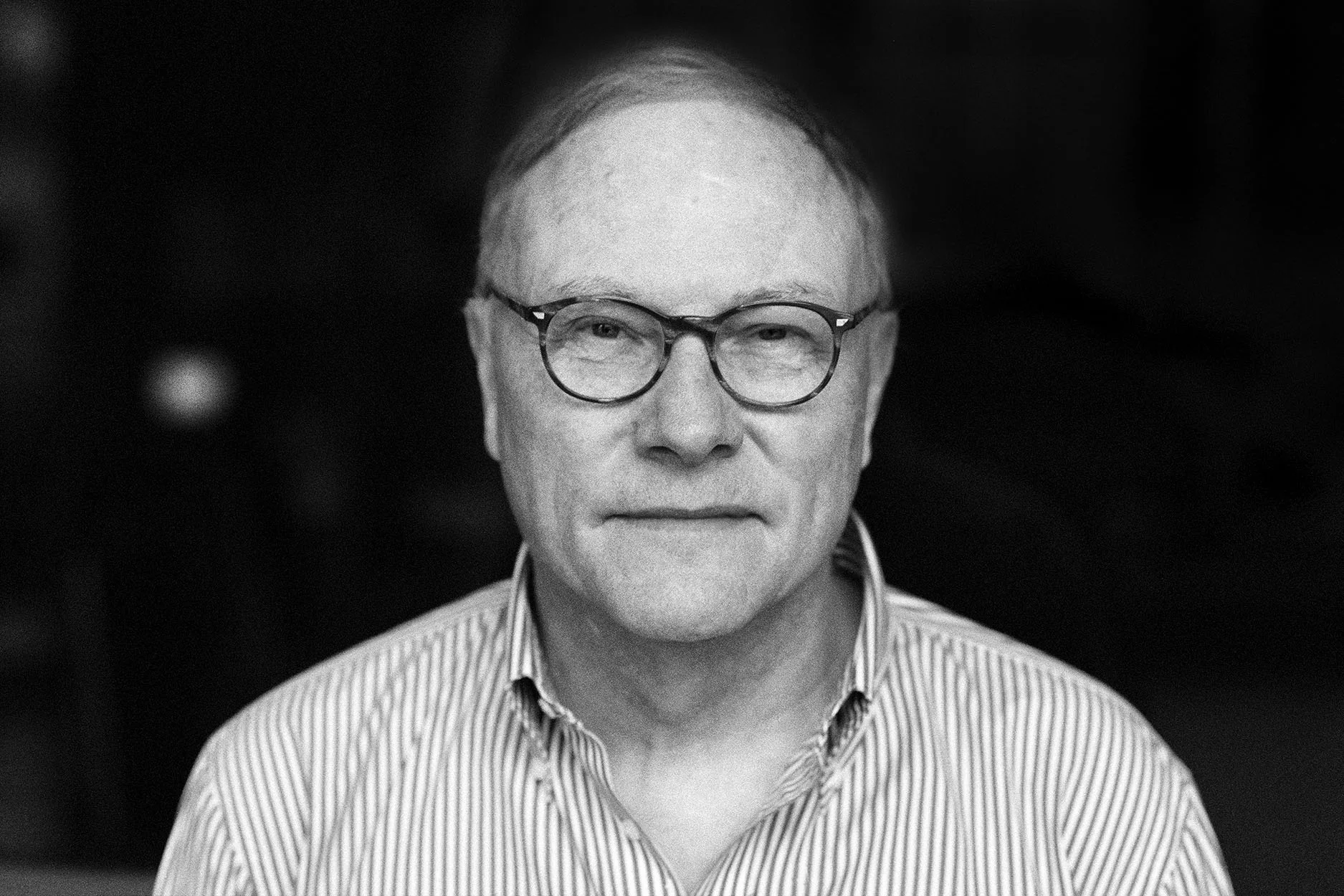
David Card
 Canada
Also known as: David Edward Card
Birthday
1956
Birth Sign
Capricorn
Birthplace
Guelph, Ontario, Canada
Age
70 years old
About
David Edward Card is a Canadian-American labour economist and the Class of 1950 Professor of Economics at the University of California, Berkeley. He is widely regarded as one of the most influential empirical economists of his generation, known for using natural experiments to answer questions about minimum wages, immigration, and education. In 2021, he received half of the Nobel Memorial Prize in Economic Sciences for his empirical contributions to labour economics.
Card's research has repeatedly challenged long-held assumptions. His landmark work with Alan Krueger on minimum wage and employment, and his studies of the Mariel Boatlift, have shaped policy debates for decades. He continues to be active in research and teaching, and in 2026 he holds emeritus status at Berkeley while remaining engaged with academic and policy audiences worldwide.
Early Life & Background
David Edward Card was born in 1956 in Guelph, Ontario. He grew up in this small Canadian city, where his early life was unremarkable by most accounts, but his academic talents were evident early on. He pursued his undergraduate degree at Queen's University in Kingston, Ontario, where he developed an interest in economics. After graduating, he moved to the United States for graduate study, earning his PhD in economics from Princeton University in 1983.
His early career included faculty positions at Princeton and the University of Chicago, where he began to focus on empirical questions in labour economics. At the time, the field was dominated by theoretical models, but Card was drawn to using real-world data and natural experiments to understand how labor markets actually behave. This approach would define his career.
Career Growth
Card's breakthrough came in 1994 with a study co-authored with Alan Krueger that examined the impact of a minimum wage increase in New Jersey on fast-food employment, comparing it to neighboring Pennsylvania. The study found no significant negative employment effects, challenging the conventional wisdom that raising the minimum wage destroys jobs. The results were controversial and sparked a new wave of research.
His research on the Mariel Boatlift, the 1980 influx of Cuban refugees to Miami, showed that immigration had little negative effect on native-born workers' wages or employment. This work has remained a cornerstone of immigration economics. Card also made important contributions to the study of education and earnings, using natural experiments to quantify the returns to schooling.
In 2021, Card was awarded half of the Nobel Memorial Prize in Economic Sciences for his empirical contributions to labour economics, sharing the award with Joshua Angrist and Guido Imbens. He continues to be active, delivering lectures and participating in academic events around the world.
Career Timeline
Public Image & Style
David Card does not have a fandom in the popular culture sense. His public image is that of a rigorous, empirically grounded economist whose work has profound policy implications. Media portrayals emphasize his role in upending conventional economic wisdom about minimum wage and immigration. His research style is characterized by careful use of natural experiments and real-world data rather than abstract mathematical modeling. He has no official fandom name or signature aesthetic. His public speaking style, as evidenced in interviews, is measured and academic.
Fame & Fandom (iFAMOUS Rankings)
David Card's public footprint is built on data, not devotion. There are no fan clubs, no hashtag campaigns, no birthday billboards. His most fervent admirers are graduate students and policy wonks who cite his papers in footnotes. The closest thing to a fan ritual is a seminar room packed to standing-room-only when he presents, or a Twitter thread dissecting his latest working paper. It's a fandom of spreadsheets and regression tables, and it has no formal name.
His iconic moments are academic, not theatrical. The 1990 minimum wage study with Alan Krueger, the one that found raising the minimum wage didn't kill jobs, became a field-defining salvo. The Mariel Boatlift study, where he used the 1980 Cuban refugee exodus to Miami as a natural experiment, remains a touchstone in immigration economics, still debated four decades later. These are the stories economists retell at conferences, the studies that launched a thousand replication attempts. His 2021 Nobel Prize cemented the lore: a scholar who upended conventional wisdom with clever natural experiments, not abstract math.
As for fame itself, iFANN's Global Fame Engine has evaluated David Card, but he currently holds no placement in the published rankings. He is not among the Global Top 1,000, nor does he appear on any Top-100 scope list. That's not a slight, it's a reflection of a fame built on peer-reviewed evidence rather than mass appeal. His renown is real, but it lives in economics departments, courtrooms, and policy briefs, not in the global celebrity index.
Interesting Facts and Legends
Card's 1994 minimum wage study with Alan Krueger was so controversial it spawned an entire subfield of research and remains one of the most cited papers in labour economics. The Mariel Boatlift study is still actively debated more than four decades after the event it analyzed. Card has served as an expert witness in antitrust and labour litigation, applying his econometric expertise to legal disputes. He has been the director of the Labor Studies Program at the National Bureau of Economic Research. His Nobel Prize was notable for recognizing empirical work using natural experiments rather than traditional economic theory.
One legend that still circulates: when Card and Krueger published their minimum wage findings, critics were so sure the results were wrong that they spent years trying to poke holes in the data. The study became a rite of passage for young economists, replicate it, challenge it, defend it. Another iconic moment: the Mariel Boatlift study was initially dismissed by some as a fluke, but it has since become a cornerstone of immigration research, cited in countless policy debates. Card's 2021 Nobel Prize is the singular landmark, a moment that validated a career of turning real-world events into natural experiments.
Notable Quotes
“The results we obtained were quite controversial.”
“We need to think carefully about what we can learn from natural experiments.”
Family & Personal Life
David Card keeps his personal life private. Public records confirm his Canadian origins and his education, but details about his parents, siblings, or any spouse or children are not documented in available sources. He is a Canadian-American citizen. As of 2026, he holds emeritus status at UC Berkeley while remaining active in research.
Notable Connections
David Card is associated with several prominent economists. His most famous collaboration was with Alan Krueger, who passed away in 2019. He shared the 2021 Nobel Prize with Joshua Angrist and Guido Imbens. He has also worked with Astrid Kunze, a professor at NHH, at a 2026 European Commission event.
Relationships & Dating History
There is no publicly documented relationship history for David Card. As a private academic figure, his personal relationships have not been the subject of media coverage, and no credible outlets have reported on dating history, marriages, divorces, or romantic partnerships. His current relationship status is not publicly documented.
Salary, Net Worth In 2026
$5 Million
iFANN Editorial Team estimate
David Card's net worth is not publicly documented, as he is an academic rather than a celebrity. His income primarily comes from his university salary, Nobel Prize money (approximately 5 million Swedish kronor, or around $570,000 USD at 2021 exchange rates), consulting and expert witness work, speaking engagements, and book royalties. iFANN's editorial analysis puts his net worth at $5 Million as of 2026, a figure consistent with his long career and prestigious position.
Awards Won (2)
David Card was awarded the Nobel Memorial Prize in Economic Sciences in 2021, one of the highest honors in the field. He also received an honorary doctorate from Concordia University in 2026. His career has been defined by the transformative impact of his research rather than a collection of competitive prizes.
2021 · Economic Sciences
Empirical contributions to labour economics
2026 · Honorary
Lifetime achievements in economics
Known For
Minimum wage study with Alan Krueger
1994 · Co-author
Mariel Boatlift immigration study
1990 · Author
Nobel Memorial Prize in Economic Sciences
2021 · Laureate
Keywords
Sources
Quick Facts
- Profession
- economist, university teacher
- Born
- 1956
- Birthplace
- Guelph, Ontario, Canada
- Gender
- Male
- Nobel Prize
- 2021
Personal Details
- Full Name
- David Edward Card
- Education
- Queen's University (BA), Princeton University (PhD, 1983)
Frequently Asked Questions
Is David Card still alive?
What did David Card win the Nobel Prize for?
What is David Card's most famous study?
What did David Card find about immigration?
Where does David Card teach?
Social Media
Similar People
Join the community
fans discussing