 Turkey
About
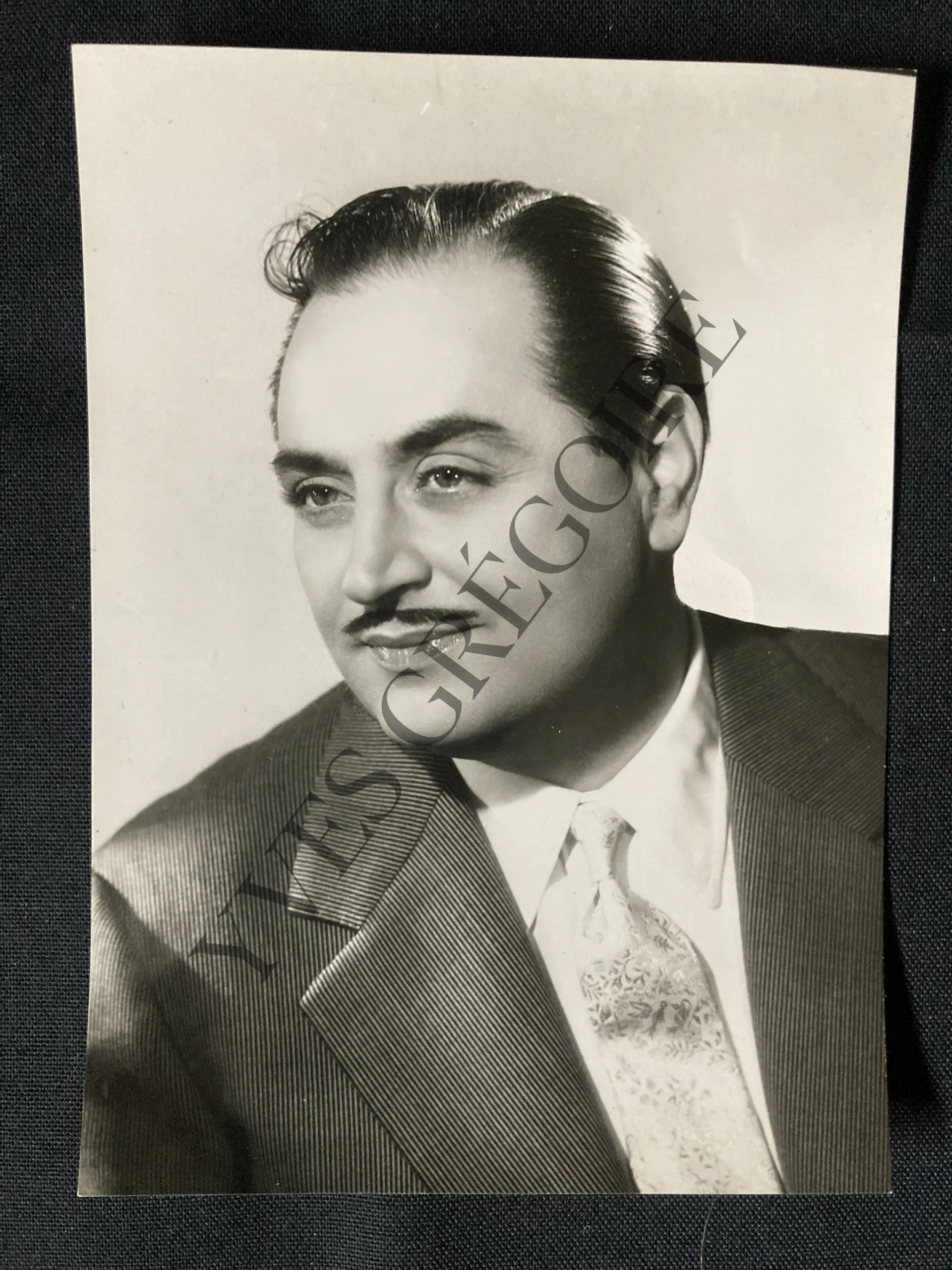
Dario Moreno was a Turkish-Jewish singer, pianist, composer, lyricist, and guitarist whose multilingual talents carried him to international stardom, most notably in France during the 1950s and 1960s. Born David Arugete in İzmir, Turkey, he became a fixture of the European entertainment scene, celebrated for his charismatic stage presence and a string of memorable songs. His 1961 hit Brigitte Bardot remains his best-known work, and his acting credits include the classic film The Wages of Fear (1953).
Moreno's career spanned music and cinema across Europe, and his ability to perform in multiple languages gave his work a distinctive international flavor. He died on December 1, 1968, in Istanbul, at the age of 47, leaving behind a legacy that continues to be honored, including a mural in his hometown and a biography published in 2022.
Early Life & Background
David Arugete was born into a poor Jewish family in İzmir, Turkey, on April 3, 1921. The city, with its cosmopolitan mix of cultures, shaped his early years, though details of his childhood remain scarce. He showed an early aptitude for music, teaching himself to play the guitar and piano. His passion for singing and performing emerged during his youth, and he began entertaining audiences in local venues.
As a young man, Moreno moved to Istanbul, where he worked as a singer and guitarist, slowly building a reputation. His big break came when he relocated to France in the early 1950s. There, his multilingual abilities, he sang in Turkish, French, Spanish, Italian, and other languages, set him apart. He started performing in Parisian cabarets and clubs, where his dynamic stage presence quickly caught the attention of audiences and industry figures alike.
Career Growth
Moreno's career took off in France, where he became a popular recording artist and performer. He appeared in the 1953 film The Wages of Fear, a critically acclaimed thriller that boosted his visibility. In 1961, he released his signature song Brigitte Bardot, a playful tribute to the French actress that became a hit across Europe and solidified his fame.
Throughout the 1960s, Moreno continued to record and perform, touring extensively and appearing in films such as Kill Me Gently (1967). He was known for his energetic live shows and his ability to connect with audiences regardless of language. His career was cut short by his sudden death in 1968, but his music remained popular, and a posthumous film credit came with Le Bal (1983). In recent years, his work has been reissued on streaming platforms, introducing him to new generations.
Career Timeline
Public Image & Style
Dario Moreno cultivated a persona of charm and sophistication, with a warm, engaging stage presence that made him a favorite among European audiences. He was seen as a symbol of cultural fusion, bridging his Turkish-Jewish heritage with French popular culture. His multilingual performances were a hallmark, and he was praised for his versatility and charisma. Media coverage often highlighted his stylish appearance and his ability to make any song his own.
Fans remember him as a beloved entertainer who brought joy through his music. His legacy has been kept alive by Turkish and Jewish communities, who celebrate his achievements as a source of pride. The mural in İzmir and the 2022 biography reflect the enduring affection for him.
Fame & Fandom (iFAMOUS Rankings)
Dario Moreno's fanbase is a living, if informal, community that thrives across generations and borders, particularly in Turkey and among the Turkish-Jewish diaspora. There is no formally documented fandom name; admirers are simply listeners and enthusiasts who keep his music alive through streaming platforms and cultural commemorations. His Spotify profile still draws over 300,000 monthly listeners, and posthumous album releases and reissues continue to surface, ensuring that new audiences discover his multilingual repertoire. The fan community's energy manifests through institutional remembrance rather than organized campaigns: the Turkish-Jewish newspaper Şalom has published multiple retrospectives, including a piece on the 51st anniversary of his death, and online forums occasionally spark discussions about his legacy. These acts of memory, rather than coordinated fan projects, define his devoted following.
In the pantheon of global fame, Dario Moreno's placement is a curious case. As of August 2026, iFANN's Global Fame Engine has evaluated his enduring cultural footprint but has not placed him in the published rankings, neither the Global Top 1,000 nor a Top-100 scope list. This unranked status is not a measure of his significance; rather, it reflects the engine's current algorithmic focus, which prioritizes contemporary signals. Moreno's fame, built on mid-century European stardom, remains substantial but niche in the modern digital landscape. His legend, however, persists through iconic moments: the famous photograph of him dancing the mambo with Brigitte Bardot, his role in the classic film The Wages of Fear, and his remarkable rise from poverty in İzmir to international acclaim. These stories, retold by fans and cultural historians alike, ensure that his name endures, even without a formal ranking.
Interesting Facts and Legends
Dario Moreno's birth name, David Arugete, is not widely known, as he adopted the stage name Dario Moreno early in his career. He was a polyglot, singing fluently in at least five languages, which was unusual for the time and contributed to his international appeal. He was also a skilled guitarist and pianist, often accompanying himself during performances. His song "Brigitte Bardot" was inspired by the actress, and he even danced with her in a famous photo opportunity. A mural was painted in İzmir in 2021 to mark his 100th birthday, and a biography, Izmirli Dario (Dario from Izmir), was published in 2022. Despite his fame, he remained connected to his Turkish roots, and his last wish was to be buried in İzmir.
Among the legends that surround his career, the story of his rise from a poor childhood in İzmir, where he reportedly sang at Bar Mitzvahs to earn money, is often retold as a reflection of his talent and determination. His role in the 1953 film The Wages of Fear is another iconic moment, showcasing his versatility beyond music. And his untimely death on December 1, 1968, at age 47, has become a defining element of his mythos, commemorated by fans and cultural institutions for decades.
Family & Personal Life
Details about Dario Moreno's family are limited. He was born to a Jewish family in İzmir, but his parents' names and occupations are not widely documented. He grew up in poverty, which shaped his early life and work ethic. There is no public record of a spouse or children, and his personal life remained largely private. He is remembered as a devoted son who maintained close ties to his family and community, even after moving to France.
Notable Connections
Dario Moreno is associated with French actress Brigitte Bardot, who inspired his hit song and with whom he shared a famous dance. He also worked with notable actors in The Wages of Fear, including Yves Montand and Véra Clouzot. Turkish producer and talent manager Erkan Özerman wrote a book about Moreno's life, reflecting his continued influence.
Relationships & Dating History
Death & Aftermath
Died
December 1, 1968 (aged 47)
Death Place
Unknown
Cause of Death
Unknown
Dario Moreno died on December 1, 1968, at the age of forty-seven. Authoritative records confirm this date and his birth year of April 3, 1921, establishing the timeline of his life as a singer, pianist, composer, lyricist, and guitarist. While historical context often associates his career with Paris or France, specific details regarding the exact location of his passing, the medical cause of death, or the circumstances surrounding his final days remain unverified in available contemporary news reports and police records.
The lack of primary source documents means that information regarding any police investigation, legal inquest, or estate handling connected to his death is absent from the record.
His filmography credits include works such as The Wages of Fear (1953), Kill Me Gently (1967), and Le Bal (1983). His song Brigitte Bardot remains a known hit, with album releases noted on streaming platforms as late as 2008 and 2018, ensuring his catalog found renewed life in digital collections long after his passing.
Net Worth (Estate Value)
Since Dario Moreno passed away in 1968, a traditional net worth figure is not applicable. However, his estate has continued to earn from music royalties, film residuals, and reissues. In recent years, his catalog has been digitally distributed, and his song Brigitte Bardot has found new audiences on streaming platforms. The estate's value is estimated to be modest, given the era of his work, but it remains a source of ongoing income. As of 2026, his music continues to be streamed regularly, with a notable presence on platforms like Spotify.
Awards & Accolades
View 2 records, honours and achievementsKnown For
Brigitte Bardot
1961 · Singer
The Wages of Fear
1953 · Actor
Kill Me Gently
1967 · Actor
Keywords
Sources
Quick Facts
- Profession
- singer, pianist, composer, lyricist, guitarist
- Born
- April 3, 1921
- Birthplace
- İzmir, Turkey
- Died
- December 1, 1968
- Death Place
- Istanbul, Turkey
- Gender
- Male
- Birth Sign
- Aries
Personal Details
- Full Name
- David Arugete
Filmography
3
Total
3
Film
0
TV
Frequently Asked Questions
Who was Dario Moreno?
When was Dario Moreno born and when did he die?
What was Dario Moreno's most famous song?
What films did Dario Moreno appear in?
Where was Dario Moreno from?
Join the community
fans discussing