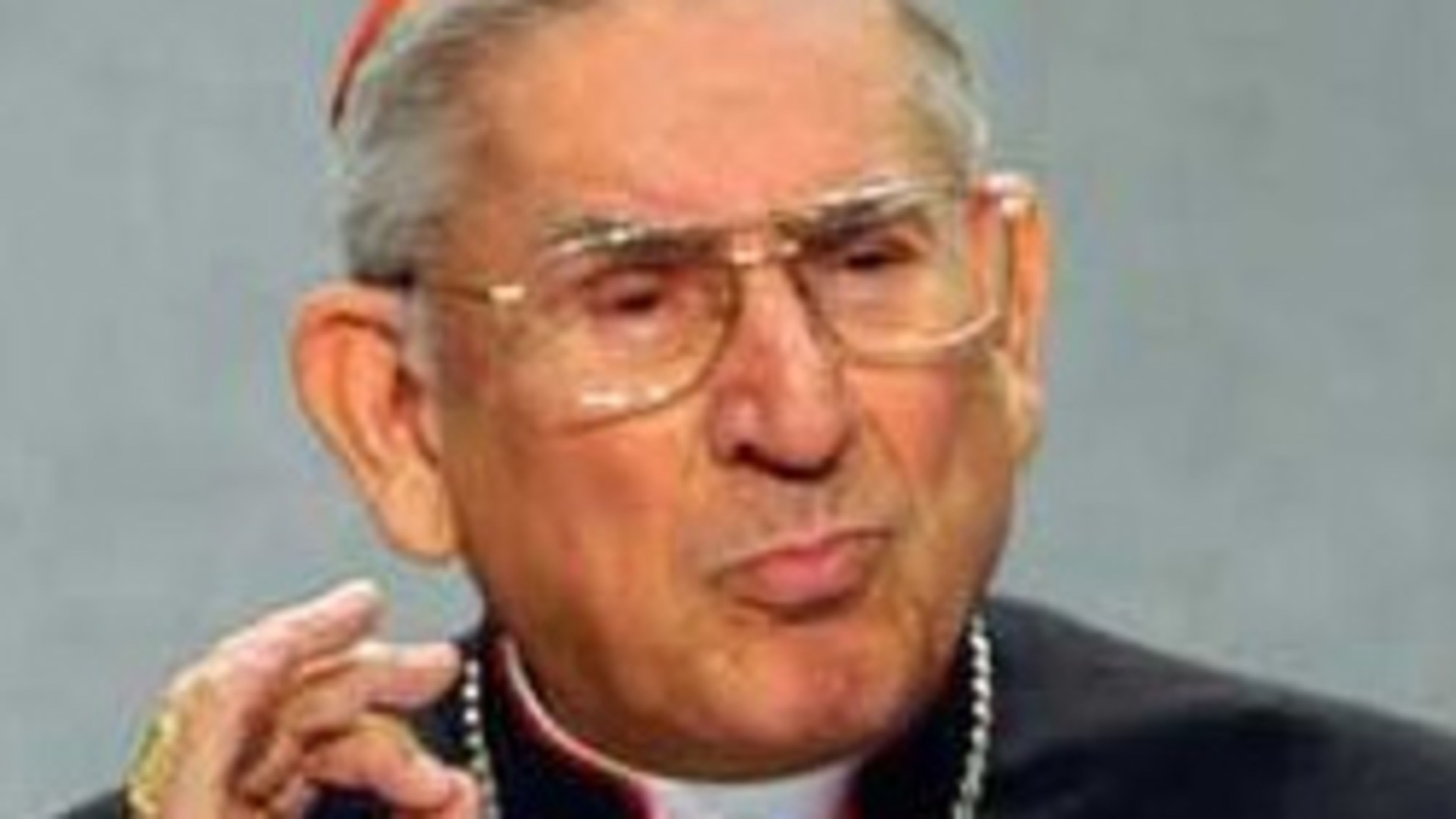
Darío Castrillón Hoyos
 Colombia
Catholic cardinal•Archbishop of Medellín
Also known as: Dario Castrillon Hoyos, Cardinal Castrillón
Birthday
July 4, 1929
Birth Sign
Cancer
Birthplace
Medellín, Colombia
Age
Died at 88
About
Darío del Niño Jesús Castrillón Hoyos was a Colombian cardinal of the Catholic Church whose career spanned nearly a century, marked by significant influence in Vatican administration, controversial peace negotiations in Colombia, and a legacy defined by his defense of traditionalist liturgy. Born on July 4, 1929, in Medellín, Colombia, he died on May 18, 2018, in Rome, Italy, at the age of 88.
He rose through the ranks to become Prefect of the Congregation for the Clergy and President of the Pontifical Commission Ecclesia Dei. His service was characterized by a staunch defense of the Latin Mass and complex diplomatic efforts that included secret negotiations with drug lord Pablo Escobar. While revered by traditionalists, his later years were overshadowed by controversies regarding the Society of St. Pius X and allegations related to sexual abuse cover-ups.
Early Life & Background
Darío del Niño Jesús Castrillón Hoyos entered the world on July 4, 1929, in Medellín, the second-largest city in Colombia. He was born into a devout family that deeply influenced his spiritual path. Driven by a strong religious vocation, he joined the seminary system at a young age. His early formation focused on theology and canon law, laying the groundwork for a life dedicated entirely to the priesthood.
Ordained a priest on June 29, 1953, he began his ministry within the Archdiocese of Medellín. Before achieving global prominence, he served in various pastoral roles across the Colombian church. He worked as a professor of theology and canon law, eventually becoming the rector of the major seminary in Medellín during the 1960s and 1970s. This period was defined by academic rigor and the development of administrative skills that would later serve him well in the Vatican.
His reputation for competence grew steadily within the ecclesiastical hierarchy. By the mid-1970s, he had moved beyond local parish duties to take on leadership positions. In 1976, he was appointed Archbishop of Manizales, marking his transition from educator to high-ranking bishop. These formative years in Colombia shaped his conservative theological outlook and prepared him for the complex political and religious challenges that awaited him on the international stage.
Career Growth
Castrillón Hoyos's career trajectory moved from local Colombian service to the highest echelons of the Vatican. After serving as Archbishop of Manizales, he was transferred in 1983 to lead the Archdiocese of Medellín, succeeding Cardinal Luis Concha Córdoba. His leadership there solidified his standing as a key figure in the Colombian church.
In 1991, Pope John Paul II appointed him Secretary of the Congregation for Bishops. Two years later, in 1996, he was elevated to Prefect of the Congregation for the Clergy, a role he held until 2006. In this capacity, he oversaw the formation and discipline of priests and deacons worldwide. His tenure was marked by a firm adherence to traditional teachings and a focus on clerical discipline.
On February 21, 1998, Pope John Paul II created him a Cardinal Priest with the title of Santi XII Apostoli. In 2000, he was appointed President of the Pontifical Commission Ecclesia Dei, tasked with reconciling traditionalist Catholics loyal to the pre-Vatican II Latin Mass with the Holy See. He held this position until 2009, when he resigned upon reaching the mandatory retirement age of 80. Even after retiring from the Congregation for the Clergy, he remained active in supporting traditionalist causes until his death.
Career Timeline
Public Image & Style
Castrillón Hoyos was portrayed as a conservative, hardline administrator who was unafraid to engage in difficult political negotiations. Media coverage in his later years focused heavily on the controversy surrounding the SSPX and the abuse scandal, painting a picture of a man whose influence waned amidst modern scandals. He was known for his dignified demeanor and clerical attire, often photographed in his red cardinal's robes.
His public image was polarized. To traditionalists, he was a defender of the Tridentine Mass and a brave negotiator who saved lives in Colombia. To critics and victims' advocates, he represented the Church's failure to address sexual abuse and its tolerance of anti-Semitic rhetoric. This duality defined his legacy in the eyes of the public.
Fame & Fandom
Darío Castrillón Hoyos never cultivated a fandom in the modern sense. His following was institutional and ideological, rooted in traditionalist Catholic circles that admired his defense of the Latin Mass and his efforts to reconcile the Society of St. Pius X with Rome. No formal fandom name exists; his supporters were simply traditionalist Catholics and, in Colombia, nationalists who took pride in his rank. Engagement took the form of devotional practices, large Tridentine Mass celebrations, pastoral visits, and the like, rather than fan campaigns or meet-and-greets.
As of September 2026, iFANN's Global Fame Engine has evaluated Darío Castrillón Hoyos, but he does not currently hold a placement in the published rankings, whether in the Global Top 1,000 or any Top-100 scope list. This absence reflects a legacy that, while significant in ecclesiastical history, has not translated into broad contemporary fame. His name surfaces in obituaries and discussions of church controversies, but his renown remains confined to specific religious and historical contexts.
Interesting Facts and Legends
Colombian media famously labeled his fall from grace 'De papable a lapidado,' translating to 'From papable to pelted.' He was considered a serious candidate for Pope in the 2005 conclave, but his chances evaporated after the release of a 2001 letter praising a bishop who failed to report an abusive priest. Another legend involves his undercover mission to persuade drug lord Pablo Escobar to surrender. While specific details about disguises are often embellished, his documented involvement in peace negotiations during Colombia's narco era is well-established.
His role as the Vatican's lead negotiator with the SSPX led to the controversial 2009 lifting of excommunications of four bishops, including a Holocaust-denier. He also championed the Tridentine Mass, drawing large crowds of traditionalists. After his death in 2018, a Colombian analysis described him as a 'prince' of the church in purgatory, reflecting his isolated end.
Notable Quotes
“The goal was to heal a schism, not to support anti-Semitism.”
“Dialogue is necessary even with the worst criminals to save lives.”
Family & Personal Life
As a lifelong cleric of the Catholic Church, Darío Castrillón Hoyos took vows of celibacy. Consequently, he had no romantic relationships, marriages, or children. His life was dedicated entirely to the priesthood and the administration of the Church. There are no records of dating history or domestic partnerships, as such activities were incompatible with his office and vows. He remained single throughout his life.
He was born into a devout family in Medellín, though specific details about his parents and siblings remain less prominent in public records compared to his ecclesiastical achievements. His family background provided the foundation for his deep religious vocation, but his adult life was defined by his service to the Church rather than a domestic household.
Notable Connections
Relationships & Dating History
Darío Castrillón Hoyos took vows of celibacy upon entering the priesthood. As a cardinal of the Catholic Church, he was prohibited from having romantic relationships, marriages, or children. His life was dedicated entirely to the Church, and there are no records of dating history or domestic partnerships. He remained single throughout his entire life, a status consistent with his high-ranking office and religious vows.
Death & Aftermath
Died
May 18, 2018 (aged 88)
Death Place
Rome, Italy
Cause of Death
Liver disease (hepatic illness)
Cardinal Darío Castrillón Hoyos died early on Friday, May 18, 2018, in Rome, Italy, at the age of 88. Reports from Nazaret TV place the time of death at 1:15 AM, though some sources vary slightly on the exact hour. The official cause of death was reported as a liver disease, a determination established through statements from Vatican officials and family members rather than forensic examination. He spent his final days in Rome where he had resided for decades following his retirement from active Vatican administration and made no public appearances after his health declined.
A funeral Mass was celebrated in St. Peter's Basilica within the Vatican, adhering to standard protocol for a cardinal before his remains were returned to Medellín for interment in the Cathedral of Our Lady of the Rosary. Formal tributes flowed from the highest echelons of the Catholic Church following the passing, with Pope Francis sending a telegram to express sorrow over the loss of a faithful servant. The College of Cardinals and various bishops' conferences worldwide issued messages of mourning, while in Colombia, his native land, he was remembered as a national hero for his role in peace negotiations involving Pablo Escobar.
Unlike secular figures who might attract fan vigils or streaming surges, the reaction remained confined to church liturgies, eulogies, and articles in religious press highlighting his conservative stance and controversial support for traditionalist groups. Retrospective media coverage highlighted his controversial legacy, particularly his role in negotiating with Pablo Escobar and his defense of the Society of Saint Pius X. The Vatican continued to reference his work in the context of the Ecclesia Dei commission, which he led until his resignation in 2009.
Net Worth (Estate Value)
$0
iFANN Editorial Team estimate
As a lifelong cleric, Cardinal Castrillón Hoyos did not accumulate personal wealth in the manner of a celebrity or business tycoon. He lived according to the modest lifestyle expected of a high-ranking church official. Research by the iFANN Editorial Team puts his fortune at around $0. He owned no private fortune, real estate, or business ventures.
Upon his death, his estate consisted primarily of personal effects and ecclesiastical property managed by the Vatican and the Archdiocese of Medellín. There is no public record of a multi-million dollar estate or posthumous revenue streams from royalties or licensing deals. His financial legacy is measured in institutional influence rather than monetary value. The Vatican and the Church managed all assets associated with his office, ensuring they remained within the institution rather than passing to private heirs.
Awards & Accolades
View 2 records, honours and achievementsKnown For
Prefect of the Congregation for the Clergy
1996-2006 · Vatican Official
Negotiations with Pablo Escobar
1980s-1990s · Mediator
President of Ecclesia Dei
2000-2009 · Vatican Official
Keywords
Sources
Quick Facts
- Profession
- Catholic priest, Catholic bishop
- Born
- July 4, 1929
- Birthplace
- Medellín, Colombia
- Died
- May 18, 2018
- Death Place
- Rome, Italy
- Gender
- Male
- Birth Sign
- Cancer
Personal Details
- Full Name
- Darío del Niño Jesús Castrillón Hoyos
- Children
- Education
- Seminary of Medellín; Pontifical Gregorian University, Rome
Frequently Asked Questions
What caused Cardinal Darío Castrillón Hoyos to die?
Did Cardinal Castrillón Hoyos have any children or a wife?
Why is Cardinal Castrillón Hoyos controversial?
Was Cardinal Castrillón Hoyos a candidate for Pope?
Where was Cardinal Castrillón Hoyos buried?
Similar People
Join the community
fans discussing