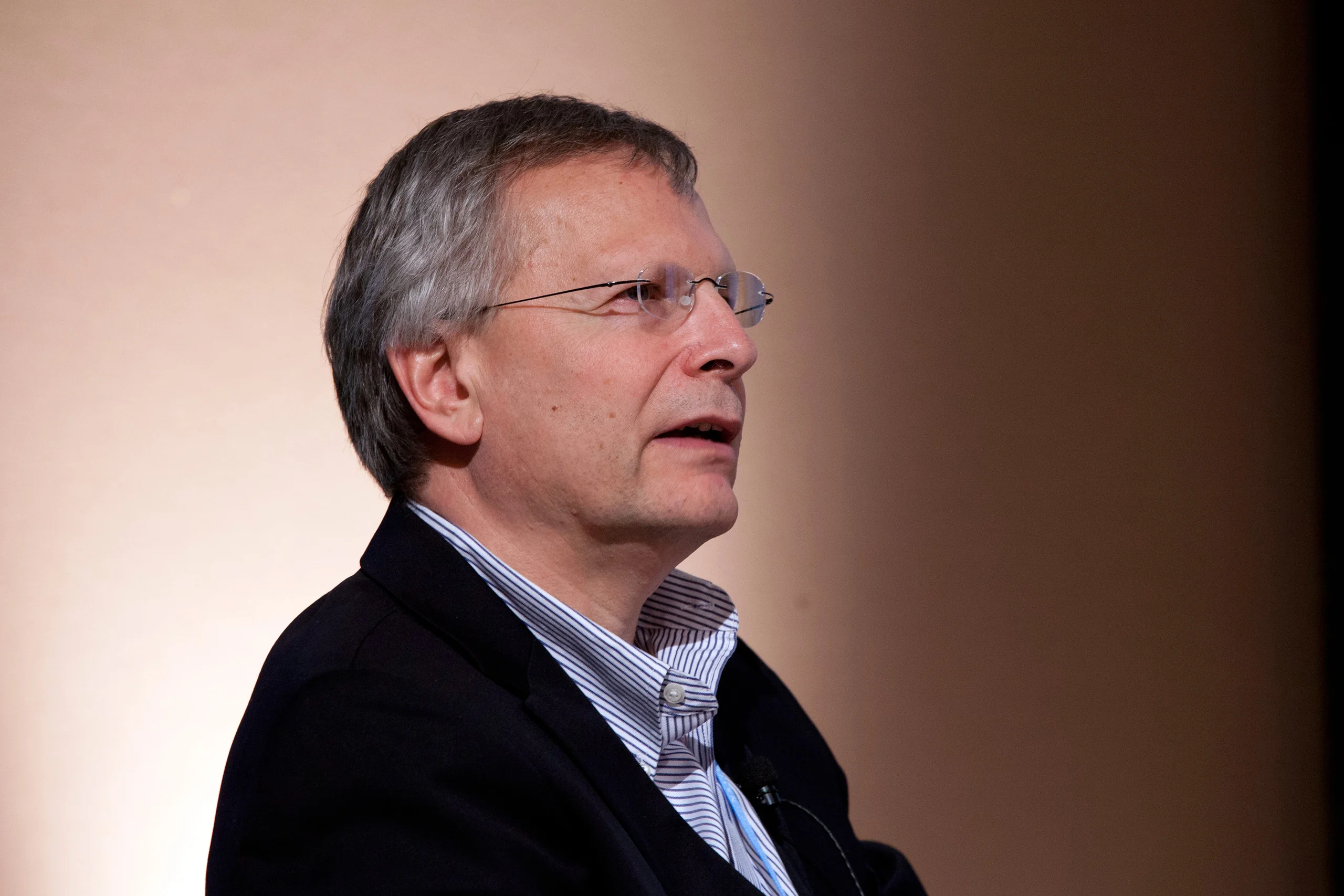
Dani Rodrik
 Turkey
Also known as: Daniel Rodrik, D. Rodrik
Birthday
August 14, 1957
Birth Sign
Leo
Birthplace
Istanbul, Turkey
Age
69 years old
About
Dani Rodrik is a Turkish-American economist and the Ford Foundation Professor of International Political Economy at Harvard University's John F. Kennedy School of Government. He is widely recognized as one of the world's leading authorities on international economics, economic development, and the political economy of globalization. His work focuses on why some nations succeed economically while others struggle, advocating for context-specific policies rather than the standardized approaches often promoted by international institutions.
Before joining Harvard in 2015, Rodrik served as the Albert O. Hirschman Professor of the Social Sciences at the Institute for Advanced Study in Princeton. His academic career has been defined by a rigorous analysis of the tensions between national policy-making and global integration. He is best known for formulating the "political trilemma of the world economy," a framework that argues countries cannot simultaneously achieve hyper-globalization, national sovereignty, and democratic politics.
Early Life & Background
Dani Rodrik was born on August 14, 1957, in Istanbul, Turkey, into a middle-class family. His father worked as a textile manufacturer, an occupation that likely exposed Rodrik to the complexities of trade and industry from a young age. This early exposure to the practical realities of business helped shape his future interest in how economic policies affect real-world outcomes. While specific details about his childhood schooling remain less documented than his later achievements, his intellectual trajectory became clear during his undergraduate years.
He attended Boğaziçi University in Istanbul, then known as Robert College, where he earned his degree in economics in 1979. The rigorous academic environment there provided him with a strong foundation in economic theory. Seeking advanced training, Rodrik moved to the United States to pursue graduate studies. He enrolled at the Massachusetts Institute of Technology (MIT), one of the world's premier institutions for science and engineering. At MIT, he immersed himself in the study of economics under the guidance of prominent scholars who were shaping the field at the time.
Rodrik completed his Master of Arts in 1980 and finished his Doctor of Philosophy in Economics in 1983. His doctoral research laid the groundwork for his lifelong focus on development economics and the role of institutions in economic growth. These formative years at MIT equipped him with the analytical tools necessary to challenge conventional wisdom. Upon completing his PhD, he immediately entered academia, joining the faculty at the University of California, Berkeley, where he began to establish his reputation as a serious scholar capable of bridging theoretical models with empirical reality.
Career Growth
Rodrik's professional journey began in 1983 when he joined the University of California, Berkeley, as an assistant professor of economics and public policy. He remained at Berkeley until 2000, spending nearly two decades establishing himself as a leading voice in development economics. During this period, he gained prominence for his research on industrialization and the so-called "East Asian Miracle," challenging the prevailing view that free markets alone were sufficient for rapid economic growth.
In 2000, Rodrik moved to Princeton University to serve as a professor of international finance and economics at the Woodrow Wilson School of Public and International Affairs. His tenure there lasted until 2011, allowing him to expand his influence within the broader policy community. A pivotal moment arrived in 2011 when he published The Globalization Paradox: Democracy and the Future of the World Economy. The book became a seminal text in the field, articulating his famous political trilemma theory and sparking intense debate among policymakers and scholars worldwide.
From 2011 to 2015, Rodrik held the prestigious Albert O. Hirschman Professorship at the Institute for Advanced Study in Princeton. This role allowed him to step back from teaching obligations to focus on broader theoretical questions regarding the global economy. In 2015, he returned to Harvard University as the Ford Foundation Professor of International Political Economy. Since then, he has continued to publish influential works, including Economics Rules: The Rights and Wrongs of the Dismal Science in 2018. As of 2026, he remains highly active, publishing regular columns on Project Syndicate and VoxEU, where he addresses contemporary issues ranging from China's economic model to the impact of artificial intelligence on labor markets.
Career Timeline
Public Image & Style
Rodrik projects the image of a rigorous, independent thinker who is willing to challenge both the left and the right. He is known for his clarity of thought and his ability to distill complex economic concepts into accessible arguments without sacrificing depth. His writing style avoids jargon where possible, aiming to reach policymakers and students alike. Media profiles describe him as a thoughtful, reserved intellectual rather than a figure with a distinctive aesthetic or performative flair. His public presence is defined by substantive contributions to debates on globalization and development, earning him respect within academic circles and among those interested in economic policy.
Fame & Fandom (iFAMOUS Rankings)
Dani Rodrik commands a distinct sphere of global attention, his influence measured not in viral moments but in the sustained weight of his economic theories across academic and policy circles. According to the iFANN Global Fame Rankings, he holds a precise position in the hierarchy of public figures, currently standing as the 11th most famous person from Turkey, a placement that has remained steady through recent assessment cycles. This ranking reflects a consistent level of visibility driven by his contributions to international political economy rather than transient media spikes. The data indicates that while his name is recognized within specific professional domains, it does not translate into the broad, celebrity-level fame seen among entertainers or politicians with mass-market appeal. His audience consists primarily of scholars, students, and policymakers who engage with his work on globalization and development, creating a following defined by intellectual respect rather than fanatical devotion. There is no formal name for this group; the community surrounding his ideas operates without a unified brand or organized identity typical of pop culture fandoms. While he maintains a presence on social platforms, his communication remains focused on professional discourse, directing followers to his Bluesky account for updates rather than engaging in the interactive rituals common to celebrity fanbases. The absence of a named fandom underscores the nature of his career: a life dedicated to rigorous analysis and policy debate rather than the cultivation of a public persona designed for mass consumption.
Interesting Facts and Legends
Dani Rodrik once described himself as a manufacturing skeptic in a notable talk titled How I Became a Manufacturing Skeptic, reflecting his evolving views on industrial policy over the years. This shift highlights his willingness to update his theories based on new evidence rather than clinging to dogma. His book The Globalization Paradox has been translated into more than 20 languages, making it a staple in university curricula across the globe. Unlike many public intellectuals who rely on social media virality, Rodrik made a strategic move in 2026 to leave X (formerly Twitter) and redirect his audience to Bluesky (@drodrik.bsky.social). This decision underscores his preference for thoughtful discourse over the contentious nature of mainstream platforms. His research on the East Asian Miracle challenged the standard Washington Consensus narrative that free markets were the only path to development.
Notable Quotes
“There is no one-size-fits-all solution to economic development.”
“The choice is not between globalization and sovereignty, but between different forms of governance.”
“We need a new economics for the middle class, the global south, and the rest.”
Family & Personal Life
Dani Rodrik maintains a notably private personal life compared to many public figures. There is no public record of his marriage, divorce, or romantic relationships. He has never publicly confirmed a spouse or partner in any credible source, interview, or biography. Consequently, there is no information available regarding children or dating history. Reports suggest he keeps his domestic life strictly out of the spotlight, focusing entirely on his academic and policy work. His father was a textile manufacturer in Istanbul, which provided an early glimpse into the world of commerce, but details about other family members remain scarce. As of 2026, based on all available public records, he appears to be single or simply chooses not to disclose his relationship status.
Notable Connections
Relationships & Dating History
Dani Rodrik maintains a notably private personal life compared to many public intellectuals. There is no public record of his marriage, divorce, or romantic relationships. Unlike celebrities or politicians who frequently disclose their family status in media profiles, Rodrik has never publicly confirmed a spouse or partner in any credible source, interview, or biography. Consequently, there is no information available regarding dating history, children, or current relationship status. As of 2026, based on all available public records, he appears to be single or strictly private regarding his domestic life. No rumors of high-profile flings or engagements have been substantiated by multiple credible outlets. His focus remains firmly on his academic work and public policy commentary.
Salary, Net Worth In 2026
$3 Million
iFANN Editorial Team estimate
As an academic economist, Dani Rodrik's financial standing is derived primarily from his salary at Harvard University, royalties from his books, and lecture fees. Unlike celebrities or corporate executives, his wealth is stable and steady rather than volatile. Estimates suggest his net worth falls within the range of $2 million to $5 million, which is typical for senior tenured professors at elite US institutions who have authored best-selling academic texts. Research by the iFANN Editorial Team puts his fortune at around $3 million as of 2026. This figure reflects his long-standing career in higher education and the enduring demand for his publications on globalization and development. Specific details about his investments or assets are not publicly disclosed, but his financial profile aligns with that of a respected intellectual rather than a commercial mogul.
Awards Won (2)
Dani Rodrik has received numerous prestigious accolades in the field of economics and public policy. He was awarded the Leontief Prize for Advancing the Frontiers of Economic Thought in 2002 by Tufts University. In 2013, he was elected a Fellow of the American Academy of Arts and Sciences, and in 2014, he joined the ranks of the Econometric Society as a Fellow. He also received the Distinguished Contribution to Economic Policy award from various academic bodies in 2015. Additionally, he holds honorary doctorates from several universities, including the University of Paris-Dauphine and the University of Lisbon.
2002 · Economic Thought
General Contributions to Development Economics
2015 · Policy
General Contributions to Economic Policy
Known For
The Globalization Paradox
2011 · Author
Economics Rules
2018 · Author
Shared Prosperity in a Fractured World
2026 · Author
Keywords
Sources
Quick Facts
- Profession
- economist, university teacher
- Born
- August 14, 1957
- Birthplace
- Istanbul, Turkey
- Gender
- Male
- Birth Sign
- Leo
Personal Details
- Full Name
- Dani Rodrik
- Children
- Education
- Boğaziçi University (BA), MIT (MA, PhD)
Frequently Asked Questions
Who is Dani Rodrik?
What is Dani Rodrik's most famous book?
Is Dani Rodrik married?
Where did Dani Rodrik go to school?
What is Dani Rodrik's latest book?
Similar People
Join the community
fans discussing