Daidō Moriyama
 Japan
photographer•photojournalist•writer
Also known as: Moriyama Daidō, 森山大道
Birthday
October 10, 1938
Birth Sign
Libra
Birthplace
Osaka Prefecture, Japan
Age
88 years old
About
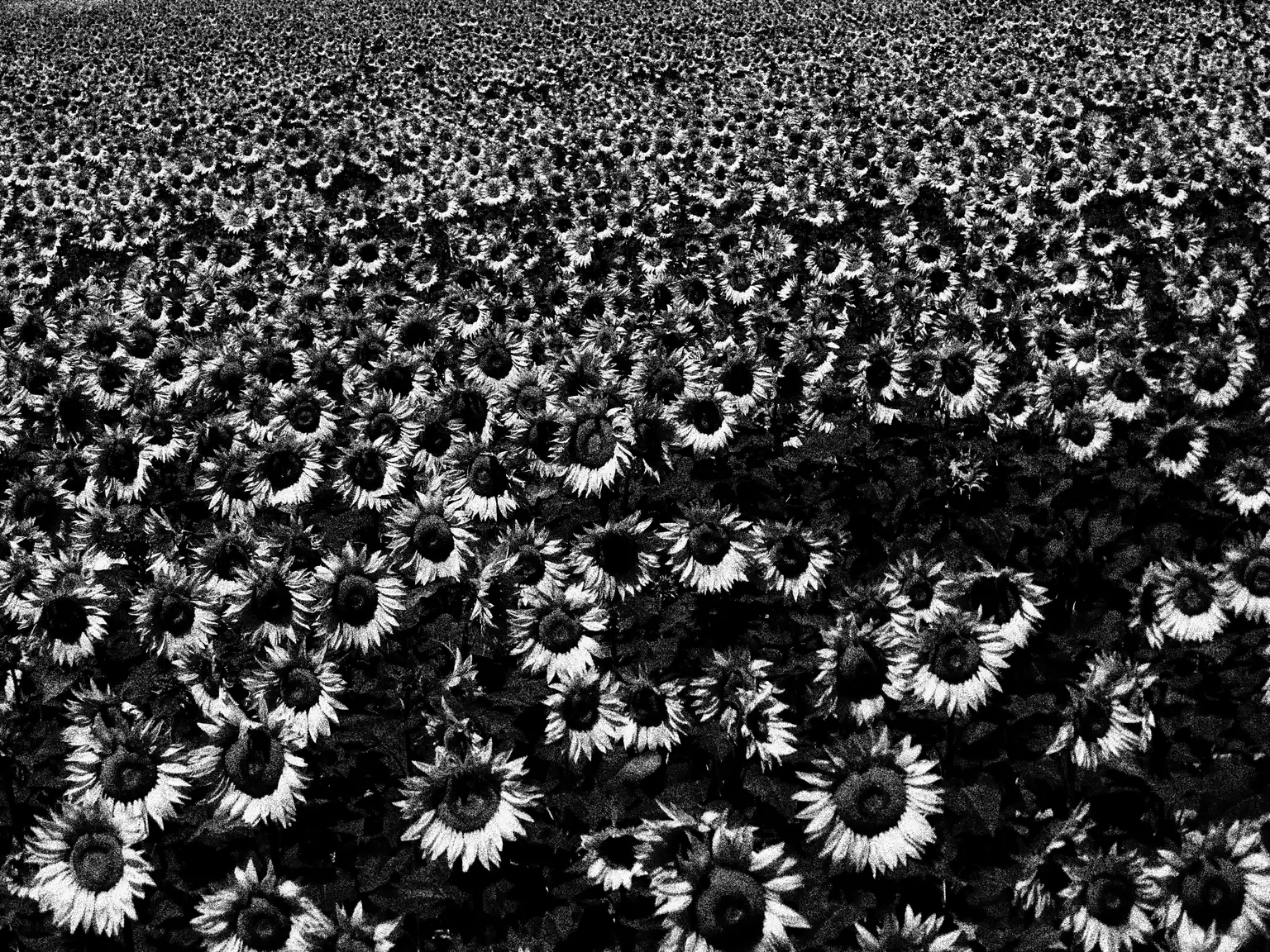
Daidō Moriyama is a preeminent Japanese photographer and writer born in Osaka Prefecture. Now 87 years old, he stands as one of the most influential figures in postwar photography, globally celebrated for his rebellious, high-contrast black-and-white street images that reject technical perfection in favor of raw emotion. His work features extreme grain, erratic angles, motion blur, and a "shock" aesthetic that prioritizes visceral feeling over polished composition. He has published over 150 photobooks and maintains an active presence in the global art world through exhibitions and publications. His distinctive style, often described as confrontational and chaotic, has influenced generations of artists who seek to document reality without filtering it through conventional aesthetics.
Early Life & Background
Daidō Moriyama was born on October 10, 1938, in Osaka Prefecture, a city that would later become the primary setting for much of his photographic work. His childhood unfolded during the turbulent post-war era of Japan, a time marked by rapid reconstruction and social upheaval. These conditions fostered a fascination with the gritty, unpolished reality of everyday life rather than idealized imagery. Before establishing his own reputation, Moriyama worked as an assistant to the renowned photographer Eikoh Hosoe. This role proved pivotal in shaping his artistic philosophy. Hosoe was a co-founder of the avant-garde collective Vivo, which actively sought to break away from traditional documentary styles. Through this mentorship, Moriyama absorbed radical ideas about the camera's purpose, learning to view it not merely as a tool for recording facts but as an instrument for personal expression and confrontation.
He attended Osaka University of Arts but dropped out before completing his degree. This decision reflected his growing impatience with formal academic constraints and his desire to explore photography on his own terms. During these early years, he began experimenting with high-contrast techniques and unconventional compositions that would eventually define his signature style. The chaotic energy of Osaka provided endless subject matter, fueling his desire to capture the city's hidden textures and shadows. In the late 1950s, he joined the Vivo group alongside Hosoe, marking his first significant step into the avant-garde scene.
Career Growth
Moriyama's career took a definitive turn in the late 1950s when he joined the Vivo group alongside Hosoe. By 1961, he had published his first book, Nihon no Shashin, though it initially received little attention. The true breakthrough arrived in 1968 with the release of Japan: A Photo Theater. This collection rejected clean composition entirely, presenting instead a fragmented vision of urban decay and reconstruction that signaled a shift toward what would become known as the "Provoke" style. In 1969, he launched the Accident series in Asahi Camera magazine. Rather than taking new photographs, he used existing media images, cropping and enlarging them to question the nature of representation and truth.
This experimental approach culminated in 1972 when he co-founded the influential magazine Provoke with Takuma Nakahira and Kikuji Kawada. Their manifesto championed a grainy, out-of-focus aesthetic that challenged the established norms of the medium. A defining moment occurred in 1971 when Moriyama traveled to New York City. Over six weeks, he produced iconic images of the city's gritty underbelly, capturing the economic struggle and social upheaval of the era using over 1,000 rolls of film. These photos are now considered some of the most important documentation of 1970s New York street life.
His subsequent works, including Hunter (1974) and the Dog & Meshitts series, continued to explore the human condition through candid, often disturbing imagery. From the 1980s onward, Moriyama expanded his scope internationally, documenting cities like Buenos Aires, London, and Paris. Major institutions recognized his impact with solo exhibitions at the Museum of Modern Art in New York, the Tate Modern in London, and the Centre Pompidou in Paris. In 2012, he won the International Center of Photography Infinity Award for Lifetime Achievement, followed by the prestigious Hasselblad Award in 2019. As of 2026, he remains active, with major exhibitions and publications continuing to be released globally.
Career Timeline
Public Image & Style
Moriyama is portrayed as a rebel, a loner, and a visionary within the art world. Media outlets describe him as untamed, visceral, and unpredictable. His public voice is minimal, often conveyed through his photographs rather than interviews. He is seen as an anti-establishment figure who values the accident and the flaw over technical perfection. His appearance often reflects his philosophy; he is known for wearing simple clothing and sunglasses, reflecting an "anti-style" that mirrors his photographic approach. Critics note that his work challenges viewers to confront the uncomfortable aspects of reality rather than seeking comfort in beauty. This stance has cemented his reputation as a fearless explorer of the urban landscape. TIME Magazine listed him among the "100 Most Influential People in the World" in 2007, solidifying his status beyond just the photography niche.
Fame & Fandom (iFAMOUS Rankings)
iFANN has not yet collected fame data for Daidō Moriyama. He is not featured on the September 2026 iFAMOUS Rankings flagship list. While he lacks a formal ranking in current celebrity metrics, his standing in the art world remains undisputed through decades of critical acclaim and institutional recognition. Rolling Stone frequently cites him in lists of "Greatest Photographers of All Time," often ranking him within the top 10 for street photography. Aperture regularly features his work in "The 100 Best Photographs of the 20th Century." There is no formal fandom name for Moriyama's following. His audience consists primarily of street photography enthusiasts, fine art collectors, and students of visual culture. These followers are deeply engaged with his work, often organizing viewings of his documentaries and attending exhibitions to experience his prints firsthand. Inside jokes among fans frequently reference his mantra to shoot without looking through the viewfinder, treating it as a badge of honor for those who embrace the chaotic spirit of his method.
Interesting Facts and Legends
Daidō Moriyama is famous for shooting without looking through the viewfinder, relying entirely on instinct and intuition. This method became a legendary practice among street photographers, symbolizing his rejection of technical control. He often describes his work as a "collision" between the photographer and the environment rather than a deliberate construction. He has stated that he shoots because he wants to see what he does not know, prioritizing the unknown over the familiar. His obsession with stray dogs is a recurring theme in his portfolio, particularly in the series Dog & Meshitts. Fans associate this motif with his empathy for the marginalized and the "outsider" status shared by both the photographer and his subjects.
The formation of Provoke in 1968 is often cited as a legendary moment where three young photographers declared war on polished aesthetics. Their collaboration resulted in a visual language that still influences modern photography today. Moriyama has also been known to carry multiple cameras simultaneously, switching between them rapidly to capture different perspectives in split seconds. He famously used a variety of cameras, including the Leica M3 and Ricoh GR. In April 2026, he was featured in *Blind Magazine* discussing "Photography as Collision," emphasizing his continued relevance in the digital age. A new exhibition titled *Ink* was showcased at Hamiltons Gallery in October 2026, focusing on his latest ink-based prints.
Notable Quotes
“I shoot because I want to see what I don't know.”
“If you look through the viewfinder, you lose the feeling of the street.”
“Photography is a collision.”
“I don't care about beauty. I care about the truth.”
Family & Personal Life
Daidō Moriyama maintains a fiercely private personal life and rarely discusses his family or romantic history in public interviews. While he keeps his domestic life out of the spotlight, he has a dog that appears frequently in his work, serving as a recurring motif in series like Dog & Meshitts. There is no information suggesting he has children. He has never publicly confirmed a partner, nor have there been any widely reported affairs or divorces. The lack of public relationship data is consistent with his persona as a reclusive artist who keeps his private world separate from his public image. As of 2026, Moriyama is widely considered single and unmarried, focusing entirely on his art and travel.
Notable Connections
Eikoh Hosoe, Takuma Nakahira, Kikuji Kawada, William Klein
Relationships & Dating History
Daidō Moriyama is known for maintaining a fiercely private personal life. Unlike many celebrities, he rarely discusses his family or romantic history in public interviews. There are no verified public records of marriages, engagements, or long-term romantic relationships documented in credible sources. He has never publicly confirmed a partner, nor have there been any widely reported affairs or divorces. While he has a dog that appears frequently in his work, there is no information suggesting he has children. As of 2026, Moriyama is widely considered single and unmarried, focusing entirely on his art and travel. The lack of public relationship data is consistent with his persona as a reclusive artist who keeps his private world separate from his public image.
Salary, Net Worth In 2026
$10 Million
iFANN Editorial Team estimate
Exact net worth figures for Daidō Moriyama are not publicly disclosed due to his privacy. However, based on his decades of prolific output, museum acquisitions, and auction results, research by the iFANN Editorial Team puts his fortune at around $10 million as of 2026, with estimates ranging between $5 million and $15 million USD. This estimate is derived from several revenue streams. His primary market sales through galleries like Pace/MacGill in New York and Galerie Nagata in Tokyo contribute significantly, with individual prints often selling for $5,000 to $20,000. Secondary market auctions for rare vintage prints further bolster his financial standing. Additionally, fees from major museum shows and licensing deals add to his income.
Moriyama has published over 150 photobooks globally, creating a steady stream of royalties. Real estate holdings in Japan likely form part of his asset base, though specific details remain unknown. The increasing demand for vintage prints and the value of his extensive archive suggest a stable or growing financial trajectory. Unlike many celebrities, his wealth comes from the art market rather than commercial endorsements or mainstream entertainment ventures. He holds the Guinness distinction for the record-breaking number of photobooks published by a single photographer.
Awards Won (6)
Daidō Moriyama has received numerous prestigious awards throughout his career, including the Kodak Medal in 1993, the Order of the Rising Sun in 2003, and an Honorary Doctorate from the University of Tokyo in 2008. He won the International Center of Photography Infinity Award for Lifetime Achievement in 2012 and the prestigious Hasselblad Award in 2019. He also received an Honorary Degree from the University of the Arts London in 2020.
1993 · Photography
2003 · National Honor
Known For
Japan: A Photo Theater
1968 · Photographer
Provoke Magazine
1968 · Co-founder
Hunter
1974 · Photographer
Farewell Photography
1972 · Author/Photographer
Keywords
Sources
Quick Facts
- Profession
- photographer, photojournalist, writer
- Born
- October 10, 1938
- Birthplace
- Osaka Prefecture
- Gender
- Male
- Birth Sign
- Libra
Personal Details
- Full Name
- Daidō Moriyama
- Children
- Education
- Osaka University of Arts (dropped out)
Frequently Asked Questions
What is Daido Moriyama known for?
Which camera did Daido Moriyama use?
What is Daido Moriyama's real name?
Who is the most famous Japanese street photographer?
Is Daido Moriyama married?
Similar People
Join the community
fans discussing