 Italy
Italy“Panahi's film is a masterpiece of restraint. It tells the story of a man who has nothing left to lose, and in that loss, he finds a terrible freedom.”
A.O. Scott
The New York Times
In the scorching heat of Tehran, a young pizza delivery driver named Hussein navigates a city split violently between rich and poor. He rides his motorcycle through narrow alleys and wide boulevards, delivering food to wealthy families while living in crushing poverty himself. His only goal is to save enough money for a gold ring to marry the woman he loves, a dream that feels increasingly out of reach as prices rise and wages stay low.
Jafar Panahi directs this stark social realist drama with a camera that lingers on the details of daily struggle. The film opens quietly but builds tension as Hussein finds a leather purse left behind by a customer. Inside are receipts from an exclusive jewelry store, offering him a chance to buy the ring he has always wanted. This single moment shifts the story from a character study into a tense thriller about desperation.
Stream
Availability and pricing can change. Confirm on the provider's site before purchasing.
Hussein moves through Tehran with a quiet intensity that masks a growing internal storm. He delivers pizzas to high-rise apartments where families ignore him, then returns to crowded neighborhoods where neighbors share their meager resources. The contrast between these worlds defines his existence. He sees cars parked outside luxury shops while he struggles to afford a meal. His interactions with others highlight the invisible barriers placed before men like him. A jeweler dismisses his questions about rings with a wave of his hand. Fellow workers joke about their misfortunes but offer no real help. These small rejections pile up over time, wearing down his patience.
The turning point comes when Hussein picks up a leather purse abandoned by a wealthy patron. He hesitates, knowing taking it is wrong, but the sight of the jewelry store receipts inside tempts him. The receipts prove the owner spent thousands on gold items. For a man who earns barely enough to eat, this represents a lifetime of work compressed into a single bag. He takes the money needed for the ring, leaving the rest hidden away. The theft does not bring him joy; instead, it brings a heavy silence that follows him everywhere.
As days pass, the pressure mounts. Hussein tries to use the money carefully, visiting the jeweler again to inquire about the ring. The shopkeeper treats him with suspicion, asking where he got such funds. The fear of being caught eats at him. He avoids police patrols and stays away from places he usually frequents. The city feels smaller now, filled with eyes watching him. Every siren sound makes him jump. Every glance from a stranger feels like an accusation.
The narrative tightens as Hussein realizes the stolen money is not enough to solve all his problems. He needs more than just a ring; he needs security, dignity, and a future. The system offers him none of these things. He approaches the police for help regarding the lost purse, hoping they might return it or find the owner. Instead, they question him aggressively, treating him like a suspect rather than a witness. Their hostility pushes him further toward the edge. He knows he cannot go back to how things were before finding the purse.
The film uses long takes and minimal dialogue to let the environment speak. You hear the hum of traffic, the clatter of dishes in tea houses, and the distant call to prayer. These sounds create a backdrop of normalcy that makes Hussein's isolation feel even sharper. He walks alone while others move in groups. He stands still while the world rushes past. The tension builds not through action sequences but through the weight of his choices. Each step he takes feels heavier than the last.
By the time the climax approaches, Hussein has nowhere left to run. The police have tracked the missing purse to him. He stands in front of the jewelry store one last time, holding the ring he bought with stolen money. The building represents everything he wants and everything he can never have. The wealth inside mocks his poverty. The greed of the owners contrasts with his simple desire for love and respect. He realizes that the only way to break free from the cycle is to destroy what he cannot possess. The fire he starts is not just an act of violence but a final scream against a society that refuses to see him as human.
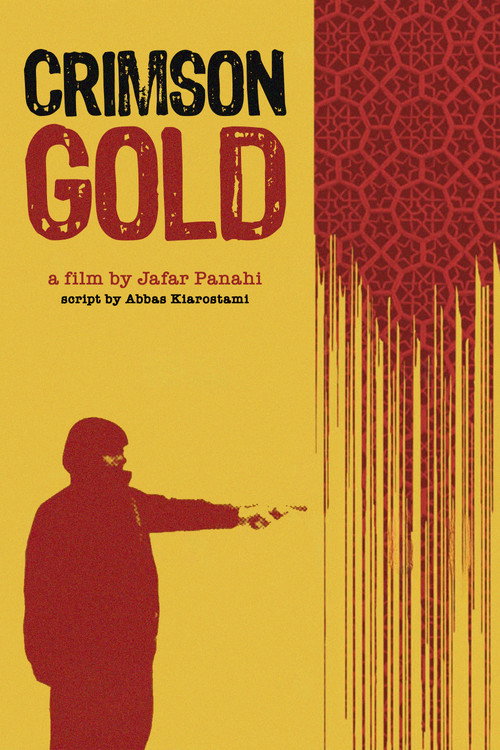
Crimson Gold - a film by Jafar Panahi
Critical Consensus
This devastating examination of class struggle blends documentary realism with fiction. Jafar Panahi delivers a restrained yet emotionally charged performance-driven drama that exposes the corrosive effects of poverty without melodrama. Critics praised its authenticity and powerful social commentary.
“Panahi's film is a masterpiece of restraint. It tells the story of a man who has nothing left to lose, and in that loss, he finds a terrible freedom.”
A.O. Scott
The New York Times
“A searing indictment of social inequality. Panahi captures the desperation of the underclass with a clarity that is both heartbreaking and infuriating.”
Todd McCarthy
Variety
“A haunting portrait of a man broken by a system that refuses to see him. The film lingers long after the credits roll.”
Kenneth Turan
Los Angeles Times
Hossain Emadeddin
Hussein
Kamyar Sheisi
Ali
Azita Rayeji
The Bride
Shahram Vaziri
The Jeweler
Ehsan Amani
The Man in the Tea House
Director
Jafar Panahi
Writer
Abbas Kiarostami
Composer
Peyman Yazdanian
Cinematographer
Hossein Jafarian
Producer
Jafar Panahi
Venice Film Festival (2003)
Silver Lion for Best Director: Won
San Sebastián International Film Festival (2003)
Golden Shell for Best Film: Won
Cairo International Film Festival (2004)
Golden Pyramid for Best Film: Won
Critics Week (2003)
Grand Prix: Won
Join the community
fans discussing