
Coordinadora Nacional para la Reducción de Desastres
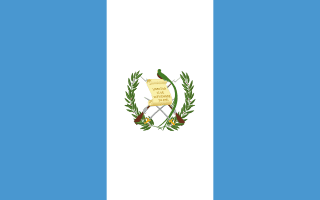 Guatemala
"Guatemala's National Disaster Reduction Coordinator"
About
Guatemala sits on a patch of earth that seems determined to test its people. The country is laced with fault lines, crowned by volcanoes, and caught in the path of Atlantic and Pacific hurricanes. When the ground shakes or the rain won't stop, the Coordinadora Nacional para la Reducción de Desastres, better known as CONRED, is the agency that steps in. Formed on November 11, 1996, CONRED is the executive secretariat of Guatemala's national disaster management system, charged with pulling together government bodies, private companies, international partners, and local communities so that the country can face these threats as one.
CONRED's work spans the entire disaster cycle. It develops policies and protocols for prevention and mitigation, runs early warning systems, coordinates evacuations, manages shelters, and distributes relief when disaster strikes. It also plans for the long haul, crafting recovery frameworks that help communities rebuild stronger. The agency's decentralized structure reaches from Guatemala City down to regional, departmental, municipal, and local coordinating bodies, so that even remote villages have a direct line to national resources and expertise.
Leadership at CONRED has often come from military ranks. The current Executive Secretary, Oscar Estuardo Cossío Cámara, is a retired army general, a background that brings a command-and-control style to crisis management. That approach has its strengths and its critics, but in a country where disasters regularly displace thousands, the discipline it brings has proven useful. CONRED's headquarters sit at Avenida Hincapié 21-72, zona 13, in the capital, and the agency maintains a public face through its website, social media channels, and even its own radio station, Radio CONRED.
Mission
CONRED exists to coordinate disaster risk management across Guatemala, weaving prevention, mitigation, preparedness, response, and recovery into a single national strategy. The agency's mandate is to bring together public and private institutions, international organizations, and civil society, giving them shared information and a common framework. By implementing national policies, plans, and norms, CONRED aims to reduce the country's vulnerability to natural hazards and support sustainable development. In practice, that means everything from running earthquake drills to setting up shelters when a volcano erupts, always with an eye toward building a more resilient Guatemala.
History
CONRED was born from a simple, grim reality: Guatemala was losing too many people to disasters. The country's position along the Ring of Fire and between two hurricane basins meant that every year brought new floods, landslides, or eruptions. On November 11, 1996, the government created CONRED as a centralized agency to manage this risk, unifying efforts that had previously been scattered across different ministries and NGOs.
From the start, CONRED took a decentralized approach. It set up coordinating bodies at every administrative level, from regions down to municipalities, so that national plans could be adapted to local realities. The agency quickly became the go-to institution for disaster response, handling floods in 2015 and 2016, and the catastrophic Volcán de Fuego eruption in 2018 that killed at least 75 people. In 2020, when Hurricanes Eta and Iota hit Central America back-to-back, CONRED sheltered over 30,000 people in Guatemala alone.
Leadership at CONRED has often come from military backgrounds. The current Executive Secretary, Oscar Estuardo Cossío Cámara, is a retired army general, continuing a tradition that brings a command-and-control ethos to the agency. Over the years, CONRED has expanded its focus from pure response to include prevention and recovery, publishing a national recovery framework in 2015 and partnering with international bodies like the UN Office for Disaster Risk Reduction. The agency has also invested in public preparedness, staging national earthquake drills that test both institutional readiness and citizen awareness.
Subdivisions
Regional Coordinating Bodies
Decentralized offices that coordinate disaster response and preparedness within each of Guatemala's regions.
Departmental Coordinating Bodies
Operate at the department level to implement national policies and manage local emergency operations.
Municipal Coordinating Bodies
Work directly with municipal governments to ensure disaster planning and response reach the community level.
Local Coordinating Bodies
Engage neighborhood and village-level groups in preparedness and response activities.
USAR-GUA
Guatemala's Urban Search and Rescue team, accredited internationally for disaster response.
Milestones
1996
CONRED established on November 11.
2015
Published the National Recovery Framework (Marco Nacional de Recuperación).
2015
Responded to floods affecting over 8,000 people in June.
2016
Evacuated hundreds during Tropical Storm Earl in August.
2018
Coordinated response to Volcán de Fuego eruption, which killed at least 75 people.
2020
Sheltered 30,602 people due to Hurricanes Eta and Iota in December.
2025
Activated shelters for renewed activity at Volcán de Fuego in March.
2025
Partnered with UNDRR to strengthen national resilience in April.
2026
Conducted the national earthquake drill (Simulacro Nacional por Sismo 2026) on February 24.
2026
Managed road clearance on route CA-2 in Génova after a fallen tree blocked both lanes in April.
2026
Coordinated access closures to Astillero Park due to Volcán de Fuego activity in August.
Sources
Organization Info
- Founded
- 1996-11-11
- Headquarters
- Avenida Hincapié 21-72 zona 13, Guatemala City
- Country
- Guatemala
- Executive Secretary
- Oscar Estuardo Cossío Cámara
- Type
- Government
- Established
- November 11, 1996
- Location
- Guatemala City, Guatemala
- Primary Contact
- [email protected]
- Phone
- +502 2296 9100
Official Website
www.conred.gob.gt
Join the community
fans discussing