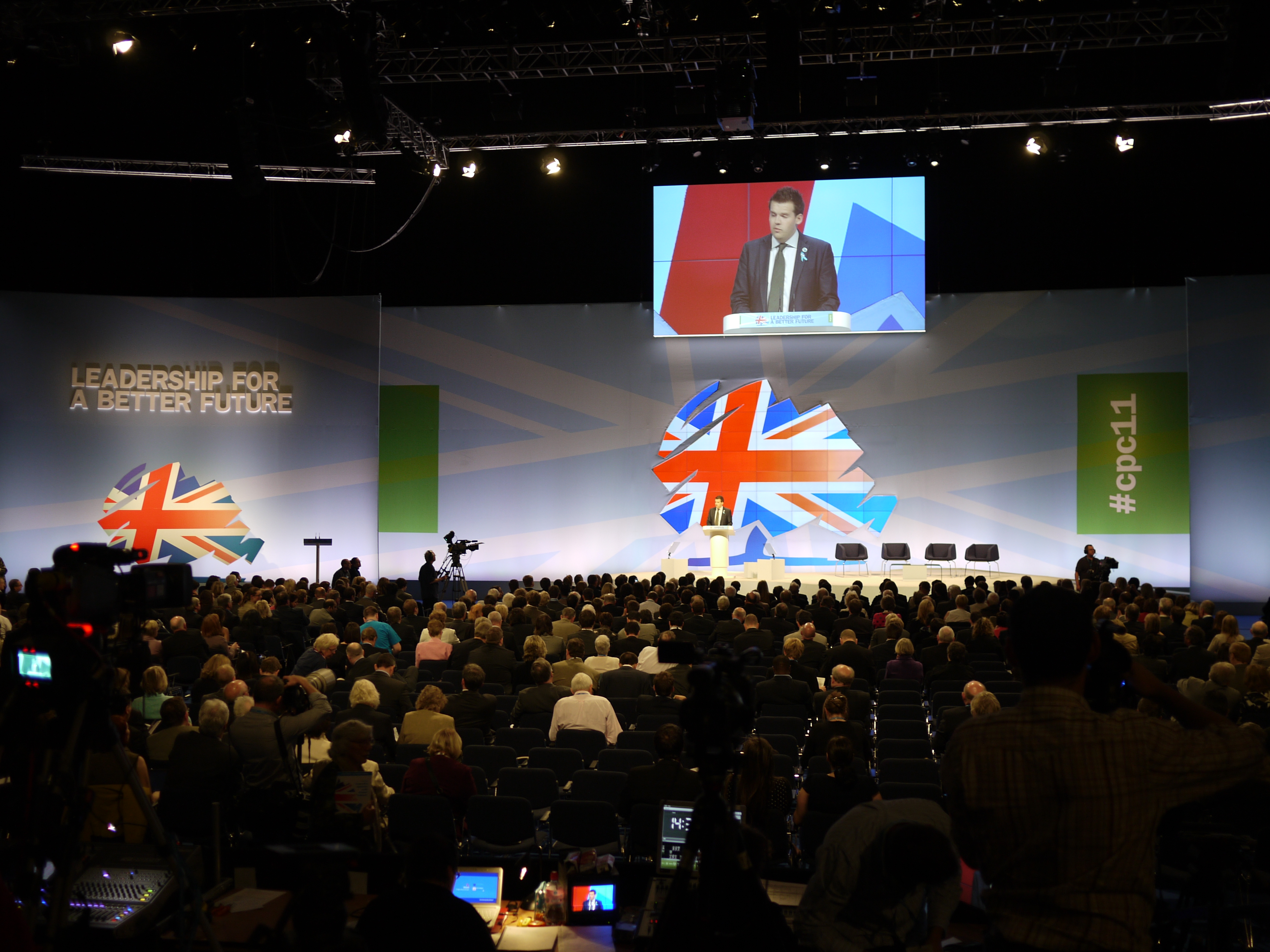
Conservative Party
 United Kingdom
"One of the UK's two major political parties, centre-right to right-wing."
About
The Conservative and Unionist Party, commonly known as the Conservative Party or simply the Tories, is one of the United Kingdom's two dominant political parties. It sits on the centre-right to right-wing of the political spectrum, advocating free markets, low taxes, and a robust national defense. Following the July 2024 general election, the party suffered a historic defeat to Labour and now serves as His Majesty's Most Loyal Opposition in the House of Commons, holding its lowest number of seats in modern history.
Founded in 1834, the party traces its roots to the older Tory tradition and has been led by a succession of influential figures, from Benjamin Disraeli to Winston Churchill and Margaret Thatcher. Its organizational structure includes a national headquarters, the Conservative Campaign Headquarters (CCHQ), and affiliated regional parties in Scotland and Wales. The party's grassroots base is organized through constituency associations across the UK.
In recent years, the party has faced considerable turbulence, including the Brexit referendum of 2016, the leadership crises that followed, and a series of controversies. As of August 2026, under the leadership of Kemi Badenoch, the party is engaged in a messy process of reinvention, seeking to rebuild its electoral coalition and define a clear policy platform for the future.
Mission
The Conservative Party's core mission is to promote individual liberty, personal responsibility, and free enterprise while preserving established institutions and traditions. The party aims to deliver lower taxes and reduced state spending, arguing that these policies foster economic growth and personal prosperity. It also emphasizes a strong national defense and the maintenance of the Union between England, Scotland, Wales, and Northern Ireland.
Under its current leadership, the party is focused on rebuilding trust with the electorate after its 2024 defeat, articulating a vision that balances fiscal conservatism with social cohesion. The party's platform continues to evolve, reflecting internal debates between traditional one-nation conservatism and more populist nationalist strands.
History
The Conservative Party emerged from the Tory Party on December 18, 1834, under the leadership of Sir Robert Peel. Peel's Tamworth Manifesto, issued that same year, laid out a philosophy of gradual reform and preservation of established institutions, marking the party's foundational document. Throughout the 19th century, the party alternated in power with the Liberal Party, with Benjamin Disraeli becoming a defining figure in the 1870s, championing social reform and imperial expansion.
The early 20th century saw the party navigate tariff reform and Irish home rule, before dominating interwar politics. After World War II, the party accepted the post-war consensus and welfare state under figures like Harold Macmillan. The election of Margaret Thatcher as leader in 1975 marked a radical shift toward free-market economics, privatization, and trade union reform, reshaping both the party and British politics.
The party's defeat in 1997 to Tony Blair's New Labour initiated a thirteen-year period in opposition. David Cameron returned the party to government in 2010 as part of a coalition with the Liberal Democrats. Cameron's decision to hold the 2016 Brexit referendum led to a period of intense division and a rapid succession of leaders: Theresa May, Boris Johnson, Liz Truss, and Rishi Sunak. The July 2024 general election resulted in a catastrophic loss to Labour, reducing the party to approximately 121 seats, its worst result in modern history. Currently, the party is rebuilding under Kemi Badenoch, who became leader in November 2024.
Subdivisions
Scottish Conservative Party
Semi-autonomous regional party operating in Scotland.
Welsh Conservative Party
Semi-autonomous regional party operating in Wales.
Notable People
Robert Peel
Founder · 1834-1846
Founded the Conservative Party and authored the Tamworth Manifesto.
Benjamin Disraeli
Prime Minister · 1868, 1874-1880
Modernized the party and expanded the British Empire.
Winston Churchill
Prime Minister · 1940-1945, 1951-1955
Led Britain through World War II.
Margaret Thatcher
Prime Minister · 1979-1990
First female Prime Minister; transformed the UK economy through privatization and free-market reforms.
David Cameron
Prime Minister · 2010-2016
Called the 2016 Brexit referendum.
Kemi Badenoch
Leader · 2024-present
First Black woman to lead a major UK political party.
Milestones
1834
Founded by Robert Peel with the Tamworth Manifesto.
1874
Benjamin Disraeli becomes Prime Minister, beginning a period of Conservative dominance.
1940
Winston Churchill leads a wartime coalition government.
1979
Margaret Thatcher becomes the first female Prime Minister, initiating major economic reforms.
1997
Defeat to Labour under Tony Blair, beginning 13 years in opposition.
2010
David Cameron forms a coalition government with the Liberal Democrats.
2016
Brexit referendum called by David Cameron; the party becomes deeply divided.
2024
Historic election defeat; Kemi Badenoch becomes leader.
Departments
Sources
Organization Info
- Founded
- 1834-12-18
- Headquarters
- Conservative Campaign Headquarters
- Country
- United Kingdom
- Leader
- Kemi Badenoch
- Type
- Other
- Founder
- Robert Peel
- Political Spectrum
- Centre-right to right-wing
Official Website
conservatives.com
Join the community
fans discussing