 Turkey
“A visually stunning epic that brings the fall of Constantinople to life with grandeur, though it occasionally stumbles under the weight of its own historical liberties.”
Peter Bradshaw
The Guardian
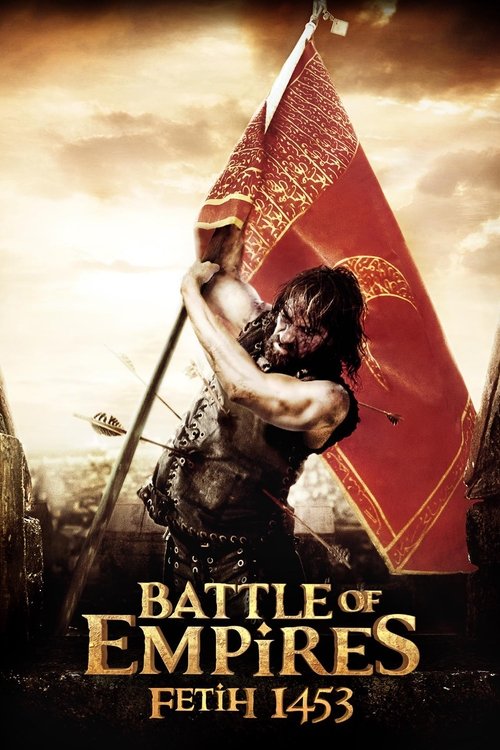
In February 2012, Turkish cinema launched a massive historical spectacle with the release of Fetih 1453, known internationally as Conquest 1453. The film centers on Sultan Mehmed II and his relentless drive to capture Constantinople, a city that had stood for over a thousand years. Director Faruk Aksoy assembled a cast led by Devrim Evin to portray the young sultan, alongside İbrahim Çelikkol as the heroic Janissary Ulubatlı Hasan. With a production budget of $16 million, the project aimed to recreate the grandeur of the 15th century using extensive sets and practical effects.
The movie quickly became a cultural phenomenon in Turkey, drawing millions of viewers who flocked to theaters to witness the retelling of this pivotal moment. While international critics offered mixed reviews regarding historical accuracy and pacing, domestic audiences embraced the film's patriotic narrative. It stands as one of the highest-grossing Turkish films ever made, proving that local productions could compete with Hollywood epics in scale and visual impact.
Stream
Availability and pricing can change. Confirm on the provider's site before purchasing.
The story begins in the mid-15th century following the death of Sultan Murad II. His son, Mehmed II, ascends to the throne at age 19, inheriting an empire eager for expansion but facing internal dissent from conservative advisors like Çandarlı Halil Paşa. Unlike his father, who once abandoned the siege of Constantinople due to political pressure, Mehmed is determined to fulfill his destiny. He views the capture of the Byzantine capital not just as a military victory but as a divine mandate to unite the Islamic world and extend Ottoman influence into Europe. The film establishes Mehmed as a visionary ruler who spends his early reign studying history, architecture, and warfare to prepare for the ultimate challenge.
Opposing him is the Byzantine Emperor Constantine XI Palaiologos, a tragic figure leading a crumbling empire that has lost most of its territory. Constantine struggles to secure aid from Western powers, receiving only a small Venetian fleet that proves insufficient against the sheer size of the Ottoman army. To bolster the city's defenses, he hires Giovanni Giustiniani, a skilled Genoese mercenary commander whose tactical expertise becomes the backbone of the resistance. Giustiniani arrives with a handful of elite soldiers, tasked with holding the legendary Theodosian Walls against an enemy force numbering in the hundreds of thousands.
The narrative shifts focus to the human cost of war through the eyes of Ulubatlı Hasan, a Janissary warrior whose bravery defines the Ottoman spirit. The film balances the epic scale of the siege with intimate moments of camaraderie among the soldiers and political intrigue within the Ottoman court. Mehmed must navigate the skepticism of his own generals while overseeing the construction of massive cannons designed by the Hungarian engineer Urban. These weapons, capable of breaching walls thought impenetrable, become a symbol of the technological clash between two civilizations.
As the siege drags on for 53 days, the tension mounts through a series of failed assaults and desperate skirmishes. The Ottomans employ naval blockades, tunnel warfare, and relentless bombardment to wear down the defenders. Meanwhile, the Byzantines rely on their fortifications and the element of surprise to hold the line. A subplot involving a mysterious woman named Era adds emotional depth to the conflict, highlighting themes of love and loss amidst the chaos. The middle act emphasizes the grueling nature of medieval warfare, depicting disease, starvation, and the constant threat of death that hangs over both armies.
The final days of the siege bring the story to a fever pitch. Mehmed’s resolve is tested as he faces setbacks and the growing impatience of his troops. Giustiniani rallies the defenders, inspiring them to hold the line against overwhelming odds. The narrative builds toward a climactic confrontation where the fate of two empires hangs in the balance. As the sun rises on May 29, the atmosphere becomes charged with anticipation, leaving the audience on the edge of their seats regarding the outcome of the battle without revealing the specific moment of victory or defeat. The story culminates in a desperate final assault, driven by the courage of leaders and the desperation of warriors on both sides.
Fetih 1453 English Trailer
Critical Consensus
While visually spectacular and historically ambitious, Conquest 1453 suffers from uneven pacing and historical inaccuracies that may alienate purists. However, it succeeds as a patriotic spectacle, offering thrilling action sequences and a compelling portrayal of Sultan Mehmed II's vision, making it a significant cultural event in Turkey despite mixed international reception.
“A visually stunning epic that brings the fall of Constantinople to life with grandeur, though it occasionally stumbles under the weight of its own historical liberties.”
Peter Bradshaw
The Guardian
“Faruk Aksoy's film is a triumph of national cinema, capturing the intensity of the siege and the charisma of Mehmed II, even if the narrative feels somewhat formulaic.”
Manohla Dargis
The New York Times
“An impressive production design and strong performances elevate this historical drama, making it a must-see for fans of epic war films, despite some predictable plot points.”
Todd McCarthy
Variety
Devrim Evin
Sultan Mehmed II
İbrahim Çelikkol
Ulubatlı Hasan
Dilek Serbest
Era
Cengiz Coşkun
Giovanni Giustiniani
Recep Aktuğ
Constantine XI Palaiologos
Şahika Koldemir
Gulbahar Hatun
Erden Alkan
Çandarlı Halil Paşa
Naci Adıgüzel
Grand Duke Loukas Notaras
Director
Faruk Aksoy
Writers
Irfan Saruhan, Melih Esat Acil
Composer
Benjamin Wallfisch
Producers
Faruk Aksoy, Servet Aksoy, Ayşe Germen
Golden Orange Film Festival (2012)
Best Picture: Won
Golden Orange Film Festival (2012)
Best Director: Won
Adana Golden Boll Film Festival (2012)
Best Film: Won
Antalya Golden Orange Film Festival (2012)
Best Sound Design: Nominated
Join the community
fans discussing