 Germany
About
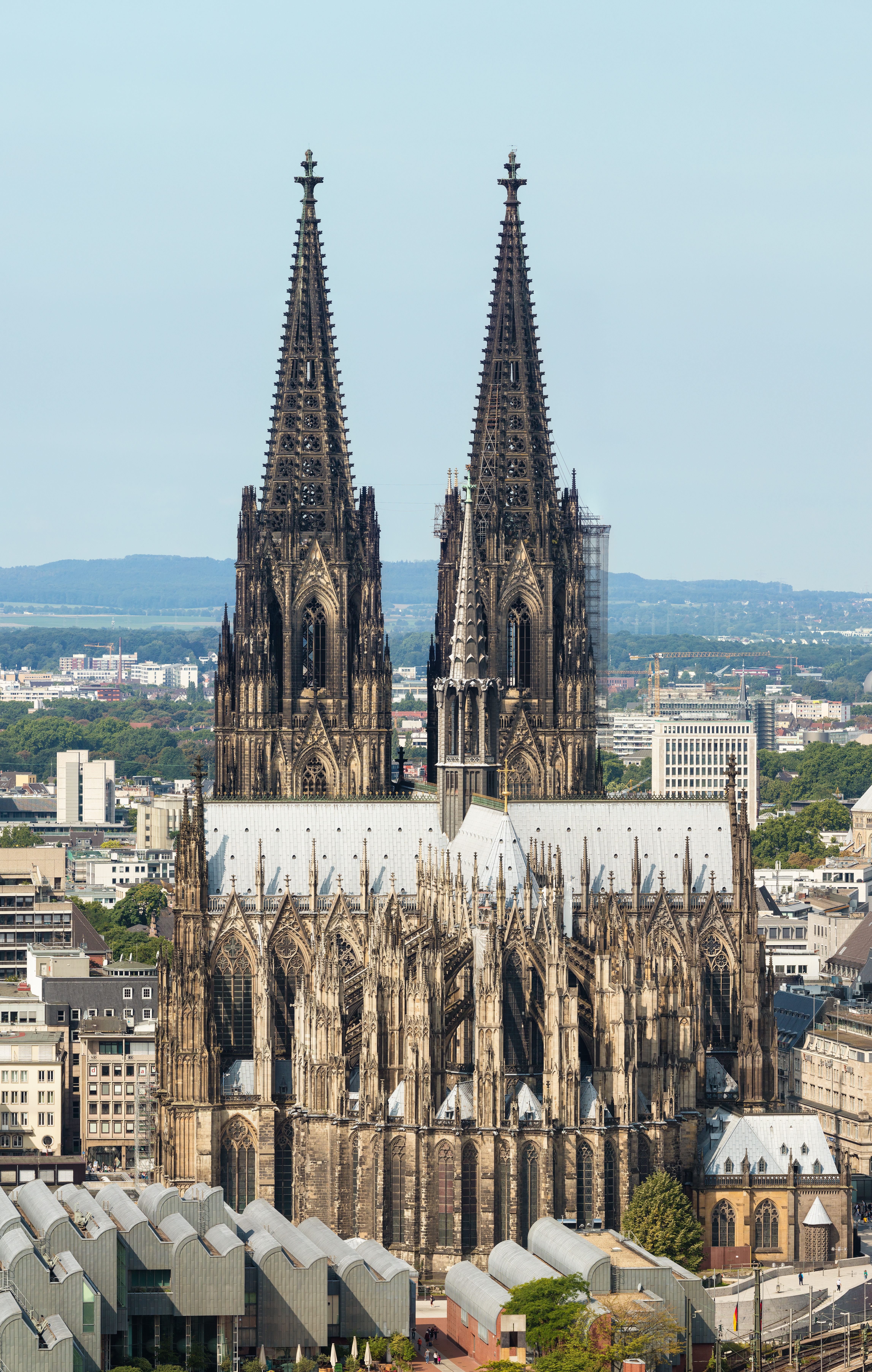
Cologne Cathedral dominates the skyline of Cologne with twin spires reaching 157.22 meters into the air. Known locally as Kölner Dom and officially as the High Cathedral of Saint Peter, this structure serves as the seat of the Archbishop of Cologne and the administrative heart of the Archdiocese. It is not just a tourist attraction but a functioning religious institution where daily masses, weddings, and pilgrimages take place alongside its role as a guardian of medieval art.
The building stands as a monumental example of High Gothic architecture in Germany. Its design draws heavily from French cathedrals like Amiens and Beauvais, featuring soaring vaults, intricate stone tracery, and vast stained glass windows. The sheer scale of the project is evident in its dimensions: 144.5 meters long and 86.25 meters wide. Inside, visitors find treasures like the Shrine of the Three Kings, a golden reliquary believed to hold the bones of the Magi, which has drawn pilgrims for centuries.
Surviving World War II bombing raids that devastated the surrounding city, the cathedral emerged largely intact after taking hits from 14 aerial bombs. This resilience turned it into a powerful symbol of hope during the reconstruction era. Today, it welcomes roughly 6 million people annually, making it the most visited landmark in Germany. Recent discussions about introducing admission fees reflect the ongoing financial challenges of maintaining such a massive historic site while keeping it accessible to the public.
Mission
The primary mission involves serving the spiritual needs of the Catholic community in the region through worship, sacraments, and pastoral care. Beyond its religious function, the organization is dedicated to preserving the architectural integrity and artistic heritage of the cathedral for future generations. Managing the flow of millions of visitors requires balancing accessibility with the sanctity of the space, ensuring that the site remains a place of reflection rather than just a museum.
History
Construction started on May 15, 1248, when Archbishop Konrad von Hochstaden laid the foundation stone. The goal was to create a shrine worthy of the relics of the Three Kings, which had arrived in Cologne from Milan in 1164. Work progressed steadily for two centuries until the plague and lack of funds brought it to a halt in 1473. For the next 300 years, the south tower stood at only 50 meters, capped by a wooden crane that became a defining feature of the city's silhouette.
The 19th century saw a resurgence of interest in medieval styles fueled by Romanticism. The Prussian government provided funding, and architects Ernst Friedrich Zwirner and Richard Voigtel took charge of completing the work. They meticulously studied the original medieval drawings to ensure consistency. The completion ceremony in 1880 marked a national triumph, elevating the cathedral to the status of the world's tallest church at 157 meters.
World War II brought new threats. In 1944 and 1945, Allied bombers dropped 14 high-explosive bombs and hundreds of incendiaries on the structure. While the roof was damaged and some windows shattered, the main structure held firm. The cathedral became a beacon of survival in a city reduced to rubble. After the war, restoration efforts focused on repairing the damage and cleaning decades of soot. In 1996, UNESCO recognized its value by listing it as a World Heritage Site.
Subdivisions
Main Nave and Transepts
Liturgical spaces housing the Shrine of the Three Kings and serving as the primary area for worship services.
The Bells
Home to the 'Dicke Pitter' (Great Peter), one of the largest swinging bells in the world, ringing from the south tower.
Museum and Tower Access
Dedicated sections for the treasury, the organ, and viewing platforms located in both the north and south towers.
Restoration Workshops
Specialized departments focused on the continuous cleaning of the sandstone façade and repair of stained glass windows.
Notable People
Konrad von Hochstaden
Archbishop · 1238–1261
Initiated the construction of the current Gothic cathedral in 1248 to house the relics of the Three Kings.
Ernst Friedrich Zwirner
Architect · 1842–1861
Led the revival of construction in the 19th century, ensuring the building followed original medieval plans.
Gerhard Richter
Artist · 2007
Designed the modern stained glass windows installed in the south transept, blending contemporary art with ancient architecture.
Andy Warhol
Artist · 1985
Created a famous screenprint of the cathedral, cementing its status in pop culture.
Milestones
1248
Foundation stone laid by Archbishop Konrad von Hochstaden
1473
Construction halted due to lack of funds and plague
1842
Project revived under the direction of Ernst Friedrich Zwirner
1880
Cathedral completed and consecrated
1945
Structure survives heavy bombing during World War II
1996
Designated a UNESCO World Heritage Site
2007
Gerhard Richter's abstract stained glass windows installed
2026
Introduction of admission fees for tourists begins
Departments
Sources
Organization Info
- Founded
- May 15, 1248
- Headquarters
- Cologne, North Rhine-Westphalia, Germany
- Country
- Germany
- Archbishop of Cologne
- Cardinal Rainer Maria Woelki
- Parent
- Archdiocese of Cologne
- Type
- Religious
- Height
- 157.22 meters
- Length
- 144.5 meters
- Width
- 86.25 meters
- Annual visitors
- 6 million
- UNESCO World Heritage Site
- Since 1996
- Entry fee for tourists
- €12 (from July 2026)
Official Website
www.koelner-dom.de/
Join the community
fans discussing