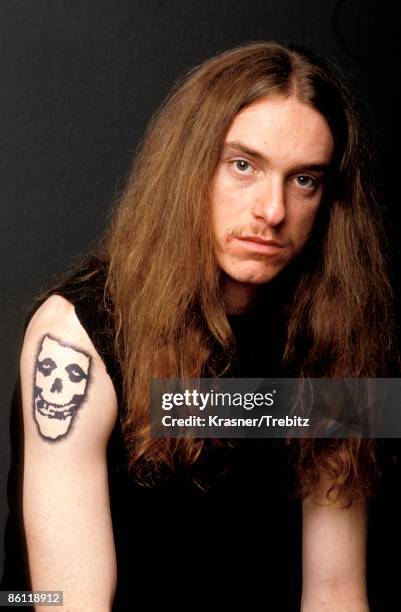
Cliff Burton
 United States
Member of Metallica
Birthday
February 10, 1962
Birth Sign
Aquarius
Birthplace
Castro Valley, California, USA
Age
Died at 24
Height
5 ft 7 in (170 cm)
About
Clifford Lee Burton was an American musician who served as the bassist for the heavy metal band Metallica from 1983 until his death in 1986. He is widely regarded as one of the most influential bass players in heavy metal, known for his virtuosic technique, use of effects pedals, and classically influenced songwriting. Burton played on Metallica's first three albums, Kill 'Em All, Ride the Lightning, and Master of Puppets, each of which became foundational to the thrash metal genre. His lead-style bass approach, showcased in instrumentals like "(Anesthesia) – Pulling Teeth" and "Orion," expanded the instrument's role in metal and set a new standard for technical proficiency. Burton's untimely death at age twenty-four in a bus crash in Sweden cut short a career that had already reshaped the genre. He was posthumously inducted into the Rock and Roll Hall of Fame as a member of Metallica in 2009, and his playing continues to be studied and revered by musicians worldwide.
Early Life & Background
Cliff Burton grew up in Castro Valley, California, in a musical household. He began playing piano at age six, moved to guitar at thirteen, and switched to bass at fourteen following the death of his older brother Scott, a tragedy that deepened his focus on music. He attended Castro Valley High School, graduating in 1980, and studied music theory at Chabot College in Hayward, where he developed the classical and harmonic knowledge that later distinguished his playing. His early influences ranged from Johann Sebastian Bach to Lynyrd Skynyrd and Thin Lizzy. Burton formed his first band, EZ-Street, in high school, playing covers. In 1980 he joined the progressive metal band Trauma, where his bass solos began attracting attention. While performing with Trauma at the Whisky a Go Go in Los Angeles in 1982, he caught the attention of James Hetfield and Lars Ulrich. The two were so impressed by his solo piece "Anesthesia (Pulling Teeth)" that they asked him to join Metallica. Burton initially hesitated, then agreed on one condition: the band must relocate from Los Angeles to the San Francisco Bay Area, a demand they accepted.
Career Growth
Burton officially joined Metallica in early 1983, replacing original bassist Ron McGovney. That same year, the band recorded their debut album Kill 'Em All, released July 25, 1983. The album peaked at No. 120 on the Billboard 200 and featured Burton's instrumental showcase "(Anesthesia) – Pulling Teeth," recorded live in the studio in a single take. In 1984, Metallica released Ride the Lightning, on which Burton co-wrote several tracks, including "For Whom the Bell Tolls," "Fade to Black," and the title track. The album reached No. 100 on the Billboard 200 and solidified the band's standing in heavy metal. The breakthrough came with Master of Puppets, released March 3, 1986. Widely considered one of the greatest metal albums ever, it peaked at No. 29 on the Billboard 200 and became the band's first platinum record. Burton co-wrote the instrumental "Orion," entirely his own composition, and his complex arrangements permeated the album. On September 27, 1986, while touring in support of the album, Burton died when the band's tour bus skidded on ice near Dörarp, Sweden, and flipped. He was thrown from his bunk and crushed by the bus. He was twenty-four.
Career Timeline
Public Image & Style
Burton was known for his long hair, denim vests with patches, and a laid-back, intellectual demeanor that contrasted with the aggressive metal stereotype. He often wore a t-shirt with the band name or a plain black shirt. Media portrayals have consistently cast him as the "musical genius" of early Metallica, the classically trained member who elevated the band's sound. Documentaries and biographies emphasize his tragic death and enduring influence. The Cliff Burton fandom is deeply reverent, with annual memorials at his crash site in Dörarp, Sweden, which has become a pilgrimage destination. Fans unofficially refer to themselves as "Cliff's Army." The official family-run social media accounts share archival photos, vintage interviews, and fan tributes, maintaining a respectful tone.
Fame & Fandom (iFAMOUS Rankings)
The devotion surrounding Cliff Burton is defined by a quiet, profound reverence rather than a distinct organizational name. While Metallica's fanbase is universally known as the Metallicaheads, Burton supporters operate within that sphere yet treat his memory with the solemnity of a martyr for artistic integrity. This community sustains his legacy through organized local efforts, such as the campaign in Castro Valley to establish an annual "Cliff Burton Day," and the mobilization of fans on his birthday to share tributes across major music publications. His influence remains so pervasive that he is frequently cited as the primary reason the band achieved critical acclaim on *Master of Puppets* before his passing. The fandom keeps his spirit alive through streaming campaigns for his work and by preserving personal artifacts in official museum exhibits, ensuring new generations encounter his history directly. Fans often recount the story of Jason Newsted playing on Burton's amp just 20 days after his ashes were spread, a poignant moment illustrating the immediate pain of the transition. These rituals anchor a collective grief that has transformed into a enduring celebration of his creative genius. Burton's standing in global culture reflects this deep-seated impact. He is currently ranked as the 51st most famous person in Metal, a position held steady from the previous cycle according to the iFANN Global Fame Rankings. This placement underscores his status as a foundational figure whose technical proficiency and classical influences expanded the instrument's role in heavy metal forever.
Interesting Facts and Legends
Cliff Burton was the only member of Metallica with formal music theory training, a skill that heavily influenced the band's complex song structures. His signature bass solo '(Anesthesia) – Pulling Teeth' was recorded live in the studio in a single take, capturing raw energy without edits. He insisted on moving Metallica from Los Angeles to the Bay Area before joining because he disliked the LA music scene. As the only band member who did not sing backing vocals, his focus remained entirely on the bass. Burton was a fan of R.E.M. and Southern rock, a departure from the thrash metal norm, and used a Morley Power Wah Boost pedal and a Big Muff distortion to create his distinctive sound. The bassline for 'Orion' was entirely composed by Burton and is considered his masterpiece. He died on September 27, 1986, the same day his favorite band, Lynyrd Skynyrd, lost three members in a plane crash in 1977. The card game that decided who would sleep in the bunk where Burton died was played with Kirk Hammett; Hammett won and took the other bunk. A widely retold account involves producer Flemming Rasmussen stating that Burton was effectively the 'real leader' of the band during his time, guiding creative decisions. Another popular anecdote highlights his blunt honesty when telling the band Possessed, 'I hate your band, you're a Slayer ripoff!'. Legends also persist regarding the instrumental track 'Orion', which was originally intended to be a guitar solo for Kirk Hammett until Burton insisted on playing it himself, fundamentally changing the song's structure. On stage, this solo became a ritualistic highlight where crowds fell silent in awe before erupting into cheers, cementing his reputation as a virtuoso.
Notable Quotes
“I don't think I'm better than anybody else. I just think I'm a little bit different.”
“When I play, I try to play what I feel. If I feel it, then it's good.”
“I want to be remembered as a musician who tried to do something different.”
“The bass is not just a background instrument. It can be a lead instrument too.”
“I'd rather be playing my bass than doing anything else in the world.”
Family & Personal Life
Cliff Burton was born to Ray and Jan Burton. He had an older brother, Scott, whose death in 1975 profoundly affected him and spurred his switch to bass. His father Ray managed Burton's estate for decades after his death, until Ray's own passing in 2020. Burton never married and had no children. He was in a relationship at the time of his death, but his partner's identity has been kept private by the family. The Burton family has maintained a low profile, with Scott Burton now managing the estate through the Cliff Burton Estate LLC.
Notable Connections
Cliff Burton's closest collaborators were his Metallica bandmates James Hetfield, Lars Ulrich, and Kirk Hammett. Hetfield and Ulrich recruited Burton after seeing him perform with Trauma. Hammett joined Metallica shortly after Burton and became a close friend. Burton also briefly overlapped with original guitarist Dave Mustaine in early 1983. After his death, his father Ray Burton managed his estate for decades, followed by his brother Scott Burton.
Relationships & Dating History
Cliff Burton's romantic life is not extensively documented in public sources. Credible information is limited to one confirmed relationship: he was in a long-term relationship with an unnamed partner from around 1984 until his death in 1986. Her identity has been kept private by his family and close friends. Burton never married and had no children. As of 2026, he is deceased, and no posthumous romantic relationships have been reported.
- DatedUnnamed1984 - 1986Long-term partner; identity kept private by family.
Death & Aftermath
Died
September 27, 1986 (aged 24)
Death Place
Lycksele, Sweden
Cause of Death
Crushing trauma after ejection from bus
Clifford Lee Burton died on September 27, 1986, in a bus accident near Lycksele, Sweden. The tour bus skidded on a wet patch of Route 45 and rolled over, throwing Burton from his bunk through an open window where he was crushed by the falling vehicle. Swedish police determined the crash resulted from road conditions and driving error, with no evidence of foul play or mechanical failure found in the official investigation. Metallica canceled their remaining European tour dates immediately following the news, while tributes poured in from peers who highlighted his unique musicality and influence. The band's albums saw a significant surge in sales as new fans sought out the work of the late bassist, particularly Master of Puppets.
A private funeral took place on October 4, 1986, in San Francisco, California, attended by family members, close friends, and select bandmates. His ashes were scattered at sea off the coast of Catalina Island, a decision made to reflect his love for the ocean and nature. Posthumously, Burton received numerous honors including induction into the Rock and Roll Hall of Fame as part of Metallica in 2009. The band dedicated their 1988 album ...And Justice for All to his memory, featuring the track One as a tribute to his legacy.
Net Worth (Estate Value)
$5 Million
iFANN Editorial Team estimate
iFANN currently estimates Cliff Burton's estate at $5 Million. The primary sources of income are posthumous royalties from Metallica's first three albums, Kill 'Em All, Ride the Lightning, and Master of Puppets, which continue to sell steadily on vinyl, CD, and streaming platforms. Licensing and merchandising of Burton's image, likeness, and music on T-shirts, posters, guitar picks, and other memorabilia generate ongoing revenue. Posthumous releases, such as the 2016 deluxe reissue of Master of Puppets and the 2018 Kill 'Em All deluxe edition, have featured previously unreleased Burton recordings. His co-writing credits on multiple songs generate publishing income. Burton's father Ray managed the estate until his death in 2020; since then, his brother Scott Burton and the Cliff Burton Estate LLC have overseen the assets. The estate's value has grown modestly over the years, buoyed by Metallica's continued popularity and periodic anniversary reissues.
Awards & Accolades
View 14 records, honours and achievementsKnown For
(Anesthesia) – Pulling Teeth
1983 · Bass solo performer/composer
Orion
1986 · Composer/bassist
For Whom the Bell Tolls
1984 · Co-writer/bassist
Keywords
Quick Facts
- Profession
- bass guitarist, musician
- Born
- 1962-02-10
- Birthplace
- Castro Valley, California, USA
- Died
- 1986-09-27
- Death Place
- Dörarp, Sweden
- Gender
- Male
- Birth Sign
- Aquarius
Personal Details
- Full Name
- Clifford Lee Burton
- Height
- 5 ft 7 in (170 cm)
- Education
- Castro Valley High School; Chabot College (music theory)
Frequently Asked Questions
How did Cliff Burton die?
Was Cliff Burton married?
How much is Cliff Burton's net worth in 2026?
What albums did Cliff Burton play on?
How tall was Cliff Burton?
Join the community
fans discussing