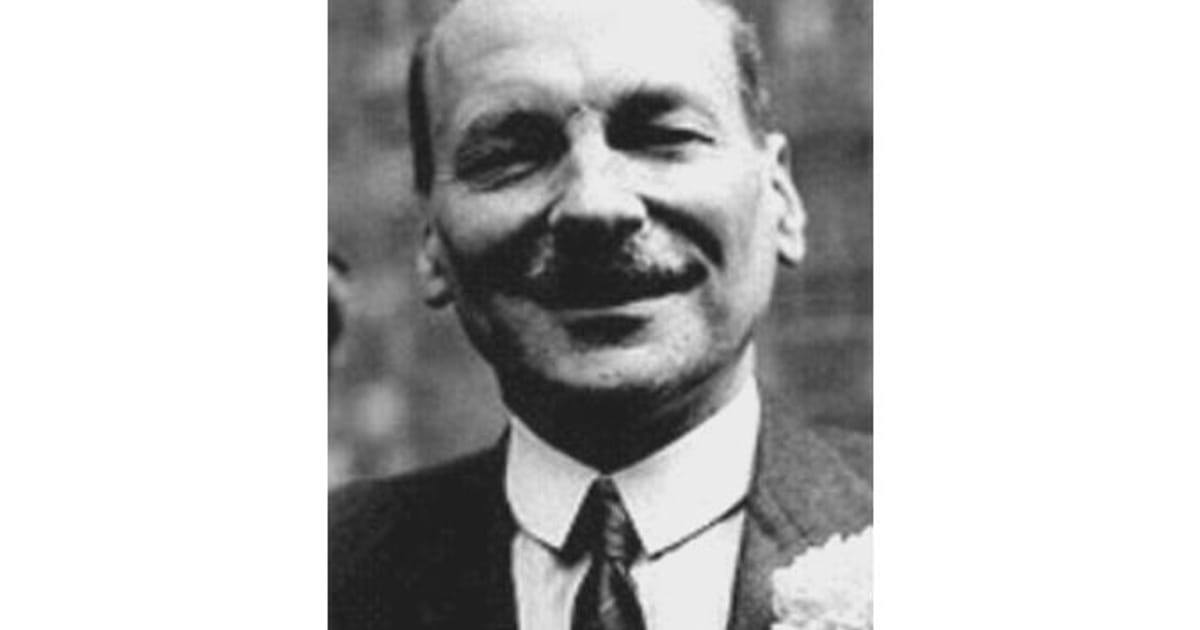
Clement Martyn Doke
 South Africa
Also known as: Clement Martin Doke
Birthday
May 16, 1893
Birth Sign
Taurus
Birthplace
Bristol, England
Age
Died at 86
About
Clement Martyn Doke was a South African linguist, Baptist minister, and pioneer in the study of Bantu languages. Born in Bristol, England, on May 16, 1893, he spent most of his life in southern Africa, where he revolutionized how scholars approach African linguistics. He died on February 24, 1980, in East London, South Africa, at the age of 86.
Doke is best remembered for his groundbreaking work on Zulu, Lamba, and other Bantu languages. His Textbook of Zulu Grammar, first published in 1927, remains a standard reference, and his Zulu-English Dictionary is still widely used. As the founding Professor of Bantu Studies at the University of the Witwatersrand, he trained generations of linguists and set the agenda for the field.
Early Life & Background
Clement Martyn Doke was born into a Baptist missionary family in Bristol, England, in 1893. His father's work took the family to New Zealand during Doke's childhood, and later to South Africa, where they settled. Growing up in a missionary household, Doke was immersed in the cultures and languages of southern Africa from an early age.
He pursued formal education in linguistics, but his real training came from fieldwork. In the 1910s and 1920s, he worked among the Lamba people of Northern Rhodesia, now Zambia. That experience proved pivotal, giving him deep insight into a Bantu language and challenging the Eurocentric frameworks that dominated linguistics at the time. He was ordained as a Baptist minister, a role that complemented his academic pursuits.
Career Growth
Doke's career took off in the 1920s when he began publishing his research on Bantu languages. His 1927 Textbook of Zulu Grammar was a landmark, offering a fresh approach that respected the internal logic of Zulu rather than forcing it into Latin-based categories. The book went through multiple editions, including a 1961 reissue by Maskew Miller Longman.
He became the founding Professor of Bantu Studies at the University of the Witwatersrand in the 1930s, a position he held for decades. During that time he produced comprehensive grammars of Lamba and other languages, as well as the Zulu-English Dictionary. His later work, Contributions to the History of Bantu Linguistics, traced the development of the field. Doke also played a key role in standardizing written Shona, working with scholars like G. Fortune.
Career Timeline
Public Image & Style
In academic circles, Doke is revered as a rigorous, pioneering scholar who fundamentally changed how African languages are studied. He is remembered as a missionary-scholar whose religious commitment and academic rigor were mutually reinforcing. His meticulous attention to the internal logic of each language set a new standard for the field. While not a public celebrity, his reputation among linguists and Africanists is immense, with one source calling him 'arguably the greatest scholar South Africa has been privileged to have had.'
Fame & Fandom (iFAMOUS Rankings)
Clement Martyn Doke never sought the spotlight, and in the traditional sense, he never found it. His fame is of a quieter, more enduring kind, woven into the very fabric of African linguistics. While he may not have a fan club or a fandom name (none is documented), his admirers are legion: linguists, missionaries, and students who continue to use his grammars and dictionaries daily. They don't gather under a banner, but they share a deep reverence for the man who gave Bantu languages their own voice.
His legacy, however, is not confined to academic circles. Doke's influence ripples through the broader cultural landscape of southern Africa, where his work on written Shona and Zulu has shaped how millions of people read and write their own languages. His Textbook of Zulu Grammar remains a touchstone, and his Zulu-English Dictionary is a trusted companion for scholars and laypeople alike. In this way, his fame is not measured in headlines but in the quiet, persistent use of his work, a fame that transcends generations.
Yet, in the grand scheme of global recognition, Doke remains unranked. As of August 2026, iFANN's Global Fame Engine has evaluated his impact but does not currently place him in its published rankings. He holds no position in the Global Top 1,000 or any Top-100 scope list. This absence, however, is not a measure of his worth. His fame is not the loud, ephemeral kind that tops charts; it is the enduring, foundational kind that shapes a field. And in the annals of African linguistics, he is, as one source put it, 'arguably the greatest scholar South Africa has had in its history.'
Interesting Facts and Legends
Doke's dual vocation as a Baptist minister and a pioneering linguist was not a contradiction but a synergy. His missionary work among the Lamba people of Northern Rhodesia was both a spiritual calling and a linguistic fieldwork opportunity, yielding foundational insights that shaped his career. He grew up in New Zealand before moving to South Africa, a geographically diverse upbringing that perhaps primed him for cross-cultural understanding.
One of his most radical stances was his insistence that Bantu languages must be described on their own terms, free from the constraints of European grammatical frameworks. This philosophy was revolutionary and remains a cornerstone of modern African linguistics. His Textbook of Zulu Grammar, first published in 1927, has stayed in print for nearly a century, a rare achievement for any academic text, and is still a standard reference.
Though no legends or viral moments surround Doke, his life itself is a story of quiet persistence. He was a prolific writer, publishing grammars, dictionaries, and histories, and his contributions to written Shona are still celebrated. A personal tribute to him was published in 1993, a reflection of the lasting respect he commands. His legacy is not one of flashy anecdotes but of scholarly dedication that continues to inspire.
Family & Personal Life
Doke came from a distinguished Baptist missionary family that made a lasting impact on southern African religious life. His father was a missionary, and the family's commitment to service deeply influenced Clement's own path. Details about his wife and children are not well documented in available sources, but his family life was intertwined with his religious and academic vocations. As a Baptist minister, he lived a life of faith and scholarship, and his family background was central to his identity.
Notable Connections
Doke's work was closely associated with the University of the Witwatersrand, where he founded the Department of Bantu Studies. He collaborated with scholars such as G. Fortune, who analyzed his contributions to written Shona, and L.W. Lanham of Rhodes University, who wrote a personal tribute after Doke's death. His legacy also lives on through the Dictionary of African Christian Biography, which features entries on Doke and his family.
Relationships & Dating History
Documentation of Doke's personal romantic relationships is extremely limited. As a Baptist minister and academic who lived from 1893 to 1980, his private life was not subject to public scrutiny. No public romantic relationships, dating history, or high-profile partnerships are documented in available sources. He was married, though details about his wife are not recorded. At the time of his death on February 24, 1980, he was widowed.
Death & Aftermath
Died
February 24, 1980 (aged 86)
Death Place
Unknown
Cause of Death
Unknown
In the final years of his life, Clement Martyn Doke remained a revered figure within the academic circles of southern Africa, continuing to be recognized for his decades of service as the founding Professor of Bantu Studies at the University of the Witwatersrand. He passed away in 1980 at the age of eighty-six, marking the end of a career that had fundamentally reshaped the understanding of African linguistics. While specific details regarding the precise location or medical cause of his passing are not recorded in public archives, his death was treated by the scholarly community as the quiet conclusion of a long and dedicated life of faith and scholarship. The reaction to his loss was immediate and deeply respectful among his peers.
L.W. Lanham of Rhodes University published a personal tribute honoring Doke's contributions, while the Dictionary of African Christian Biography described him as arguably the greatest scholar South Africa had been privileged to have up to that point. His standing was such that his work continued to define the field without the need for posthumous fanfare. Following his death, the focus shifted entirely to the enduring utility of his publications. The Textbook of Zulu Grammar and Contributions to the History of Bantu Linguistics remained standard references for students and researchers, with reissues ensuring their accessibility. Instead, his memory is preserved through the continued citation of his descriptive work.
Net Worth (Estate Value)
N/A
iFANN Editorial Team estimate
When Clement Martyn Doke passed away in 1980, no contemporary net worth figures were recorded. His financial legacy remains tied to his scholarly publications, which continue to be used and cited in African linguistics. The iFANN Editorial Team's research points to the enduring value of his books, including the Textbook of Zulu Grammar and Contributions to the History of Bantu Linguistics, which remain in print through academic publishers. While the estate's current management is not documented, his intellectual legacy, measured in the continued citation and use of his grammars and dictionaries, far outweighs any monetary valuation.
Awards & Accolades
View 2 records, honours and achievementsKnown For
Textbook of Zulu Grammar
1927 · Author
Zulu-English Dictionary
1948 · Author
Founding Professor of Bantu Studies, University of the Witwatersrand
1930 · Professor
Contributions to the History of Bantu Linguistics
1961 · Author
Keywords
Sources
Quick Facts
- Profession
- Linguist
- Born
- May 16, 1893
- Birthplace
- Bristol, England
- Died
- February 24, 1980
- Death Place
- East London, South Africa
- Gender
- Male
- Birth Sign
- Taurus
Personal Details
- Full Name
- Clement Martyn Doke
Frequently Asked Questions
Who was Clement Martyn Doke?
What did Clement Doke contribute to linguistics?
Where was Clement Doke born?
When did Clement Doke die?
What is Clement Doke's legacy in African linguistics?
Join the community
fans discussing