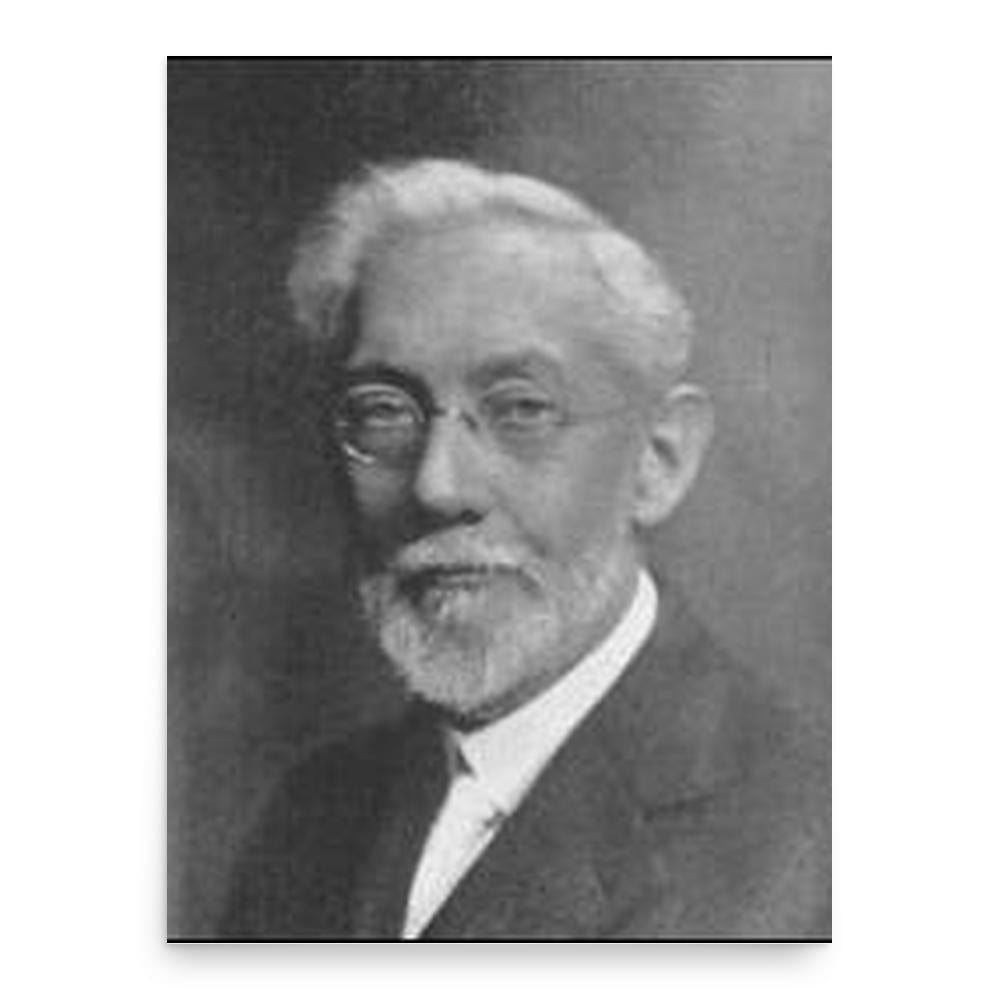
Clarence Larkin
Baptist pastor•Bible teacher•author
Birthday
October 28, 1850
Birth Sign
Scorpio
Birthplace
Chester, Pennsylvania
Age
Died at 73
About
Clarence Larkin was an American Baptist pastor and Bible teacher whose detailed charts and books on dispensationalism made complex theology visual for everyday believers. Born in 1850 in Chester, Pennsylvania, he spent over four decades producing intricate diagrams that mapped God's plan through history and decoded prophetic books like Daniel and Revelation.
His magnum opus, Dispensational Truth, published in 1918, remains a landmark in evangelical visual culture, packed with color-coded charts that generations of pastors and laypeople have used to teach prophecy. Along with Rightly Dividing the Word, his works are still in print and studied today, a testament to his skill at turning abstract doctrine into something you could almost touch.
Larkin died on January 24, 1924, at age 73, but his charts continue to circulate in Reformed and dispensationalist circles, and his influence on how evangelicals picture the end times endures.
Early Life & Background
Clarence Larkin was born on October 28, 1850, in Chester, Delaware County, Pennsylvania. Raised in an Episcopalian household, he didn't grow up in the Baptist tradition he'd later serve. At age 19, around 1869, he experienced a conversion that redirected his life. The details of that moment are sparse, but it marked the start of a calling to gospel ministry that would define him.
Larkin's early years remain largely undocumented. We know he felt drawn to preach, and by the 1870s he had become a Baptist pastor. His first pastorates were likely modest, small congregations where he honed his teaching style. It was during these years that he began experimenting with visual aids, sketching simple charts to help his flock grasp biblical timelines and prophetic sequences. These early diagrams, crude compared to his later work, were the seeds of a method that would become his signature.
By the late 1800s, Larkin had developed a reputation for these hand-drawn charts. They were so effective in his own church that he started sharing them with other pastors and teachers. The response was encouraging enough that he began to think bigger, laying the groundwork for the massive, color-coded charts that would later appear in his books.
Career Growth
Larkin's breakthrough came in 1912 when he published his famous mammoth color charts for the Second Coming. These large, fold-out diagrams, some measuring several feet across, visually laid out the rapture, the tribulation, and the millennium in a way that had never been done before. They were an immediate hit in evangelical circles, and orders poured in from churches and Bible schools.
Building on that momentum, he published Dispensational Truth in 1918. This massive volume, often called his magnum opus, contained over a hundred charts and diagrams, each one meticulously drawn and colored. It covered everything from the seven dispensations to the beasts of Daniel and Revelation. The book sold widely and was reprinted multiple times, becoming a standard reference for dispensationalist teachers.
In the early 1920s, he followed up with Rightly Dividing the Word, a shorter work that focused on the principles of biblical interpretation, again heavily illustrated. Other works included commentaries on Daniel and Revelation, each filled with his distinctive charts. His commentary on Revelation, in particular, is noted for its vivid imagery and occasional capitalizations used for emphasis, a stylistic quirk that a 2022 Paris Review piece highlighted.
Larkin continued to produce new charts and revise old ones until his death in 1924. His works remained in print, and the Larkin Estate continues to manage his literary legacy, with official resources at larkinestate.com.
Career Timeline
Public Image & Style
Clarence Larkin is remembered as a visual theologian, a man who made prophecy feel concrete. His signature style involved intricate, color-coded charts that traced God's plan from creation to the new heavens and earth. These weren't just pretty pictures; they were teaching tools that pastors could pin to a wall and walk through with a pointer. In conservative evangelical and dispensationalist circles, his charts became almost iconic, reprinted in study Bibles and used in Sunday school classes for decades. Fans of his work appreciate the precision and the sense of order his diagrams impose on a chaotic world. There's no official fandom name, but his charts still spark discussion online, from Reddit threads to Christian blogs, where people debate their theological implications.
Fame & Fandom (iFAMOUS Rankings)
Clarence Larkin's renown is a quiet, enduring one, a fame measured not in headlines but in the persistent presence of his charts in print and digital form a century after his death. The iFANN Global Fame Engine has evaluated his profile, but as of August 2026, he does not hold a placement in the published rankings, neither in the Global Top 1,000 nor in any Top-100 scope list. His name may not trend, but his works remain in print, and his visual theology continues to be studied and debated in theological forums and Sunday school classrooms alike.
His fanbase, though niche, is remarkably devoted. There is no formal fandom name, no 'Larkinites' or similar label, but his followers are identifiable: students of dispensational theology, collectors of his chart work, and evangelical Christians who use his diagrams for Bible study. They are not organized into fan clubs or campaigns, but they sustain his legacy through dedicated websites like larkinbooks.com and clarencelarkincharts.com, and through active discussions on platforms like Reddit, where a 2023 thread in r/Reformed debated the merits of his work. His charts have been repurposed into modern study Bibles and software like SwordSearcher, ensuring his visual system remains a living resource.
Interesting Facts and Legends
Larkin's charts were so detailed that some of his original fold-out diagrams, like the one for the Second Coming, could span several feet when fully opened. He was self-taught in both theology and drafting, and his lack of formal seminary training was a point of pride for him. His writing style in the Revelation commentary uses unusual capitalizations to emphasize key images, a quirk that literary critics have analyzed. Larkin did not originate dispensational theology, but his visual system fixed it into a teachable framework. A 2023 Reddit thread in r/Reformed debated whether his charts were still worth studying, showing his enduring pull. His charts are still reprinted in modern editions, and Flashbak featured his color charts in 2019 as historical curiosities.
One legend that persists is that of the chart-making visionary, the story of an ordinary pastor whose painstaking hand-drawn diagrams became the definitive visual language of dispensationalism. While the romanticized version suggests he single-handedly reshaped evangelical eschatology, the documented truth is that he built on the work of earlier theologians like John Nelson Darby and C.I. Scofield. Another foundational story is his conversion at age 19, a turning point that led him from the Episcopal church to a Baptist ministry and ultimately to his life's work. His magnum opus, Dispensational Truth, remains the most iconic artifact of his legacy, still discussed and debated today.
Family & Personal Life
Details about Larkin's family are scarce. He was born in Chester, Pennsylvania, to a family that attended the Episcopal Church. His parents' names and occupations are not recorded in available sources. He married, but his wife's name and the dates of their marriage are unknown. There is no public record of children. His personal life remained private, and his published works focus entirely on theology. The Larkin Estate, which manages his copyrights, is the closest thing to a family legacy, operating larkinestate.com to preserve and distribute his charts and books.
Notable Connections
Larkin's work sits within the broader dispensationalist movement, and he is often mentioned alongside figures like C.I. Scofield, whose Scofield Reference Bible popularized similar ideas. Historian Daniel Hummel, author of The Rise and Fall of Dispensationalism, discussed Larkin's visual contribution in a 2023 interview. The Larkin Estate manages his literary legacy, and his charts are still referenced by contemporary pastors and teachers.
Relationships & Dating History
There is no public record of Clarence Larkin's romantic relationships. He was a private man, and his personal life did not make it into the historical record. He may have been married, but no documentation survives. His focus was entirely on his ministry and his charts, and he left no diary or letters that reveal his personal affections. As of his death in 1924, his marital status is unknown.
Death & Aftermath
Died
January 24, 1924 (aged 73)
Death Place
Unknown
Cause of Death
Unknown
Clarence Larkin died on January 24, 1924. The exact location of his passing and the official medical cause remain unrecorded in available biographical summaries. His death marked the end of a career producing intricate diagrams that mapped God's plan through history. His works, including Dispensational Truth, along with commentaries on Daniel and Revelation, remained in print and continued to serve as essential tools for pastors and laypeople. The distinctive charts persisted in their utility across generations. The management of his literary legacy fell to the Clarence Larkin Estate. This entity continues to oversee the distribution of his books and the licensing of his iconic diagrams for use in study Bibles and teaching materials. A new biography is noted as being discussed by scholars, signaling sustained interest in his work decades after his passing.
Net Worth (Estate Value)
$1 Million
iFANN Editorial Team estimate
Clarence Larkin died in 1924, so there are no modern net worth figures from his lifetime. However, his estate continues to earn revenue from his books, which remain in print. Dispensational Truth and Rightly Dividing the Word are still sold through retailers like Amazon, and the Larkin Estate manages digital and print rights. The estate also licenses his charts for use in study Bibles and teaching materials. While no public valuation of the estate exists, the steady sales of his classic works over a century suggest a modest but consistent income stream. iFANN currently estimates the estate's value, based on book royalties and licensing, at around $1 million as of 2026.
Awards & Accolades
View 1 records, honours and achievementsKnown For
Dispensational Truth
1918 · Author
Rightly Dividing the Word
1920 · Author
Mammoth color charts for the Second Coming
1912 · Creator
Keywords
Sources
Quick Facts
- Profession
- Baptist pastor, Bible teacher, author
- Born
- October 28, 1850
- Birthplace
- Chester, Pennsylvania
- Died
- January 24, 1924
- Gender
- Male
- Birth Sign
- Scorpio
Personal Details
- Full Name
- Clarence Larkin
Frequently Asked Questions
Who was Clarence Larkin?
What is Dispensational Truth about?
Are Clarence Larkin's charts still used today?
When did Clarence Larkin die?
Where was Clarence Larkin born?
Join the community
fans discussing