 United States
“It is a film that makes you laugh and cry, and then makes you want to laugh and cry again. Chaplin's genius lies in his ability to make the absurd seem real and the tragic seem funny.”
Roger Ebert
Chicago Sun-Times
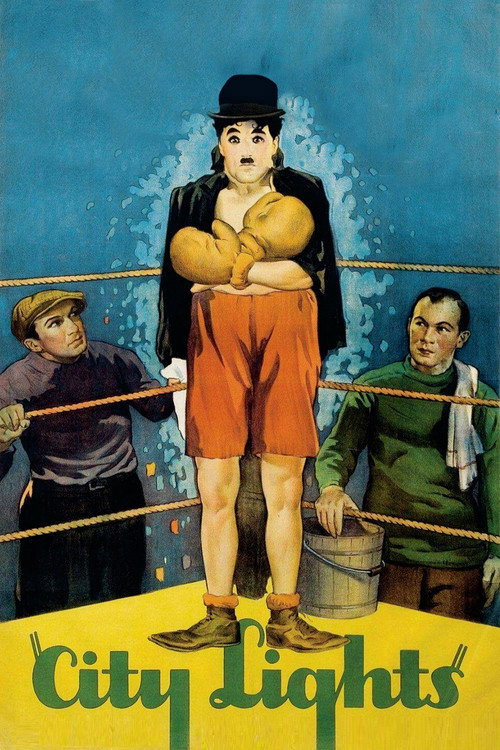
Charlie Chaplin's City Lights arrived in 1931, three years into the talkie revolution, and Chaplin stubbornly kept it silent. The gamble paid off. The film became one of the highest-grossing releases of the year and remains the most emotionally direct of his features. Chaplin plays the Tramp, a figure who drifts through a city of hard edges and small mercies. He falls for a blind flower girl, played with quiet dignity by Virginia Cherrill, and convinces her that he is a wealthy benefactor.
The ruse depends on an eccentric millionaire, Harry Myers, whose friendship with the Tramp swings wildly between drunken generosity and sober indifference. Chaplin wrote, directed, produced, scored, and starred, a one-man band working with a budget of roughly $1.5 million, a huge sum at the time. The film earned about $4.25 million worldwide, a strong return during the Depression. It blends slapstick and pathos with a precision that few filmmakers have matched. The boxing match alone is a masterclass in choreographed chaos. Yet the film's reputation rests on its final scene, a wordless exchange that critics have dissected for nearly a century.
Availability and pricing can change. Confirm on the provider's site before purchasing.
A rainy afternoon sets the stage when the Tramp rescues a blind flower girl from police harassment after she drops her wares to beg for money. Her beauty captivates him instantly, but their connection is fragile. She needs funds for an eye operation to restore her sight, a medical expense her family cannot afford. Determined to help, the Tramp embarks on a series of desperate schemes to raise the necessary cash while navigating the harsh realities of the Great Depression.
His fortunes shift when he meets a drunken millionaire at a party. The two bond over shared vulnerability, but the millionaire forgets their encounter once he sobers up, treating the Tramp with cold hostility. This volatile relationship becomes the engine of the story. When the Tramp is thrown out of the mansion for being drunk, he loses his shelter and must find new ways to survive. He takes a job as a sparring partner for a prizefighter named Hank Mann, enduring a brutal beating to protect the referee and win the crowd's favor. The purse he earns is intended solely for the girl's surgery.
Meanwhile, the Tramp visits the flower girl daily, pretending to be a wealthy patron to spare her feelings. He buys flowers and shares tender moments, all while hiding his true identity. As the deadline for the operation approaches, the tension mounts. The girl grows suspicious of his sudden wealth and the nature of his "friendship" with the millionaire. The narrative builds toward a pivotal confrontation where the Tramp must choose between his dignity and the well-being of the woman he loves. The story culminates in a sequence that tests the limits of human endurance and the power of selfless love, leaving the audience wondering if the Tramp will succeed in his mission and what the consequences of his actions will be for both him and the flower girl.
City Lights (1931) Trailer #1 | Movieclips Classic Trailers
City Lights - Official Trailer
City Lights (1931) - Original Theatrical Trailer
Critical Consensus
Chaplin's masterpiece blends slapstick humor with deep emotional resonance. His direction and performance are flawless, creating a timeless tale of love and sacrifice that transcends language barriers. The film's enduring legacy stems from its universal themes and Chaplin's unparalleled ability to evoke empathy and laughter in equal measure.
“It is a film that makes you laugh and cry, and then makes you want to laugh and cry again. Chaplin's genius lies in his ability to make the absurd seem real and the tragic seem funny.”
Roger Ebert
Chicago Sun-Times
“Chaplin's City Lights is a triumph of the human spirit, a film that reminds us of the power of kindness and the resilience of the human heart in the face of adversity.”
Manohla Dargis
The New York Times
“A perfect blend of comedy and drama, City Lights is a testament to Chaplin's artistry and his ability to create characters that resonate with audiences across generations.”
Todd McCarthy
Variety
“Chaplin's City Lights is a film that defies time, remaining as relevant and moving today as it was nearly a century ago. A true classic of world cinema.”
Peter Bradshaw
The Guardian
Charlie Chaplin
The Tramp
Virginia Cherrill
A Blind Flower Girl
Florence Lee
Her Grandmother
Harry Myers
An Eccentric Millionaire
Al Ernest Garcia
His Butler
Hank Mann
A Prizefighter
Director
Charlie Chaplin
Writers
Charlie Chaplin, Harry Crocker, Harry Carr
Composer
Charlie Chaplin
Cinematographers
Roland Totheroh, Gordon Pollock
Producer
Charlie Chaplin
Join the community
fans discussing