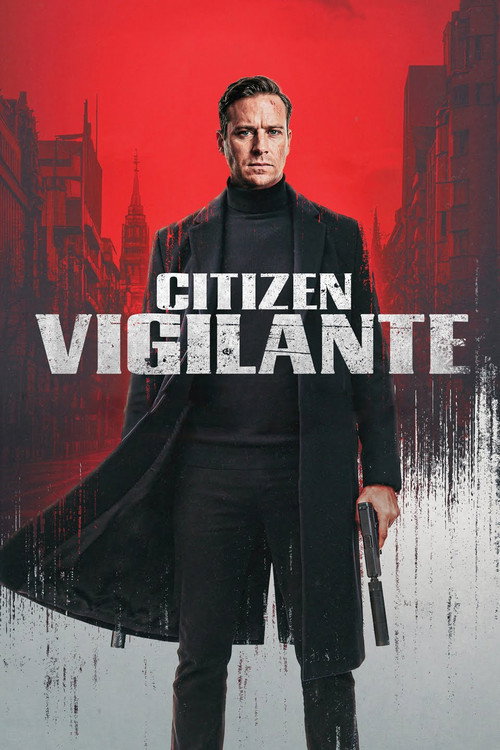
In an unnamed European city where crime runs unchecked and the justice system routinely fails victims, a former U.S. Army officer named Sanders takes matters into his own hands. Armie Hammer plays the title character, a real estate businessman who moonlights as a brutal vigilante, targeting criminals who escaped punishment. His blurred-face manifestos go viral, making him a folk hero to some and a menace to others. Directed by Uwe Boll, the film was shot in Croatia, Germany, and the United States, with a lean 89-minute runtime. Boll, known for his provocative filmography, crafted this entry as a direct response to a 2016 Hamburg gang-rape case where perpetrators received suspended sentences.
The story pits Sanders against Interpol Regional Chief Henry, played by Costas Mandylor, a lawman determined to stop the vigilante's bloody crusade. As Sanders eliminates corrupt judges, migrant gang members, and others who slipped through the system, Henry closes in. The film's nonlinear structure weaves together multiple attacks, each one more shocking than the last. Early audience votes on IMDb give it a 6.8 out of 10, but critics have been far less kind, calling it morally bankrupt and exploitative. The film was effectively banned in Germany, failing to receive a rating over fears it could incite violence against migrants.
Where to Watch
Rent
Amazon Prime Video
Vudu
Google Play Movies
Buy
Apple TV+
Availability and pricing can change. Confirm on the provider's site before purchasing.
PlotSpoiler-free
A young mother is fatally stabbed in front of her son by a passing migrant. This opening scene establishes the lawless atmosphere of the unnamed European city where the story unfolds. News reports tell of parents afraid to let children play outside, women avoiding the streets after dark. The city is gripped by crime and a judicial system that seems to protect perpetrators while ignoring victims.
Michael Sanders is a former U.S. Army officer who moved to Europe after inheriting his estranged father's real estate business. By day he manages properties, collecting rent from tenants. By night he becomes a vigilante, targeting criminals who escaped justice. He records videos with a blurred face, delivering manifestos about a legal system that re-traumatizes victims and protects offenders. These videos spread online, making him a viral sensation. Influencers sing his praises while authorities scramble to identify him.
Sanders funds his operations through the rent he collects. He runs his family business with the same exacting control he applies to judging evildoers. His targets include a corrupt judge who let a rapist walk free, a gang of migrant teenagers who assaulted a local girl, and a mafia boss operating with impunity. Each attack is methodical and brutal, filmed with a gritty, handheld style.
Interpol Regional Chief Henry leads the investigation. He is a by-the-book lawman frustrated by the public's support for the vigilante. Citizens refuse to cooperate, some even tipping off Sanders to police movements. Henry's pursuit becomes personal as the body count rises. The cat-and-mouse game takes them through the city's underbelly, from abandoned factories to high-rise apartments.
The film weaves between Sanders' past and present, showing how the Hamburg case inspired his transformation. Flashbacks reveal his military training and the moment he decided to take action. The narrative builds toward a confrontation between Sanders and Henry, with the city's fate hanging in the balance. Along the way, Sanders kills a prostitute's client, lectures a sex worker about black mold on her ceiling during a paid encounter, and executes a police officer in cold blood. The violence is unflinching, the tone shifting wildly between grim realism and dark comedy.
Ending ExplainedSpoilers
Trailers
Citizen Vigilante - Official Trailer I Uwe Boll, Armie Hammer
Critics have almost universally panned Citizen Vigilante as morally bankrupt and exploitative. Despite attempting to address serious issues of justice and immigration, the film descends into offensive, violent spectacle. Reviewers note that its incoherent message and inappropriate treatment of its subject matter make it a shameless exercise in ambulance-chasing rather than an earnest pursuit of justice.
 United States