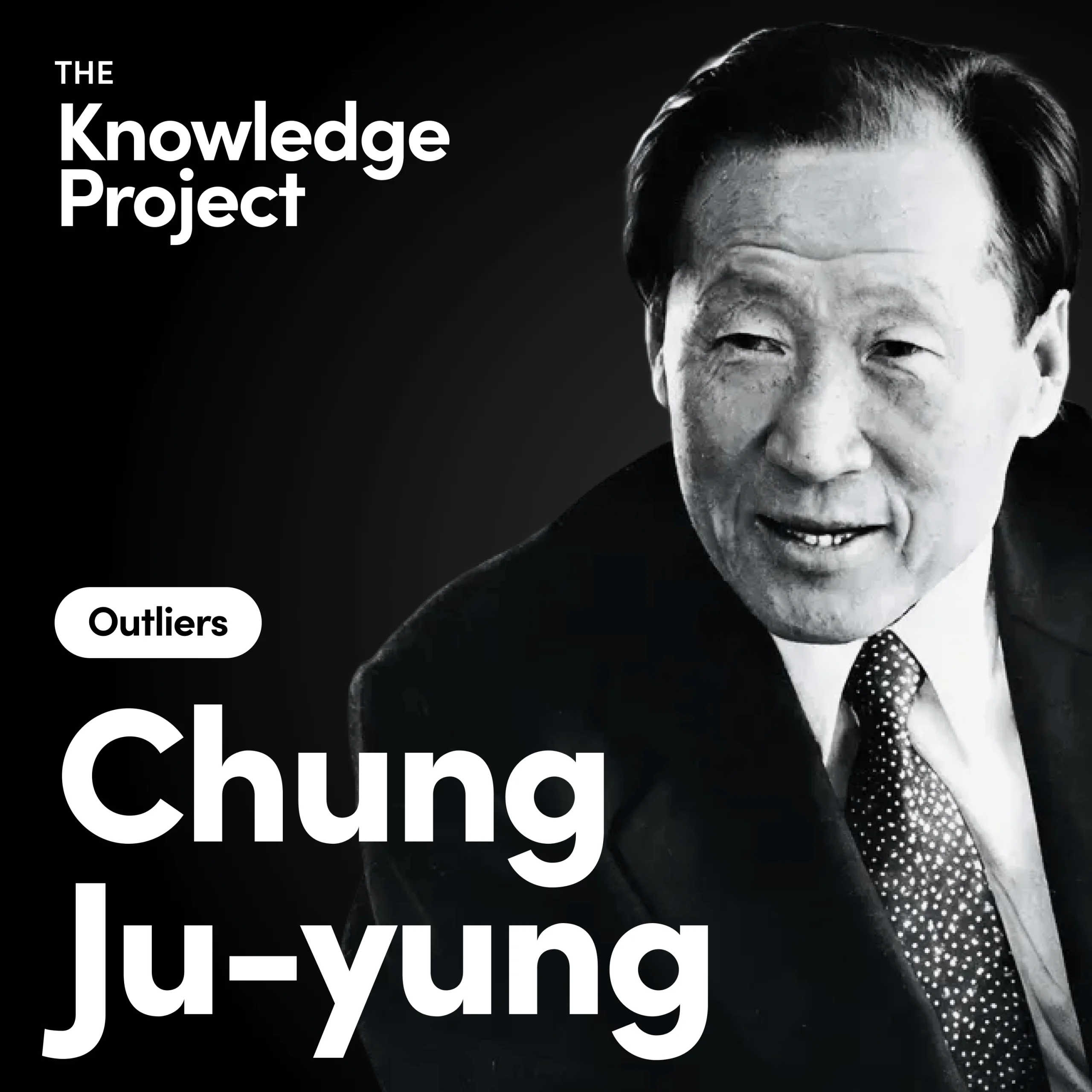
Chung Ju-yung
 South Korea
entrepreneur•politician•author
Also known as: Chung Ju-young, Chung Ju-yong
Birthday
November 25, 1915
Birth Sign
Sagittarius
Birthplace
Tongchon County, Pyongan Province (now North Korea)
Age
Died at 85
Height
5 ft 7 in (170 cm)
About
Chung Ju-yung was a South Korean entrepreneur and the founder of the Hyundai Group, one of the world's largest chaebols. Born in Tongchon County (now part of North Korea), he rose from extreme poverty to become the architect of South Korea's industrialization. He is widely regarded as a folk hero for his relentless work ethic and visionary leadership that transformed Hyundai from a small construction firm into a global industrial powerhouse spanning shipbuilding, automobiles, electronics, and heavy industry. His legacy includes building the first Korean-owned shipyards, constructing the country's first expressways, and creating a domestic automobile industry that now competes globally.
Under his direction, Hyundai became the first Korean-owned shipbuilder and constructed the country's first expressways. Beyond business, Chung entered politics, running for President of South Korea in 1992 and later serving as a lawmaker. He also wrote an autobiography, Born of This Land, which became a bestseller and remains a canonical text in Korean literature and business studies. The "Asan" foundation, named after his pen name, continues to manage his social welfare initiatives. In recent years, the Hyundai Motor Group has commemorated his legacy with events such as a 25th-anniversary memorial concert broadcast globally on CNN, featuring performances by renowned pianists to celebrate his enduring influence on the nation's economy and culture.
Early Life & Background
Chung Ju-yung was born on November 25, 1915, in Tongchon County, Pyongan Province, which was then under Japanese rule. He was the eldest son of a poor peasant farming family. His early life was marked by severe deprivation; historical accounts and his own autobiography note that he and his family often ate tree bark to survive during famines. Despite these hardships, he showed an early aptitude for survival and risk-taking.
As a teenager, he was sent to sell the family's only cow at the market. Instead of returning with money, he used the proceeds to buy a train ticket and ran away to Seoul at the age of 18, leaving his family behind to seek a better life. He received no formal education beyond elementary school but was a voracious learner. In Seoul, he worked various odd jobs, including selling vegetables and working in a rice mill, before entering the construction business. His first major venture was a small auto repair shop founded in 1946, which quickly expanded into general construction. By the late 1940s, he had established the Hyundai Construction Company, marking the beginning of his ascent. He stood approximately 170 cm tall and was known for his robust health and energetic demeanor despite his age.
Career Growth
Chung's career trajectory was defined by bold risks and massive infrastructure projects that others deemed impossible. In 1947, he won his first major government contract to rebuild bridges damaged during the Korean War. By 1953, he had secured the contract to build the Gyeongbu Expressway, the first highway connecting Seoul and Busan, solidifying his reputation as a capable contractor. In 1967, he founded Hyundai Engineering & Construction, further diversifying his portfolio.
In 1968, he made a monumental leap into the shipbuilding industry by establishing the Ulsan Shipyard. This was a significant achievement as South Korea had no prior shipbuilding capacity. Chung famously secured a loan from Barclays Bank in London in 1971 using only a photograph of an empty beach and a 500-won banknote to fund the project. In 1972, he launched Hyundai Motor Company, entering the automobile manufacturing sector. Throughout the 1970s and 1980s, he oversaw the expansion of Hyundai Heavy Industries into the world's largest shipbuilder and diversified into electronics and petrochemicals.
Chung's influence extended beyond business. In 1992, he ran for President of South Korea, finishing second in the election against Kim Young-sam. Despite his defeat, his political campaign highlighted his popularity and influence. In 1994, he was elected to the National Assembly as a lawmaker, serving until 1996. In 1998, he led a herd of 500 cattle across the Demilitarized Zone (DMZ) into North Korea to provide food aid during a famine, becoming the first South Korean corporate leader to visit the North. This act earned him international acclaim for humanitarianism and inter-Korean reconciliation. He continued to oversee the conglomerate's operations until his death in 2001. He was inducted into the Korean Business Hall of Fame and received honorary doctorates from Seoul National University and Johns Hopkins University.
Career Timeline
Public Image & Style
Chung Ju-yung is portrayed as a tough, visionary, and patriotic leader. Media depictions emphasize his humility, his connection to the common people, and his unwavering belief in the potential of South Korea. His style was practical and unpretentious, reflecting his farming roots. He is often depicted in black-and-white photos wearing traditional Korean attire or simple business suits, reinforcing his image as a man of the people. His ability to take on massive projects that others deemed impossible, such as building a shipyard from scratch, cemented his reputation as a fearless innovator. He is frequently cited in articles regarding the "Asian Miracle" and the founders of the world's most influential corporations by Time Magazine and Forbes.
Fame & Fandom
Chung Ju-yung's fanbase is not the kind that screams at concerts or trends hashtags. It is quieter, more institutional, a devotion expressed in boardrooms, museum halls, and the occasional gift of his autobiography to a visiting king. There is no formal fandom name; the closest thing is the honorific 'Asan,' his pen name, which now labels the Asan Chung Juyung Museum in Seoul, a pilgrimage site for those who revere the man who built Hyundai from nothing. The most organized 'fans' are the Hyundai Motor Group itself, which commemorates his legacy with annual events, including a 25th anniversary memorial concert in February 2026 that was broadcast worldwide on CNN.
On the global fame stage, iFANN's Global Fame Engine has evaluated Chung Ju-yung, but as of August 2026, he holds no placement in the published rankings, neither the Global Top 1,000 nor any Top-100 scope list. That absence, however, says little about his resonance. The stories fans tell are the real measure: the cow sold to fund his escape to Seoul, the tree bark he ate to survive, the 500 cattle he drove across the DMZ in 1998 as a humanitarian gesture. These are the legends that keep his name alive, not in fan forums, but in the national memory of South Korea, where he remains a folk hero of industrialization. In September 2026, news reported that Euisun Chung achieved the "vertical integration" dream originally envisioned by Chung Ju-yung in the U.S. market, further expanding the family's business reach.
Interesting Facts and Legends
The legend of Chung Ju-yung stealing a cow to buy a train ticket is a founding myth of Hyundai, symbolizing his daring nature. In 1971, he secured a loan from Barclays Bank in London using only a 500-won bill and a photo of an empty beach, a story that became legendary in business circles. Driving 500 cattle across the DMZ in 1998 was a unique act of humanitarianism that garnered international attention. His autobiography, Born of This Land: My Life Story, remains a canonical text, even gifted to the King of Ghana's Ashanti Kingdom in July 2026 as a diplomatic artifact. Princess Anne visited the shipyard built by Chung Ju-yung in 2026, highlighting the enduring legacy of his shipbuilding empire. The Hyundai Motor Group and the Asan Foundation maintain active social media channels that frequently reference his legacy, share historical content, and promote events like the 2026 memorial concert, with follower counts in the millions.
Notable Quotes
“I will build a shipyard from scratch.”
“If you want to succeed, you must be willing to take risks.”
“The future belongs to those who believe in the beauty of their dreams.”
“I am not a politician, but I will serve my country.”
Family & Personal Life
Chung Ju-yung was married to Byeon Jung-seok in 1941. Their union lasted until his death in 2001. They had several children who later took over leadership roles in the Hyundai Group, including Chung Mong-joon and Chung Mong-koo. Chung Mong-koo served as Chairman of Hyundai Heavy Industries, while Chung Mong-joon chaired Hyundai Rotem. His granddaughter, Euisun Chung, currently serves as the Chairman of Hyundai Motor Group. The couple lived in Seoul, and their household was known for its strong emphasis on family values and hard work. There are no public records of other romantic relationships or engagements prior to this marriage. The estate's financial trajectory has remained robust, driven by posthumous releases, licensing, merchandise, royalties, and IP rights managed by the foundation.
Notable Connections
Chung Mong-koo, Chung Mong-joon, Euisun Chung, Byeon Jung-seok
Relationships & Dating History
Chung Ju-yung was married to Byeon Jung-seok in 1941. Their union lasted until his death in 2001. There are no public records of other romantic relationships, engagements, or divorces prior to this marriage. The couple had several children who later took over leadership roles in the Hyundai Group, including Chung Mong-joon and Chung Mong-koo. Chung Mong-koo served as Chairman of Hyundai Heavy Industries, while Chung Mong-joon chaired Hyundai Rotem. His granddaughter, Euisun Chung, currently serves as the Chairman of Hyundai Motor Group. There is no documented dating history outside of his marriage to Byeon Jung-seok. No high-profile flings or rumored relationships have been substantiated by credible sources.
- MarriedByeon Jung-seok1941 - 2001Married until his death; they had several children who later led Hyundai Group companies.
Death & Aftermath
Died
March 21, 2001 (aged 85)
Death Place
Songpa District, Seoul, South Korea
Cause of Death
Cardiac arrest
Chung Ju-yung spent his final days in a medical center in Songpa District, Seoul, where he passed away on March 21, 2001. He was 85 years old at the time of his death, and hospital staff confirmed that cardiac arrest was the cause following a medical examination. The nation reacted with immediate and profound grief to the loss of the man who had transformed South Korea from a war-torn agrarian society into an industrial powerhouse. Thousands of mourners gathered for a state-level funeral that reflected his towering status as a national icon. Government officials, business leaders, and international dignitaries paid tribute to his contributions to the country's economic miracle.
Following his death, Chung was laid to rest at the Hyundai Cemetery in Gyeonggi-do, a site that has since become a permanent landmark for those wishing to honor his memory. His passing marked the end of an era, but his legacy remained deeply institutionalized through various honors and foundations established in his name. The Asan Foundation continues to operate under his pen name, focusing on social welfare and cultural projects across the globe. Additionally, the Chung Ju-yung Distinguished Professorship in International Economics and Business was established at Johns Hopkins University to promote economic development and research. His autobiography remains a seminal work, and his image continues to inspire future generations of entrepreneurs within the sprawling conglomerates he founded. In recent years, the Hyundai Motor Group has commemorated his legacy with events such as a 25th-anniversary memorial concert broadcast globally on CNN, featuring performances by renowned pianists to celebrate his enduring influence on the nation's economy and culture. Following his death, the Hyundai Group split into separate entities, but the legacy of his vision remained central to the company's identity.
Net Worth (Estate Value)
$3 Billion
iFANN Editorial Team estimate
Chung Ju-yung passed away in 2001, leaving behind a vast estate managed by the Asan Foundation and the Hyundai Family Trust. At the time of his death, his personal net worth was estimated between $2 billion and $4 billion USD, making him one of the wealthiest individuals in Asia. The primary sources of his wealth included ownership stakes in Hyundai Heavy Industries, Hyundai Motor Company, Hyundai Construction, and Hyundai Electronics. Additional income came from real estate holdings, investments in shipping, and royalties from his autobiography.
Research by the iFANN Editorial Team puts Chung Ju-yung's estate value at approximately $3 Billion as of 2026. While no specific "2026 net worth" figure exists for the deceased individual, the Hyundai Group's valuation remains a key indicator of the family's wealth. Recent reports in 2026 highlight the group's continued dominance, with Euisun Chung achieving vertical integration goals in the U.S., further expanding the family's business reach. The estate's financial trajectory has remained robust, driven by posthumous releases, licensing, merchandise, royalties, and IP rights managed by the foundation. The Hyundai Group's market capitalization fluctuates but consistently exceeds $100 billion USD.
Awards Won (4)
Chung Ju-yung received numerous national honours and distinctions throughout his life. He was awarded the Order of Merit for National Foundation (First Class), one of South Korea's highest civilian awards, recognizing his contribution to the nation's development. He received honorary doctorates from various universities, including Seoul National University and Johns Hopkins University. He was inducted into the Korean Business Hall of Fame and recognized by the South Korean government for his role in the country's industrialization. He was also awarded for his 1998 cattle drive to North Korea, hailed as a significant act of inter-Korean reconciliation.
1960 · Civilian Award
Contribution to National Development
1970 · Academic Honor
Seoul National University
Known For
Hyundai Group
1946 · Founder
Gyeongbu Expressway
1953 · Contractor
Ulsan Shipyard
1968 · Founder
Hyundai Motor Company
1972 · Founder
Cattle Drive to North Korea
1998 · Humanitarian Leader
Keywords
Sources
Quick Facts
- Profession
- entrepreneur, autobiographer, politician
- Born
- November 25, 1915
- Birthplace
- Tongchon County
- Died
- March 21, 2001
- Death Place
- Songpa District
- Gender
- Male
- Spouse
- Byeon Jung-seok
- Birth Sign
- Sagittarius
Personal Details
- Full Name
- Chung Ju-yung
- Height
- 5 ft 7 in (170 cm)
- Spouse
- Byeon Jung-seok
- Children
- Chung Mong-koo · Chung Mong-joon · Chung Eui-sun
- Education
- Elementary school only
Frequently Asked Questions
Who was Chung Ju-yung?
How did Chung Ju-yung start Hyundai?
What caused Chung Ju-yung's death?
Did Chung Ju-yung ever run for president?
What is the Asan Foundation?
Similar People
Join the community
fans discussing