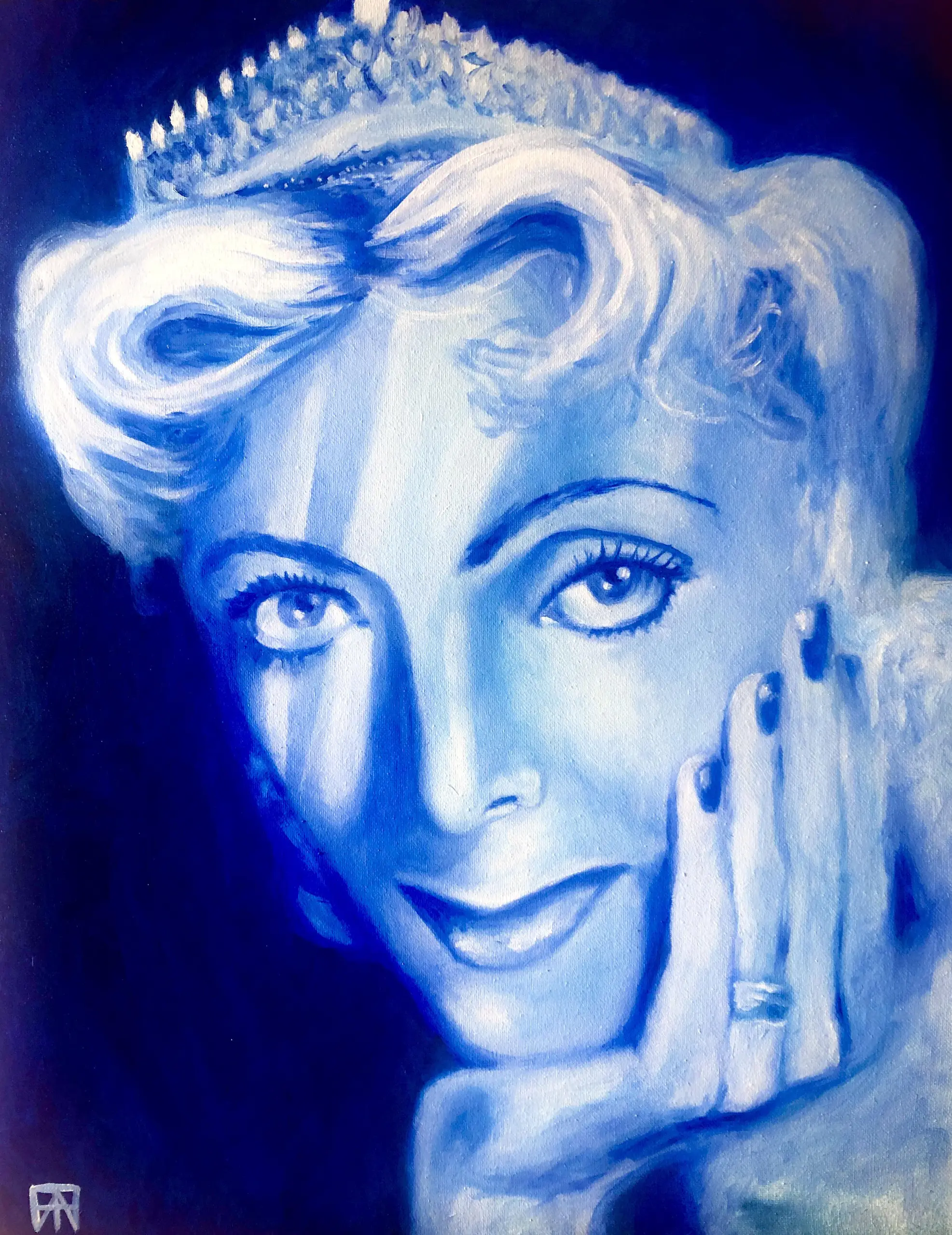
Christine Jorgensen
 United States
actress•singer•transgender activist
Also known as: George William Jorgensen Jr., Christine Jorgensen
Birthday
May 30, 1926
Birth Sign
Gemini
Birthplace
The Bronx, New York City, New York, United States
Age
Died at 62
Height
5 ft 6 in (168 cm)
About
Christine Jorgensen was an American actress, singer, and transgender activist, and the first American to become a household name for having medically transitioned. Her 1953 return from Copenhagen turned a private medical journey into an international news event, and she spent the next three decades refusing to let the story be told without her in the room.
She was, by her own design, an educator more than a celebrity. Nightclub engagements and a novelty single paid the bills, but the college lecture circuit is where she did her real work, answering the same blunt questions year after year with composure and a dry sense of humor. Her 1967 autobiography sold nearly 450,000 copies and remains the fullest account of her life in her own voice.
She died in 1989 at 62. The phrase that has attached itself to her ever since, the first widely known American trans celebrity, is accurate but thin. What she actually did was insist, in front of a hostile press, on describing her own life in her own terms.
Early Life & Background
George William Jorgensen Jr. arrived on May 30, 1926, the second of two children in a working-class Bronx household. His father, George Sr., was a carpenter and contractor of Danish descent, and his mother, Florence Davis Hansen, ran the home. The family's Danish roots mattered later: when Jorgensen began researching surgical options in the late 1940s, Denmark was not an arbitrary destination.
Classmates and family remembered a quiet, reserved kid, sometimes a lonely one, who gravitated toward photography and the theater rather than sports or the street. He attended Christopher Columbus High School in the Bronx, and after graduation took a job while waiting on the draft board.
The Army called in 1944. Jorgensen served stateside as a clerical worker through the end of World War II and was discharged in 1946, a stretch of service that would later give the Daily News its memorable "Ex-GI" headline. The G.I. Bill sent him to photography school in New York, and further study at the New York Institute of Photography followed. He worked as a photographer and lab technician, unremarkable jobs that gave him the independence and the privacy to research hormone treatments and surgical possibilities in Sweden and Germany on his own time.
That research was painstaking and mostly solitary. Jorgensen wrote letters, read what little medical literature existed, and eventually made contact with people who could help. The breakthrough came through Copenhagen, where endocrinologist Christian Hamburger took up the case and the Danish Ministry of Justice granted special permission for treatment. Hormone therapy began in 1951, with the surgical stage following in 1952. What Jorgensen expected was a private life. What he got, upon stepping off the plane back in New York in early 1953, was a press mob.
Career Growth
The story broke on the front page of the New York Daily News in early 1953 under the headline "Ex-GI Becomes Blonde Beauty," and the reaction was immediate and enormous. Jorgensen could have gone into hiding. Instead she sat for interviews, and the interviews went well, because she was poised, funny, and completely unembarrassed. That combination made her a booking rather than just a headline.
Nightclubs and theaters followed through the 1950s and 1960s, including a documented run at the Sahara in Las Vegas and engagements in New York. She recorded a single, I Enjoy Being a Girl, a choice of material that fans still read as a wink. The performing was the visible part. The college lecture circuit was the substance, and she worked it for roughly two decades, speaking plainly about transgender lives to rooms of students who had never met anyone like her.
In 1967 she published Christine Jorgensen: A Personal Autobiography, which sold nearly 450,000 copies and gave her a permanent, self-authored record. By the early 1980s she had retired from public life to Laguna Beach, California, though she still surfaced for interviews, including a 1984 conversation with Gary Collins and a 1977 sit-down with Geraldo Rivera about what counts as normal.
Career Timeline
Public Image & Style
The press of 1953 sold her as a blonde beauty and a curiosity, and Jorgensen spent the rest of her life quietly refusing that frame. She dressed impeccably, spoke in complete paragraphs, and answered rude questions with a smile that suggested she had heard worse. Interviewers consistently came away describing her as disarming, which was the whole strategy: make the audience comfortable enough to actually listen.
Her public voice was warm but never confessional. She did not perform trauma for cameras. She presented herself as a woman with a job to do, which happened to be explaining herself to a country that had never met anyone like her. That poise is what turned a tabloid sensation into a figure historians now treat as a pioneer.
Fame & Fandom (iFAMOUS Rankings)
iFANN has not yet gathered fame data for Christine Jorgensen, so there is no published placement to point to here. Her fame is a different kind anyway, historical rather than metric: she is routinely named the first widely known American trans celebrity, and that sentence shows up in nearly every obituary, archive entry, and stage adaptation that touches her. She is not on the September 2026 iFAMOUS Rankings flagship list.
There is no fandom name and no organized fanbase in the modern sense. Her admirers are historians, LGBTQ+ advocates, and trans-history enthusiasts, and they commemorate her through archives and scholarship rather than streaming campaigns or birthday billboards. The Legacy Walk in Chicago inducted her in 2012 as part of its outdoor LGBT history installation, and PBS's American Experience returned to her story in 2023. In 2024 the Off-Broadway play The Christine Jorgensen Show at 59E59 Theaters drew audiences who knew the headline but not the wit behind it, which is roughly the reaction she produced in 1953 too.
Interesting Facts and Legends
She disliked the word transsexual and told publicist Chris Costello she preferred to describe herself simply as someone who had gone through a sex change. Fans still retell the story of her 1950s nightclub crowds, sometimes with embellishments about people fainting, though the packed houses themselves are well documented in the press of the day. Her 1984 interview with Gary Collins is the late-career clip most often passed around, and a 1977 segment with Geraldo Rivera debating the meaning of normal gets recirculated every few years. The 1970 film The Christine Jorgensen Story starred John Hansen in the title role, a casting fact that surprises people who assume she played herself. She was an accomplished photographer before she was famous for anything else, and she kept taking pictures long after the cameras turned toward her.
Notable Quotes
“I was the first to have a sex change, and I'm proud of it.”
“I disliked the word transsexual and preferred to say I had a sex change.”
Family & Personal Life
Jorgensen grew up in the Bronx as the younger of two children. Her father, George William Jorgensen Sr., worked as a carpenter and contractor and traced the family's roots to Denmark. Her mother, Florence Davis Hansen, kept the household. The family was working class, and the Danish connection in particular shaped the course of her life, since it pointed her toward Copenhagen when she began searching for medical help in the late 1940s.
She never married and had no children. She lived out her final years alone in Laguna Beach, California, after retiring from public life in the early 1980s, and her surviving relatives handled arrangements after her death in 1989.
Notable Connections
Endocrinologist Christian Hamburger oversaw her treatment in Copenhagen and remained the medical figure most tied to her story. Publicist Chris Costello handled her press in later years and left some of the sharpest recollections of how she wanted to be described. Interviewers Gary Collins and Geraldo Rivera produced two of the most-rewatched conversations of her career.
Relationships & Dating History
Jorgensen never married and had no children, a fact sources state consistently. In the early 1950s, shortly after her return to the United States, she was briefly engaged to a man she publicly identified only as Bill, described in some accounts as a young statistician she met after coming home. The engagement was called off, and the specific identity behind the name has never been fully documented.
Later accounts describe a relationship during her performing years with a man she called John. She said in interviews that she had been in love and had chosen not to marry, framing the decision as her own rather than as something imposed on her. At the time of her death in 1989 she was single.
- EngagedBill1953 - 1953Brief engagement in the early 1950s to a man she identified publicly only as Bill; the engagement was called off.
- DatedJohnRelationship during her nightclub performing years with a man she referred to publicly as John.
Death & Aftermath
Died
May 3, 1989 (aged 62)
Death Place
San Clemente, California, United States
Cause of Death
Bladder and lung cancer
Jorgensen died on May 3, 1989, at age 62 in San Clemente, California, roughly three weeks shy of her 63rd birthday. Her representatives and the New York Times obituary both reported the cause as bladder and lung cancer. She had stepped away from public life years earlier, settling in Laguna Beach in the early 1980s, and her final years were quiet ones away from the cameras that had followed her since 1953.
The obituaries did the framing work. The Times ran the headline "Christine Jorgensen, 62, Is Dead; Was First to Have a Sex Change," and papers across the country followed with tributes that treated her as a pioneer rather than a curiosity, a notable shift from the tone of the 1953 coverage that made her name. No investigation or legal proceeding followed her death, and no dispute over the cause was ever raised.
There was no large public funeral, and no foundation bearing her name is well documented today. What did follow was a slow, steady reclamation by the communities she had made visible. Transgender history archives, commemorative projects, and later the Legacy Walk in Chicago kept her story in circulation, and PBS's American Experience returned to her in 2023 with the short (Trans)formation: The Story of Christine Jorgensen. In 2024 the Off-Broadway play The Christine Jorgensen Show ran at 59E59 Theaters in New York, putting her wit and her reluctance about the spotlight back on a stage. Her autobiography stayed in print and in libraries, which is arguably the memorial she would have chosen: her own account, in her own words.
Net Worth (Estate Value)
$1 Million
iFANN Editorial Team estimate
Jorgensen's earnings came from three places: nightclub and theater engagements through the 1950s and 1960s, the college lecture circuit she worked for roughly two decades, and royalties from her 1967 autobiography, which sold nearly 450,000 copies. There was no major brand partnership, no film franchise, and no posthumous licensing operation of any scale. She retired to Laguna Beach in the early 1980s on what those decades had provided.
Reliable multi-source figures for her estate do not exist. Celebrity net worth sites do not track her, and the numbers that circulate online are unverified. Based on the documented revenue streams, the iFANN Editorial Team's analysis of her lifetime earnings and estate points to roughly $1 Million as of 2026. That reflects a career built on personal appearances and one strong book rather than on residuals or intellectual property.
Her financial legacy sits mostly in cultural rather than monetary terms. The autobiography remains the asset with staying power, still read and cited, and the 1970 film and later stage adaptations kept her name in circulation without generating a documented estate windfall.
Awards & Accolades
View 4 records, honours and achievementsKnown For
First American widely known for undergoing sex reassignment surgery
1953 · Herself
Christine Jorgensen: A Personal Autobiography
1967 · Author
The Christine Jorgensen Story
1970 · Subject
Keywords
Sources
Quick Facts
- Profession
- actress, singer, transgender activist
- Born
- May 30, 1926, The Bronx, New York City
- Died
- May 3, 1989, San Clemente, California
- Cause of Death
- Bladder and lung cancer
- Birth Sign
- Gemini
- Height
- 5 ft 6 in (168 cm)
- Never Married
- True
- Autobiography Sales
- Nearly 450,000 copies
Personal Details
- Full Name
- George William Jorgensen Jr.
- Height
- 5 ft 6 in (168 cm)
- Children
- None
- Education
- Christopher Columbus High School; New York Institute of Photography
Filmography
2
Total
1
Film
1
TV
Frequently Asked Questions
What happened to Christine Jorgensen?
Did Christine Jorgensen ever get married?
Is the Christine Jorgensen story true?
What was Christine Jorgensen's cause of death?
Why is Christine Jorgensen famous?
Similar People
Join the community
fans discussing