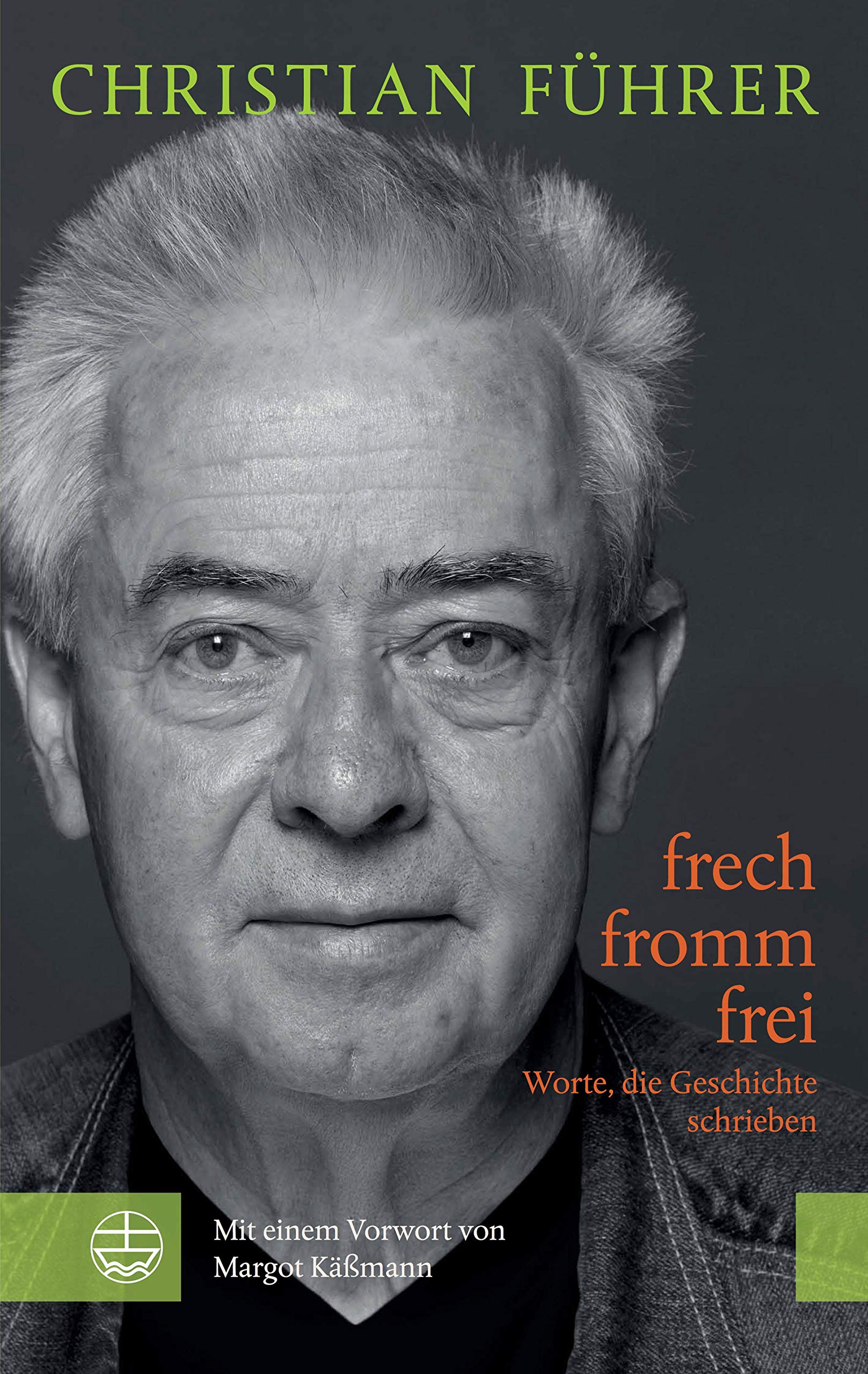
Christian Führer
 Germany
Birthday
March 5, 1943
Birth Sign
Pisces
Birthplace
Leipzig, Saxony, Germany
Age
Died at 71
About
Christian Führer was a German Protestant pastor and a central figure in the peaceful revolution that brought down East Germany's communist regime. Born on March 5, 1943, in Leipzig, he served as pastor of the Nikolai Church, where his weekly peace prayers grew into the Monday demonstrations of 1989. Those protests, which drew hundreds of thousands into the streets, helped topple the Berlin Wall and led to German reunification in 1990.
Führer's moral authority and commitment to nonviolence made him a trusted leader during a time of great uncertainty. He died on June 30, 2014, in Leipzig, at the age of 71, leaving behind a legacy of courage and faith that continues to inspire.
Early Life & Background
Christian Führer was born in Leipzig in 1943, near the end of World War II, and grew up in the chaos of postwar Germany as the Soviet occupation hardened into the German Democratic Republic. He trained as a Protestant pastor, drawn to the church's role as a refuge for free thought in a repressive state. By the early 1980s, he was serving at the Nikolai Church, one of Leipzig's oldest and most revered places of worship.
In 1982, Führer began hosting weekly peace prayers on Monday evenings. What started as a small gathering of a few dozen people slowly grew as word spread. In a 2009 PBS interview, he explained that the church provided one of the only free spaces in East Germany, a place where people could speak openly. His distinctive appearance, with spiky hair and denim vests, made him a recognizable and approachable figure in the community.
Career Growth
By 1989, the peace prayers had transformed into the Monday demonstrations, drawing tens of thousands of people to Leipzig's streets each week. The pivotal moment came on October 9, 1989, when an estimated 70,000 people gathered peacefully, refusing to be intimidated by the regime. That demonstration is widely credited with breaking the back of East German authority. On November 9, the Berlin Wall fell, and within a year, Germany was reunified.
Führer continued his pastoral work and became a symbol of the peaceful revolution. In 2009, he gave an extended interview for PBS's Religion & Ethics NewsWeekly, reflecting on the power of prayer and the courage of ordinary people. He remained active in Leipzig's civic life until his death in 2014.
Career Timeline
Public Image & Style
Christian Führer's public image was that of a humble, courageous pastor who stood firm in the face of oppression. Media portrayals consistently highlight his commitment to nonviolence and his ability to inspire hope. His spiky hair and denim vests became part of his recognizable persona, making him a relatable figure among Leipzig's citizens. In Germany, he is remembered as a moral leader of the peaceful revolution, honored in commemorations of the Monday demonstrations and the fall of the Berlin Wall. He did not cultivate a fan following, but his legacy lives on in the civic memory of Leipzig.
Fame & Fandom (iFAMOUS Rankings)
Christian Führer does not currently hold a placement in the published rankings for the Global Top 1,000 or any Top-100 scope list. The iFANN Global Fame Engine has evaluated this figure and determined that he is unranked. While he lacks a formal numeric standing among living entertainers, his historical impact commands a specific, high-level recognition that transcends standard popularity metrics. He remains a central figure in the narrative of the peaceful revolution, with his legacy anchored in verified historical acts of courage rather than modern media cycles. His fame is derived from the scale of the Monday demonstrations and the profound societal shift he helped engineer, drawing crowds of over 700,000 during the peak of the unrest. Unlike figures whose renown fluctuates with viral trends, Führer's reputation is stable, rooted in the fall of the Berlin Wall and the subsequent reunification of Germany. There is no documented fanbase with an official name, nor are there organized campaigns, chart pushes, or birthday billboards associated with his memory. As a historical figure and Protestant pastor, he did not cultivate a community in the modern sense of fandom; instead, he is remembered by historians, political activists, and the general public as a symbol of non-violent resistance. His interaction with the public was strictly pastoral and political, characterized by weekly prayer meetings at St. Nicholas Church that evolved into massive demonstrations. No records exist of autograph signings or meet-and-greets, as his role was that of a dissident clergyman operating under a totalitarian surveillance state. The concept of a fandom does not apply to his legacy, which is sustained through educational materials and national commemorations rather than fan rituals.
Interesting Facts and Legends
The surname Führer translates directly to 'leader' in German, a coincidence noted by the Cato Institute in his obituary which described him as truly a Christian leader. He was distinctively recognizable by his spiky hair and a collection of denim vests, items that were scarce commodities under Communist rule and became symbols of his accessible persona. His weekly peace prayers began in 1980 with only a handful of attendees and eventually expanded to fill the church with around 500 people before spilling into the streets. Führer never pursued political office, choosing instead to operate through the church and moral persuasion as a lifelong member of the Evangelical Lutheran Church. A central legend of his life involves the night of October 9, 1989, when the East German government threatened to crush the planned demonstration. Standing before a massive crowd, Führer famously urged them to live in peace with our rights, an act widely regarded as the turning point that prevented a massacre and allowed the revolution to proceed without bloodshed. This moment cemented his place in history as the man who disarmed the state through faith. Another iconic element of his story is his emphasis on prayer; in a 2009 PBS interview, he stated that the most important thing for us was the power of prayer and that people accepted the message of the Sermon on the Mount for peace and justice. The scale of the reaction to his leadership transformed local services into a national force, drawing crowds of over 700,000 during the peak of the Monday demonstrations. Historical accounts also note that by September 1989, attendance at the peace prayers swelled to approximately 7,000 people inside the church, forcing many to listen via loudspeakers outside due to capacity limits.
Notable Quotes
“In East Germany, the church provided the only free space in connection with side of the oppressed… people accepted.”
“The most important thing for us was the power of prayer, which is still true today. We are not praying to the air or to the wall, but to a...”
Family & Personal Life
Christian Führer was married to Monika Führer, who survived him at his death in 2014. The couple kept their personal life private, and little is known about their family. No public records indicate children, and Führer's public identity was almost entirely defined by his pastoral work and activism. He lived in Leipzig throughout his life, remaining close to the congregation at the Nikolai Church.
Notable Connections
Christian Führer worked alongside other pastors and activists in Leipzig's peace movement, though specific collaborators are not extensively documented. He was married to Monika Führer, and his congregation at the Nikolai Church was central to his work. He is also associated with the broader Protestant community in Leipzig that supported the Monday demonstrations.
Relationships & Dating History
Christian Führer was married to Monika Führer, and they remained together until his death in 2014. The couple kept their private life out of the public eye, and no other romantic relationships have been documented in credible sources. Their marriage was a quiet partnership that supported his demanding pastoral and activist work.
- MarriedMonika Führer? - 2014Married until his death; she survived him.
Death & Aftermath
Died
June 30, 2014 (aged 71)
Death Place
Unknown
Cause of Death
Unknown
Net Worth (Estate Value)
$1 Million
iFANN Editorial Team estimate
As a Protestant pastor in East Germany and later a retired clergyman, Christian Führer did not accumulate personal wealth. Since his death in 2014, there has been no public information about his estate's earnings or management. iFANN currently estimates his net worth at $1 million, a figure that reflects his modest lifestyle and dedication to service rather than material gain. His financial status remained modest throughout his life, and his legacy is measured in the freedom he helped secure, not in monetary terms.
Awards & Accolades
View 1 records, honours and achievementsKnown For
Monday demonstrations
1989 · Organizer
Peace prayers at Nikolai Church
1982 · Initiator
Keywords
Sources
Quick Facts
- Profession
- pastor, theologian
- Born
- March 5, 1943
- Birthplace
- Leipzig, Saxony, Germany
- Died
- June 30, 2014
- Death Place
- Leipzig
- Gender
- Male
- Birth Sign
- Pisces
Personal Details
- Spouse
- Monika Führer
Frequently Asked Questions
What did Christian Führer do?
When did Christian Führer die?
How old was Christian Führer when he died?
Where was Christian Führer born?
Was Christian Führer married?
Join the community
fans discussing