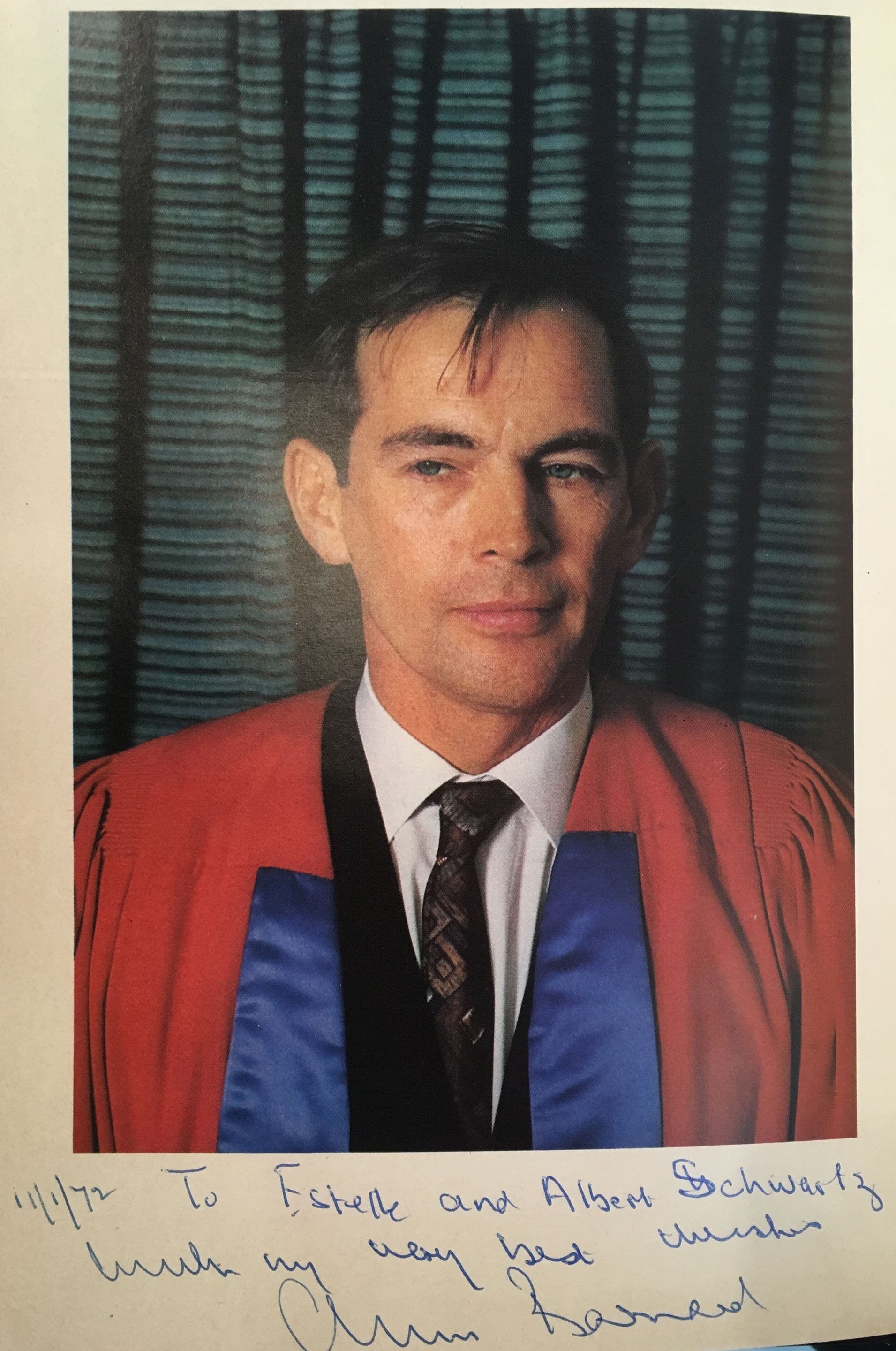
Christiaan Barnard
 South Africa
Also known as: Chris Barnard, Dr. Chris Barnard
Birthday
November 8, 1922
Birth Sign
Scorpio
Birthplace
Beaufort West, South Africa
Age
Died at 78
About
Christiaan Neethling Barnard was a South African cardiac surgeon whose name is permanently etched into medical history as the pioneer of human-to-human heart transplantation. Born on November 8, 1922, in Beaufort West, a small town in the Cape Province, he became a global icon overnight after performing the world's first successful heart transplant on December 3, 1967. He utilized the heart of Denise Darvall, a 25-year-old accident victim, and transplanted it into Louis Washkansky, a 54-year-old grocer suffering from terminal heart failure. Although Washkansky survived for only 18 days before succumbing to pneumonia caused by immunosuppressive drugs, the procedure proved the viability of the technique for future generations.
Barnard continued to lead cardiothoracic surgery at Groote Schuur Hospital until 1983, when rheumatoid arthritis in his hands forced him to retire. Following his retirement, he turned his attention to anti-aging research and various business ventures. Despite facing controversy later in life, including the promotion of Glycel skin cream which was withdrawn by the FDA, he remained committed to humanitarian causes. He established the Christiaan Barnard Foundation to assist underprivileged children worldwide and authored several books sharing his experiences. He died on September 2, 2001, leaving behind a legacy that transformed modern medicine.
Early Life & Background
Christiaan Neethling Barnard was born on November 8, 1922, in Beaufort West, a small town in the Cape Province of South Africa. He was the son of a church pastor and one of four brothers. His early life was steeped in religious tradition, but his academic brilliance and surgical curiosity led him to the University of Cape Town, where he qualified in medicine in 1946. Before achieving global fame, Barnard demonstrated significant surgical ingenuity by developing a technique to correct intestinal atresia, a life-threatening blockage in newborns. This method saved ten babies in Cape Town and was subsequently adopted by surgeons in Britain and the United States.
In 1955, Barnard traveled to the United States to further his training, initially working on gastrointestinal problems at the University of Minnesota under Owen Harding Wangensteen. However, upon encountering the heart-lung machine, he shifted his focus to open-heart surgery, joining the service of Walt Lillehei, a pioneer in the field. This period of advanced training was pivotal, equipping him with the technical skills necessary for his future breakthrough. Upon returning to South Africa in 1958, Barnard became the head of the Department of Experimental Surgery at Groote Schuur Hospital in Cape Town. There, he laid the rigorous groundwork for his most famous achievement: the world's first human-to-human heart transplant.
Career Growth
On December 3, 1967, Barnard performed the historic procedure at Groote Schuur Hospital. The operation was a technical success; Washkansky woke up, spoke with his wife, and survived for 18 days before succumbing to pneumonia. A second patient, Philip Blaiberg, underwent the surgery in early 1968 and survived for a year and a half, eventually returning home to live an active life, which solidified the procedure's place in medical reality. The immediate aftermath of the transplant transformed Barnard from a respected regional surgeon into an international superstar overnight. Crowds effectively shut down parts of Cape Town seeking news or a glimpse of the "miracle doctor." Barnard himself noted that while he was merely a surgeon on Saturday, he became a household name by Sunday.
Barnard continued to lead cardiothoracic surgery at Groote Schuur Hospital until 1983, when rheumatoid arthritis in his hands forced him to retire from operating. Following his retirement, he turned his attention to anti-aging research and various business ventures. In 1986, his reputation suffered a blow when he promoted Glycel, an expensive skin cream that the U.S. Food and Drug Administration soon withdrew from the market due to safety concerns. Despite this controversy, Barnard remained committed to humanitarian causes, establishing the Christiaan Barnard Foundation to assist underprivileged children worldwide. He also authored several books, including Heart of Gold and A Man Called Chris, sharing his experiences and insights on life and medicine.
Career Timeline
Public Image & Style
Christiaan Barnard is portrayed as a visionary scientist and a man of immense courage. His signature style was professional and modest, reflecting his scientific background. The media often highlights his duality: the brilliant surgeon and the controversial figure who faced setbacks in his later years. His public persona remains that of a pioneer who dared to push the boundaries of medical science. While celebrated globally for his medical feats, his later career involved commercial ventures that drew criticism, adding nuance to his public image. He is remembered not just for the surgery itself but for the sheer audacity of attempting it in an era where organ rejection was considered an insurmountable barrier.
Fame & Fandom (iFAMOUS Rankings)
Christiaan Barnard never cultivated a formal fandom in the manner of modern entertainers, nor does his legacy possess an organized fan club or specific moniker. Unlike pop stars who inspire chart campaigns and social media rituals, Barnard was revered by the global medical community, patients saved by his innovations, and history enthusiasts as a singular historical figure. His public persona remained that of a scientist rather than an entertainer, leaving no records of fan-funded projects or birthday billboards dedicated to him. Instead, his reputation rests on verified historical events and the profound cultural mythology generated by the world's first human-to-human heart transplant. This achievement propelled him from a relatively unknown surgeon into an international superstar overnight, with crowds gathering outside Groote Schuur Hospital to catch a glimpse of the "miracle doctor." In the August 2026 cycle of the iFANN Global Fame Rankings, he holds significant standing. He is currently ranked as the 36th most famous person from South Africa, a position holding steady from the previous cycle. These placements reflect a sustained recognition of his role in medical history long after his passing.
Interesting Facts and Legends
Before becoming a surgeon, Barnard was a talented athlete, playing rugby and cricket. His athletic background contributed to the physical stamina required for long, complex surgeries. Another key figure in his story is Hamilton Naki, a black surgical assistant whose crucial contribution to the dissection of the donor heart was largely omitted from initial public credit. Modern accounts now highlight the complex layers of race and apartheid that defined the era and the team dynamics of the surgery. The promotion of Glycel skin cream in the 1980s is often cited as a cautionary tale of celebrity endorsement gone wrong. Barnard traveled extensively after his fame, performing consultations and giving lectures in over 30 countries. Annual events on December 3 continue to mark the anniversary of the transplant, with new generations of cardiac surgeons referencing his pioneering work as inspiration.
Notable Quotes
“It is infinitely better to transplant a heart than to let a person die.”
“I am just a man doing his job.”
“The heart is the symbol of life.”
Family & Personal Life
Christiaan Barnard was married twice. His first marriage was to Brenda Koen, whom he wed in 1948. They had two sons together: Johan Koen Barnard and David Barnard. Brenda passed away in 1984. Following her death, Barnard married Susan de Villiers in 1986. Susan predeceased him, dying in 1998. There are no widely documented romantic relationships outside of these two marriages, and no records of high-profile flings or divorces prior to the deaths of his spouses. His legacy continues through his son, Dr. Johan Koen, who practices cardiac surgery at the Netcare Christiaan Barnard Memorial Hospital in Cape Town. Recent reports from 2026 confirm that the father-and-son duo have been keeping the legacy alive, with Dr. Koen performing surgeries that honor his father's pioneering work.
Notable Connections
Relationships & Dating History
Christiaan Barnard was married twice. His first marriage was to Brenda Koen, whom he wed in 1948. They had two sons together: Johan Koen Barnard and David Barnard. Brenda passed away in 1984. Following her death, Barnard married Susan de Villiers in 1986. Susan predeceased him, dying in 1998. There are no widely documented romantic relationships outside of these two marriages, and no records of high-profile flings or divorces prior to the deaths of his spouses. As of his death in 2001, he was widowed. His legacy continues through his son, Dr. Johan Koen, who practices cardiac surgery at the Netcare Christiaan Barnard Memorial Hospital in Cape Town.
- MarriedBrenda Koen1948 - 1984Had two sons together; she passed away.
- MarriedSusan de Villiers1986 - 1998Predeceased him; no children recorded from this marriage.
Death & Aftermath
Died
September 2, 2001 (aged 78)
Death Place
Paphos, Cyprus
Cause of Death
Asthma attack
Christiaan Neethling Barnard died on September 2, 2001, in Paphos, Cyprus, at the age of 78. The immediate cause was reported as an asthma attack while he was traveling abroad. His passing was widely covered by international media, and the medical community responded with tributes honoring his status as the pioneer of heart transplantation. While specific details regarding his final days and the precise location within Paphos remain unrecorded in available accounts, the event marked the end of a life that had fundamentally altered surgical history.
The legacy of the man who performed the world's first human-to-human heart transplant persists through institutions like the Netcare Christiaan Barnard Memorial Hospital in Cape Town. In 2026, news outlets highlighted the work of his son, Dr. Johan Koen, who continues to practice cardiac surgery there, keeping the family name alive in the field. However, the narrative surrounding his reputation has faced new challenges. In 2016, a sexual assault allegation made by Annie Kuster resurfaced, adding a complex dimension to his posthumous image. This claim sparked renewed debate about his character alongside his medical achievements, complicating the historical record without altering the facts of his demise or the technical success of his pioneering surgeries.
Net Worth (Estate Value)
$5 Million
iFANN Editorial Team estimate
As a deceased individual, Christiaan Barnard does not have a current net worth in the traditional sense. However, his estate's value and ongoing revenue streams are estimated based on posthumous earnings. The estate earns from royalties of his books, licensing deals for his name, and the operations of the foundation named after him. The Netcare Christiaan Barnard Memorial Hospital in Cape Town remains a major revenue generator, contributing to the financial legacy of the Barnard name. iFANN currently estimates the value of Christiaan Barnard's estate at approximately $5 million. This figure reflects the enduring economic impact of his name and the institutions carrying his legacy forward, particularly the hospital that bears his title and the charitable foundation he established.
Awards Won (5)
While Barnard did not receive entertainment industry awards like Oscars or Grammys, he received numerous prestigious medical and national honors. He received multiple honorary doctorates from universities worldwide in recognition of his contributions to medicine. Regarded as a national hero in South Africa, he was inducted into the South African Sports Hall of Fame and various medical halls of fame. He was awarded keys to several cities, including New York and London, following the transplant. He is recognized for the first human heart transplant in Guinness World Records.
1968 · Medicine
University of Cape Town
1967 · Civic Honor
New York City
1967 · Civic Honor
London
Known For
First Human Heart Transplant
1967 · Surgeon
Keywords
Sources
Quick Facts
- Profession
- surgeon, writer, physician
- Born
- November 8, 1922
- Birthplace
- Beaufort West, South Africa
- Died
- September 2, 2001
- Death Place
- Paphos, Cyprus
- Gender
- Male
- Birth Sign
- Scorpio
Personal Details
- Full Name
- Christiaan Neethling Barnard
- Spouse
- Brenda Koen (1948–1984), Susan de Villiers (1986–1998)
- Children
- Johan Koen Barnard, David Barnard
- Education
- University of Cape Town (MBChB, 1946)
Frequently Asked Questions
Who was Christiaan Barnard?
When did Christiaan Barnard die?
What was the outcome of the first heart transplant?
Did Christiaan Barnard have any children?
Is there a hospital named after Christiaan Barnard?
Similar People
Join the community
fans discussing