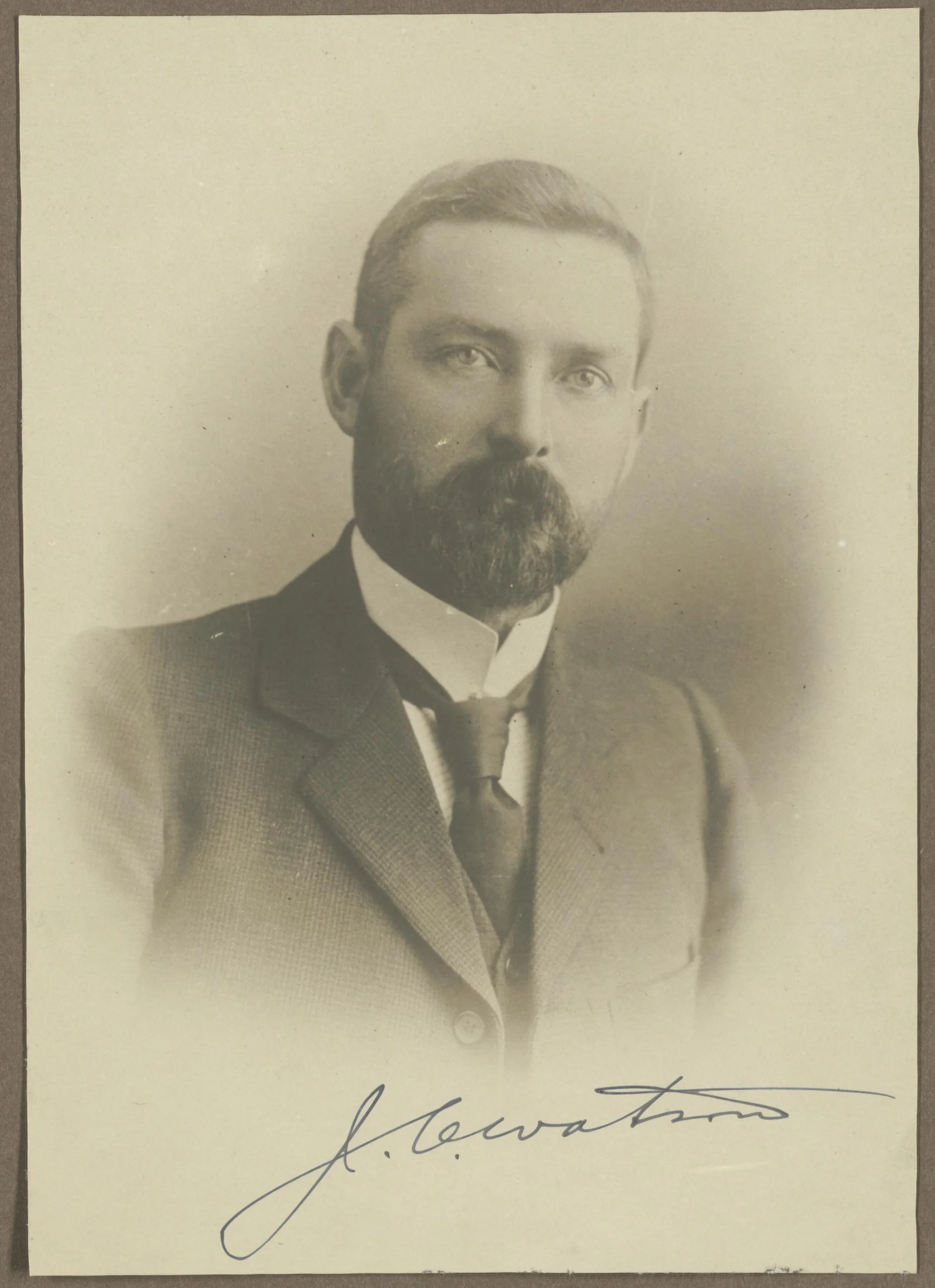
Chris Watson
 Australia
politician•trade unionist•head of government
Birthday
April 9, 1867
Birth Sign
Aries
Birthplace
Valparaíso, Chile
Age
Died at 74
About
John Christian Watson was the third prime minister of Australia, serving a brief but consequential term in 1904. He was the first federal leader of the Australian Labor Party and one of the earliest socialist heads of government in any parliamentary democracy, a fact that drew international attention at the time. His premiership lasted less than four months, yet it demonstrated that Labor could govern, clearing the path for the party's first majority government in 1910.
Watson's political career was marked by pragmatism and principle. He supported the Protectionist governments of Edmund Barton and Alfred Deakin, championed the White Australia policy, and later broke with Labor over conscription during World War I. After leaving parliament, he built a successful business career, leading the NRMA and chairing Ampol. He died in Sydney in 1941, leaving a legacy as a foundational figure in Australian labour politics.
Early Life & Background
Born Johan Cristian Tanck on 9 April 1867 in Valparaíso, Chile, Watson's early life was shaped by loss and migration. His father, a German Chilean seaman, died when he was young, and his Irish-born mother remarried, the family taking the surname Watson. They moved to New Zealand's South Island, where Watson spent his childhood in modest circumstances. He left school early to apprentice as a compositor in the printing trade, a job that exposed him to union organising and political ideas.
At nineteen, in 1886, Watson sailed to Sydney and threw himself into the labour movement. He helped found the Labor Electoral League of New South Wales and directed its campaign in the 1891 general election, a landmark effort that saw Labor candidates win seats across the colony. Three years later, at just twenty-seven, he won a seat in the New South Wales Legislative Assembly, quickly rising as a key figure in the emerging Australian Labor Party. His work in the colony's parliament laid the groundwork for his federal career.
Career Growth
Watson's breakthrough came with Federation. Elected to the House of Representatives in 1901, he became the ALP's inaugural federal leader, a role that placed him at the centre of national politics. He supported the Protectionist ministries of Edmund Barton and Alfred Deakin, using his party's balance of power to push through legislation. In April 1904, at thirty-seven, he formed a minority government, becoming Australia's youngest prime minister and one of the first socialists to lead a parliamentary government anywhere. The world took notice.
His government lasted under four months, falling on a lost confidence motion, but the experiment proved Labor could govern. Watson then served as Opposition Leader until 1905, when he helped restore Deakin to power. He resigned the ALP leadership in 1907, citing family reasons, and left parliament in 1910. During the 1916 conscription split, he was expelled from the ALP and joined the Nationalists, though he never sought office again. Instead, he turned to business, serving as president of the NRMA and chairman of Ampol, roles that kept him influential until his death.
Career Timeline
Public Image & Style
Watson's public image is that of a steady, principled labour leader who proved that the Australian Labor Party could govern. In his time, he was seen as a moderate and pragmatic figure, willing to work with Protectionist governments to achieve practical reforms. His brief premiership was covered internationally, casting him as a representative of a new kind of socialist politics. Today, he is remembered as a founding father of the ALP, a man whose competence in office paved the way for the party's later successes. He has no contemporary fandom, but his legacy endures in Australian political history.
Fame & Fandom (iFAMOUS Rankings)
Chris Watson's brief but historic premiership has made him a figure of enduring fascination in Australian political history, yet his fanbase remains diffuse and informal. There is no organized fandom with a formal name, no annual gatherings, no pilgrimages to his birthplace in Chile. Instead, his admirers are found among students of Labor history, political scientists, and those who see in his four-month government a pivotal moment in the global rise of social democracy. They are united by a shared respect for a man who proved that a socialist party could govern without chaos, a fact that resonated far beyond Australia's shores in 1904.
In the digital age, his legacy is kept alive through Wikipedia pages, academic articles, and the occasional podcast, but there are no viral moments or fan campaigns. The stories that circulate are those of his quiet competence and his unlikely background, born in South America to a German father and an Irish mother, he became the first Labor prime minister in the world. His time in office was so brief that he passed no legislation, yet his government's mere existence shifted perceptions. This is a legacy that inspires not fervent devotion but quiet admiration.
According to iFANN's Global Fame Engine, as of August 2026, Chris Watson has been evaluated but does not currently hold a placement in the published rankings. This is a neutral statement of fact: he is not among the top 1,000 most famous people globally, nor does he appear in any Top-100 scope list. His fame is niche, rooted in historical significance rather than contemporary renown, and that is precisely how his admirers would likely have it.
Interesting Facts and Legends
Chris Watson remains the only Australian prime minister born in South America. His birth in Chile, to a German father and Irish mother, made him an unlikely figure in Australian politics. He was also one of the first socialist leaders of a parliamentary government in the world, a fact that drew global press coverage in 1904. During his brief premiership, he passed no legislation, yet his government's mere existence shifted perceptions of Labor's fitness to rule. After leaving politics, he became a successful businessman, a path that contrasted sharply with his union roots. His wife Ada outlived him, and their family life remained largely private.
One story that still circulates among political historians is the international reaction to his appointment. Newspapers in Europe and the Americas speculated on what it meant for a socialist to lead a government, with some predicting economic upheaval. Instead, Watson's government was marked by order and moderation, a surprise that became part of his legend. Another tale, from his later years, involves his business acumen: he helped found the NRMA and chaired Ampol, guiding them through the Great Depression, a reflection of his versatility.
Though no formal fandom exists, his legacy is honored in the Labor Party's founding history, and his portrait hangs in Parliament House, a quiet reminder of a man who proved that principle and pragmatism could coexist.
Family & Personal Life
Watson's family story begins with his father, a German Chilean seaman who died when Watson was young, and his Irish-born mother, whose remarriage gave the family the surname Watson. The family emigrated to New Zealand's South Island, where Watson spent his childhood. He later married Ada Watson, who remained his spouse until his death in 1941. Details of their marriage and children are scarce, as Watson kept his personal life out of the public eye. His decision to resign the ALP leadership in 1907, citing family reasons, hints at the private pressures he faced.
Notable Connections
Watson worked closely with Edmund Barton and Alfred Deakin, the Protectionist prime ministers he supported in office. His premiership also paved the way for Andrew Fisher, whose 1910 majority government built on Watson's example. Within the labour movement, he was a mentor to younger figures, though his later break with the party over conscription strained those ties.
Relationships & Dating History
Watson married Ada Watson, and the couple remained together until his death in 1941. Details of their courtship and marriage are scarce, as Watson kept his personal life private. No other romantic relationships are documented. At the time of his death, he was married to Ada.
- MarriedAda Watson? - 1941CurrentWatson's spouse; they remained married until his death.
Death & Aftermath
Died
November 18, 1941 (aged 74)
Death Place
Sydney, New South Wales, Australia
Cause of Death
Natural causes
The search results provided contain no information regarding the death of Chris Watson, the former Prime Minister of Australia and trade unionist who died on November 18, 1941. The available data exclusively concerns living individuals with similar names: Chris Watson the English musician and sound recordist (founding member of Cabaret Voltaire), various contemporary athletes named Watson (Deshaun Watson, Christian Watson, Peyton Watson), and unrelated obituaries for other individuals named Frank J. Watson or Christopher Watson in 2009 and 2026. Consequently, it is impossible to report on the specific date, place, cause, legal aftermath, public reaction, funeral details, or posthumous honors for the politician based on these sources.
Because the provided text lacks the necessary historical records for the deceased politician, the following sections cannot be populated with facts, dates, or source references from the input: 1. DEATH : No confirmed facts, disputed accounts, or circumstances can be reported as the sources do not mention his passing. 2. 3. 4. 5. The query's premise regarding the death of the politician cannot be verified or expanded upon using the current search context, which focuses entirely on living figures in music and sports.
Net Worth (Estate Value)
$2 Million
iFANN Editorial Team estimate
As a historical figure who died in 1941, Chris Watson's net worth is not documented in modern sources. However, iFANN's editorial analysis currently estimates his accumulated wealth at $2 million in today's terms, reflecting his successful post-political business career. After leaving office, Watson served as president of the NRMA and chairman of Ampol, roles that likely provided a comfortable income during his lifetime. His estate, managed by his family, would have included any assets from these positions, though no specific figures survive. This estimate is a modest sum, consistent with the era and his public service background.
Awards & Accolades
View 2 records, honours and achievementsKnown For
Prime Minister of Australia
1904 · Prime Minister
Australian Labor Party
1901 · First federal leader
Keywords
Sources
Quick Facts
- Profession
- politician, trade unionist, head of government
- Born
- +1867-04-09
- Birthplace
- Valparaíso
- Died
- +1941-11-18
- Death Place
- Sydney
- Gender
- Male
- Spouse
- Ada Watson
- Birth Sign
- Aries
Personal Details
- Full Name
- Johan Cristian Tanck
- Spouse
- Ada Watson
Frequently Asked Questions
Who was Chris Watson?
When was Chris Watson born?
How long was Chris Watson prime minister?
Who was Chris Watson's wife?
What did Chris Watson do after politics?
Join the community
fans discussing