
 Canada
About
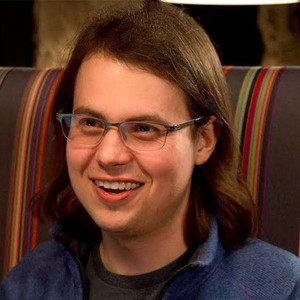
Chris Olah is a Canadian researcher and programmer known for his work in machine learning. He stands out as a key figure where his contributions have made complex ideas more approachable. Growing up in Toronto, he showed early talent in tech, leading him to skip traditional paths and dive straight into research. His career took off without a degree, thanks to fellowships and hands-on projects that let him explore AI's inner workings.
Olah gained notice for creating tools that reveal how neural networks operate, turning abstract concepts into visual insights that even non-experts can grasp. At places like Google Brain and OpenAI, he pushed forward ideas around AI safety and interpretability. Now, as a co-founder of Anthropic, he focuses on building safer AI systems, drawing from his experiences to influence the field's direction in meaningful ways.
His blog and papers have reached millions, showing how clear communication can shape technology's future. Olah's story highlights the value of curiosity and innovation, inspiring others to question and experiment in their own fields.
Early Life & Background
Olah grew up in Toronto and got involved in local tech scenes as a teenager, serving as a director at a hackerspace from February 2012 to February 2014, where he handled management, maintenance, and safety. This role gave him practical experience before he turned 20.
He attended university briefly but left at 18 in 2009 or early 2010 to support a friend facing charges. Instead of formal education, he pursued machine learning on his own. A turning point came in 2012 when he won the Thiel Fellowship, a $100,000 grant that funded his independent AI projects and opened doors to internships at Google Brain.
Career Growth
Olah made his mark in AI by developing ways to understand neural networks, such as through visualizations that show how these systems process information. His contributions include being a second author on the 2015 DeepDream paper from Google Brain, which created those striking psychedelic images and brought AI visualization to a wide audience.
He co-founded Distill, a platform for clear machine learning communication, and led teams at OpenAI and Anthropic. At OpenAI from October 2016 to December 2020, he advanced interpretability research. Since co-founding Anthropic in late 2020, he's focused on mapping features in large language models to boost AI safety, influencing standards at major labs.
Career Timeline
Public Image & Style
Chris Olah is widely regarded as a visionary communicator in AI, known for making complex neural network concepts accessible through stunning visualizations and clear writing. His signature style combines deep technical rigor with an artist's eye: his blog posts and papers are filled with interactive diagrams, activation atlases, and feature visualizations that resemble abstract art. Media and peers describe him as a 'translator' between AI systems and humans, praised for his humility and ethical focus. He maintains a low-key personal aesthetic, often seen in casual attire like t-shirts and hoodies at conferences, letting his work speak for itself. On social media, especially X (Twitter) as @ch402, he shares technical insights and safety concerns with a calm, thoughtful tone. While he has no formal fandom name, he inspires a dedicated following among AI researchers and enthusiasts who admire his clarity and principled stance on AI safety. His work is often described as 'beautiful' and 'essential' for the field.
Fame & Fandom (iFAMOUS Rankings)
Chris Olah doesn't top the charts of celebrity fame, but his name carries a different kind of weight. iFANN's Global Fame Engine has evaluated him, yet he holds no placement in the published rankings, neither the Global Top 1,000 nor any Top-100 scope list. That's not a slight; it's a reflection of his arena. His fame is the quiet, credentialed sort, built on a blog that demystified neural networks for a generation of researchers and a career that took him from Google Brain to OpenAI to co-founding Anthropic.
His following isn't a fandom in the traditional sense. There's no formal name for the community that tracks his work, no fan clubs or coordinated campaigns. Instead, there's a devoted intellectual audience, AI researchers, students, and technologists who treat his papers and visualizations as essential reading. His influence shows up in citations, conference halls, and the very structure of modern AI safety research.
But the spotlight found him in May 2026, when he stood beside Pope Leo XIV at the Vatican to help unveil an encyclical on AI. An atheist at the Pope's side, telling the tech industry it 'can't govern itself', that image ricocheted around the world. Forbes had already profiled him as an 'atheist billionaire' in March, and the Vatican moment cemented his status as a figure who bridges the secular and the sacred, the technical and the moral. That's the kind of fame that doesn't need a ranking.
Interesting Facts and Legends
Chris Olah's path has always been unconventional. He dropped out of university at 18 to help a friend facing legal troubles and later managed a Toronto hackerspace as a teen. His blog, 'colah's blog,' remains a legendary resource, explaining advanced machine learning in plain terms to millions of readers. He chose the Thiel Fellowship in 2012 over college, calling it an easy decision, and his work on DeepDream made neural networks visually famous.
One of the most retold stories is his appearance at the Vatican in May 2026. An atheist, Olah was invited by Pope Leo XIV to speak at the launch of the encyclical Magnifica Humanitas, sitting beside the Pope and delivering a speech on AI ethics. The irony of an atheist AI researcher being embraced by the Catholic Church's highest authority became a global talking point.
Another legend is the 'atheist billionaire' narrative, fueled by a March 2026 Forbes profile. As a co-founder of Anthropic, Olah's paper wealth has soared, and the juxtaposition of his secular worldview with his role in shaping AI's moral future has become part of his public mythology.
Family & Personal Life
Notable Connections
Relationships & Dating History
Salary, Net Worth In 2026
$25 Million
iFANN Editorial Team estimate
iFANN's editorial analysis puts Chris Olah's net worth at $25 million as of 2026. The bulk of that wealth stems from his equity in Anthropic, the AI company he co-founded, which reached an $18.4 billion valuation after recent funding rounds. His earlier roles at Google Brain and OpenAI also contributed through stock options and salaries, though he's never pursued endorsements or publicized real estate holdings. The meteoric rise of AI company valuations has significantly boosted his financial standing in recent years.
Awards Won (1)
Olah won the Thiel Fellowship in 2012, a $100,000 grant for young innovators, which supported his early AI research. This recognition helped launch his career in machine learning without formal degrees.
2012 · Fellowship Grant
Independent AI research
Known For
DeepDream
2015 · Researcher and second author
Distill
Pre-2016 · Co-founder
Anthropic
2021 · Co-founder and lead on interpretability
Keywords
Sources
Quick Facts
- Profession
- researcher, programmer
- Gender
- Male
Personal Details
- Full Name
- Christopher Olah
- Education
- Olah graduated from The Abelard School in Toronto as a National AP Scholar in 2010, but he dropped out of university at age 18 in 2009 or early 2010 without completing an undergraduate degree.
Frequently Asked Questions
Does Chris Olah have a degree?
How old is Chris Olah?
What is Chris Olah doing now?
What is Chris Olah's net worth?
Does Chris Olah have a wife or kids?
Join the community
fans discussing