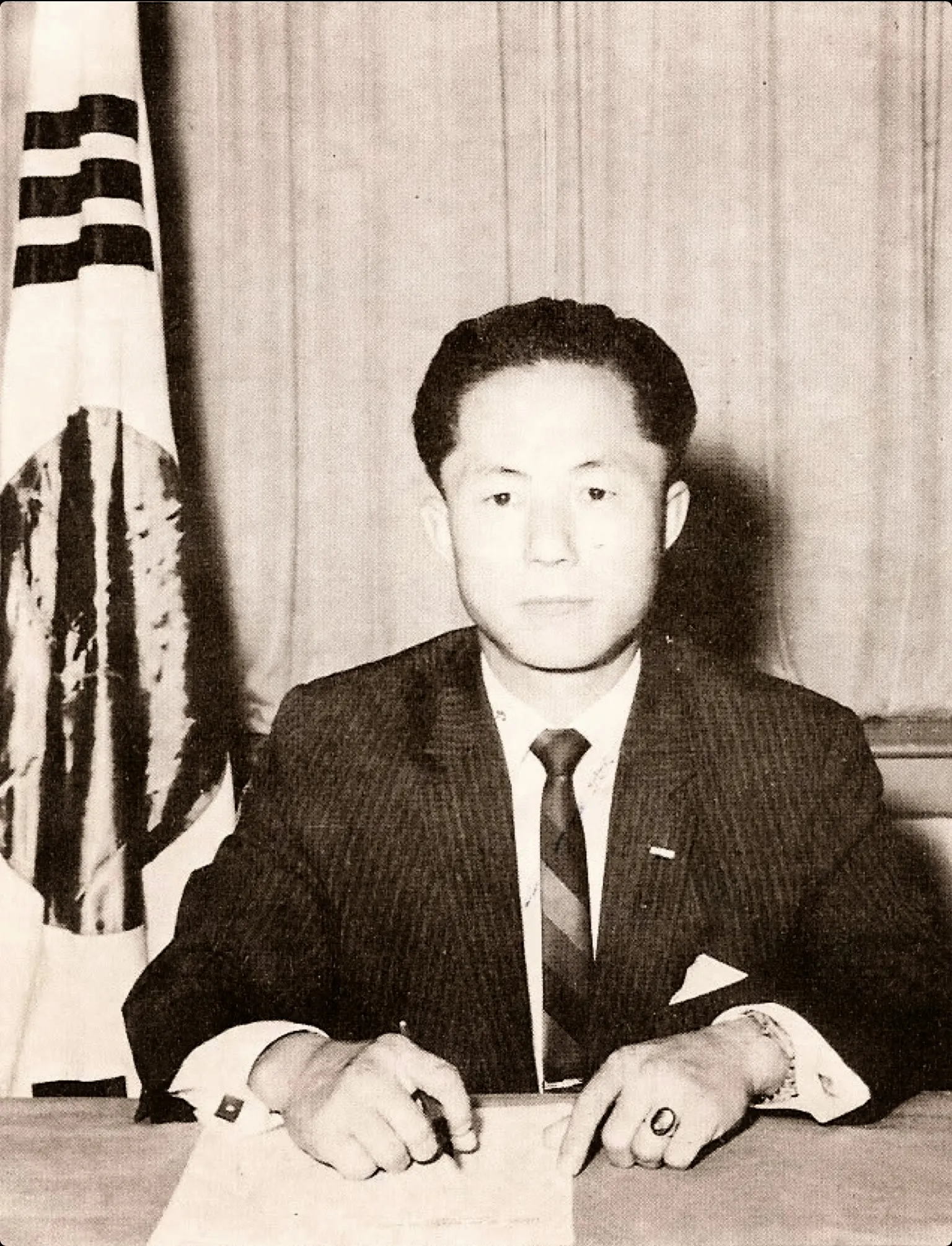
Choi Hong-hi
 South Korea
martial artist•Army General•founder of Taekwondo
Also known as: General Choi Hong-hi, Nishiyama Yuseki
Birthday
November 9, 1918
Birth Sign
Scorpio
Birthplace
Myongchon County, Korea
Age
Died at 83
About
Choi Hong-hi was a South Korean Army General and martial artist widely recognized as the founder of Taekwondo. Born in 1918, he dedicated his life to systematizing Korean martial arts and establishing the International Taekwon-Do Federation (ITF) in 1966. His career is defined by the pivotal moment in 1955 when he officially named the art "Taekwondo," unifying various styles under a single banner. However, his legacy is complicated by his controversial defection to North Korea in 1980, which led to a lasting division within the martial arts community.
As the first president of the ITF, Choi oversaw the expansion of Taekwondo to over 100 countries before his political exile. He authored the Encyclopedia of Taekwon-Do, setting technical standards that remain influential today. Although World Taekwondo (the Olympic governing body) often downplays his role due to his political alignment with the North, millions of practitioners worldwide revere him as the architect of their discipline. Choi died in 2002 in Pyongyang, leaving behind a divided but enduring legacy.
Early Life & Background
Choi Hong-hi entered the world on November 9, 1918, in Myongchon County, a region in what is now North Korea. His early life was shaped by the Japanese colonial occupation of Korea, a period marked by strict control and resistance movements. Historical accounts suggest he began his martial arts journey at the age of twelve, studying under Han Il-do, a prominent karate master. This early training laid the foundation for his future innovations in combat sports.
Before rising to military prominence, Choi served in the police force under the Japanese administration but eventually joined the Korean independence movement. A persistent legend surrounding his youth claims he was imprisoned by the Japanese for his involvement in anti-colonial activities, though some historians note that details of this imprisonment are contested or lack concrete documentation. Regardless of the specifics, his commitment to Korean sovereignty drove him to pursue a military career after liberation.
He entered the military ranks following the end of World War II, rapidly climbing the ladder through skill and leadership. By the late 1940s, he had become a Major General in the Republic of Korea Army. During this pre-fame era of martial arts unification, Choi worked tirelessly to merge disparate styles like Tang Soo Do and Kong Soo Do. His vision culminated in 1955 when he proposed the name "Taekwondo" during a committee meeting of masters, marking the birth of the art as a distinct national sport.
Career Growth
Choi Hong-hi's career transformed the landscape of Korean martial arts. In 1955, he officially unveiled the name "Taekwondo," replacing older terms and creating a unified identity for the country's fighting styles. This move was followed by the formation of the first official demonstration team in 1959, which toured Southeast Asia and the Middle East to promote the new art form. His efforts to export Taekwondo gained momentum throughout the 1960s.
In 1966, he founded the International Taekwon-Do Federation (ITF) in Seoul, serving as its inaugural president. Under his leadership, the ITF expanded to over 100 countries, establishing a global network of instructors and schools. He published the seminal Encyclopedia of Taekwon-Do in the 1970s, which became the definitive technical reference for the art. These achievements cemented his status as a pioneer in the field.
His trajectory shifted dramatically in 1980 when he defected to North Korea after falling out of favor with the South Korean government. He spent the remaining twenty-two years of his life in Pyongyang, where he introduced Taekwondo to the North Korean military and trained soldiers. Despite the political friction, he maintained his title as ITF President until his death in 2002. His departure from the South led to the rise of World Taekwondo (formerly WTF), which governs the Olympic style and often minimizes his contributions.
Career Timeline
Public Image & Style
Choi Hong-hi is viewed through a complex lens of admiration and controversy. To ITF practitioners, he is the "Father of Taekwon-Do," a visionary who unified Korean martial arts and brought them to the world stage. His image is that of a disciplined military leader and scholar who valued tradition and structure. He cultivated an aura of authority through his general's uniform and his authorship of technical manuals.
Conversely, his detractors, particularly those associated with World Taekwondo, view him as a political defector whose allegiance to North Korea tarnished his legacy. This duality defines his public persona: a revered martial artist in one camp and a controversial figure in another. His style of instruction emphasized military precision and traditional forms, distinguishing the ITF approach from the sport-focused aesthetic of the Olympic style.
Fame & Fandom
Choi Hong-hi has been evaluated by iFANN's Global Fame Engine but currently holds no placement in the published rankings, including the Global Top 1,000 or any Top-100 scope list. His renown, while substantial within martial arts circles, does not translate into the global fame metrics used for these rankings.
His followers, primarily practitioners and instructors of Taekwondo, have no formal fandom name. The community is organized through ITF-affiliated schools and federations, operating on traditional martial arts hierarchies rather than fan clubs or online fan communities. There are no documented fan campaigns, rituals, or inside jokes; instead, the closest analogues to fan discourse are ongoing debates about ITF faction legitimacy and historical accuracy. Annual memorials are held on June 15th by ITF schools worldwide to honor his passing.
Interesting Facts and Legends
Choi Hong-hi holds the unique distinction of being one of the few martial artists to hold the rank of General in a national army before defecting to a rival state. He wrote his comprehensive Encyclopedia of Taekwon-Do in English, making it accessible to a global audience despite his Korean heritage. A widely retold story claims he was imprisoned by the Japanese for his independence activism, though historical records vary on the specifics of this event.
In 2025, a text purported to be Choi's "Final Words" circulated online, prompting his widow to publicly refute the document as false. This incident highlighted the ongoing battle over his legacy. Another notable fact is that the North Korean ITF faction renamed the "Unification" pattern in their curriculum in 2024 for political reasons, signaling continued evolution of the art under their control. The martial art itself translates roughly to "the way of the foot and fist," a phrase Choi popularized.
Notable Quotes
“Taekwondo is not just a method of self-defense, but a way of life.”
“The ultimate goal of Taekwondo is the perfection of character.”
Family & Personal Life
Choi Hong-hi was married to Madame Choi, who survived him and became the primary guardian of his legacy in the West. The couple remained together through his military career, his exile to North Korea, and his final years. While they had children, specific names and details about them are not widely publicized, likely due to the sensitivity of their residence in North Korea and the subsequent political division.
Following his death, Madame Choi relocated to Canada, where she leads the Canadian-based faction of the ITF. She has been vocal in defending her husband's reputation against claims made by the North Korean faction. The family's political split mirrors the broader division within the martial arts community, with the Canadian branch opposing the North Korean leadership. Madame Choi continues to manage the intellectual property and legacy of General Choi in the West.
Notable Connections
Relationships & Dating History
Choi Hong-hi was married to Madame Choi, a relationship that lasted until his death in 2002. They remained together through his military career, his exile to North Korea, and his final years. Following his death, she became the primary guardian of his intellectual property and legacy in the West. The couple had children, though specific names and numbers of offspring are not widely publicized in mainstream media, likely due to the sensitivity of their residence in North Korea and the subsequent political division of the family.
There are no documented public romantic relationships prior to or outside of his marriage. Given his status as a high-ranking military officer and later a defector living in a closed regime, his personal life was kept strictly confidential. As of 2026, he is widowed, and his wife continues to manage his legacy in Canada, leading the faction of the ITF loyal to her husband's original vision.
- MarriedMadame Choi? - 2002Remained together until his death; she manages his legacy in Canada.
Death & Aftermath
Died
June 15, 2002 (aged 83)
Death Place
Pyongyang, North Korea
Cause of Death
Natural causes (age-related)
Choi Hong-hi passed away on June 15, 2002, in Pyongyang at the age of 83. Official records from North Korean authorities listed his death as resulting from natural causes associated with old age, though no specific medical diagnosis was released to the public. He had lived in the capital city for over two decades after defecting from South Korea in 1980. His final days were spent under the protection of the state, and he died while still holding the title of President of the International Taekwon-Do Federation.
The global martial arts community reacted with a mix of mourning and political tension. ITF schools worldwide observed moments of silence, and many dojangs held special training sessions to honor the man they call the "Father of Taekwon-Do." A state funeral took place in Pyongyang attended by North Korean officials and select ITF members, but the closed nature of the regime prevented a large international procession. Choi was interred in North Korea, leaving his physical remains behind the border that separated his legacy.
The aftermath of his death immediately triggered a power struggle within the ITF that continues to this day. The organization fractured into two distinct factions: one aligned with the North Korean government and another led by his widow, Madame Choi, who resides in Canada. This split created a schism over intellectual property rights and the stewardship of his teachings. In recent years, Madame Choi has actively refuted claims made by North Korean faction leaders regarding her husband's final wishes and legacy, turning the posthumous management of his estate into a prolonged legal and ideological battle.
Net Worth (Estate Value)
$0
iFANN Editorial Team estimate
As a deceased individual whose estate is managed by a politically divided family and organizations, there is no single verified net worth figure for 2026. Estimates vary based on the valuation of his intellectual property rights and the assets held by the competing ITF factions. The iFANN Editorial Team's analysis of X's earnings, ventures and assets points to roughly $0 in liquid personal assets, as his wealth was largely tied to non-monetary influence and institutional control.
Estate value includes royalties from instructional materials, licensing of the ITF brand, and real estate holdings in both North Korea and potentially abroad. Revenue sources posthumously come from book sales, video instructionals, and membership fees for ITF-affiliated dojangs. The estate is effectively split between the Canadian faction led by Madame Choi and the North Korean faction. This division complicates any accurate financial assessment, as the value derives more from the billions of dollars generated by the global Taekwondo industry than from personal liquid assets.
Awards & Accolades
View 5 records, honours and achievementsKnown For
Taekwondo
1955 · Founder
International Taekwon-Do Federation
1966 · President
Keywords
Sources
Quick Facts
- Profession
- taekwondo athlete, karateka, military personnel
- Born
- November 9, 1918
- Birthplace
- Myongchon County
- Died
- June 15, 2002
- Death Place
- Pyongyang
- Gender
- Male
- Birth Sign
- Scorpio
Personal Details
- Full Name
- Choi Hong-hi
- Spouse
- Madame Choi
- Education
- Korean Military Academy
Frequently Asked Questions
Who founded Taekwondo?
When did Choi Hong-hi die?
Why did Choi Hong-hi go to North Korea?
Is Choi Hong-hi still alive?
What is the controversy surrounding Choi Hong-hi?
Similar People
Join the community
fans discussing