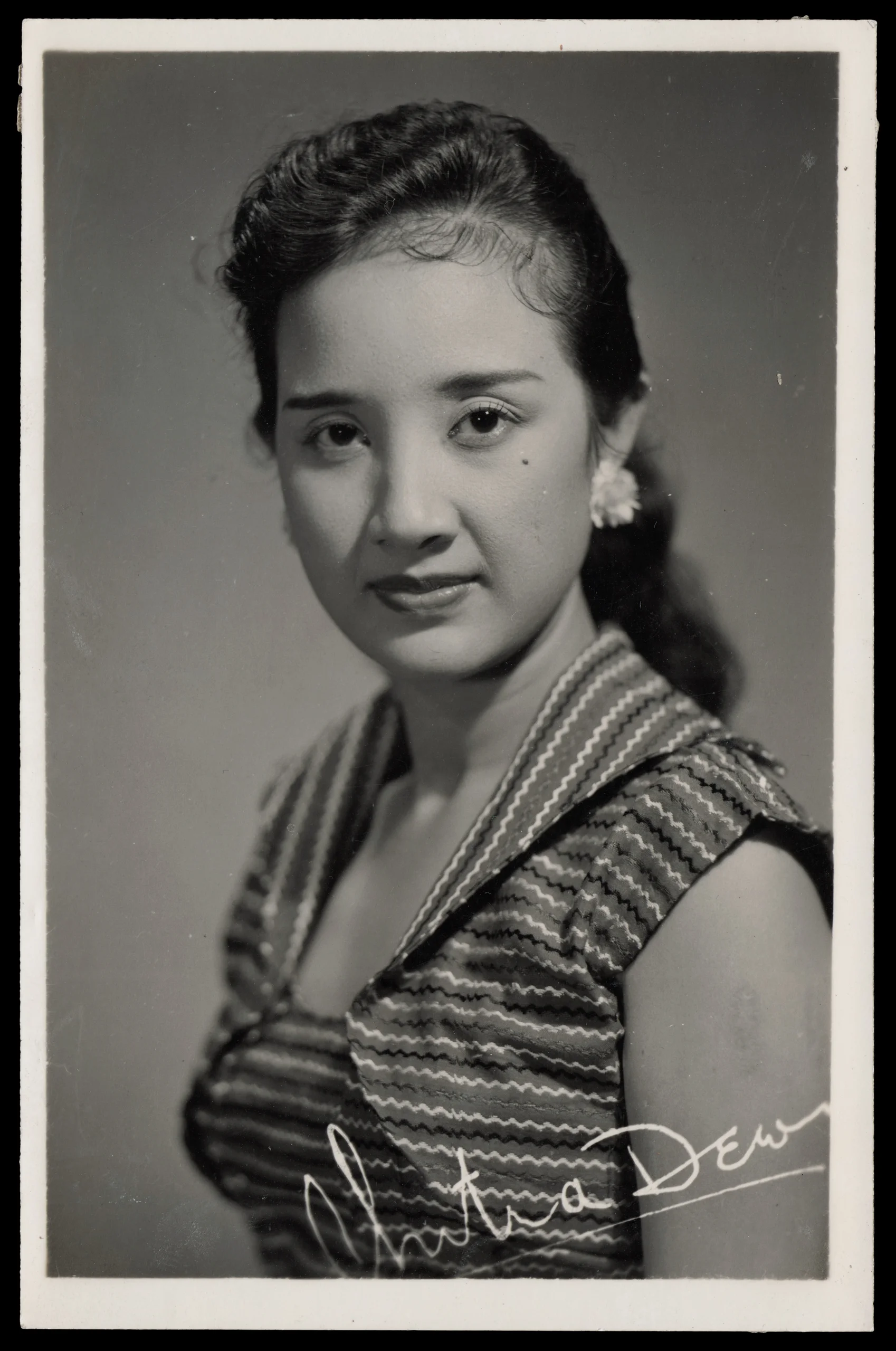
Chitra Dewi
 Indonesia
Also known as: Rara Patma Dewi Tjitrohadiseikusumo, Roro Patma Dewi Tjitrohadikusumo
Birthday
January 26, 1930
Birth Sign
Sagittarius
Birthplace
Cirebon, Indonesia
Age
Died at 78
About
Chitra Dewi, born Rara Patma Dewi Tjitrohadiseikusumo, stands as a defining figure of Indonesia's "Golden Age" of cinema. She entered an industry dominated by men and broke significant barriers not only as a leading lady but also as one of the few female directors and producers in the nation before 1998. Her career spanned over four decades, bridging the transition from the silent era to the modern age of Indonesian film. She is renowned for her signature style of restraint, often described as "the face of stillness," where she could command the screen with minimal movement. Her performances in landmark films like Tamu Agung, Tiga Dara, and Pedjuang helped shape the nation's early cinematic identity. In 1971, she made history by directing Bertjinta Dalam Gelap, cementing her legacy as a pioneering creator. With a filmography exceeding 40 films and numerous television productions, she remained a steady force until her final role in 1993. Chitra Dewi passed away on October 28, 2008, leaving behind a legacy defined by professional excellence and artistic innovation rather than domestic life.
Early Life & Background
Chitra Dewi was born into the Javanese aristocracy in Cirebon, Java, a background that deeply influenced her poised demeanor and understanding of traditional arts. Growing up in a city rich in cultural heritage, she developed an appreciation for storytelling that would later define her screen persona. While specific details of her early schooling are not widely documented in English-language sources, her entry into cinema began in the late 1940s or very early 1950s. Unlike many contemporaries who were discovered through modeling or singing contests, Chitra Dewi's rise was marked by her natural screen presence and collaboration with visionary filmmakers. Her initial steps into the industry coincided with the post-independence era of Indonesia, a time when filmmakers sought stories relevant to the newly independent nation. She worked alongside Usmar Ismail, the father of Indonesian cinema, who recognized her unique ability to convey complex emotions with minimal movement. This partnership set the stage for her breakthrough, establishing her as a serious artist capable of handling socially charged dramas. Before achieving stardom, she honed her craft through small roles that allowed her to understand the mechanics of the camera and the rhythm of Indonesian storytelling. Her education, though undocumented in detail, informed her artistic choices and contributed to her dignified approach to acting.
Career Growth
Chitra Dewi's career spanned over four decades, bridging the silent transition from the golden age of Indonesian cinema to the modern era. Her breakthrough came in the 1950s when she was cast in films directed by Usmar Ismail. In 1955, she appeared in Tamu Agung, a socially charged drama that showcased her ability to handle complex emotional roles. Her most iconic role followed in 1956 with Tiga Dara. Although she was not one of the three titular sisters, her supporting performance in this landmark musical comedy cemented her status as a star. The film is considered a cultural touchstone, and its 2016 restoration brought her work back to the forefront of public memory. In 1960, she starred in Pedjuang, further establishing her range in patriotic dramas. A pivotal moment in her career occurred in 1971 when she stepped behind the camera to direct Bertjinta Dalam Gelap. This achievement made her one of only six Indonesian women to direct a feature film before 1998. She also founded her own production company, Chitra Dewi Film Production, in May 1970, to produce works like Samiun dan Dasima. In 1977, she delivered a critically acclaimed performance in Gara-gara Isteri Muda. For this role, she won the Citra Award for Best Supporting Actress at the Indonesian Film Festival in 1979, the highest honor in the industry. She played her final screen role in 1993, concluding a filmography that included over 40 films and numerous television productions. Her work extended to 1967 with 2 X 24 djam, demonstrating her longevity in the industry.
Career Timeline
Public Image & Style
Chitra Dewi is portrayed in media and retrospectives as a dignified, quiet, and highly professional artist. Her image is one of restraint and elegance, contrasting with the more dramatic styles of some peers. She is remembered as a "muse" of Usmar Ismail but also as a formidable creator in her own right. Colleagues and critics noted her conscious understanding of the camera, knowing exactly when to remain silent, turn her head, or let a subtle glance convey deep emotion. She was often described as "the face of stillness," a master of restraint who could command the screen without overt action. This unique physical presence became her trademark, setting her apart from the more flamboyant actors of her era. Her posture and demeanor reflected the grace of her aristocratic upbringing, creating a screen persona that was both timeless and authoritative. Even in interviews, she maintained a reserved composure, rarely speaking extensively about her personal feelings. This quiet professionalism earned her the respect of colleagues and audiences alike, solidifying her reputation as a serious artist dedicated to the art of filmmaking rather than celebrity culture.
Fame & Fandom (iFAMOUS Rankings)
Chitra Dewi's fanbase is not a formally organized community; no fandom name exists in any documented archive. As of September 2026, iFANN's Global Fame Engine has evaluated Chitra Dewi but she does not currently hold a placement in the published rankings, neither the Global Top 1,000 nor any Top-100 scope list. This is a plain statement of her current evaluated status, with no numeric rank or score assigned. Her admirers were the general Indonesian moviegoing public, who packed theaters to see her in classics like Tiga Dara (1956) and Pedjuang (1960). The closest thing to organized fan activity is the cultural preservation of her work, such as the 2016 restoration and theatrical re-release of Tiga Dara, a national initiative that reflects the enduring public affection for her films. Fans do not engage in viral campaigns or social media trends but rather in cultural preservation and academic appreciation. Her fame is not measured by contemporary online signals but by her lasting legacy in Indonesian cinema history. The stories they tell are of artistic excellence and cultural significance, not viral moments or fan campaigns. Her pioneering role as a female producer-director, founding Chitra Dewi Film Production, adds to her legendary status among historians and enthusiasts of classic Indonesian cinema.
Interesting Facts and Legends
One of the most enduring legends surrounding Chitra Dewi is the confusion over her birth year. Sources conflict between 1930 and 1934, a discrepancy fans still debate. Some say it was a common practice among actresses of her era to adjust their ages; others blame inconsistent colonial-era record-keeping. Whatever the truth, the ambiguity has become part of her lore. Her full birth name is recorded as Rara Patma Dewi Tjitrohadiseikusumo, though variations like Roro Patma Dewi Tjitrohadikusumo appear in different archives. She founded Chitra Dewi Film Production in May 1970, a rare feat for a woman in the male-dominated Indonesian film industry of that time. Her role in Tiga Dara (1956) is legendary; even though she wasn't one of the three titular leads, her presence in that landmark film cemented her place in cinema history. The film's 2016 restoration was a major cultural event, and for many Indonesian film enthusiasts, it's the first thing they tell newcomers about her era. She was renowned for her ability to act without dialogue, using minimal movement to convey maximum emotion, a technique that set her apart from more flamboyant actors of the era. Additionally, while she did not win international awards, her induction into the small group of female directors in Indonesia prior to 1998 is a significant honorary distinction recognized by film historians. Specific height measurements are not recorded, but her elegant posture was a noted feature of her screen presence.
Notable Quotes
“Colleagues noted her conscious understanding of the camera and her belief in the power of silence in acting.”
Family & Personal Life
Chitra Dewi was born into the Javanese aristocracy, a lineage that likely instilled in her a sense of dignity and a deep connection to traditional Javanese culture. Born Rara Patma Dewi Tjitrohadiseikusumo, she grew up in Cirebon, a city known for its rich heritage, which shaped her early worldview. Specific details regarding her siblings, extended family members, or household pets remain unrecorded in available biographical sources. Her upbringing in a noble family provided her with a foundation of discipline and artistic appreciation, though the specifics of her daily family life were kept private. There are no documented anecdotes about family gatherings, childhood home environments, or relationships with parents beyond the general influence of her aristocratic background. The scarcity of personal records suggests a deliberate choice to keep her domestic sphere separate from her public career. Consequently, no information exists regarding any siblings, cousins, or other relatives who may have influenced her path. Her family history is thus characterized by silence and privacy, mirroring her adult life where she focused entirely on her craft rather than familial narratives.
Notable Connections
Usmar Ismail, Ratna Asmara
Relationships & Dating History
Chitra Dewi was known for keeping her personal life out of the public eye. There are no credible records, news reports, or biographies detailing any public romantic relationships, engagements, marriages, or divorces. Unlike many of her contemporaries whose romances were tabloid fodder, Chitra Dewi maintained a private existence, focusing entirely on her craft. Consequently, there is no information regarding partners, children, or dating history available in the public domain. As of her passing in 2008, she remained a respected elder stateswoman of the industry, with no reported spouse or children mentioned in obituaries or tributes. Her legacy is defined solely by her professional achievements rather than her domestic life. This deliberate privacy extended to all aspects of her personal relationships, ensuring that her professional output remained the sole focus of public discourse. No rumors or unverified claims about secret partnerships have gained traction in reputable historical accounts. Her dedication to her art meant that her personal life remained a closed chapter, accessible only to those within her immediate, trusted circle, if anyone at all.
Death & Aftermath
Died
October 28, 2008 (aged 78)
Death Place
Tangerang, Indonesia
Cause of Death
Natural causes
Chitra Dewi spent her final years as a respected elder stateswoman of Indonesian cinema, having transitioned from the vibrant leading lady of the 1950s to a steady presence in television and film for decades. On October 28, 2008, she passed away in Tangerang at the age of 74. The specific circumstances surrounding her final days remain unrecorded in available accounts, while no official statement regarding the cause of death was released by medical authorities or her family. While details about funeral arrangements or memorial services held in her honor were not made public, the industry continued to acknowledge her contributions through the preservation of her work. A significant moment of posthumous recognition arrived several years later when the classic film Tiga Dara returned to local cinemas in August 2016 following restoration efforts. This theatrical re-release served as a major tribute, ensuring her performance remained accessible to new generations. The legacy of Chitra Dewi endured quietly but effectively, with her body of work serving as the primary monument to her career rather than dedicated foundations or scholarships established in her name. Her death marked the end of an era, but her influence continues to inspire modern Indonesian filmmakers and actors who study the Golden Age of their cinema.
Net Worth (Estate Value)
$0
iFANN Editorial Team estimate
As Chitra Dewi passed away in 2008, there is no current net worth estimate for 2026. Historical financial data for Indonesian actors of her era is rarely publicly disclosed in detail, and no estate valuation has been released. Unlike Western celebrities with massive estates managed by corporate entities, her wealth was likely derived from her acting salaries and production ventures during her active years from the 1950s to the 1990s. Any posthumous earnings from the 2016 restoration of Tiga Dara would have gone to the estate or the rights holders, but specific figures are not available. Therefore, no consensus average or detailed breakdown of assets can be provided for 2026. The financial landscape of Indonesian cinema during her prime was vastly different from today, with salaries varying based on the film's budget and the actor's stature. While she achieved success as a producer, the exact value of her production company or her personal assets remains a matter of speculation. No official documents detailing her income streams or property holdings have surfaced in public records, making a precise financial assessment impossible.
Awards Won (1)
Chitra Dewi won the Citra Award for Best Supporting Actress at the Indonesian Film Festival in 1979 for her role in Gara-gara Isteri Muda. This is her most significant competitive award. While she did not win international awards, her induction into the small group of female directors in Indonesia prior to 1998 is a significant honorary distinction recognized by film historians.
1979 · Best Supporting Actress
Gara-gara Isteri Muda
Known For
Tiga Dara
1956 · Supporting Role
Gara-gara Isteri Muda
1977 · Lead Actress
Bertjinta Dalam Gelap
1971 · Director
Pedjuang
1960 · Lead Actress
Keywords
Sources
Quick Facts
- Profession
- actor, director
- Born
- January 26, 1930
- Birthplace
- Cirebon
- Died
- October 28, 2008
- Death Place
- Tangerang
- Gender
- Female
- Birth Sign
- Sagittarius
Personal Details
- Full Name
- Rara Patma Dewi Tjitrohadiseikusumo
- Children
Filmography
42
Total
38
Film
4
TV
Frequently Asked Questions
What was Chitra Dewi's real name?
When did Chitra Dewi die?
Did Chitra Dewi win any awards?
Was Chitra Dewi married or did she have children?
What is Chitra Dewi famous for?
Similar People
Join the community
fans discussing