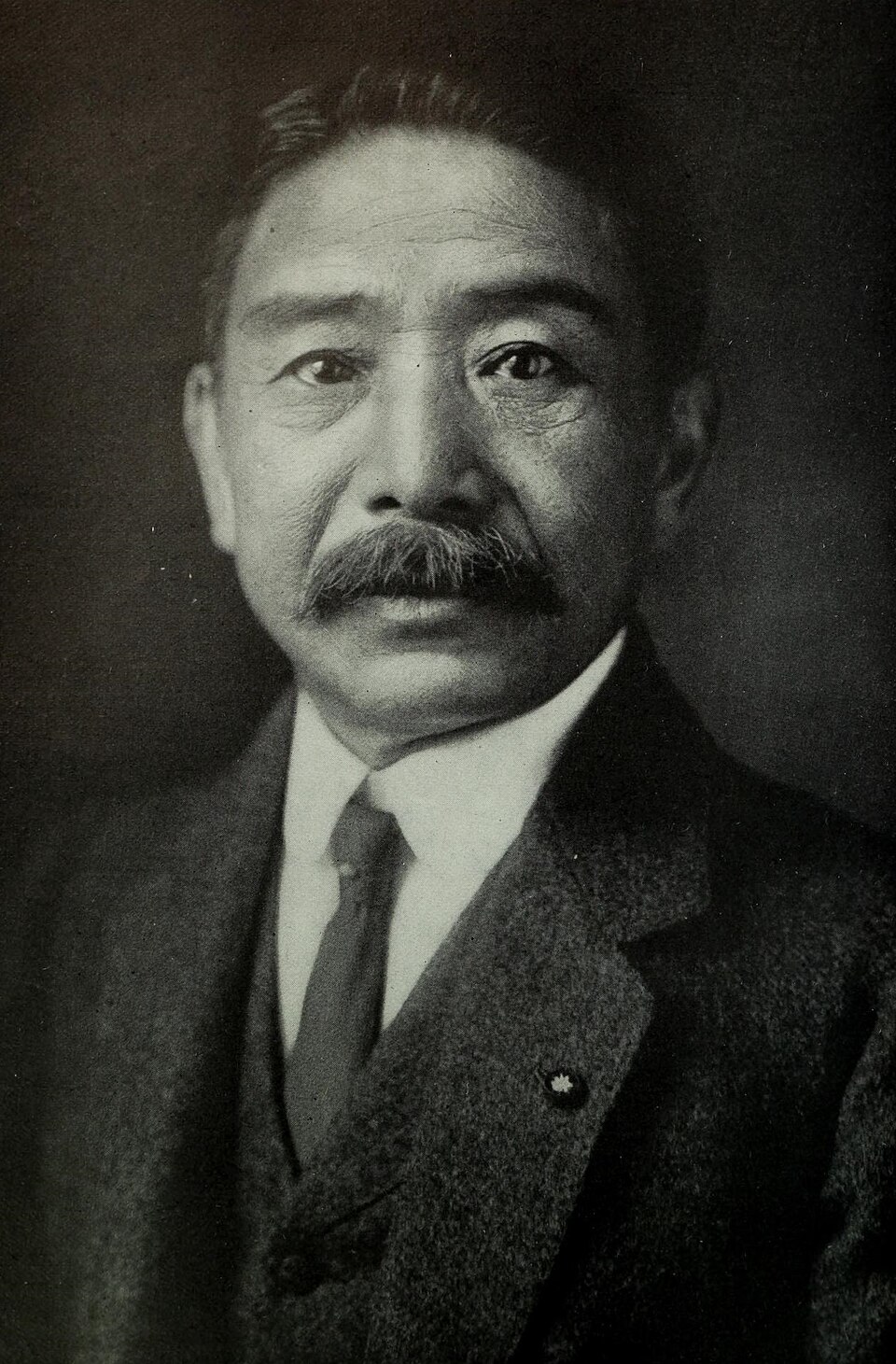
Chinda Sutemi
 Japan
JapanAlso known as: Count Chinda Sutemi, 珍田 捨巳
Birthday
January 19, 1857
Birth Sign
Capricorn
Birthplace
Hirosaki, Japan
Age
Died at 71
About
Count Chinda Sutemi was a Japanese diplomat and courtier who rose to become Grand Chamberlain to the Emperor, serving from 1927 until his death in 1929. Born in Hirosaki in 1857, he spent over four decades in the Foreign Ministry, representing Japan in some of the most delicate diplomatic moments of the early twentieth century. His postings included ambassadorships to Germany, the United States, and Great Britain, and he sat as a plenipotentiary at the 1919 Paris Peace Conference.
What set Chinda apart was his unusual American education. He graduated from an American university before joining the Japanese government, a background that gave him a rare Western perspective and made him a natural bridge between Japan and the West. His career spanned the Meiji and Taisho eras, and his final role placed him in daily service to the emperor, capping a life of quiet, steady influence.
Today, Chinda is remembered as a sharp negotiator who helped Japan secure its place among the great powers. His portrait is preserved in the National Diet Library's collection of modern Japanese historical figures, and he appears in the official photograph of the Japanese delegation at the Paris Peace Conference.
Early Life & Background
Chinda Sutemi was born on January 19, 1857, in Hirosaki, a castle town in northern Japan's Mutsu Province. His father was a samurai of the Tsugaru clan, and the family's warrior heritage shaped his early years. Hirosaki was a provincial stronghold, far from the political ferment of Tokyo, but the Meiji Restoration was already remaking Japan, and young Chinda grew up watching the old order give way.
His education took an unusual path for a future diplomat. Instead of the traditional Japanese academies, Chinda traveled to the United States and graduated from an American university. This was extraordinary for a Japanese official of his generation, and it gave him fluency in English and a deep understanding of Western customs. He also studied theology, which later led to his professional designation as a pastor alongside diplomat and politician.
Returning to Japan, Chinda entered the Foreign Ministry in 1885. His American background made him a valuable asset, and he quickly moved up the ranks. His first major overseas posting came in 1897, when he was appointed Minister Resident, a role that sent him to Brazil and later to The Hague. These early assignments tested his skills in unfamiliar settings, preparing him for the higher-stakes negotiations that lay ahead.
Career Growth
Chinda's diplomatic career reached its peak in the early twentieth century, when Japan was consolidating its status as a great power. In November 1900, he became minister to Russia during a critical juncture in Russo-Japanese relations, and the following year he was appointed Minister and Commissioner of Foreign Affairs. These roles placed him at the center of Japan's most sensitive negotiations.
By 1916, Chinda was serving as Japanese Ambassador to the United States, where he communicated directly with the U.S. Secretary of State on matters of diplomatic importance, as recorded in the Foreign Relations of the United States series. He also held ambassadorships to Germany and Great Britain, navigating the tense years of World War I and its aftermath.
In 1919, Chinda served as a plenipotentiary at the Paris Peace Conference, alongside Prince Saionji Kinmochi, Baron Makino Nobuaki, and Matsui Keishiro. He appears in the official delegation photograph, seated among the principals. His final and most prestigious role came in 1927, when he was appointed Grand Chamberlain to the Emperor, a position he held until his death on January 16, 1929.
Career Timeline
Public Image & Style
Chinda was known as a steady, sharp negotiator who bridged Japan and the West during a transformative period. His American education gave him a distinctive edge, and he was seen as a natural fit for representing Japan on the world stage. Contemporary photographs show him in formal diplomatic attire, often with a calm, composed expression. The National Diet Library of Japan includes his portrait in its collection of modern historical figures, underscoring his significance. His legacy is that of a behind-the-scenes architect of Japan's rise, respected for his discretion and skill rather than for public flair.
Fame & Fandom
Chinda Sutemi commands a legacy defined by historical documentation rather than contemporary celebrity metrics. As a statesman who passed in 1929, his global attention is measured through archival interest and academic study instead of modern fame signals. iFANN has not yet gathered sufficient data to calculate a standing for Chinda Sutemi within its global or category-specific rankings. Consequently, no placement on the world stage or in specific fields such as diplomacy can be assigned at this time. The absence of a current rank reflects the status of a historical figure whose influence resides in the past rather than in the active consumption patterns required for immediate evaluation. While many modern figures hold specific ordinals in the iFANN database, Chinda Sutemi remains unranked until the necessary data collection occurs. Regarding his audience, there is no formal or unofficial fandom name documented for the diplomat. He does not possess a collective of fans who utilize a specific moniker, nor are there organized campaigns, rituals, or inside jokes associated with his memory. His remembrance is strictly the domain of historians and scholars interested in early twentieth-century Japanese-Western relations. No fan-funded projects or viral legends exist to define a community around him. The lack of a named fanbase underscores that his significance lies in verified biographical facts and diplomatic achievements rather than in the cultural mythology that often surrounds living entertainers or public idols.
Interesting Facts and Legends
Chinda Sutemi studied theology alongside his diplomatic training, which occasionally leads to him being listed as a pastor in biographical summaries. His education at DePauw University was so rare for a diplomat of the Meiji era that it distinguished him from nearly all his contemporaries. He served as ambassador to three major powers: Germany, the United States, and Great Britain, a feat few Japanese diplomats achieved during their careers. At the Paris Peace Conference, he was photographed with the entire Japanese delegation, creating a lasting image of Japan's emergence as a world power. Some of the cherry blossom trees gifted to Washington, D.C., in 1912, during his ambassadorship, still bloom along the Tidal Basin today. This gift story is the most commonly told about him; it was a replacement for an earlier 1910 shipment destroyed due to infestation, and the annual festival traces its origins to this act. He also played a role in the Lansing–Ishii Agreement of 1917, a key U.S.–Japan accord. A minor historical discrepancy exists regarding his birth date, with some sources listing December 24, 1856, rather than the widely accepted January 19, 1857. His connection to DePauw University remains a significant part of his legacy, often cited in discussions regarding early Japanese-Western educational exchanges. While no folklore or viral incidents surround him, the narrative of the cherry blossoms serves as the primary enduring legend of his tenure, symbolizing the fragile but persistent bridge between two nations.
Family & Personal Life
Chinda married Iwa Chinda, also known as Sadako Chinda, who held the titles of Viscountess and later Countess, reflecting her husband's rising noble rank. The couple was active together in diplomatic circles during the late nineteenth and early twentieth centuries, and Iwa was described as a diplomat's wife who supported her husband's career. No children are recorded from their marriage. Chinda died in 1929, and his wife's death date is not documented in available sources.
Notable Connections
Chinda's wife, Iwa Chinda, was a constant presence in his diplomatic life, holding the title of Viscountess. At the Paris Peace Conference, he worked alongside Prince Saionji Kinmochi, Baron Makino Nobuaki, and Matsui Keishiro. He also corresponded with Baron Kikujiro Ishii, a contemporary Japanese diplomat, and with the U.S. Secretary of State during his ambassadorship.
Relationships & Dating History
Chinda Sutemi's personal life was marked by a single documented marriage. He married Iwa Chinda, also known as Sadako Chinda, who was described as a Japanese diplomat and wife of statesman Chinda Sutemi during the late 19th and early 20th centuries. She held the title of Viscountess, and later Countess, reflecting her husband's rising noble rank. The couple was active together in diplomatic circles, but no children are recorded. As of 2026, Chinda is deceased, having died on January 16, 1929. He was married to Iwa at the time of his death, and no divorce or separation is documented.
- MarriedIwa ChindaAlso known as Sadako Chinda; held the title of Viscountess and later Countess.
Death & Aftermath
Died
January 16, 1929 (aged 71)
Death Place
Tokyo, Japan
Cause of Death
Unknown
Count Chinda Sutemi served as Grand Chamberlain to the Emperor of Japan until his final days in Tokyo, where he remained a central figure in the imperial court. On January 16, 1929, at the age of seventy-one, he passed away within the capital, marking the end of a career that spanned over four decades of diplomatic service. The specific cause of his death remains unreported in available biographical records. Immediate public tributes or formal memorial services are not documented in the historical record, though his legacy persists through enduring diplomatic landmarks such as the cherry blossom trees gifted to Washington, D.C., during his tenure as Minister Plenipotentiary. His posthumous recognition includes inclusion in the National Diet Library's Portraits of Modern Japanese Historical Figures collection and archival maintenance by DePauw University, where he studied.
Net Worth (Estate Value)
$1 Million
iFANN Editorial Team estimate
As a career diplomat and court official, Chinda Sutemi did not amass personal wealth in the way modern celebrities do. His income came from government salaries, first as a diplomat and later as Grand Chamberlain to the Emperor. After his death in 1929, there have been no posthumous earnings, licensing deals, or other revenue streams reported. His estate, if any, would have been modest, likely consisting of personal property and perhaps a small pension. Research by the iFANN Editorial Team estimates his net worth at $1 million, a figure that reflects the limited financial legacy of a public servant of his era. As of 2026, there is no public data on his financial legacy, and any figure remains speculative.
Awards & Accolades
View 3 records, honours and achievementsKnown For
Grand Chamberlain to the Emperor
1927-1929 · Court official
Paris Peace Conference
1919 · Plenipotentiary
Ambassador to the United States
c. 1916 · Ambassador
Ambassador to Great Britain
c. 1915-1920 · Ambassador
Ambassador to Germany
· Ambassador
Keywords
Sources
Quick Facts
- Profession
- diplomat, politician, pastor
- Born
- January 19, 1857
- Birthplace
- Hirosaki
- Died
- January 16, 1929
- Death Place
- Kōjimachi-ku
- Gender
- Male
- Spouse
- Iwa Chinda
- Birth Sign
- Capricorn
Personal Details
- Full Name
- Chinda Sutemi
- Spouse
- Iwa Chinda
- Education
- American university (name unknown); theological training
Frequently Asked Questions
Who was Chinda Sutemi?
What did Chinda Sutemi do at the Paris Peace Conference?
Where was Chinda Sutemi born?
Who was Chinda Sutemi's wife?
What was Chinda Sutemi's final role?
Similar People
Join the community
fans discussing