 Japan
“A nervous and experimental work of genius, following two lonely manga artists on the cusp of their 30s through a romance built out of awkwardness and nerve.”
Screen Anarchy staff
Screen Anarchy
Masanao Kawajiri's debut feature opens on a dating app. Two people swipe, match, and then sit across from each other at a table, and the film's whole engine is the silence before either of them speaks. Ryou, 32, makes his living drawing explicit manga and has never had sex. Ami, 28, illustrates commercial work by day and publishes boys' love manga under a pen name by night, and she has never had a boyfriend. Cherry and Virgin takes their matched inexperience seriously and finds comedy in it anyway.
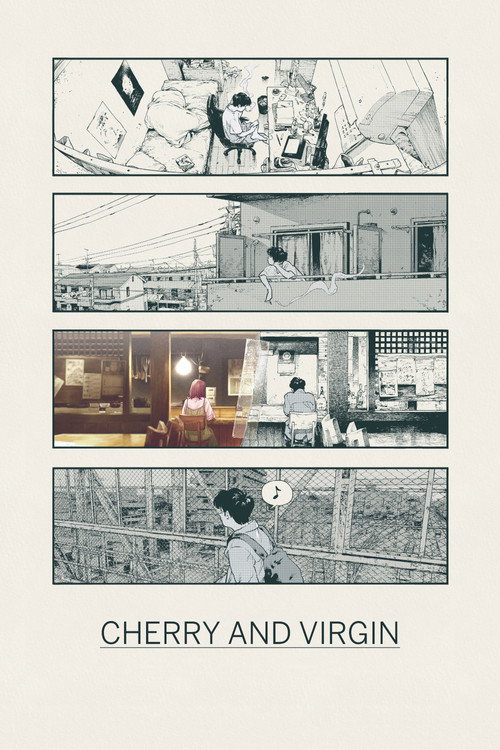
Kawajiri shot live-action footage and traced it, frame by frame, into animation. The rotoscope look gives the film a jittery, observational quality, as if the camera caught these two people before they had time to compose themselves. Toei Video Company produced, Gen Sato took the producer credit, and the film ran 87 minutes. It premiered at the 30th Fantasia International Film Festival on July 18, 2026, and won a prize there, with Anime News Network reporting the award on July 27.
What separates the movie from the usual otaku comedy is its refusal to mock its leads. Their professions mirror each other almost too neatly, an erotic artist who has never touched anyone and a BL artist who has never been kissed, but the script treats that symmetry as a shared condition rather than a joke. The humor comes from the distance between what they can draw and what they can say out loud. The tenderness comes from watching them close it.
Ryou is 32 and good at his job. He draws erotic manga for a living, pages of bodies in impossible configurations, and he has spent so long rendering desire on paper that the real thing has become a rumor. Ami is 28, a commercial illustrator with a steady freelance income and a secret second career: under a pen name she draws and publishes boys' love manga, and her readership has no idea she has never been on a date that lasted past the second drink.
The film introduces them separately, in their apartments, at their desks, surrounded by the tools of their trade. Ryou's workspace is a clutter of reference photos and half-finished panels. Ami's is quieter, organized, with a locked drawer for the BL drafts. Neither of them is miserable, exactly. They are settled. They have built lives that function, and the movie is careful to show that those lives are not empty. They have work they are good at, friends who check in, and a running joke between them about being "cherries" and "virgins," the title's blunt pairing, which they use on themselves before anyone else can.
Then a dating app matches them. The first act is the date: a restaurant, a table, two people who are far more articulate on the page than in person. Kawajiri lets the conversation run long and lets it stall. Ryou talks about his work in vague terms and then overcorrects into too much detail. Ami laughs at the wrong moment and then explains the laugh, which makes it worse. They order a second round. They discover, cautiously, that they are both in the same ridiculous boat, and the relief of that is almost physical. The scene works because the film does not rush it. There is a long stretch where neither of them says anything important, and that stretch is the point.
What follows is a slice-of-life progression rather than a plot. There are more dates, some better than others. There are work pressures: a deadline that keeps Ryou at his desk for three days, an editor who wants Ami's BL series to get steamier and does not know that she is writing from research rather than memory. Aya, a friend in their orbit, nudges and teases and occasionally says the thing neither of them wants to hear. The film moves between their separate worlds and the small overlaps between them, and it keeps finding the same friction: they can imagine intimacy in detail, and they cannot yet tolerate being seen.
Kawajiri treats that friction with wry warmth. The movie is structured around disclosures rather than set pieces. Ryou admits something about his virginity and immediately wishes he hadn't. Ami shows him a page of her BL work and watches his face while he reads it. There are misunderstandings, but they are small and human, the kind that come from two people who have spent years protecting themselves and are out of practice at letting anyone in. The central question is not whether they will end up together. It is whether two people who have made armor out of work, fandom, and irony can stand to be vulnerable for an hour at a time.
The film leans on seinen manga traditions and otaku culture without turning its characters into caricatures. Ryou and Ami are not types. They are specific, and their specificities are the source of both the comedy and the pathos. Virginity at thirty is not the punchline here. It is a quiet, sometimes painful condition, and the movie's interest is in whether two people might help each other out of it, not in whether they can check off a milestone. The title promises a joke. The film delivers something gentler and harder to pull off.
Cherry & Virgin - Trailer
Critical Consensus
Festival reviews have been warm, praising Kawajiri's rotoscoped debut as an unusually honest and formally adventurous treatment of adult loneliness and late virginity. Critics consistently describe it as earnest rather than mocking, experimental in technique yet emotionally direct, and they single out the warmth it finds in the gap between its characters' erotic imaginations and their halting real lives. No aggregate scores are yet available.
“A nervous and experimental work of genius, following two lonely manga artists on the cusp of their 30s through a romance built out of awkwardness and nerve.”
Screen Anarchy staff
Screen Anarchy
“Kawajiri finds love in full color, tracing live-action footage into animation until the film's intimacy feels observed rather than staged.”
Cinapse staff
Cinapse
“The film builds an animated universe around dating-app despair, and somehow locates real hope inside it.”
Cult MTL staff
Cult MTL
“A notable 2026 anime title from Masanao Kawajiri, treating thirty-something inexperience with a frankness that adult animation rarely attempts.”
Asian Movie Pulse staff
Asian Movie Pulse
Yaeko Kiyose
Ami (voice)
Takashi Okado
Ryou (voice)
Risa Hinami
Aya (voice)
Director
Masanao Kawajiri
Producer
Gen Sato
Fantasia International Film Festival (2026)
Award Winner (category not specified in coverage): Won
Join the community
fans discussing