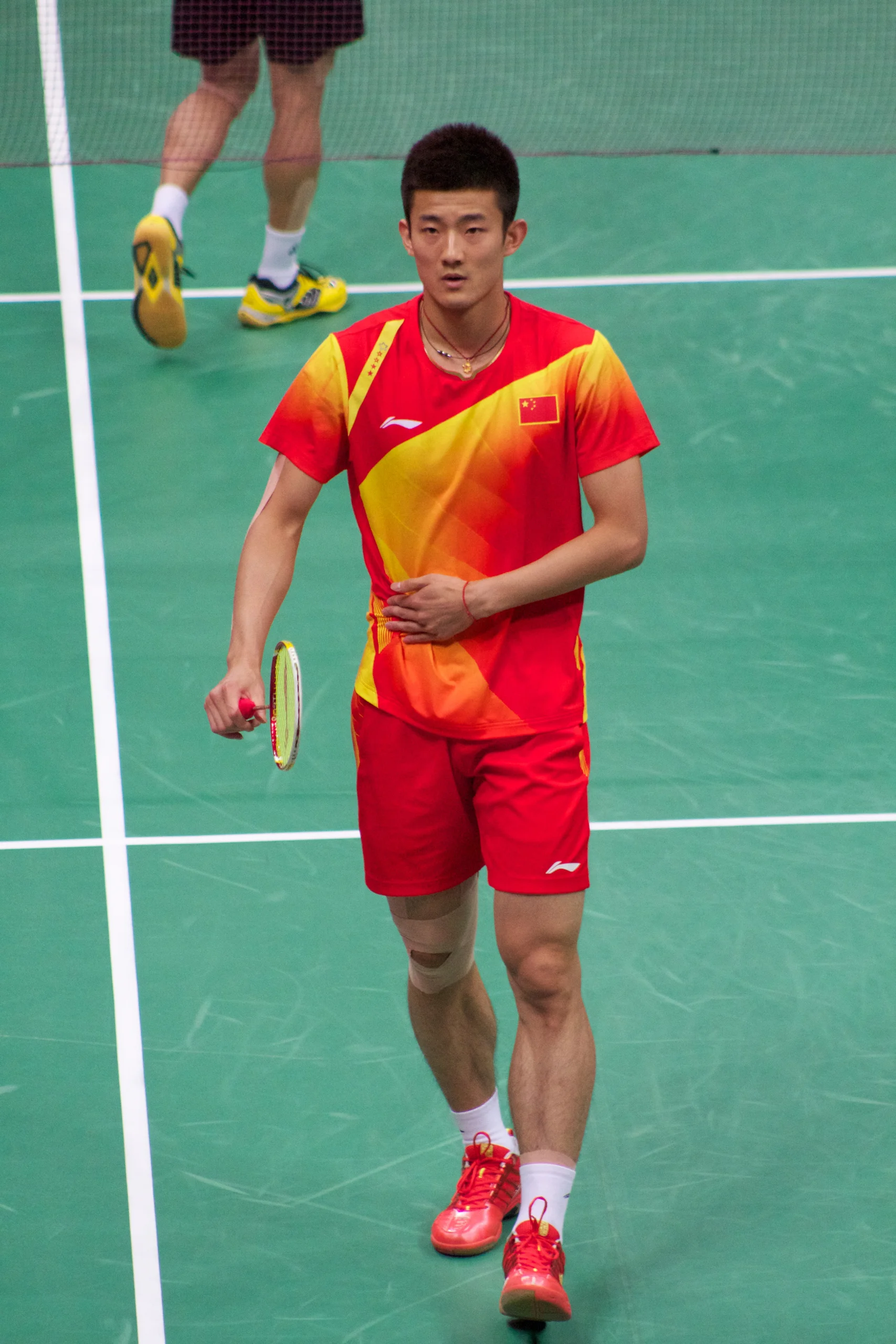
Chen Long
 China
Chinabadminton player•Olympic competitor•coach
Also known as: The Great Wall of China, 谌龙
Birthday
January 18, 1989
Birth Sign
Capricorn
Birthplace
Shashi District, Yichang, Hubei Province, China
Age
37 years old
Height
5 ft 10.5 in (179 cm)
About
Chen Long is a Chinese former professional badminton player and current head coach of the Chinese national junior team. He is the 2016 Olympic gold medalist in men's singles, a four-time BWF world champion, a two-time Asian Games champion, and one of only a handful of men to hold the world number one ranking for more than a year at a stretch.
His career record reads as a study in consistency: Olympic medals at three consecutive Games (bronze in 2012, gold in 2016, silver in 2020), four World Championship titles between 2014 and 2019, and 76 consecutive weeks at world number one from December 2014 to June 2016. He retired from competition in May 2023 after 13 years on the international tour and was inducted into the BWF Hall of Fame in 2024. In October 2025 he took charge of China's junior national squad.
Fans know him as "The Great Wall of China," a reference to a defensive game built on patience, stamina and an unreadable expression that opponents found unnerving. He keeps his personal life private and has never publicly confirmed a partner.
Early Life & Background
Chen Long was born on January 18, 1989, in the Shashi District of Yichang, Hubei Province, an inland city on the Yangtze where sport offered one of the few clear routes out. He showed unusual agility and coordination as a child, and at 15 he joined the Hubei Provincial Badminton Team, the first formal step on a path that most Chinese players of his generation entered through provincial academies rather than school competition.
Selection for the national training camp followed quickly. He spent his late teens in the national system, training alongside players who would become both teammates and rivals, including Lin Dan, the reigning Olympic champion and the standard against which every Chinese men's singles player of that era was measured. The comparison was not flattering in the early years. Lin Dan was charismatic, attacking and already a global star; Chen Long was quiet, defensive and slower to assert himself.
The junior circuit is where he first made his case. In 2007 he won the boys' singles at both the Asian Junior Championships and the BWF World Junior Championships, a double that marked him as the likely heir to China's men's singles throne. He turned professional shortly after and, in 2009, claimed his first senior title at the Philippines Open. That win was modest in scale but significant in signal: the defensive game that would later be called the Great Wall was already taking shape, and he was beginning to beat senior opponents by outlasting them rather than overpowering them.
By 2010 he was part of China's Thomas Cup squad, and by 2011 he had reached the All England Open final and the World Championship final, losing the latter to Lin Dan. He entered the London Olympics cycle as the second Chinese man, not the first, and the question hanging over him was whether patience alone could win the biggest titles.
Career Growth
The breakthrough came at the 2012 London Olympics, where Chen Long won bronze in men's singles after losing to Lin Dan in the semifinal. It was a result that established him as a genuine medal contender rather than a domestic standout, and it set up the run that defined his career.
In 2014 he won his first World Championship title in Copenhagen, beating Lee Chong Wei in the final, and in December of that year he reached world number one for the first time. He defended the world title in Jakarta in 2015 and held the top ranking for 76 consecutive weeks, a stretch that ended in June 2016. The peak arrived that August at the Rio de Janeiro Olympics, where he beat Lee Chong Wei in a three-game final lasting 73 minutes to win gold. The victory completed the Super Slam, the set of Olympic, World Championship, All England and Asian Games titles.
He added a third world title in Glasgow in 2017 and a fourth in Basel in 2019, becoming the first male player to win the World Championships four times. He also won Asian Games gold in Incheon in 2014 and Jakarta in 2018, the All England Open in 2011 and 2016, and was part of six Thomas Cup-winning squads and five Sudirman Cup-winning squads.
At the Tokyo Olympics, held in 2021, he reached the final again and lost to Viktor Axelsen, taking silver. That medal made him the only male singles player to win Olympic medals at three consecutive Games. He retired in May 2023, and in October 2025 became head coach of the Chinese national junior team, working with the next generation at events such as the BWF Junior World Championships in Guwahati, India.
Career Timeline
Public Image & Style
Chen Long's public image is built on restraint. Where Lin Dan projected charisma and Lee Chong Wei projected emotion, Chen Long projected nothing at all, and that blankness became his brand. Commentators described his stillness as a psychological weapon; opponents reported that his lack of reaction, whether he was winning or losing, was harder to play against than any shot he hit.
Off court the persona holds. His Instagram, with roughly 136,000 followers, is a modest footprint for a three-time Olympic medalist, and his posting leans toward coaching updates, occasional career reflections and rare family moments rather than sponsored content. He does not court the commercial visibility that Chinese athletes of comparable achievement often pursue. The nickname "The Great Wall of China" is used by media and fans alike, and it fits both the defensive style and the impassive manner. In interviews he comes across as measured and understated, a tone that has made him a difficult figure for the media to sensationalize.
Fame & Fandom (iFAMOUS Rankings)
Chen Long's fame sits almost entirely inside badminton. In the iFANN Global Fame Engine's September 2026 evaluation he was assessed but holds no placement in the published rankings, meaning he is not currently among the Global Top 1,000 or any Top-100 scope list. The engine measures worldwide attention across public signals such as Wikipedia readership and global search interest, and his footprint there is concentrated rather than broad: recent Wikipedia traffic is heavily weighted toward Chinese, English, Japanese and Vietnamese readers, with smaller clusters in Malaysia, Singapore, Hong Kong and Taiwan. That is the shape of a regional sporting icon rather than a global celebrity.
His fanbase has no formal name. Supporters gather around the nickname "The Great Wall" and organize organically, showing up in stadiums and arguing his case online. The defining fan narrative is that he was underrated, a player who won four world titles and three Olympic medals while sharing an era with the more charismatic Lin Dan, and that argument has kept his name alive in forums long after his retirement. The fan ritual that outlasts everything else is the poker face: supporters treat any crack in it, such as the smiles he showed while coaching juniors in India in 2025, as a small event worth noting. He engages back only lightly, through occasional posts, and has never leaned on his audience for commercial campaigns.
Interesting Facts and Legends
His name in Chinese characters is 谌龙, and the character 谌 is uncommon enough that non-Chinese broadcasters have mangled it for years. The "poker face" became a genuine internet meme in China, deployed to describe anyone who refuses to show emotion, and it is arguably better known there than any single match he played.
He lost the All England Open final before he ever won the title, finally taking it in 2016 after earlier defeats. He is a Capricorn, a detail fans cite when discussing the discipline that defined his playing style. A story fans still retell is the Rio 2016 final against Lee Chong Wei, a 73-minute marathon in which his stamina, not his attack, decided the outcome. The other legend is quieter: opponents and commentators repeatedly described the unnerving experience of playing against an expression that never changed, win or lose.
Notable Quotes
“I am just a normal person who loves badminton.”
“Coaching is more stressful than being a player. I have to think about everything now.”
“I don't care about the pressure. I just want to play my game.”
Family & Personal Life
Chen Long was born and raised in the Shashi District of Yichang, Hubei Province, into a family that has never been the subject of detailed public reporting. He has kept his relatives out of interviews and social media almost entirely, a level of privacy unusual even by the standards of Chinese national-team athletes.
He has never publicly confirmed a spouse, partner or children, and there is no documented information about his current household, pets or living arrangements. Interviews over the years suggest his family was supportive of the provincial-team move at 15 but otherwise stayed in the background. He has spoken about the discipline instilled in him early, which he credits for the temperament that became his trademark on court.
Notable Connections
Lin Dan, his longtime teammate and rival, is the figure against whom his career is most often measured. Lee Chong Wei of Malaysia was his most frequent opponent and the man he beat in both the 2014 World Championship final and the 2016 Olympic final. Viktor Axelsen of Denmark beat him in the Tokyo Olympic final. Zhou Mi is a former teammate and friend.
Relationships & Dating History
Chen Long has never publicly confirmed a romantic relationship. Across a career that ran from 2007 to 2023 and a retirement that has kept him in the public eye as a coach, no credible source has named a girlfriend, fiancée or spouse, and no engagement, marriage or divorce has ever been reported.
Rumours have surfaced periodically in fan forums, particularly during his peak years, but none were ever substantiated by him, his representatives or the Chinese badminton federation. In interviews he has said his focus during his playing years was entirely on badminton, leaving little room for a public relationship, and he has not discussed the subject since retiring.
His privacy on this front is deliberate and consistent with his broader public persona. Where other athletes of his stature have used relationships as part of their media presence, Chen Long has treated the subject as off limits. As of 2026, with no confirmed partner and no reported change in status, he is widely considered single.
Salary, Net Worth In 2026
$3 Million
iFANN Editorial Team estimate
Chen Long's finances reflect the structure of Chinese national-team sport rather than the endorsement economy that surrounds stars in football, tennis or basketball. The bulk of his career income came from state salaries and medal bonuses. China's General Administration of Sport pays substantial rewards for Olympic medals, and a gold in 2016 plus silvers and bronzes at other Games formed the single largest component of his earnings. Prize money on the BWF World Tour added to that over 13 years, though badminton purses are modest next to those in comparable global sports.
Endorsements were real but limited. He had partnerships with Li-Ning and other Chinese sports equipment manufacturers, but never built the commercial portfolio that Lin Dan did, partly by temperament and partly because his reserved public profile made him a harder sell. Since retiring he has drawn a coaching salary from the national team structure, a steady if unspectacular income.
Property is the other likely asset. Retired elite athletes in China commonly hold real estate in cities such as Beijing or Wuhan, and Chen Long is assumed to, though no specific holdings or values have been confirmed publicly. iFANN's own editorial research puts his net worth at approximately $3 million. That figure is consistent with the range that credible sports-business and Chinese media estimates cluster around, covering accumulated bonuses, prize money, endorsement income and coaching salary.
Speculative articles citing $5 million or more lack backing and appear to conflate his competitive fame with actual liquid assets. The $3 million estimate is iFANN's own, derived from the available earnings record, and should be read as an informed approximation rather than a disclosed figure.
Awards Won (27)
Chen Long's medal cabinet is one of the fullest in men's singles badminton. He won Olympic gold in 2016, silver in 2020 and bronze in 2012, four BWF World Championship titles between 2014 and 2019, two Asian Games golds, two All England Open titles, and was part of six Thomas Cup and five Sudirman Cup-winning Chinese squads. He was inducted into the BWF Hall of Fame in 2024.
2024 · Hall of Fame
Career
2019 · Men's Singles
2019 BWF World Championships, Basel
2017 · Men's Singles
2017 BWF World Championships, Glasgow
2015 · Men's Singles
2015 BWF World Championships, Jakarta
2014 · Men's Singles
2014 BWF World Championships, Copenhagen
Known For
Rio 2016 Olympic men's singles gold
2016 · Men's singles champion
BWF World Championships
2014 · Men's singles champion (also 2015, 2017, 2019)
Tokyo 2020 Olympic men's singles silver
2021 · Men's singles runner-up
London 2012 Olympic men's singles bronze
2012 · Men's singles bronze medalist
Asian Games men's singles gold
2014 · Men's singles champion (also 2018)
All England Open
2011 · Men's singles champion (also 2016)
Keywords
Sources
Quick Facts
Personal Details
- Full Name
- Chen Long
- Height
- 5 ft 10.5 in (179 cm)
Frequently Asked Questions
Is Chen Long still playing badminton?
How many Olympic medals does Chen Long have?
What is Chen Long's net worth in 2026?
Who is Chen Long married to?
Why is Chen Long called the Great Wall of China?
Social Media
Similar People
Join the community
fans discussing