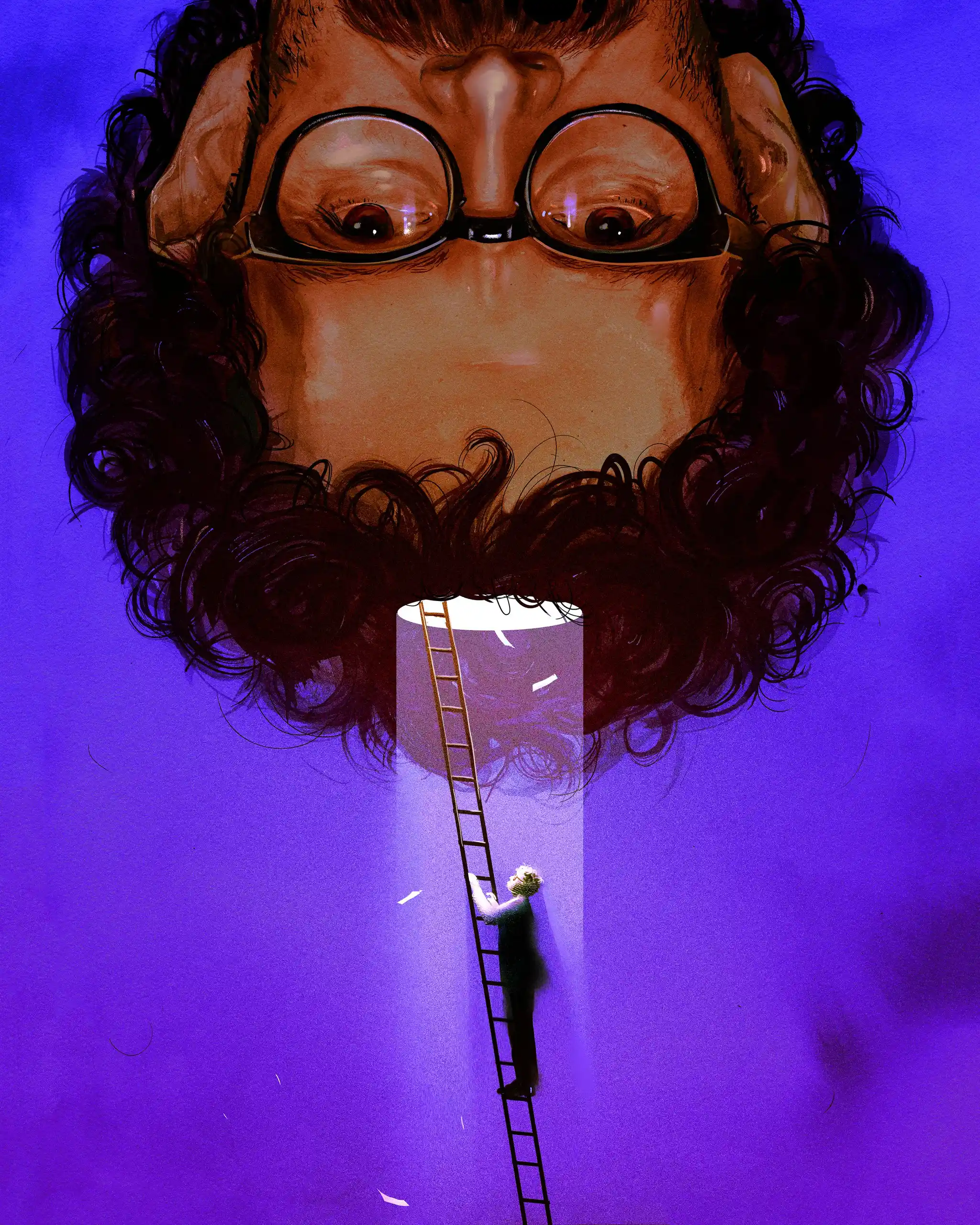
Charlie Kaufman
screenwriter•film producer•film director
Also known as: Charles Stuart Kaufman
Birthday
November 19, 1958
Birth Sign
Scorpio
Birthplace
New York City
Age
68 years old
About
Charles Stuart Kaufman is an American filmmaker and novelist whose work has redefined the boundaries of screenwriting and cinema. Born in New York City and raised in Long Island and Connecticut, he emerged as a distinct voice in American culture through his postmodernist and surreal storytelling. His career spans television writing, feature film screenwriting, directing, and literature, marked by a consistent exploration of identity, memory, and the creative process itself.
Kaufman achieved critical acclaim early on with scripts for Being John Malkovich, Adaptation, and Eternal Sunshine of the Spotless Mind. These films, often collaborating with directors Spike Jonze and Michel Gondry, blended high-concept science fiction with intimate emotional drama. He won an Academy Award for Best Original Screenplay for Adaptation and has had three scripts listed on the Writers Guild of America's list of the 101 greatest movie scripts ever written. Transitioning to directing, he created the sprawling Synecdoche, New York and the stop-motion animated hit Anomalisa.
His literary contributions include the novel Antkind, published in 2020. As of 2026, Kaufman remains active in the industry with upcoming projects like Iq 83 and Later The War. He continues to be recognized for his intellectual rigor and willingness to tackle uncomfortable themes of depression and mortality without relying on conventional narrative structures.
Early Life & Background
Charles Stuart Kaufman entered the world on November 19, 1958, in New York City into a Jewish family. His father Robert worked as a physician while his mother Barbara was a homemaker. The family relocated from Massapequa on Long Island to West Hartford, Connecticut, when Charlie was thirteen years old. This move coincided with a period where he began immersing himself deeply in reading and theater. Before this transition, he had already started writing plays and making short films during his student years, showing an early aptitude for storytelling that defied standard classroom expectations.
He attended the University of California, Berkeley, where he studied English Literature and Film. During these formative years, he produced several short films that showcased his interest in surrealism and complex narrative structures. Before achieving widespread fame, Kaufman took on various jobs to support himself while honing his craft. His professional breakthrough came through television writing, where he contributed to shows like The Ben Stiller Show and Mr. Show with Bob and David. These experiences were crucial in developing his unique voice characterized by awkward humor and existential dread. The skills he cultivated in these sketch comedy environments laid the groundwork for the intricate meta-narratives that would later define his feature film career.
His brother Donald Kaufman played a significant role in his life before his untimely death. Donald died of a drug overdose in 1995, a tragedy that would later become a central element in Kaufman's most famous work. The loss of his twin brother deeply affected him and provided the emotional fuel for exploring themes of grief and identity in his writing. This personal history remained largely private until it became the subject of his Oscar-winning screenplay about the struggle to adapt a book into a film.
Career Growth
Kaufman's entry into feature films marked a seismic shift in independent cinema. His breakthrough arrived with Being John Malkovich in 1999, directed by Spike Jonze. The script explored identity and consciousness through a portal into the mind of actor John Malkovich, earning him an Academy Award nomination for Best Original Screenplay. This collaboration continued with Eternal Sunshine of the Spotless Mind in 2004, starring Jim Carrey and Kate Winslet. This film further cemented his reputation for blending high-concept sci-fi with intimate emotional drama and earned him another Oscar nomination along with BAFTA and WGA awards.
In 2002, he released Adaptation, a meta-fictional masterpiece about the struggle to adapt Susan Orlean's book The Orchid Thief. The film starred Nicolas Cage playing both the protagonist and his fictional twin brother Donald. Kaufman won the Academy Award for Best Original Screenplay for this work, along with three BAFTA Awards, two Independent Spirit Awards, and a Writers Guild of America Award. Three of his screenplays are now listed on the Writers Guild of America's list of the 101 greatest movie scripts ever written.
Transitioning to directing, Kaufman made his debut with Synecdoche, New York in 2008. A sprawling autobiographical film starring Philip Seymour Hoffman, Roger Ebert later named it the best movie of the decade. He followed this with Anomalisa in 2015, a stop-motion animated film co-directed with Duke Johnson. It won the Grand Jury Prize at Sundance and received an Oscar nomination for Best Animated Feature. In 2020, he released I'm Thinking of Ending Things, a psychological thriller adapted from his own novel, which premiered at the Venice Film Festival and was distributed by Netflix. Beyond film, Kaufman published his first novel, Antkind, in 2020, a semi-autobiographical story about a young writer struggling with mental health and identity.
As of mid-2026, Kaufman remains active in the industry. He is set to shoot Later The War in Cyprus in 2027, starring Channing Tatum and Tessa Thompson. Additionally, he announced a new project titled Iq 83 starring Steve Carell. He continues to collaborate with Duke Johnson and Eva H.D., appearing at film festivals like the Sands Film Festival in April 2026. His recent interviews have focused on the impact of AI on art and the state of Hollywood, reflecting his ongoing engagement with cultural commentary.
Career Timeline
Public Image & Style
Charlie Kaufman is portrayed as a brilliant, eccentric, and deeply introspective artist. His public image is defined by his intellectual rigor, his reluctance to conform to Hollywood norms, and his willingness to explore uncomfortable themes of identity, depression, and the human condition. He is often described as "the writer's writer" because of his complex and challenging narratives.
His style is characterized by awkward humor, existential dread, and meta-narrative structures that challenge traditional storytelling. He rarely appears on magazine covers due to his reclusive nature but has been featured in profiles in The New York Times, The Guardian, and Film Comment. His social media presence is sparse, mostly used to promote his work rather than engage in personal interaction.
Fame & Fandom (iFAMOUS Rankings)
iFANN's Global Fame Engine evaluated Charlie Kaufman in November 2026 but determined he does not currently hold a placement in the published rankings. He is not on the September 2026 iFAMOUS Rankings flagship list. While he lacks a formal ranking number, his influence on modern cinema remains profound.
There is no officially recognized fandom name for Charlie Kaufman. Fans typically refer to themselves as "Kaufman fans" or "screenwriters." The fanbase is highly organized around academic discussions, film analysis, and online forums like Reddit and Letterboxd. Notable fan campaigns include streaming pushes for his lesser-known works and deep-dive video essays analyzing his films. Fans often celebrate his birthday (November 19) with retrospective viewings and discussions. The audience is drawn to his unique brand of metaphysical comedy and his ability to tackle difficult subjects with wit and insight.
Interesting Facts and Legends
Charlie Kaufman is famously known for the real-life story behind Adaptation. His fraternal twin brother Donald Kaufman died of a drug overdose in 1995. Charlie used Donald's death as a catalyst for the character of Donald in the film, creating a meta-narrative where the fictional Donald tries to write a better ending than the real Charlie could manage. This blurring of lines between reality and fiction became a defining example of meta-cinema.
Before his feature film success, Kaufman made several short films while at UC Berkeley. These early works showcased his interest in surrealism and complex narrative structures long before he entered the mainstream. He only published his first novel, Antkind, in 2020 after decades of writing exclusively for film and television. The book is a semi-autobiographical story about a young writer struggling with mental health and identity.
A legendary moment in cinema history occurred in Adaptation when Nicolas Cage played both Charlie and Donald Kaufman. The chaotic, self-referential climax blurred the lines between reality and fiction so thoroughly that it became a defining example of meta-cinema. In a 2011 interview, Kaufman stated "I don't believe in rules," a quote that has become a mantra for aspiring writers seeking to break conventional narrative structures.
Notable Quotes
“I don't believe in rules.”
“The idea that you can just make a movie and people will see it is a fantasy.”
“Writing is a way of trying to understand yourself.”
Family & Personal Life
Charles Stuart Kaufman was born into a Jewish family in New York City. His father, Robert Kaufman, was a physician, and his mother, Barbara, was a homemaker. The family moved from Massapequa, New York, to West Hartford, Connecticut, when Charlie was 13 years old. This move coincided with his early immersion in reading and theater.
He had a twin brother named Donald Kaufman who died of a drug overdose in 1995. Donald was a real person and served as the inspiration for the character of Donald in Adaptation. Charlie has never publicly discussed other romantic relationships or children, maintaining a very private family life. He lives a low-profile existence outside of his professional work, keeping his personal affairs separate from his public persona.
Notable Connections
Spike Jonze, Michel Gondry, Nicolas Cage, Duke Johnson, Steve Carell, Donald Kaufman
Relationships & Dating History
Charlie Kaufman is notoriously private regarding his personal life. There are no publicly confirmed records of marriages, engagements, or long-term public relationships. Throughout his career, media speculation has occasionally surfaced regarding his sexuality or potential partners, but Kaufman has never publicly discussed a romantic relationship in detail. He has consistently maintained a low profile outside of his professional work.
As of 2026, there are no credible reports confirming a current partner, spouse, or children. Publicly, he is considered single, though he keeps his personal life entirely separate from his public persona. No sources document any specific dating history, flings, or breakups, indicating a deliberate choice to remain private. His focus has always remained on his creative output rather than his personal relationships.
Salary, Net Worth In 2026
$14 Million
iFANN Editorial Team estimate
Estimates for Charlie Kaufman's net worth vary due to his privacy and lack of endorsement deals. Research by the iFANN Editorial Team puts his fortune at around $14 million. Wealth is derived primarily from screenwriting fees, which often range from $1 to $2 million per major project, along with directing salaries and residuals from his highly successful back catalog. He also earns from book sales, including Antkind, and speaking engagements.
Unlike many celebrities, he does not have major business ventures, real estate holdings reported publicly, or endorsement deals. His financial trajectory has remained steady through the years, supported by the enduring popularity of his films. As of 2026, his income streams continue to generate revenue from his extensive library of work, ensuring his financial stability without the need for commercial endorsements typical of mainstream stars.
Awards Won (27)
Kaufman's award tally reflects his status as a critically acclaimed writer. He won the Academy Award for Best Original Screenplay for Adaptation in 2003. He also received BAFTA Awards for Best Original Screenplay for Adaptation and Best Adapted Screenplay for Eternal Sunshine of the Spotless Mind. His accolades include two Independent Spirit Awards, a Writers Guild of America Award, and an Emmy for Outstanding Writing for a Variety Series for The Ben Stiller Show. He also won the Grand Jury Prize at Sundance for Anomalisa.
2003 · Best Original Screenplay
Adaptation
2005 · Best Adapted Screenplay
Eternal Sunshine of the Spotless Mind
2003 · Best Original Screenplay
Adaptation
Known For
Being John Malkovich
1999 · Screenwriter
Adaptation
2002 · Screenwriter
Eternal Sunshine of the Spotless Mind
2004 · Screenwriter
Synecdoche, New York
2008 · Director/Screenwriter
Anomalisa
2015 · Director/Screenwriter
I'm Thinking of Ending Things
2020 · Director/Screenwriter
Keywords
Sources
Quick Facts
- Profession
- screenwriter, film producer, film director
- Born
- +1958-11-19
- Birthplace
- New York City
- Gender
- Male
- Birth Sign
- Scorpio
Personal Details
- Full Name
- Charles Stuart Kaufman
- Children
- Education
- University of California, Berkeley
Filmography
15
Total
10
Film
5
TV
Frequently Asked Questions
Does Charlie Kaufman have a twin brother?
How many Oscars does Charlie Kaufman have?
Why is Charlie Kaufman famous?
Is Being John Malkovich LGBTQ?
What is Charlie Kaufman's latest movie?


Join the community
fans discussing