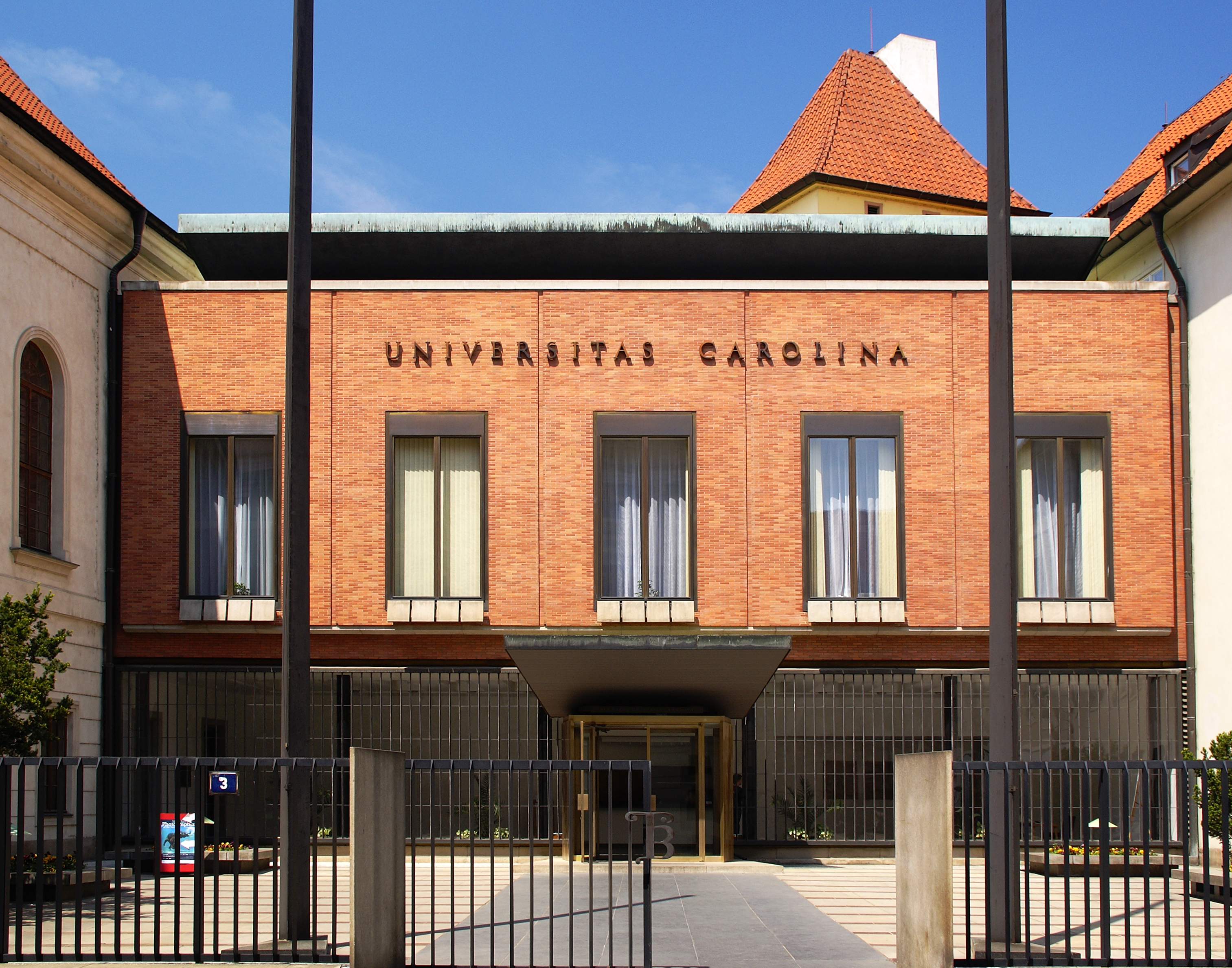
Charles University
 Czechia
"Bridging centuries, creating the future since 1348"
About
Charles University, known in Czech as Univerzita Karlova, is the largest university in the Czech Republic and one of the oldest continuously operating universities in the world. Founded in 1348 by Holy Roman Emperor Charles IV, it ranks as the third oldest university north of the Alps, after Oxford and Cambridge, and was the first university established in Central and Eastern Europe. Its historic halls have witnessed seven centuries of intellectual, political, and cultural transformation, from the Hussite movement to the Velvet Revolution.
Today, the university operates 17 faculties spread across Prague and Hradec Králové, covering disciplines from medicine and law to humanities and natural sciences. With a student body exceeding 50,000 and a staff of over 9,000, it is a vibrant academic community that fuels the nation's intellectual life. The main campus in Prague blends gothic architecture with modern research facilities, and three new campuses are currently under construction: Biocentrum at Albertov, the Charles University Campus in Hradec Králové (MEPHARED 2), and Campus Motol.
Charles University has produced an extraordinary roster of alumni, including writers Franz Kafka and Milan Kundera, scientist Albert Einstein (who briefly taught there), and political leader Václav Havel. Its reputation for rigorous scholarship and its central role in Czech history make it a cornerstone of national identity. The university is also an active member of the 4EU+ European University Alliance, fostering collaboration across borders.
Mission
Charles University's mission is to advance knowledge through research, education, and international collaboration, preserving its historical legacy while driving modern innovation. It aims to provide high-quality education across a broad spectrum of disciplines, foster critical thinking, and contribute to the development of Czech society and the global academic community.
History
Charles University was founded on April 7, 1348, by Holy Roman Emperor Charles IV, who envisioned Prague as a major intellectual center. Modeled on the universities of Paris and Bologna, it began with four faculties: theology, law, medicine, and arts. During the Hussite era in the 15th century, the university played a pivotal role in the Czech Reformation, becoming a center of religious and political dissent.
After the Battle of White Mountain in 1620, the university came under Habsburg control and was merged with the Jesuit Clementinum, becoming known as Charles-Ferdinand University. It remained a German-speaking institution until the 19th century, when a Czech-language university was established. In 1882, the university split into separate Czech and German institutions, with the Czech part eventually becoming the modern Charles University. During the 20th century, the university faced Nazi occupation and communist rule, yet maintained pockets of intellectual resistance. It was a key site of the Velvet Revolution in 1989, and since then has expanded and modernized, becoming a leading research university in Europe.
Subdivisions
Faculty of Arts
The largest faculty, known for humanities and social sciences, with a rich history in Czech intellectual life.
Faculty of Mathematics and Physics
Focuses on mathematics, physics, and computer science, with strong research output.
Faculty of Education
Trains teachers and education professionals.
Faculty of Social Sciences
Covers political science, economics, journalism, and international relations.
Faculty of Physical Education and Sport
Specializes in sports science and physical education.
Faculty of Humanities
Offers interdisciplinary programs in the humanities.
Faculty of Science
Includes biology, chemistry, geology, and environmental science.
Central Library
The university's main library system, serving all faculties.
Institute for Language and Preparatory Studies
Provides language courses and preparatory programs for international students.
Institute of Classical Archaeology
Conducts research and teaching in classical archaeology.
Aula Cervantes
A center for Spanish language and culture.
Environment Centre
Focuses on environmental research and sustainability.
CERGE-EI
Center for Economic Research and Graduate Education - Economics Institute, a joint workplace with the Czech Academy of Sciences.
Notable People
Charles IV
Founder · 1348
Founded the university in 1348.
Franz Kafka
Alumnus · 1901-1906
Studied law at the university.
Milan Kundera
Alumnus · 1948-1952
Studied at the Faculty of Arts.
Albert Einstein
Professor · 1911-1912
Taught theoretical physics at the university.
Václav Havel
Alumnus · 1960s
Studied at the Faculty of Economics, later became president of Czechoslovakia.
Milestones
1348
Founded by Charles IV
1882
Split into Czech and German universities
1918
Renamed Charles University after Czechoslovakia's founding
1989
Played a key role in the Velvet Revolution
2019
Joined the 4EU+ European University Alliance
2026
Opened CenMAS research center at the Faculty of Arts
Sources
Organization Info
- Founded
- April 7, 1348
- Headquarters
- Prague
- Country
- Czech Republic
- Type
- University
- Employees
- 9156
- Founder
- Charles IV
Financials
- Employees
- 9156
Official Website
cuni.cz
Join the community
fans discussing