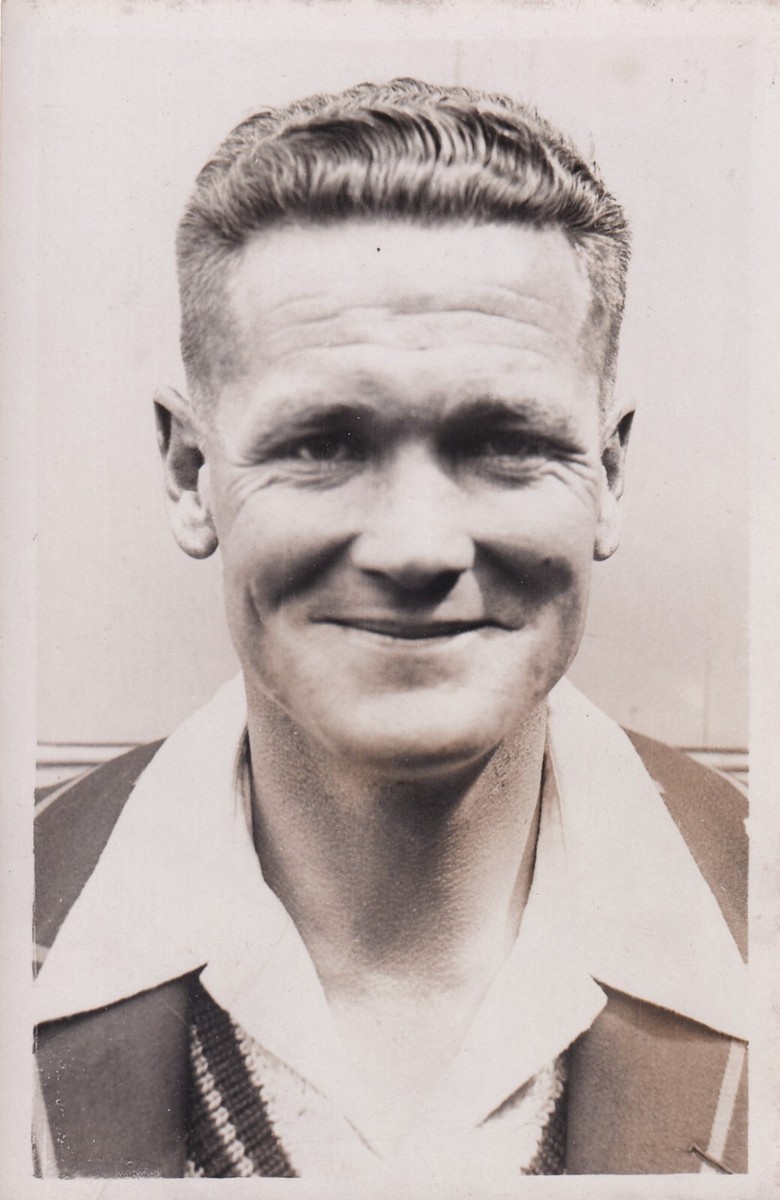
Charles Catterall
 South Africa
Birthday
October 16, 1914
Birth Sign
Libra
Birthplace
Harare, Zimbabwe (then Salisbury, Southern Rhodesia)
Age
Died at 52
About
Charles Catterall was a South African featherweight boxer who reached the pinnacle of amateur boxing in the 1930s. He is best remembered for winning the silver medal at the 1936 Berlin Olympics, where he lost a close final to Argentina's Oscar Casanovas. Two years earlier, he had claimed gold at the 1934 British Empire Games in London, defeating Wales's J.D. Jones in the final. That double achievement places him among the finest amateur featherweights of his generation.
Catterall's Olympic silver remains a landmark in South African boxing history, celebrated for decades as proof that the country could produce world-class talent. His career was brief but brilliant, and his name still appears in Olympic and Commonwealth Games records. He died on November 1, 1966, in Durban, South Africa, at the age of 52.
Early Life & Background
Charles Catterall was born on October 16, 1914, in Salisbury, Southern Rhodesia, now known as Harare, Zimbabwe. Details of his childhood and schooling are scarce, but he developed an early interest in boxing and rose through the amateur ranks with notable speed. By the early 1930s, he had established himself as one of the leading featherweights in Southern Africa, catching the attention of selectors for the British Empire Games.
His first major international appearance came at the 1934 British Empire Games in London, where he represented South Africa. He powered through the featherweight bracket and met Wales's J.D. Jones in the final. Catterall won the gold medal, a result that announced his arrival on the world stage and set the foundation for his Olympic campaign two years later.
Career Growth
Charles Catterall's defining moment came at the 1936 Summer Olympics in Berlin. He advanced through the featherweight field with a series of disciplined performances, reaching the final against Oscar Casanovas of Argentina. The match was tightly contested, but Casanovas edged ahead to take the gold, leaving Catterall with the silver medal. That Olympic run remains one of the standout achievements in South African boxing history.
Shortly after the Olympics, on October 31, 1936, Catterall recorded his only professional bout, according to BoxRec, with his residence listed as Luanshya, Zambia, then Northern Rhodesia. The fight appears to have been a brief foray into the paid ranks, and no further professional contests are documented. His competitive career effectively ended there, but his amateur legacy endured.
Career Timeline
Public Image & Style
Charles Catterall competed in the amateur ranks in the 1930s, an era before mass sports celebrity. No signature style, media portrayal, or fandom culture is documented. His public image is defined almost entirely by his competitive achievements: a gold at the 1934 British Empire Games and a silver at the 1936 Berlin Olympics.
He is remembered as a disciplined and skilled featherweight who represented South Africa with distinction. His legacy is preserved through Olympic and Commonwealth Games historical records, and his Wikipedia article receives modest but steady attention, with roughly 337 views over 60 days as of mid-2026.
Fame & Fandom
Charles Catterall’s name carries weight in Olympic history, but his global footprint is modest. iFANN’s Global Fame Engine has evaluated him, yet he holds no placement in the published rankings, neither the Global Top 1,000 nor any Top-100 scope list. His fame is real but niche, anchored in a silver medal from the 1936 Berlin Olympics and a gold from the 1934 British Empire Games. Those feats keep him alive in boxing encyclopedias and South African sports lore, but they don’t translate into the kind of sustained, worldwide attention that drives high rankings.
There is no formal fandom for Catterall. No fan name, no organized community, no campaigns or rituals. His audience is composed of boxing historians, Olympic trivia buffs, and South Africans who take pride in his legacy. They remember him as a disciplined fighter who nearly won Olympic gold, but their engagement is quiet, scholarly, and scattered across continents.
Interesting Facts and Legends
Charles Catterall’s Wikipedia article exists in at least ten languages, including Arabic, German, Finnish, French, Italian, Norwegian, Polish, Romanian, Swedish, and Chinese, an unusually wide linguistic footprint for a 1930s amateur boxer. His Wikidata identifier is Q3438964. He was born in Harare, Zimbabwe, but competed for South Africa. His only professional bout took place immediately after the Berlin Olympics, and BoxRec lists his residence at that time as Luanshya, Zambia. Catterall’s Olympic silver came in the featherweight class, where he lost to Argentina’s Oscar Casanovas in the final. He won gold at the 1934 British Empire Games two years before that Olympic silver, making him a two-time major international medallist.
No legendary moments or iconic stories have been documented around Catterall. There are no tales of fans fainting, streets shutting down, or disruptive events. His legacy is built purely on results, the kind that earn respect but not mythology.
Family & Personal Life
No detailed records of Charles Catterall's parents, siblings, spouse, or children survive in the available sources. He was born in Salisbury, Southern Rhodesia, to a family about whom little is documented. His private life remained out of the public eye, and no family stories or household details have been preserved.
Catterall died on November 1, 1966, in Durban, South Africa, at age 52. No cause of death is recorded. He left no known descendants or family members in the public record.
Notable Connections
Relationships & Dating History
No public records of romantic relationships, marriages, or children exist for Charles Catterall in the available sources. As a 1930s amateur boxer from Southern Africa, his private life was not documented in the accessible biographical records.
Given his death in 1966, no 'latest reported status' for 2026 applies. He is deceased, and there is no evidence of any public romantic relationship, engagement, marriage, divorce, or rumoured pairing.
Death & Aftermath
Died
November 1, 1966 (aged 52)
Death Place
Unknown
Cause of Death
Unknown
The official record confirms Charles Catterall passed away on November 1, 1966, at the age of fifty-two. Born on October 16, 1914, he remained a documented figure in sporting history due to his silver medal in the Featherweight class at the 1936 Summer Olympics and his gold medal at the 1934 British Empire Games. Available sources do not contain details regarding his place of death, hospital statements, coroner rulings, or autopsy reports that would clarify the specific cause of his passing.
The handling of his estate never entered the public domain in the available sources. No information exists regarding the date, location, or nature of any funeral service, burial site, cremation status, or dedicated memorial established for him following his death in 1966.
Contemporary accounts of mourning, fan vigils, moments of silence, or tributes from peers and institutions are absent from the data. Posthumous releases, films, books, awards, hall-of-fame inductions, dedications, foundations, or scholarships created in his name after 1966 also lack documentation. His legacy remains defined by his historical sporting records without further elaboration on immediate public reaction or long-term commemorative efforts found in these sources.
Net Worth (Estate Value)
$0
iFANN Editorial Team estimate
Charles Catterall passed away in 1966, and no estate value or posthumous earnings are documented. His amateur boxing career generated no significant professional income, and his single professional bout in 1936 would have yielded minimal compensation. No estate, licensing deals, royalties, merchandise, or intellectual property rights are recorded. As of 2026, iFANN’s editorial analysis estimates Catterall’s net worth at $0. His financial legacy is essentially nonexistent, with no known assets or revenue streams.
Awards Won (2)
Charles Catterall won two major international medals: a gold at the 1934 British Empire Games and a silver at the 1936 Olympic Games, both in the featherweight division.
1936 · Featherweight
Boxing at the 1936 Summer Olympics
1934 · Featherweight
Boxing at the 1934 British Empire Games
Known For
1936 Summer Olympics
1936 · Featherweight silver medallist
1934 British Empire Games
1934 · Featherweight gold medallist
Keywords
Sources
Quick Facts
- Profession
- Boxer
- Born
- October 16, 1914
- Birthplace
- Harare, Zimbabwe
- Died
- November 1, 1966
- Death Place
- Durban, South Africa
- Gender
- Male
- Birth Sign
- Libra
Personal Details
- Full Name
- Charles Catterall
Frequently Asked Questions
Who is Charles Catterall?
What is Charles Catterall's net worth?
How did Charles Catterall die?
What is Charles Catterall best known for?
Is Charles Catterall still alive?
Similar People

Join the community
fans discussing