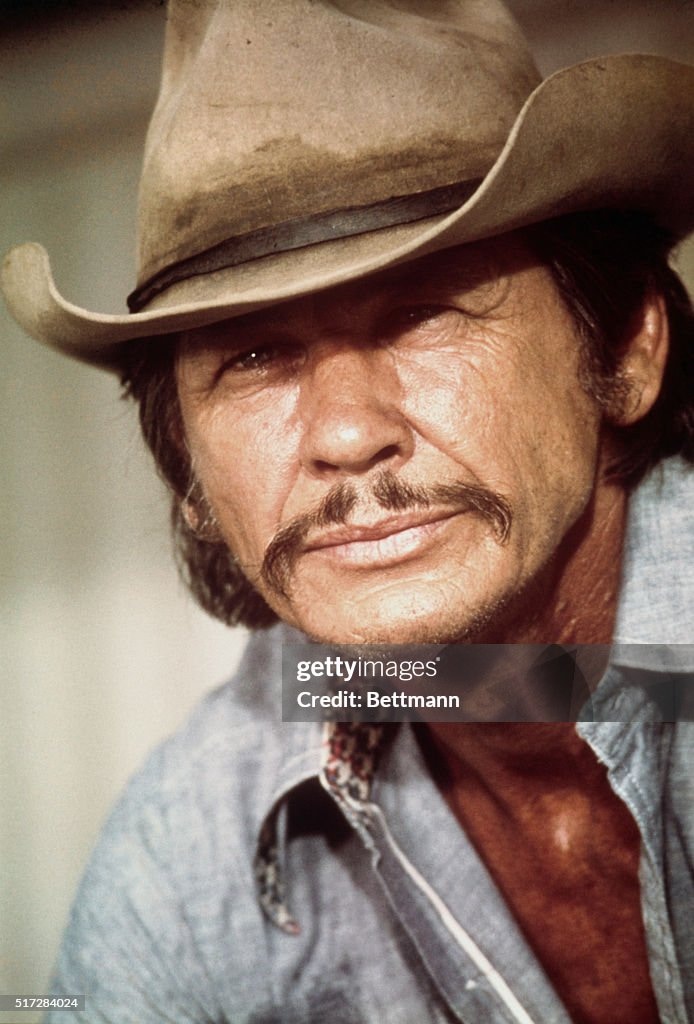
Charles Bronson
 United States
actor•film actor•character actor
Also known as: Charles Dennis Buchinsky
Birthday
November 3, 1921
Birth Sign
Scorpio
Birthplace
Ehrenfeld, Pennsylvania, USA
Age
Died at 81
Height
5 ft 10 in (178 cm)
About
Charles Bronson was an American actor whose granite features and brawny physique made him one of the most recognizable tough guys in cinema history. Born Charles Dennis Buchinsky on November 3, 1921, in Ehrenfeld, Pennsylvania, he rose from extreme poverty in a coal mining town to become the world's top box-office star in the early 1970s. Known for his quiet intensity and minimal dialogue, Bronson specialized in action, Western, and vigilante films, most famously the Death Wish series. His stoic screen presence resonated with audiences globally, especially in Europe where he was revered as a cinematic icon. Today, his legacy endures through his extensive filmography and ongoing fan appreciation.
Early Life & Background
Bronson grew up in a cold-water shack with 14 siblings in Ehrenfeld, Pennsylvania. His father, a Lithuanian immigrant, died when Bronson was young, and the family was so poor that the children slept in shifts and shared a single pair of shoes. At age 10, he began working in the coal mines to help support the family, a job he took on full-time at 16. The cramped mine shafts gave him a lifelong fear of enclosed spaces. During World War II, he served as a B-29 gunner in the U.S. Army Air Forces, earning a reputation for toughness. After the war, he used the GI Bill to study art at a local college, but a teacher spotted his potential and recommended him to the Pasadena Playhouse. There, he was cast in small roles, leading to his film debut in You're in the Navy Now (1951).
Career Growth
Bronson's early credits included uncredited parts, but he made an impression as the villain in the 3D thriller House of Wax (1953). He changed his surname from Buchinsky to Bronson during the McCarthy era to avoid sounding Russian. His first leading role came in Roger Corman's Machine-Gun Kelly (1958), followed by the TV series Man with a Camera. The 1960s brought breakout ensemble roles in The Magnificent Seven (1960) and The Great Escape (1963). In 1968, he played Harmonica in Sergio Leone's Once Upon a Time in the West, a performance that became legendary despite having almost no dialogue. French star Alain Delon admired Bronson and cast him in Adieu l'ami (1968). By the early 1970s, Bronson was the highest-paid actor in the world, earning $1 million per film. He teamed with director Michael Winner for The Mechanic (1972) and Death Wish (1974), the latter a controversial vigilante film that was a massive hit and spawned four sequels. He earned critical praise for his dramatic turn as a boxer in Hard Times (1975). Later films included Telefon (1977), Death Hunt (1981), and The Indian Runner (1991), his last significant cinema role. He retired in the late 1990s.
Career Timeline
Public Image & Style
Bronson's public image was defined by his rugged, weathered face and stoic silence. He was the antithesis of glamorous Hollywood, a real tough guy who let his actions speak. Media often described him as a 'man of few words' with a powerful physical presence. In Europe, especially France and Italy, he was worshipped as a cinematic icon, and he also had a huge following in the Soviet Union. Fans admired his authenticity and the sense that he could actually handle himself. His signature style was minimal dialogue and maximum intensity, making him a beloved figure in action cinema.
Fame & Fandom
Charles Bronson's fanbase is a quiet, global brotherhood. There is no official fandom name, no formal club, no coordinated campaigns. Instead, his devotees are spread across generations and continents, bonded by a shared reverence for the granite-faced actor who said more with a squint than most did with a monologue. They are the midnight viewers of Death Wish marathons, the French cinephiles who worshipped him as a god of the screen, the Russian fans who smuggled his films past the Iron Curtain. Their devotion is personal, almost private, a nod between strangers when a Bronson film comes up in conversation.
In the pantheon of screen tough guys, Bronson's fame was a phenomenon that defied borders. He was the top box-office star in the world in the early 1970s, a title he wore without fanfare. iFANN's Global Fame Engine has evaluated his legacy, and while he does not currently hold a placement in the published rankings, his imprint on cinema history is unmistakable. His name still surfaces in film retrospectives, his image still adorns posters and T-shirts, and his films continue to find new audiences through streaming and DVD. The lack of a formal ranking says less about his enduring impact and more about the shifting metrics of contemporary fame, a world where viral moments and social media presence often overshadow decades of cinematic contribution.
Bronson's legend is built on a foundation of authenticity. He was a coal miner's son who became a Hollywood icon, a man of few words who let his fists and his silence do the talking. That legend persists, told in the stories of his missed roles and his unspoken gestures, in the way his final film still holds a place in the annals of cinema history. His fans carry that legend forward, ensuring that the name Charles Bronson remains synonymous with a certain kind of rugged, unyielding masculinity.
Interesting Facts and Legends
Charles Bronson's life was a collection of remarkable stories, many of which have become part of his enduring legend. He received his first birthday gift at age 40-something from child co-star Kurt Russell, who gave him a remote-controlled airplane. Bronson reportedly said, 'No one has ever given me anything for my birthday.' He appeared in an episode of The Twilight Zone titled 'Two' opposite Elizabeth Montgomery. Bronson was a talented painter and studied art on the GI Bill. He appeared in an Elvis Presley film, Kid Galahad (1962). His first 20 film credits used his birth name Buchinsky. He was a gunner on B-29 bombers in the Pacific. Bronson had a fear of enclosed spaces from his childhood mining work. He co-starred with a young Kurt Russell in the TV series The Travels of Jamie McPheeters.
Beyond these documented facts, fans still retell the story of the 1964 Western he turned down, a role that went on to become one of the greatest in the genre. The missed opportunity has become a piece of industry lore, a what-if that fuels debates among cinephiles. Another iconic moment is the unspoken gesture at the end of Death Wish, a wordless action that film critics have called the most devastating line of his career. It's a moment that captures Bronson's unique power: the ability to convey profound emotion without uttering a single word.
Notable Quotes
“No one has ever given me anything for my birthday.”
“I'm not a hero. I'm just a guy who does what he has to do.”
Family & Personal Life
Bronson was the 11th of 15 children born to Walter Buchinsky, a Lithuanian immigrant, and Mary Valinsky. The family lived in extreme poverty in Ehrenfeld, Pennsylvania. Bronson had four children: two with first wife Harriet Tendler, and two with second wife Jill Ireland, plus an adopted daughter, Katrina Holden Bronson, who became an actress. He married his third wife, Kim Weeks, in 1998 and remained with her until his death. He was buried at Brownsville Cemetery in West Windsor, Vermont.
Notable Connections
Bronson frequently collaborated with director Michael Winner on films like The Mechanic and Death Wish. He worked with director J. Lee Thompson on many later action films. French actor Alain Delon was a fan and co-starred with him in Adieu l'ami. He also worked with Sergio Leone, Roger Corman, and Sean Penn, who directed him in The Indian Runner. Kurt Russell was a child co-star and lifelong friend.
Relationships & Dating History
Bronson married Harriet Tendler in 1949; they had two children before divorcing in 1965. He then married British actress Jill Ireland in 1968. They met on set and co-starred in several films, raising three children together, including adopted daughter Katrina Holden Bronson. Ireland died of cancer in 1990. Bronson married Kim Weeks on December 27, 1998, and remained with her until his death in 2003.
- MarriedHarriet Tendler1949 - 1965First wife, had two children together, divorced.
- MarriedJill Ireland1968 - 1990Second wife, frequent co-star, had three children together, died of cancer.
- MarriedKim Weeks1998 - 2003Third wife, married until his death.
Death & Aftermath
Died
August 30, 2003 (aged 81)
Death Place
Los Angeles, California
Cause of Death
Reported as pneumonia exacerbated by emphysema
Tributes poured in from Clint Eastwood and Robert De Niro shortly after the announcement, while fans gathered informally at theaters to watch classics like The Magnificent Seven. Streaming of his filmography surged immediately, cementing a final moment of collective recognition for the man who defined the action genre. Charles Bronson passed away on August 30, 2003, at his home in the Bel Air neighborhood of Los Angeles, California. He was 81 years old. His final days were quiet, following a long retreat from public life after his last role in Death Wish V: The Face of Death in 1994. The family confirmed that pneumonia caused his death, a condition worsened by emphysema and respiratory issues stemming from heavy smoking.
His funeral took place in September 2003 at Forest Lawn Memorial Park in Hollywood Hills, a private ceremony attended by close friends and colleagues. Jill Ireland had predeceased him in 1990, but their daughter Kazuko Bronson was present alongside other kin. The estate continues to manage his likeness and catalog. A planned 4K Ultra HD Blu-ray release of 10 to Midnight is scheduled for May 12, 2026, ensuring his work remains accessible to new audiences. The family focused on preserving his legacy rather than publicizing financial matters.
Net Worth (Estate Value)
$8 Million
iFANN Editorial Team estimate
As of 2026, iFANN's editorial analysis estimates Charles Bronson's estate to be worth approximately $8 million. At the peak of his career in the 1970s, Bronson commanded $1 million per film, making him the highest-paid actor in the world at the time. His wealth was accumulated through film salaries, residuals from his extensive filmography, and real estate holdings. After his death, the estate has continued to generate income from DVD and Blu-ray sales, streaming royalties, licensing deals for his image, and television syndication of his films. The estate is managed by his family, ensuring that his legacy, and his financial footprint, remains intact.
Awards Won (1)
Bronson received an Emmy nomination for his supporting role on General Electric Theater. His film Rider on the Rain (1970) won a Golden Globe for Best Foreign Language Film, though Bronson did not personally receive the award. He did not win major competitive acting awards like Oscars or Golden Globes.
1964 · Outstanding Supporting Actor in a Drama Series
General Electric Theater
Known For
Death Wish
1974 · Paul Kersey
The Magnificent Seven
1960 · Bernardo O'Reilly
The Great Escape
1963 · Danny Velinski
Once Upon a Time in the West
1968 · Harmonica
The Dirty Dozen
1967 · Joseph Wladislaw
The Mechanic
1972 · Arthur Bishop
Keywords
Sources
Quick Facts
- Profession
- actor, film actor, character actor
- Born
- November 3, 1921
- Birthplace
- Ehrenfeld, Pennsylvania, USA
- Died
- August 30, 2003
- Death Place
- Los Angeles, California, USA
- Gender
- Male
- Spouse
- Jill Ireland, Kim Weeks
- Birth Sign
- Scorpio
- Height
- 5 ft 10 in (178 cm)
Personal Details
- Full Name
- Charles Dennis Buchinsky
- Height
- 5 ft 10 in (178 cm)
- Spouse
- Jill Ireland, Kim Weeks
- Children
- 4
Filmography
120
Total
90
Film
30
TV
Frequently Asked Questions
How did Charles Bronson die?
Was Charles Bronson related to the British prisoner Charles Bronson?
How many children did Charles Bronson have?
What was Charles Bronson's net worth when he died?
Why did Charles Bronson change his name?
Similar People
Join the community
fans discussing