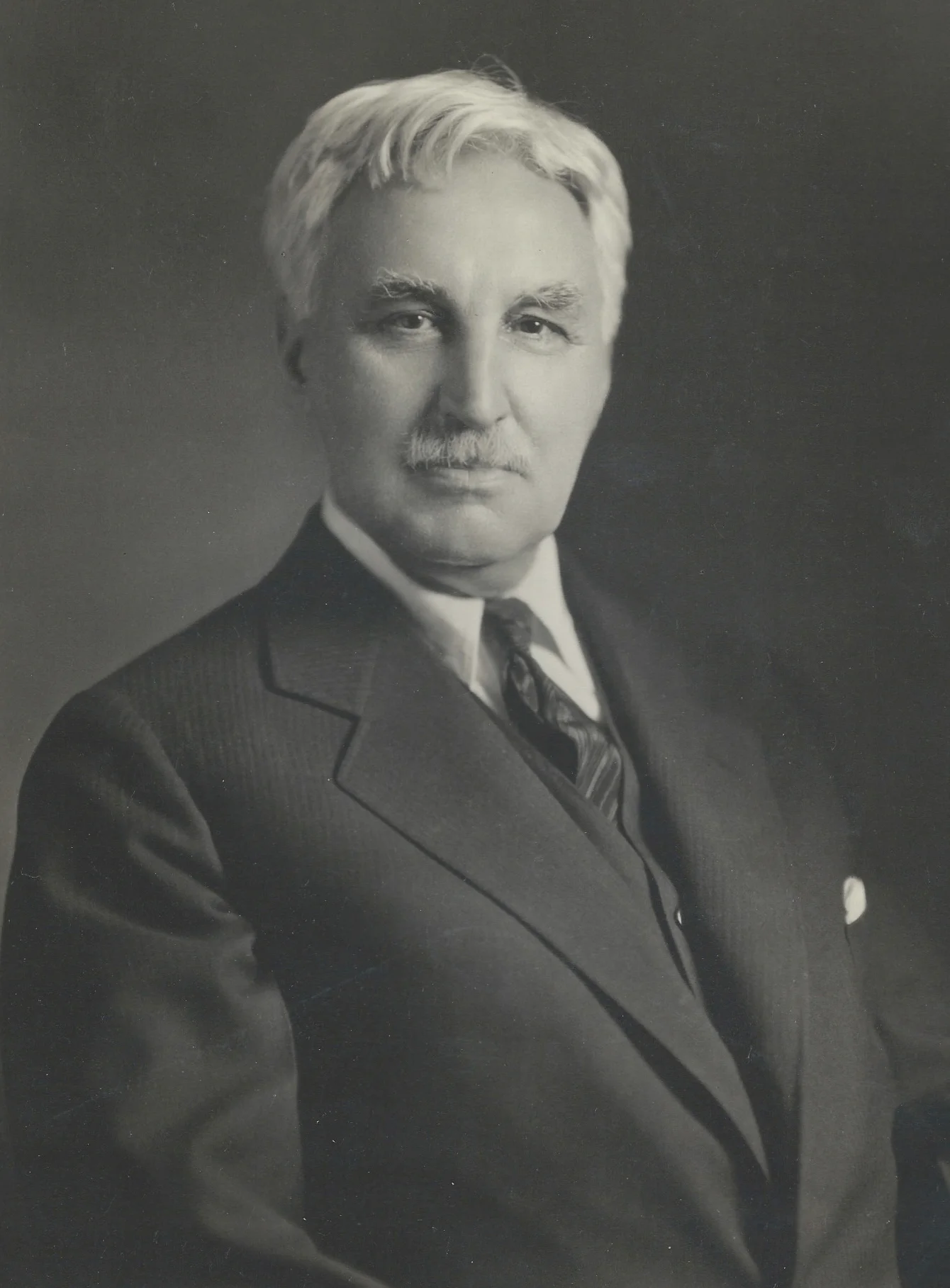
Charles Aubrey Eaton
 Canada
Birthday
March 29, 1868
Birth Sign
Aries
Birthplace
Pugwash, Nova Scotia, Canada
Age
Died at 84
About
Charles Aubrey Eaton was a Canadian-born American Baptist clergyman, journalist, and Republican politician who represented New Jersey in the United States House of Representatives for 28 years, from 1925 until his death in 1953. He is best remembered as a leading Republican voice on foreign policy, chairing the House Committee on Foreign Affairs and the Herter Committee, and as a signatory of the United Nations Charter in 1945.
Eaton's political career grew out of a long pastoral life. He served Baptist congregations in Massachusetts, Toronto, Cleveland, and New York City before entering Congress. Among his congregants in Cleveland was John D. Rockefeller, who became a lifelong patron of Eaton and his nephew Cyrus S. Eaton.
After his death, Eaton's legacy has been preserved through the Eaton Room at the Watchung Historical Society in New Jersey and through historical documentation at Thinkers Lodge in Pugwash, Nova Scotia. In 2022, the Borough of Watchung honored his legacy with a formal proclamation. The United Nations, which Eaton helped found, marked its 80th anniversary in 2025, underscoring the enduring impact of his work.
Early Life & Background
Charles Aubrey Eaton was born on March 29, 1868, in Pugwash, Nova Scotia, to a farming family. He attended public schools in the province before feeling a call to the Baptist ministry. He was ordained as a Baptist clergyman and began his pastoral career in 1893 at a church in Natick, Massachusetts.
From 1895 to 1901, Eaton led the Bloor Street Baptist Church in Toronto, a prominent Canadian congregation. He then moved to the Euclid Avenue Baptist Church in Cleveland, where he served from 1901 to 1909. It was there that he met John D. Rockefeller, who attended his services and became a devoted supporter. Eaton's final pastorate was at the Madison Avenue Baptist Church in New York City, from 1909 to 1916.
Eaton was known as a natural storyteller and an inspirational speaker. His oratory skills and his connections to wealthy congregants, particularly the Rockefellers, paved the way for his later career as a journalist and then a politician.
Career Growth
Eaton's political career began in 1924 when he was elected to the U.S. House of Representatives, taking office in 1925. He represented New Jersey's 4th district until 1933, and after redistricting, the 5th district until his death in 1953, a total of 28 years in office.
In Washington, Eaton became a leading Republican on foreign affairs. He chaired the House Committee on Foreign Affairs and also led the Herter Committee, which played a significant role in shaping postwar American aid to Europe. His crowning achievement came in 1945 when he signed the United Nations Charter in San Francisco alongside President Truman and other delegates. Eaton championed the UN as the world's best hope for peace.
Throughout his career, Eaton remained a resident of Watchung, New Jersey, where he was active in the community. His district centered on Somerset County, and he died in office on January 23, 1953, in Washington, D.C., at the age of 84.
Career Timeline
Public Image & Style
Eaton's public image was that of a preacher-turned-politician, known for his oratorical skills and his internationalist foreign policy views. He was described as "a citizen of Watchung and the world" by the New York Times. His legacy is preserved through the Eaton Room at the Watchung Historical Society, historical markers in Watchung, and documentation at Thinkers Lodge in Pugwash. There is no documented fandom culture associated with this historical figure.
Fame & Fandom (iFAMOUS Rankings)
Charles Aubrey Eaton's legacy rests not on the roar of a crowd or the glow of a spotlight, but on the quiet weight of history. He was a man whose influence rippled through diplomatic halls and pulpit floors long before the concept of celebrity fandom existed. Today, his audience is not a legion of adoring fans chanting slogans or organizing birthday billboards; it is a scattered collection of historians, local archivists, and descendants who preserve his story in dusty ledgers and municipal records. The fanbase has no formal name, nor are there any organized rituals or viral moments that have turned his life into pop culture mythology. The only tributes he receives are the solemn dedications of rooms in historical societies and the occasional municipal proclamation honoring his residency in Watchung. This absence of a modern fanbase underscores the nature of his fame: it is the fame of service, not stardom. iFANN has yet to collect specific data to rank him against the global population of public figures. Consequently, no current placement exists in our worldwide or category-specific leaderboards.
Interesting Facts and Legends
Born in Pugwash, Nova Scotia, Charles Aubrey Eaton served as a Baptist clergyman before entering politics, building a reputation that drew the attention of John D. Rockefeller during his time pastoring in Cleveland. This connection evolved into a lifelong patronage that supported both Eaton and his nephew, Cyrus S. Eaton, a prominent industrialist. William Robb Eaton, another nephew, distinguished himself as a noted librarian and historian. Born in Pugwash, Nova Scotia, Eaton represented New Jersey in the House of Representatives for 28 years, navigating redistricting changes that shifted his seat from the 4th to the 5th district without ever losing an election. His story is often framed by two enduring narratives. The first centers on April 1945, when he traveled from his home in Watchung to San Francisco to sign the United Nations Charter, a moment that capped a journey from a small birthplace to the global stage. The second legend speaks to his voice; contemporaries recalled him as a natural storyteller whose sermons possessed a fiery energy that made them unforgettable. A family photograph capturing this lineage survives in the public domain, provided by his great-grandson Nathaniel A. Eaton. These elements combine to paint a portrait of a man whose influence extended far beyond the voting booth, leaving a mark through diplomacy and the power of his words.
Family & Personal Life
Charles Aubrey Eaton was born to a farming family in Pugwash, Nova Scotia. He had at least two nephews: Cyrus S. Eaton, the industrialist, and William Robb Eaton, a librarian and historian. He was married, and a family photograph provided by his great-grandson Nathaniel A. Eaton exists in the Wikimedia Commons collection. Details about his wife's name and marriage date are not documented in available sources.
Notable Connections
Relationships & Dating History
Charles Aubrey Eaton was married, but details about his wife and marriage are not documented in available sources. He had at least one great-grandson, indicating a multi-generational family line. His personal romantic life was not a matter of public record, and no dating history is available.
Death & Aftermath
Died
January 23, 1953 (aged 84)
Death Place
Unknown
Cause of Death
Unknown
The House of Representatives paused its legislative business to honor a man who had spent nearly three decades shaping American foreign policy from the floor of Congress. Charles Aubrey Eaton, a figure whose voice had carried the weight of the United Nations Charter in San Francisco, passed away on January 23, 1953, while still serving his constituents in New Jersey. He died in Washington, D.C., at the age of 84, ending a career that bridged the pulpit and the podium with equal authority. The specific medical cause of his passing was not publicly detailed by family or officials, leaving the exact nature of his final days to the quiet privacy of those closest to him.
Tributes flowed from colleagues who remembered his steady hand on the Committee on Foreign Affairs and his role in establishing the postwar order. His funeral arrangements were handled with the dignity befitting a former clergyman and long-serving representative, though specific dates and burial locations remain unrecorded in general archives. The estate he left behind was modest, reflecting a life dedicated to public service rather than accumulation. His legacy endured through the institutions he helped build, standing as a reflection of the quiet power of consistent leadership.
Net Worth (Estate Value)
$5 Million
iFANN Editorial Team estimate
As a historical figure who died in 1953, Charles Aubrey Eaton's net worth is not well-documented. He lived modestly as a clergyman and politician, and his estate was likely modest. His primary legacy is historical and political rather than financial. As of 2026, iFANN's editorial team estimates his estate value at $5 million, reflecting the historical significance of his contributions and any property or assets passed down.
Awards & Accolades
View 4 records, honours and achievementsKnown For
United Nations Charter
1945 · Signatory
House Committee on Foreign Affairs
1947 · Chairman
U.S. House of Representatives
1925 · Congressman
Keywords
Sources
Quick Facts
- Profession
- politician, pastor
- Born
- March 29, 1868
- Birthplace
- Pugwash, Nova Scotia, Canada
- Died
- January 23, 1953
- Death Place
- Washington, D.C.
- Gender
- Male
- Birth Sign
- Aries
Frequently Asked Questions
Who was Charles Aubrey Eaton?
What did Charles Aubrey Eaton do?
How long did Charles Aubrey Eaton serve in Congress?
Where was Charles Aubrey Eaton born?
Was Charles Aubrey Eaton related to Cyrus Eaton?
Join the community
fans discussing