Overview
Origin Story
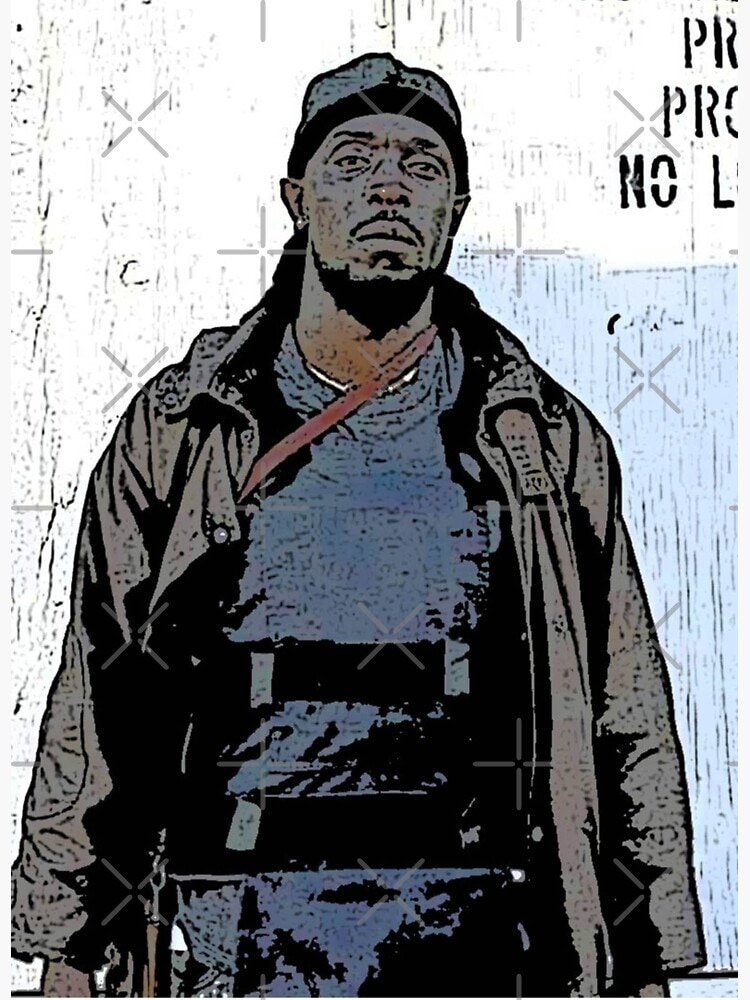
Omar Devone Little grew up in the low-rise projects of Baltimore, where he learned the street trade early. His father was a stick-up man who taught him the basics of robbing drug dealers, but Omar took it further, developing his own code. He came out as gay in his teens, which made him a target, but he earned respect through sheer ruthlessness. By the time of the series, he is a seasoned criminal, known for hitting stash houses and enforcers, never robbing ordinary citizens.
Personality
Omar lives by a strict personal code: he never puts his gun on anyone who isn't in the game, and he honors his word. He is fearless, methodical, and possesses a dark sense of humor. Despite his violent profession, he shows tenderness toward his lovers and a grudging respect for those who play by their own rules. He is fiercely independent, refusing to answer to any organization, and his pride often leads him to take unnecessary risks.
Story Arc
Omar's journey begins with revenge. After the Barksdale crew murders his boyfriend Brandon, he declares war on the organization. He forms a loose alliance with Detective McNulty, providing intel in exchange for protection. Over the seasons, he robs the Stanfield crew and the Greek's smuggling operation, but his losses mount: his partner Renaldo leaves him, and his reputation attracts younger predators. In Season 4, he is shot by a child named Kenard in a corner store, a moment that shatters his mystique. He survives but is broken. In Season 5, he returns to Baltimore, seeking vengeance against Marlo Stanfield. He tracks down Marlo's crew but is ultimately killed by Kenard, now a junior dealer, in a back alley. His death is quick, unglamorous, and underscores the cycle of violence.
Powers & Abilities
Expert marksman with shotgun and handgun
Master of urban guerrilla tactics
Intimidation through reputation and whistling
Strategic planning and trap-setting
Skilled negotiator and informant
Equipment & Signature Items
Long duster coat
Shotgun (Remington 870)
Large-caliber handgun (.44 Magnum or .45 ACP)
Bulletproof vest
Relationships
Brandon Wright
Love InterestOmar's boyfriend whose murder at the hands of the Barksdale crew sets Omar on his path of vengeance.
Renaldo
Love InterestA younger man who loves Omar but struggles with his violent lifestyle; they part ways after Omar is shot.
Jimmy McNulty
AllyA detective who shares information with Omar; they have a mutual respect despite being on opposite sides of the law.
Avon Barksdale
RivalKingpin of the Barksdale organization; Omar respects his code but targets his operation.
Stringer Bell
EnemyAvon's second-in-command; Omar despises his lack of street honor and attempts to kill him.
Marlo Stanfield
EnemyA ruthless drug lord whose disregard for the code disgusts Omar; they become direct adversaries.
Kenard
EnemyA young dealer who idolizes Omar but ultimately shoots him twice, first wounding him and later killing him.
Memorable Quotes
“Come at the king, you best not miss.”
“A man gotta have a code.”
“The game is the game. Always.”
“I got the shotgun, you got the briefcase. It's all in the game though, right?”
“I ain't never put my gun on no citizen.”
“Indeed.”
Portrayed By
Key Appearances
The Wire (2002–2008)
Reception & Legacy
Omar Little is frequently cited as one of the greatest television characters of all time. Critics praise his moral complexity, and the character has appeared on top-100 lists from Entertainment Weekly, Rolling Stone, and The Guardian. His catchphrase "Come at the king, you best not miss" has become a pop-culture staple. The character's influence extends to later antiheroes in prestige TV. In 2014, a statue of Omar was briefly installed in Baltimore as part of a public art project, though it was removed after controversy.
Interesting Facts and Legends
Omar was inspired by real-life Baltimore criminal Donnie Andrews, who later became a crime-reduction consultant.
Michael K. Williams based Omar's walk and demeanor on a pimp he saw in Brooklyn.
Omar's whistle was Williams's idea; it was not in the script.
The scene where Omar testifies in court wearing a tie was improvised by Williams to show respect for the court.
Omar was originally written as a minor role, but Williams's audition convinced David Simon to expand it.
In an alternate ending, Omar survives, but Simon chose the tragic death to reflect the show's themes.
Williams often said Omar changed his life but made it hard to escape the character's shadow.
Frequently Asked Questions
Who is Omar Little?
Does Omar Little die?
Who plays Omar Little?
Is Omar Little a villain?
Who does Omar Little end up with?
Keywords
Character Info
- Creator
- David Simon
- Portrayed By
- Michael K. Williams
Join the community
fans discussing