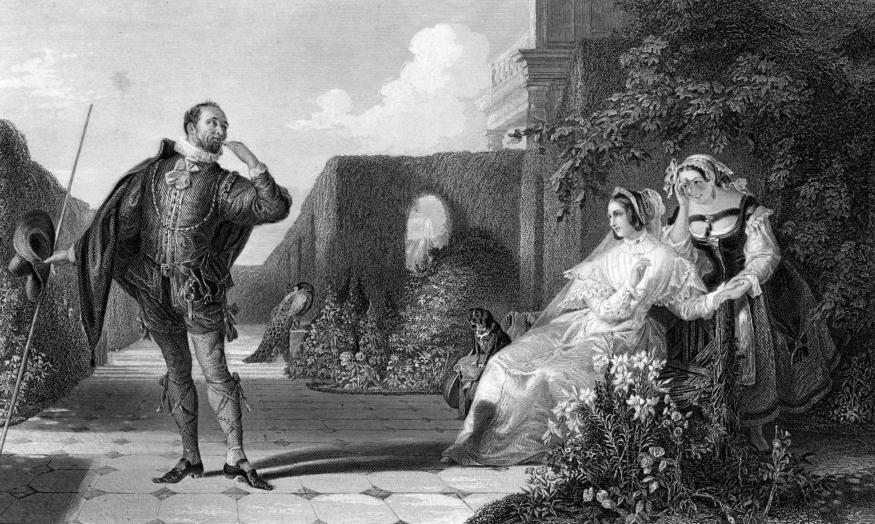
Malvolio
Appears In
Shakespearean plays
Species
Human
First Appearance
1601-1602
Occupation
Steward to Countess Olivia
Creator
William Shakespeare
Overview
Origin Story
Malvolio is the steward of Countess Olivia's household in Illyria, a position of considerable authority in Elizabethan times. His name, derived from Italian meaning 'ill will,' hints at his disagreeable nature. He is described as 'a kind of Puritan,' reflecting Shakespeare's satire of the Puritan movement that opposed theater and festive celebrations. Malvolio's puritanical attitudes put him at odds with the more hedonistic members of Olivia's household, including her uncle Sir Toby Belch and the fool Feste.
Personality
Malvolio is vain, pompous, and self-righteous, with a stern disapproval of frivolity. He craves status and respect, often lording his authority over others. His ambition leads him to fantasize about marrying Olivia and becoming 'Count Malvolio.' Despite his outward moral rigidity, he is easily flattered and gullible, falling for a forged letter that plays on his vanity. He lacks a sense of humor and takes himself too seriously, making him an easy target for mockery.
Story Arc
Malvolio begins as a trusted steward who despises the revelry of Sir Toby and his companions. When Maria forges a letter suggesting Olivia loves him, Malvolio eagerly follows its instructions: wearing yellow stockings and cross-garters, smiling constantly, and behaving arrogantly. Olivia, horrified by his bizarre appearance, believes he is mad. He is then imprisoned in a dark house and tormented by Feste disguised as a priest. In the final scene, Malvolio confronts Olivia, demanding an explanation. When the deception is revealed, he receives no apology and storms off with the threat, 'I'll be revenged on the whole pack of you!' Unlike other characters, Malvolio remains unreconciled, making him a uniquely bitter figure in Shakespearean comedy.
Powers & Abilities
Literacy
Organizational skills
Self-discipline
Relationships
Olivia
Love InterestMalvolio serves as her steward and secretly loves her, but his advances horrify her.
Sir Toby Belch
EnemySir Toby represents revelry and hedonism, clashing with Malvolio's puritanical nature.
Maria
EnemyMaria masterminds the forged letter that humiliates Malvolio.
Feste
EnemyThe fool torments Malvolio in the dark house, mocking his self-importance.
Sir Andrew Aguecheek
EnemySir Andrew joins in mocking Malvolio but is a passive participant.
Fabian
AllyA servant who participates in the deception but later reveals the truth.
Memorable Quotes
“Some are born great, some achieve greatness, and some have greatness thrust upon 'em.”
“I'll be revenged on the whole pack of you!”
“I do not now fool myself, to let imagination jade me, for every reason excites to this, that my lady loves me.”
“And, acting this in an obedient hope, why have you suffered me to be imprisoned, kept in a dark house, visited by the priest, and made the most notorious geck and gull that e'er invention played on? Tell me why?”
Portrayed By
Key Appearances
Twelfth Night (play, 1601-1602)
Reception & Legacy
Malvolio is one of Shakespeare's most memorable comic characters, ranking 1126th in overall popularity among fictional characters and 43rd by type. His line 'Some are born great...' has become a cultural touchstone. Sir Toby's retort about 'cakes and ale' is often quoted in defense of pleasure against moralizing. Modern audiences and scholars increasingly see Malvolio as a tragic figure, noting that his genuine suffering and lack of resolution make him a complex, even sympathetic character. The cruelty of his torment has been compared to bullying, sparking debate about the ethics of comedy.
Interesting Facts and Legends
Malvolio's name contrasts with Benvolio from Romeo and Juliet, meaning 'ill will' versus 'good will.'
The character is widely seen as Shakespeare's satire of Puritans, who sought to close theaters.
Twelfth Night is sometimes called 'the Hamlet of the comedies' due to its darker themes, exemplified by Malvolio's bitter fate.
In some modern productions, Malvolio is portrayed sympathetically, highlighting the cruelty of his tormentors.
The play was traditionally performed on Twelfth Night (January 6), making Malvolio's opposition to festivity especially pointed.
Malvolio is the only main character in Twelfth Night who does not participate in the final reconciliations.
Frequently Asked Questions
Who is Malvolio?
Does Malvolio die in Twelfth Night?
What does Malvolio's name mean?
Is Malvolio a villain?
Who plays Malvolio in film adaptations?
Keywords
Sources
Character Info
- Creator
- William Shakespeare
Join the community
fans discussing