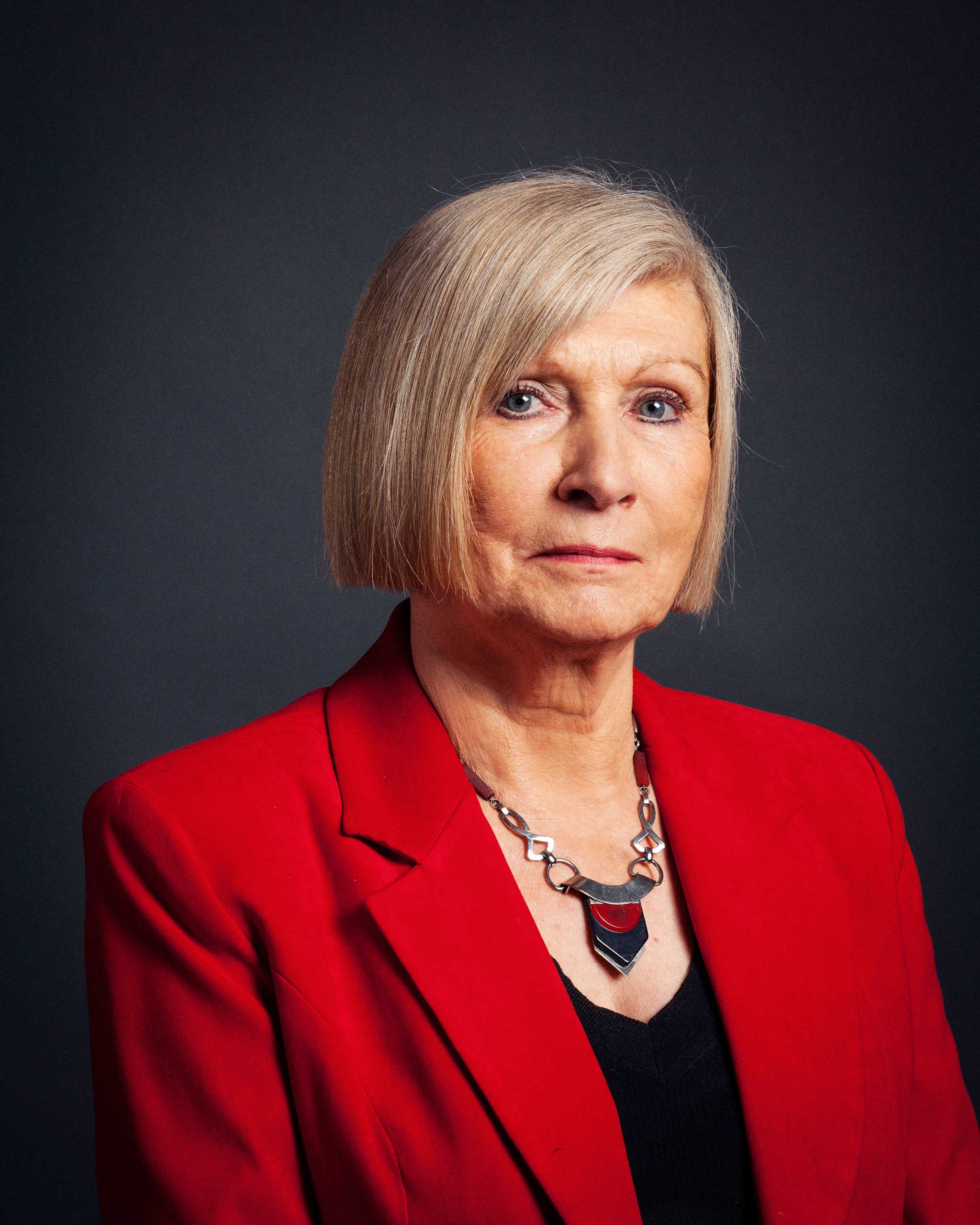
Chantal Mouffe
 Belgium
Political theorist•philosopher•university teacher
Birthday
June 17, 1943
Birth Sign
Gemini
Birthplace
Charleroi, Belgium
Age
83 years old
About
Chantal Mouffe is a Belgian political theorist and philosopher whose work on agonistic democracy and radical politics has influenced a generation of thinkers and activists. As a professor of political theory at the University of Westminster, she has spent decades challenging the assumptions of liberal democracy, arguing that conflict is not a flaw but a vital feature of political life.
Mouffe's ideas have shaped debates on populism, post-Marxism, and the role of emotion in politics. Her books, including On the Political and The Democratic Paradox, are widely read in academic circles and beyond. She continues to write, teach, and speak publicly, engaging with contemporary crises through the lens of her theoretical framework.
Fans and critics alike recognize Mouffe for her sharp critiques of consensus politics and her insistence that democracy must embrace antagonism to remain vibrant. Her influence extends from philosophy departments to grassroots movements, making her one of the most distinctive voices in modern political thought.
Early Life & Background
Chantal Mouffe was born on June 17, 1943, in Charleroi, a steel-making city in the French-speaking region of Belgium. Growing up in the shadow of World War II, she witnessed the fragility of political order, an experience that would later inform her skepticism of tidy political solutions.
She studied philosophy at the Catholic University of Louvain and later at the University of Paris, where she encountered the intellectual ferment of post-structuralist thought. In the 1960s, she became active in the women's movement, an involvement that sharpened her sensitivity to power relations and social exclusion.
Mouffe moved to England to pursue a doctorate at the University of Essex, a period that proved pivotal. It was there she met Ernesto Laclau, a fellow political theorist who would become her most important collaborator and eventual husband. Their partnership, forged in the 1970s, combined Laclau's grounding in Marxism with Mouffe's engagement with French theory, laying the groundwork for a new approach to political analysis.
Before her academic breakthrough, Mouffe taught in Colombia and worked as a researcher, but her time at Essex was where she began to formulate the ideas that would define her career. The intellectual climate, marked by debates over structuralism and post-Marxism, pushed her to question the economic determinism of traditional leftist thought. By the early 1980s, she and Laclau were drafting what would become their landmark work, Hegemony and Socialist Strategy.
Career Growth
Mouffe's breakthrough came in 1985 with the publication of Hegemony and Socialist Strategy, co-authored with Ernesto Laclau. The book reimagined socialism through the lens of discourse theory, arguing that political identities are constructed rather than predetermined. It became a foundational text of post-Marxism, sparking debates that continue today.
Throughout the 1990s, Mouffe solidified her reputation as a leading critic of deliberative democracy. Her 1993 book The Return of the Political challenged the idea that consensus could resolve political differences, asserting instead that democratic politics requires a vibrant clash of opposing views.
In 2005, she published On the Political, which introduced the concept of agonistic pluralism to a wider audience. The book argued that liberal democracy often suppresses conflict, leading to apathy and the rise of extremist movements. Mouffe's solution was to channel antagonism into productive, respectful confrontation.
Her work gained renewed relevance in the 2010s as populism surged across the globe. Mouffe became a prominent voice advocating for a left-wing populism that could harness popular grievances without resorting to xenophobia. She published For a Left Populism in 2018, and her essays appeared in outlets like The Guardian and Jacobin.
By the 2020s, Mouffe had become a public intellectual in high demand, lecturing at universities and conferences worldwide. Her 2026 interview with AS reiterated her core belief: 'Democracy requires the existence of conflict; without it, there is no politics.'
Career Timeline
Public Image & Style
Chantal Mouffe is often portrayed as a formidable intellectual presence, known for her sharp wit and unapologetic defense of conflict in politics. Her public image is that of a scholar who is not afraid to challenge the status quo, whether in academic journals or on the op-ed pages of major newspapers.
Her style is distinctive: the red scarf, often paired with dark, elegant clothing, gives her a recognizable visual identity that has become part of her brand. She is frequently photographed at conferences, always engaged in animated conversation, exuding an energy that draws people to her ideas.
Media coverage often emphasizes her role as a contrarian, someone who critiques both the left and the right for their failures to address the emotional dimensions of politics. This has made her a polarizing figure, but also a magnetic one, with a growing following among young activists who see her as a guide through the complexities of modern political life.
Mouffe's social media presence is modest, but she uses platforms like YouTube to share lectures and interviews, ensuring her ideas reach a broader audience. Her fans, often called 'Mouffians' in jest, appreciate her refusal to simplify complex issues, a trait that sets her apart in an era of soundbites.
Fame & Fandom (iFAMOUS Rankings)
Chantal Mouffe commands a following defined not by adoration but by intense intellectual engagement. Her audience consists of political theorists, activists, and students who dissect her work rather than cheer for her persona. There is no formal fanbase name, organized campaigns, or viral rituals associated with her; the community is diffuse, bound by shared academic study and political strategy rather than celebrity worship. The most iconic element of her public presence remains the red scarf, a visual anchor that has become as recognizable as her theories on agonistic democracy, yet it serves as a symbol of scholarly identity rather than pop culture flair. Despite this lack of traditional fandom, her global reach is undeniable. She ranks among the most influential thinkers in her field, a status quantified by rigorous data tracking attention across media coverage, search activity, and consumption signals worldwide. This specific positioning places her firmly within the elite tier of Belgian intellectuals globally. Chantal Mouffe is currently the 91st most famous person from Belgium, a standing confirmed by the iFANN Global Fame Rankings.
Interesting Facts and Legends
The red scarf worn by Chantal Mouffe has transcended mere fashion to become a signature of her brand, appearing in countless photographs and sparking playful academic commentary. Fluent in French, English, and Spanish, she navigates a cosmopolitan career spanning Belgium, France, the UK, and Latin America. Her book The Democratic Paradox found an unexpected readership when translated into Persian, resonating with audiences in Iran despite the country's distinct political landscape. Although known for radical ideas, she has held visiting professorships at Harvard and Princeton, proving her theories penetrate even the most conservative academic halls. In 2016, she co-founded the Centre for the Study of Democracy at the University of Westminster, cementing her institutional legacy. While there are no viral celebrity legends, her formulation of agonistic pluralism stands as a defining intellectual milestone. She argues that democracy requires conflict, transforming adversaries into rivals who respect each other's legitimacy. This concept, central to works like On the Political, sparked fierce debates among left-wing thinkers who challenged her post-Marxist strategies. Recent discussions continue to focus on her defense of left-wing populism as a necessary counter to the rise of the radical right.
Notable Quotes
“Democracy requires the existence of conflict; without it, there is no politics.”
“The political cannot be erased; it is always present, and we must find ways to deal with it.”
“We need to accept that there is no final solution to the problem of pluralism.”
“A well-functioning democracy calls for a vibrant clash of political positions.”
Family & Personal Life
Chantal Mouffe was married to Ernesto Laclau, an Argentine political theorist who shared her intellectual passions. The couple met at the University of Essex in the 1970s and quickly became partners in both life and work. Their collaboration produced some of the most influential texts in contemporary political theory, including Hegemony and Socialist Strategy.
Laclau passed away in 2014, a loss that deeply affected Mouffe. She has spoken publicly about how his death changed her personal and professional life, yet she has continued to build on their shared legacy. The couple had no children, and Mouffe has described her work as her primary focus.
Mouffe maintains a private life away from the public eye, but her home in London, where she has lived for decades, reflects her cosmopolitan identity. She keeps a small circle of close friends and colleagues, many of whom are fellow academics.
Notable Connections
Chantal Mouffe is most closely associated with Ernesto Laclau, her husband and intellectual partner. Together they developed the Essex School of discourse analysis and co-authored Hegemony and Socialist Strategy, a foundational text of post-Marxism. Her work also engages with thinkers like Carl Schmitt, whose critique of liberalism influenced her concept of the political, and Antonio Gramsci, whose notion of hegemony she adapted. Mouffe's ideas have inspired contemporary political movements, including Podemos in Spain and elements of the UK Labour Party under Jeremy Corbyn, who have cited her work on left populism.
Relationships & Dating History
Chantal Mouffe's personal life has been deeply intertwined with her intellectual career. She met Ernesto Laclau in the 1970s while both were at the University of Essex. Their relationship blossomed into a marriage that lasted until Laclau's death in 2014. The couple had no children, and their partnership was marked by intense collaboration, co-authoring several works and co-editing others.
Before Laclau, Mouffe had a brief relationship with a fellow student during her time in Paris, but little is known about this early period. She has always been private about her personal affairs, preferring to let her work speak for itself.
As of 2026, Mouffe is widowed and lives alone in London. She has not been linked to any new partners, and her focus remains on her teaching and writing. Her marriage to Laclau is remembered as a powerful intellectual and personal bond that shaped the course of contemporary political theory.
- MarriedErnesto Laclau1970 - 2014Husband and intellectual collaborator; together they developed the Essex School of discourse analysis.
Salary, Net Worth In 2026
$2 Million
iFANN Editorial Team estimate
Per iFANN's editorial analysis, Chantal Mouffe's net worth is estimated at $2 Million as of 2026. Her financial stability stems primarily from her long-standing role as a professor at the University of Westminster, where she has taught for over two decades. Senior academic positions in the UK typically command salaries between £50,000 and £80,000 annually, and her prestige likely secures compensation at the higher end of that scale. Beyond her salary, she generates consistent revenue through royalties from widely adopted textbooks and theoretical works. Titles such as Hegemony and Socialist Strategy, The Return of the Political, and On the Political have maintained steady sales for decades, providing a reliable income stream. Speaking fees for lectures and conference appearances further supplement her earnings, ranging from a few thousand to tens of thousands of dollars per engagement. Mouffe maintains a modest lifestyle centered on her academic pursuits, owning a London flat that has appreciated in value over time. Her financial profile reflects comfort without extravagance, aligning perfectly with her reputation as a dedicated intellectual rather than a wealthy celebrity.
Awards & Accolades
View 4 records, honours and achievementsKnown For
Hegemony and Socialist Strategy
1985 · Co-author
The Return of the Political
1993 · Author
On the Political
2005 · Author
For a Left Populism
2018 · Author
Keywords
Sources
Quick Facts
- Profession
- Political theorist, philosopher, university teacher
- Born
- June 17, 1943
- Birthplace
- Charleroi, Belgium
- Gender
- Female
- Spouse
- Ernesto Laclau
- Birth Sign
- Gemini
- Education
- University of Leuven, University of Paris, University of Essex (PhD)
Personal Details
- Spouse
- Ernesto Laclau
- Children
- Education
- University of Leuven, University of Paris, University of Essex (PhD)
Frequently Asked Questions
What is Chantal Mouffe's main political theory?
Who did Chantal Mouffe collaborate with?
What are Chantal Mouffe's key works?
Where does Chantal Mouffe teach?
What is 'agonism' according to Chantal Mouffe?
Social Media
Similar People
Join the community
fans discussing