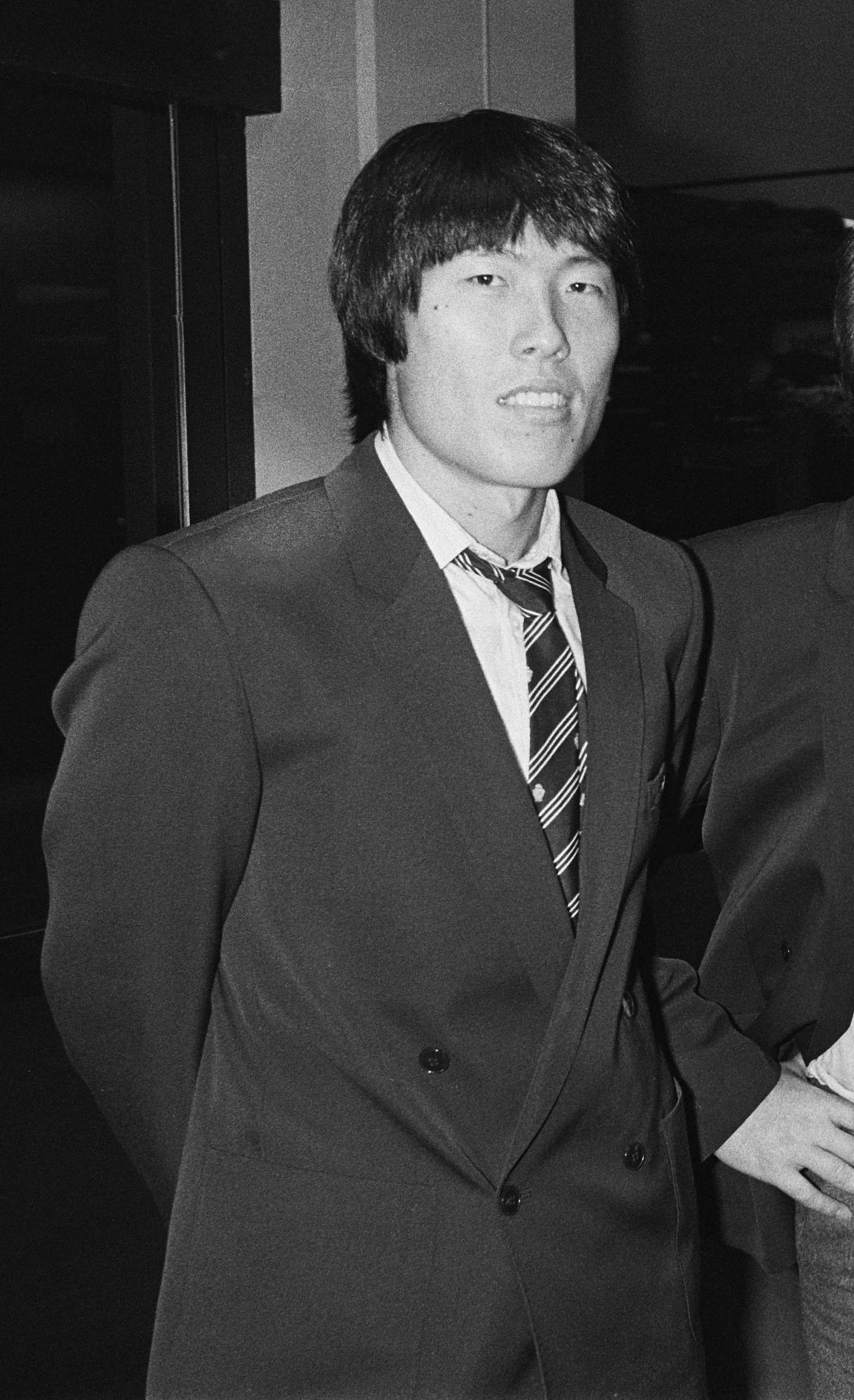
Cha Bum-kun
 South Korea
association football player•association football coach
Also known as: Cha Bum-geun, Cha Boom, 차범근
Birthday
May 22, 1953
Birth Sign
Sagittarius
Birthplace
Hwaseong, South Korea
Age
73 years old
Height
5 ft 10 in (1.78 m)
About
Cha Bum-kun is a former professional footballer and manager from South Korea who revolutionized the perception of Asian players in Europe. Born in Hwaseong on May 22, 1953, he became the first Asian star to dominate the German Bundesliga, earning the nickname "Cha Boom" for his thunderous shooting ability. His career stands as a bridge between two continents, proving that talent from Asia could thrive at the highest level of European club football.
As of 2026, Cha remains an influential figure in Korean sports, often appearing at major tournaments to support the national team. He holds the distinction of being the youngest player ever to reach 100 international caps and remains South Korea's all-time leading scorer with 58 goals. His legacy is defined by two UEFA Cup victories, a rare feat achieved with two different clubs, Eintracht Frankfurt and Bayer Leverkusen. Today, he continues to mentor young athletes through his academy while serving as a respected voice in football commentary.
Early Life & Background
Cha was born into a family that valued discipline and education, yet his heart belonged entirely to the game of football from a very young age. Growing up in Hwaseong, Gyeonggi Province, he displayed exceptional athletic prowess that quickly set him apart from his peers. By the time he reached adolescence, local scouts had already taken notice of his explosive speed and technical skill. He joined the national youth system early, where coaches recognized his potential to represent the country on a global stage.
His rise was meteoric. At just 18 years old in 1972, Cha made his debut for the South Korean national team, becoming the youngest player to ever represent his nation at that time. This achievement marked the beginning of a historic trajectory. Within six years, he shattered another record by becoming the youngest player in the world to reach 100 international appearances at the age of 24. Before he ever stepped foot in Germany, he had already established himself as a national hero, contributing significantly to South Korea's gold medal victory at the 1978 Asian Games in Bangkok. These domestic and regional successes laid the groundwork for his groundbreaking move to Europe, setting the stage for a career that would change the landscape of Asian football forever.
Career Growth
The turning point in Cha's career arrived in July 1979 when he signed with Eintracht Frankfurt, becoming the first Asian player to join a major European club. This move opened doors for countless others and marked the true beginning of his legendary status. During his five seasons with Frankfurt, he scored 66 goals in 156 league matches, establishing himself as a formidable force in the Bundesliga. The highlight of this period came in the 1980–81 season when he led the club to win the UEFA Cup, defeating Ipswich Town in the final. His powerful strikes earned him the affectionate moniker "Cha Boom," a name that became synonymous with fear among defenders across West Germany.
In 1984, Cha transferred to Bayer Leverkusen, continuing his dominance in German football. Over four seasons, he added another 55 goals to his tally in 124 league matches. In the 1987–88 season, he replicated his earlier triumph by winning the UEFA Cup again with Leverkusen, this time against PSV Eindhoven. Winning the prestigious trophy with two different clubs is a distinction shared by very few players in history. Across his entire Bundesliga career, Cha accumulated 121 goals in 297 matches, a statistic that remains a benchmark for Asian strikers. On the international stage, he captained South Korea to their first-ever FIFA World Cup appearance in 1986 in Mexico. Although the team did not advance past the group stage, his leadership was pivotal. He retired from international duty in 1990 after earning 107 caps and scoring 58 goals, cementing his status as the nation's all-time top scorer.
Career Timeline
Public Image & Style
Cha is widely regarded as a dignified and humble figure who carried himself with grace both on and off the pitch. In Korea, he is known as the "Father of Korean Football," a title reflecting his role as a pioneer who paved the way for future generations. In Germany, he is remembered as a fierce competitor who also embodied the spirit of fair play. His public persona is built on consistency, integrity, and an unwavering dedication to the sport. Unlike many modern celebrities, Cha has maintained a low profile regarding personal scandals, focusing instead on his contributions to football development. His image is one of quiet strength, representing the best qualities of an athlete who prioritizes respect over fame.
Fame & Fandom
iFANN's Global Fame Engine has evaluated Cha Bum-kun but he does not currently hold a placement in its published rankings, neither the Global Top 1,000 nor any Top-100 scope list as of September 2026. This absence from current charts reflects how his fame is measured differently, rooted in enduring historical impact rather than contemporary search volume or media cycles. His fanbase spans generations and borders, though it lacks a formal organizational name. To German fans, he is simply "Cha Boom," a legend whose name evoked cheers whenever he took a shot. In Korea, he is revered as "Asia's King," the man who proved that Asian players could conquer the toughest leagues in the world.
There are no organized fan clubs with branded titles, but the reverence is palpable. Older fans remember his goals vividly, while younger supporters know him through stories and the legacy of players like Son Heung-min, whom Cha has frequently praised. A unique cultural phenomenon exists among Korean football fans known as the "Cha Bum-kun tax," an inside joke where every new Korean striker is unfairly compared to his impossibly high standards. This comparison serves as a testament to his mythical status. His ongoing work with "Team Cha Bum," his youth academy, and his public commentary on the national team keep him present in the public eye. His true gift to fans is the story itself, the trail he blazed for every Asian player who followed in his footsteps.
Notable Quotes
“Son's impact went beyond goals in the World Cup opener. He carries the weight of our nation, just as we tried to do.”
“I never thought I would change anything. I just played football with love.”
“We must build a foundation so strong that the next generation doesn't need to fight for respect.”
Notable Connections
Relationships & Dating History
Cha Bum-kun has maintained a stable and private personal life throughout his decades in the public eye. He is married to Park Mi-sook, and the couple has been together since the late 1970s or early 1980s. There are no public records of previous marriages or divorces, indicating a long-lasting commitment to his family. Together, they have raised one son, Cha Se-jji, who has become a well-known actor in South Korea, and one daughter. The family resides comfortably in Pyeongchang-dong, where they enjoy a relatively quiet life away from the intense scrutiny faced by many celebrities.
Recent reports in 2026 highlight the close bonds within the Cha household. Cha Se-jji's wife, actress Han Chae-ah, has shared photos showcasing her warm relationship with her father-in-law, demonstrating the family's unity. In mid-2026, Han Chae-ah discussed the family's luxurious lifestyle, noting their comfortable living arrangements. Later that year, she spoke publicly about her husband, describing him as a devoted father. As of 2026, Cha remains happily married to Park Mi-sook and actively involved in family life, balancing his public duties with his role as a patriarch.
- MarriedPark Mi-sook1979 - presentCurrentMarried since the late 1970s; mother of his children.
Salary, Net Worth In 2026
$6 Million
iFANN Editorial Team estimate
iFANN currently estimates Cha Bum-kun's net worth at approximately $6 million. While specific financial figures for older athletes are rarely disclosed in detail, this estimate reflects his long-term career earnings, real estate holdings in Seoul and Pyeongchang-dong, and the value of his football academy. His primary wealth sources include his historical salary from Eintracht Frankfurt and Bayer Leverkusen, which were among the highest-paid contracts for Asian players of his era, along with coaching salaries and income from his academy.
Real estate investments in South Korea, particularly the family home in Pyeongchang-dong, have contributed significantly to his asset base. His academy, "Team Cha Bum," located in Goheung, continues to generate revenue while nurturing young talent. Occasional media appearances and endorsements also add to his income stream. Unlike modern celebrities with extensive commercial portfolios, Cha's wealth accumulation was steady and grounded in his playing career and subsequent management roles. Financial analysts place his wealth firmly in the multi-million dollar range, reflecting a comfortable upper-middle-class status typical of successful retired athletes of his generation.
Awards Won (7)
Cha Bum-kun won the UEFA Cup twice, once with Eintracht Frankfurt in 1981 and again with Bayer Leverkusen in 1988. He was named Asian Footballer of the Year three consecutive times from 1980 to 1982, making him the first Asian player to achieve this feat multiple times. He received the FIFA Order of Merit for his contributions to the sport and the Grand Prize (Taekwon) from the South Korean government. Additionally, he has been inducted into both the Korean Football Hall of Fame and the German Football Hall of Fame.
1988 · Club Competition
Bayer Leverkusen
1981 · Club Competition
Eintracht Frankfurt
1982 · Individual Award
Career Achievement
1981 · Individual Award
Career Achievement
1980 · Individual Award
Career Achievement
Known For
Eintracht Frankfurt
1979 · Player
Bayer Leverkusen
1984 · Player
South Korea National Team
1972 · Captain
Keywords
Sources
Quick Facts
- Profession
- association football player, association football coach
- Born
- May 22, 1953
- Birthplace
- Hwaseong, South Korea
- Gender
- Male
- Birth Sign
- Sagittarius
- Height
- 5 ft 10 in (1.78 m)
Personal Details
- Full Name
- Cha Bum-geun
- Height
- 5 ft 10 in (1.78 m)
- Spouse
- Park Mi-sook
- Children
- Cha Se-jji, one daughter
- Education
- Unknown
Frequently Asked Questions
Who is Cha Bum-kun?
How many goals did Cha Bum-kun score for South Korea?
What is Cha Bum-kun's nickname?
Did Cha Bum-kun win the UEFA Cup?
Is Cha Bum-kun still alive?
Similar People
Join the community
fans discussing