Center for Strategic and International Studies
 United States
"Advancing practical ideas to address the world's greatest challenges"
About
On September 4, 1962, just weeks before the Cuban Missile Crisis brought the world to the brink of nuclear war, a small think tank opened its doors in a brick townhouse a block from Georgetown University. Founded by Admiral Arleigh Burke and David Manker Abshire, the Center for Strategic and International Studies started with a single professional staff member, Richard V. Allen, who would later become Ronald Reagan's National Security Advisor. The organization's original mission was straightforward: help the United States survive as a nation and prosper as a people during the Cold War.
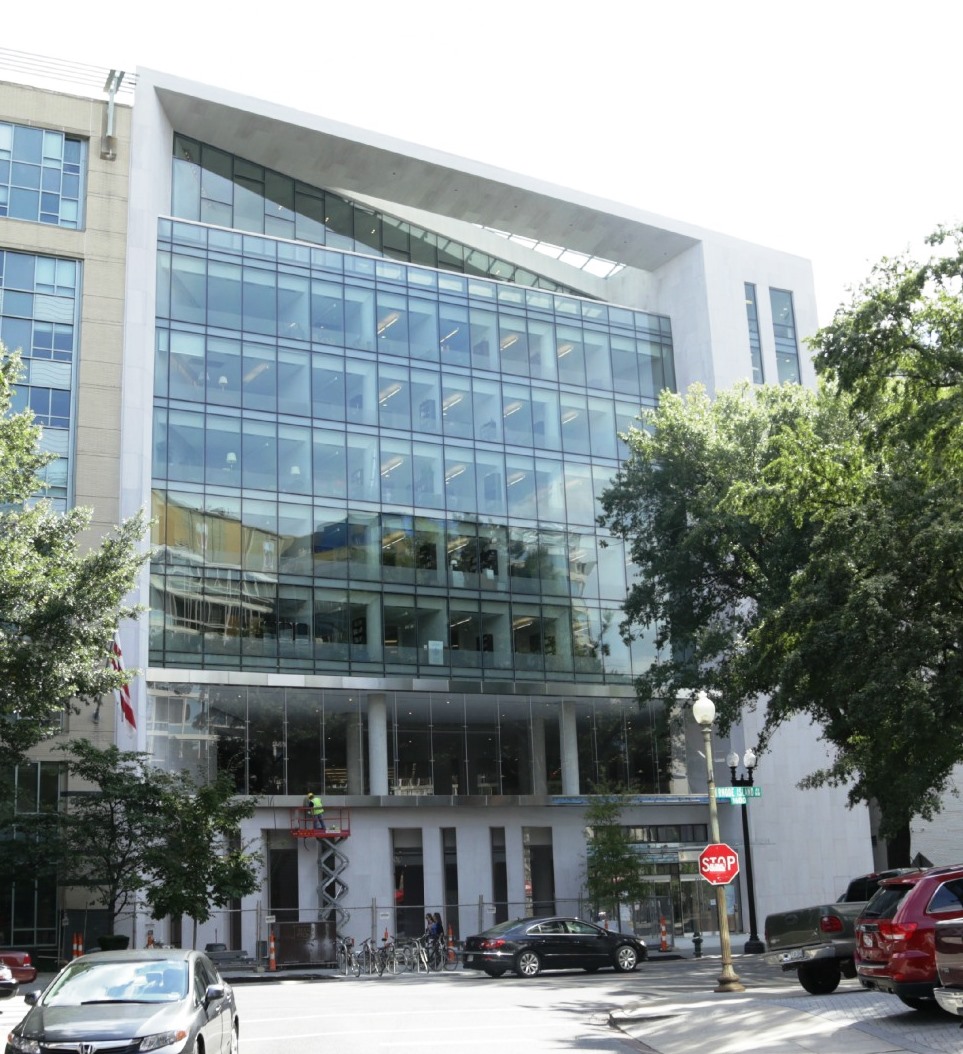
CSIS operated as an affiliate of Georgetown University until 1987, when it spun off to become an independent 501(c)(3) nonprofit. Today, its headquarters occupy a modern building at 1616 Rhode Island Avenue NW in Washington's Dupont Circle neighborhood. The organization has grown to employ more than 350 full-time staff and commands an annual budget of roughly $50 million. Its work spans four core areas: Defense and Security, Geopolitics and Foreign Policy, Economic Security and Technology, and Global Development.
CSIS scholars are regularly called to testify before Congress and brief executive branch officials. The organization produces original data-driven research, open-source analysis, and multimedia content through its iDeas Lab. It also houses the Wadhwani AI Center and the Abshire-Inamori Leadership Academy. The think tank has been described as the top defense and national security think tank in the world, and its reports are widely cited by policymakers and media outlets across the political spectrum.
Mission
CSIS's mission is advancing practical ideas to address the world's greatest challenges. The organization defines its purpose as helping to define the future of national security. It operates with a set of core values: non-partisanship, independent thought, innovative thinking, cross-disciplinary scholarship, integrity and professionalism, and talent development. The founders' original vision was helping the United States survive as a nation and prosper as a people, a mission that has evolved to encompass a vision of a safer and more prosperous world.
History
CSIS was born in the heat of the Cold War. Admiral Arleigh Burke, fresh from his tenure as Chief of Naval Operations, teamed up with David Manker Abshire, a political scientist and former Army officer, to create a research center that could inform U.S. strategy. They secured space in a townhouse at 1316 36th Street NW in Washington, just off Georgetown's campus. The first employee, Richard V. Allen, was hired to run day-to-day operations. The center opened on September 4, 1962, and within weeks the Cuban Missile Crisis tested the very issues CSIS was created to study.
For its first 25 years, CSIS operated as an affiliate of Georgetown University. The arrangement gave the young think tank academic credibility and access to faculty, but also tied it to university governance. By the mid-1980s, leadership decided that independence would allow greater agility and broader fundraising. In 1987, CSIS formally separated from Georgetown and became a standalone nonprofit. The move paid off: under the leadership of presidents like David Abshire and later John J. Hamre, the organization expanded its staff, opened new program areas, and raised its profile in Washington.
The Hamre era, from 2000 to 2026, was a period of dramatic growth. Hamre, a former Deputy Secretary of Defense, oversaw the construction of CSIS's current headquarters, the launch of the iDeas Lab, and a doubling of the annual budget. In 2015, Thomas J. Pritzker became chairman of the board, succeeding Sam Nunn. In 2026, General Joseph F. Dunford took over as CEO, bringing decades of military and national security leadership to the role.
Subdivisions
Defense and Security
Covers nuclear nonproliferation, national security, and military strategy.
Geopolitics and Foreign Policy
Focuses on regional studies and international relations across Asia, Europe, the Middle East, and the Americas.
Economic Security and Technology
Addresses trade, finance, energy, and AI policy.
Global Development
Works on global health, environmental issues, and sustainable development.
iDeas Lab
Produces multimedia and data visualization to enhance research communication.
Wadhwani AI Center
Focuses on artificial intelligence policy and governance.
Abshire-Inamori Leadership Academy
Develops leadership skills for policy professionals.
Notable People
Thomas J. Pritzker
Chairman of the Board of Trustees · 2015–present
Led the board through a period of growth and transition; also executive chairman of Hyatt Hotels.
Joseph F. Dunford
President and CEO · 2026–present
Former Commandant of the Marine Corps and Chairman of the Joint Chiefs of Staff; appointed to lead CSIS in 2026.
John J. Hamre
President and CEO · 2000–2026
Grew CSIS into one of the most trusted policy research institutions; former Deputy Secretary of Defense.
David Manker Abshire
Co-founder · 1962–1987
Co-founded CSIS and served as its first president; later U.S. Ambassador to NATO.
Arleigh Burke
Co-founder · 1962–1971
Co-founded CSIS; served as Chief of Naval Operations and was a key figure in Cold War naval strategy.
Sam Nunn
Former Chairman of the Board of Trustees · 1999–2015
Former U.S. Senator; led the board during a period of expansion.
Milestones
1962
Founded by Arleigh Burke and David Abshire; opens on September 4 in a townhouse near Georgetown University.
1987
Becomes an independent nonprofit organization, separating from Georgetown University.
2000
John J. Hamre appointed president and CEO, beginning a 26-year tenure.
2015
Thomas J. Pritzker named chairman of the Board of Trustees.
2026
General Joseph F. Dunford appointed president and CEO, succeeding John J. Hamre.
Sources
Organization Info
- Founded
- September 4, 1962
- Headquarters
- 1616 Rhode Island Avenue NW, Washington, D.C. 20036
- Country
- United States
- Chairman of the Board of Trustees
- Thomas J. Pritzker
- Type
- Research
- Chairman
- Thomas J. Pritzker
- Employees
- 354
- Founders
- David Manker Abshire, Arleigh Burke
- Revenue (2024)
- $59.8 million
- CEO
- Joseph F. Dunford
Financials
- Revenue
- $59,828,961
- Budget
- $50,000,000
- Employees
- 354
Official Website
www.csis.org/
Join the community
fans discussing