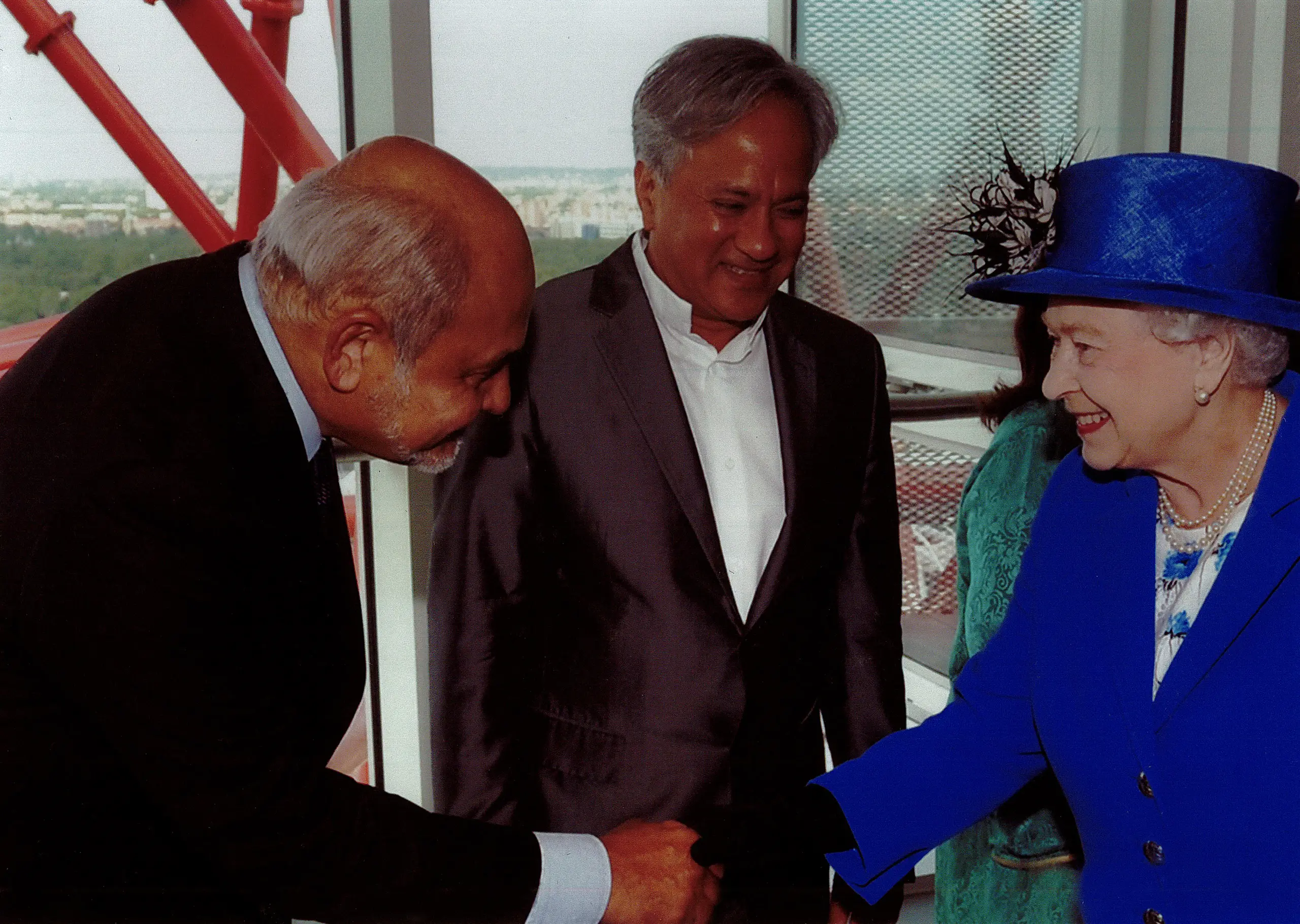
Cecil Balmond
 Sri Lanka
engineer•architect•structural engineer
Birthday
1943
Birth Sign
Capricorn
Birthplace
Sri Lanka
Age
83 years old
About
Cecil Balmond OBE is a British Sri Lankan designer, artist, writer, and engineer, widely regarded as one of the most influential structural innovators of his generation. Born in Sri Lanka in 1943, he spent decades at Ove Arup & Partners, rising to deputy chairman and establishing the Advanced Geometry Unit (AGU) in 2000 to push the boundaries of architectural form. His radical concepts have enabled some of the world's most audacious buildings, blending mathematics, art, and engineering in ways that challenge conventional practice.
Today, Balmond leads Balmond Studio, a research-led practice with offices in London and Colombo, where he continues to explore the interplay of structure, space, and geometry. He has also shaped architectural education through academic roles at PennDesign, Harvard, and Yale. His work, ranging from the Serpentine Gallery Pavilion to the Star of Caledonia, has earned him an OBE and international acclaim, making him a pivotal figure in contemporary architecture.
Early Life & Background
Cecil Balmond was born in Sri Lanka in 1943, a time when the island was still under British colonial rule. Growing up in a culturally rich environment, he developed an early fascination with patterns and geometry, which would later define his career. He pursued engineering studies, eventually earning a degree that set the stage for his entry into the field. In 1968, he joined Ove Arup & Partners, a move that would anchor his professional life for nearly five decades.
At Arup, Balmond quickly distinguished himself through his ability to see structure not just as a technical necessity but as a creative force. He worked on a range of projects, learning the ropes of large-scale engineering while nurturing his interest in the artistic potential of structural design. These early years were formative, allowing him to develop the bold, unconventional thinking that would later make him a sought-after collaborator for architects like Rem Koolhaas and Toyo Ito.
Career Growth
Cecil Balmond's breakthrough came through his long association with Ove Arup & Partners, where he rose to deputy chairman. In 2000, he founded the Advanced Geometry Unit (AGU) within Arup, a group dedicated to exploring non-linear forms and complex geometries in architecture. This unit became a laboratory for innovation, producing structures that seemed to defy gravity and logic.
Among his most celebrated projects is the 2002 Serpentine Gallery Pavilion, designed with Toyo Ito and Arup. This temporary structure, with its seemingly random yet mathematically rigorous lines, became an icon of experimental architecture. Balmond also contributed to the Casa da Música, a concert hall in Porto designed by Rem Koolhaas, where his structural ingenuity helped realize the building's distinctive faceted form.
In 2010, Balmond launched Balmond Studio in London and Colombo, expanding his practice into art, design, and consulting. He left Arup in 2017 to focus on this independent venture. His ongoing projects include the Star of Caledonia, a monumental sculpture at the Scotland-England border, which won a competition in 2011 and broke ground in 2026. Balmond's academic roles, including the Paul Philippe Cret Chair at PennDesign, have further cemented his influence, and he continues to lecture and exhibit worldwide.
Career Timeline
Public Image & Style
Cecil Balmond is perceived in the architecture world as a visionary who bridges the gap between engineering and art. His public persona is that of a thoughtful, almost philosophical figure, often seen sketching complex geometric patterns in notebooks. He is respected for his willingness to take risks and challenge conventional structural norms. Fans and peers alike admire his ability to communicate complex ideas with clarity, making him a sought-after speaker at conferences. Balmond's work with Balmond Studio is showcased on Instagram, where his followers get a glimpse into his creative process.
Fame & Fandom
Cecil Balmond's following is an unusual one: not a fanbase in the celebrity sense, but a devoted circle of architects, engineers, students, and design intellectuals who treat his published sketches and built works as objects of study. There is no formal fandom name, no fan clubs, no coordinated social media presence, his admirers engage through conferences, exhibitions, and the quiet reverence of reading his books. What unites them is a shared fascination with structure as a form of hidden poetry, a theme that recurs in every pavilion, sculpture, and essay he produces.
That professional admiration has translated into measurable global recognition. In the iFANN Global Fame Rankings, which track attention across media coverage, search, and consumption signals worldwide, Balmond currently holds a placement among his country's most notable figures: he is the 95th most famous person in Sri Lanka, a position that has held steady from the previous cycle. The ranking reflects a career spent at the intersection of art and engineering, where his name carries weight far beyond the discipline's usual boundaries.
Interesting Facts and Legends
Cecil Balmond is known for his love of puzzles; his Tokyo installation 'Element' is a three-dimensional puzzle based on the 'Danzer' geometry. He has described structure as 'the hidden order of things,' a philosophy that permeates his work. Balmond is also an accomplished author, having written books that explore the intersection of mathematics and design. In a 2026 interview, he shared his ideal last meal, revealing a passion for simple, well-prepared food. He is an avid follower of cricket, a sport he grew up with in Sri Lanka.
Among the stories that circulate in architectural circles, the 2002 Serpentine Gallery Pavilion stands out, a collaboration with Toyo Ito that produced a seemingly chaotic lattice of lines, now regarded as a turning point in computational design. In 2007, The New Yorker profiled him in a feature titled "The Anti-Gravity Men," cementing his reputation as an engineer who defies expectation. More recently, his design for the Star of Caledonia, a public sculpture in Scotland, has sparked public debate, with Balmond describing it as a "burst of starlight." His 2017 departure from Arup after 36 years to found Balmond Studio with his daughter marked a new chapter, and a 2023 Artforum profile dubbed him a "Code Breaker" for his cross-disciplinary approach.
Notable Quotes
“Structure is the hidden order of things.”
“I am interested in the moment when the rational becomes irrational.”
“My last meal would be simple: fresh bread, good cheese, and a glass of wine.”
Family & Personal Life
Details about Cecil Balmond's family are largely private. He was born in Sri Lanka and later moved to the UK, where he built his career. He has two children, a son and a daughter, who have mostly stayed out of the public eye. Balmond maintains a residence in London, where he lives with his wife, though her name is not widely publicized. He often speaks fondly of his Sri Lankan heritage, which influences his artistic sensibilities.
Notable Connections
Cecil Balmond has collaborated with some of the most prominent architects of our time, including Toyo Ito, with whom he designed the 2002 Serpentine Gallery Pavilion, and Rem Koolhaas, on projects like the Casa da Música in Porto. He has also worked with the artist Anish Kapoor on several installations, exploring the intersection of art and engineering. Balmond's work has been exhibited in galleries and museums worldwide, and he has served as a judge for prestigious design awards, including the Dezeen Awards.
Relationships & Dating History
Very little is publicly known about Cecil Balmond's romantic relationships. He has kept his personal life private throughout his career, and there are no confirmed reports of past or present partners in the media. As of 2026, Balmond is believed to be married, but he has not shared details about his spouse publicly. His focus has consistently been on his work, and he rarely discusses his personal life in interviews.
Salary, Net Worth In 2026
$10 Million
iFANN Editorial Team estimate
Research by the iFANN Editorial Team puts Cecil Balmond's net worth at $10 million as of 2026, accumulated through his long career at Ove Arup & Partners, where he held the position of deputy chairman, and later through his independent practice, Balmond Studio. His income streams include consulting fees for high-profile architectural projects, royalties from his books, and earnings from speaking engagements and academic positions. Balmond has also received fees for his work on iconic structures like the Serpentine Pavilion and the Star of Caledonia. While his exact earnings are private, his net worth reflects a lifetime of contributions to the field of structural engineering and design.
Awards Won (1)
Cecil Balmond has received numerous awards throughout his career, though specific details are not widely publicized. He was appointed Officer of the Order of the British Empire (OBE) in 2002, recognizing his services to architecture and engineering. He has also been honored with the Institution of Structural Engineers' Gold Medal, among other professional accolades.
2002 · Services to Architecture and Engineering
Known For
Serpentine Gallery Pavilion 2002
2002 · Structural engineer
Casa da Música
2005 · Structural engineer
Star of Caledonia
2026 · Designer
Keywords
Sources
Quick Facts
- Profession
- engineer, architect, structural engineer
- Born
- 1943
- Birthplace
- Sri Lanka
- Gender
- Male
- Nationality
- British Sri Lankan
- Awards
- OBE
Personal Details
- Full Name
- Cecil Balmond
Frequently Asked Questions
What is Cecil Balmond known for?
Where was Cecil Balmond born?
Is Cecil Balmond still active in 2026?
What is Cecil Balmond's net worth?
What is Balmond Studio?
Social Media
Similar People
Join the community
fans discussing