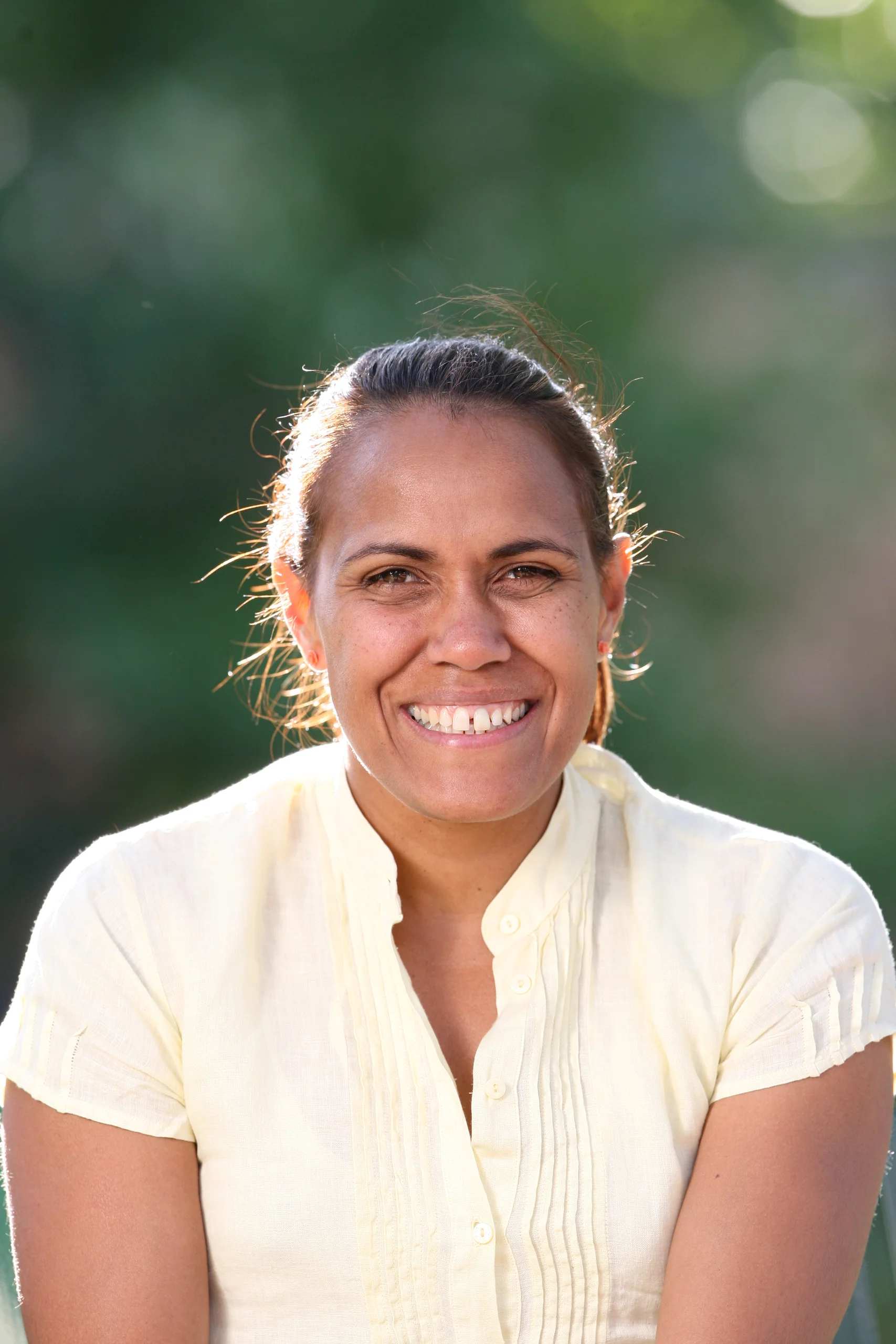
Cathy Freeman
 Australia
Also known as: Catherine Astrid Salome Freeman
Birthday
February 16, 1973
Birth Sign
Aquarius
Birthplace
Slade Point, Queensland, Australia
Age
53 years old
Height
5 ft 5 in (164 cm)
About
Catherine Astrid Salome Freeman is an Australian former sprinter who specialised in the 400 metres. She is one of the country's most celebrated athletes, known for her Olympic gold at the Sydney 2000 Games and her role as a symbol of reconciliation between Indigenous and non-Indigenous Australians.
Freeman's career highlights include two world championship titles, a Commonwealth Games double, and an Olympic silver and gold. Her personal best of 48.63 seconds, set in 1996, still ranks her among the fastest women in history. Since retiring in 2003, she has focused on philanthropy, founding an organisation that supports Indigenous children's education.
Her public persona is marked by quiet dignity and a deep connection to her heritage. She remains an influential figure in Australian sport and culture.
Early Life & Background
Cathy Freeman was born in Mackay, Queensland, to Cecilia and Norman Freeman. Her father, a rugby league player nicknamed "Twinkle Toes," passed on his speed. She grew up in a housing commission home on Burston Street, one of five children, with three brothers. Her parents separated when she was young, and her mother later converted to the Bahá'í faith, which Freeman credits for her strength.
At age eight, she won her first race. By ten, she had made a poster declaring "I am the greatest athlete in the world" and hung it on her wall. At fourteen, she had already won national titles in the high jump, 100m, 200m, and 400m. Her stepfather, Bruce Barber, became her first coach. She later received scholarships to Fairholme College and Kooralbyn International School, where she could train seriously.
In 1990, at just sixteen, she became the first female Indigenous Australian to win a Commonwealth Games gold medal, running in the 4x100m relay in Auckland. That same year she was named Young Australian of the Year.
Career Growth
Freeman's breakthrough came in 1994 at the Commonwealth Games in Victoria, Canada, where she won gold in both the 200m and 400m. She carried the Aboriginal flag on her victory lap, a moment that became a powerful symbol for reconciliation. In 1996, she set a Commonwealth record of 48.63 seconds in the 400m at the Atlanta Olympics, taking silver behind Marie-José Pérec.
She claimed her first world title in 1997 in Athens, then overcame an injury-plagued 1998 to win a second world title in Seville in 1999. At the Sydney 2000 Olympics, she lit the Olympic Flame and then won gold in the 400m, becoming the first Aboriginal person to win an individual Olympic gold. Her victory lap, carrying both the Australian and Aboriginal flags, remains one of the most iconic moments in Olympic history. She retired in 2003.
Career Timeline
Public Image & Style
Freeman is regarded as a symbol of national reconciliation. Her decision to carry the Aboriginal flag during victory laps was a quiet but powerful political statement. She is described as humble and dignified, preferring to let her actions speak for themselves.
Her legacy extends beyond sport. She has inspired many Indigenous Australians and is seen as a role model. Her foundation work continues to shape her public image as someone committed to giving back.
Fame & Fandom
Cathy Freeman commands a level of global attention that transcends typical athletic achievement, anchoring her legacy within the specific cultural and historical currents of Australia while maintaining a steady presence in international sporting discourse. This sustained visibility is quantified by the iFANN Global Fame Rankings, which place her as the 84th most famous person in Olympic Sports, a position reflecting a slight decline from the 81st spot recorded in the previous cycle. Her standing is derived from continuous media coverage and enduring public consumption of her historic moments rather than transient viral spikes. Regarding her fanbase, there is no documented formal organization or specific name for her supporters; instead, she is revered by a diffuse national audience and the Indigenous community who view her as a cultural icon rather than a celebrity with an active, self-organized fan club structure. While modern pop stars often cultivate dedicated groups for chart pushes or birthday campaigns, Freeman's following operates through a broader, quieter admiration that manifests in the continued relevance of her legacy projects and the inspiration drawn from her story by new generations of athletes.
Interesting Facts and Legends
Freeman's father, Norman, was a celebrated rugby league player known by the nickname Twinkle Toes due to his exceptional speed. Her maternal grandmother belonged to the Stolen Generation, a fact that deeply informs Freeman's identity and advocacy. She is a first cousin once removed of the singer Jessica Mauboy. During her childhood, her family relocated frequently, including stays in the coal-mining town of Hughenden and Moura. In 1993, Freeman wrote 48.60 ATLANTA on an airsickness bag as her target time for the 1996 Olympics; she subsequently ran 48.63 seconds. The mythology surrounding her career centers on the Sydney 2000 Olympics, where she lit the cauldron ten days before winning gold in the 400 meters, becoming the first Aboriginal person to win an individual Olympic gold medal. This victory is widely cited as a moment of profound national healing. Another foundational legend is her performance at the 1994 Commonwealth Games in Victoria, where she became the first-ever Aboriginal Commonwealth Games medallist by securing a double in the 200m and 400m events. These verified achievements have evolved into a cultural narrative that persists into 2026, with her image remaining a definitive reference point for Australian sporting history.
Notable Quotes
“I am the greatest athlete in the world.”
“48.60 ATLANTA”
Family & Personal Life
Freeman's mother Cecilia converted to the Bahá'í faith, which Cathy credits for her strength. Her stepfather Bruce Barber, who married her mother when Cathy was nine, became her first coach. She has three brothers and grew up in a housing commission home in Mackay.
Freeman has no biological children. She has spoken about her decision, noting she was not ready for the "responsibility and obligation" of motherhood. Through her marriage to James Murch, she has a stepdaughter. In 2024, she and Murch separated.
Notable Connections
Relationships & Dating History
Freeman married Sandy Bodecker, a Nike executive, in 1999. The marriage ended in divorce in 2003, during a challenging period after her Olympic triumph.
In 2009, she married James Murch, a businessman. The couple separated in 2024. They have no children together, though Freeman has a stepdaughter from Murch's previous relationship. As of 2026, Freeman is reportedly single after the separation.
- MarriedSandy Bodecker1999 - 2003Nike executive; marriage ended in divorce.
- MarriedJames Murch2009 - 2024Businessman; separated in 2024.
Salary, Net Worth In 2026
$20 Million
iFANN Editorial Team estimate
Per iFANN's editorial analysis, Cathy Freeman's net worth is estimated at $20 Million as of 2026. This valuation reflects the cumulative financial impact of her distinguished athletics career, encompassing prize money and lucrative endorsement deals with major entities such as Nike. Additional revenue streams include fees for public speaking engagements and activities related to her philanthropic endeavors. A significant portion of her focus has been directed toward her foundation, now operating under the name Murrup. Although she has maintained a lower commercial profile compared to some of her contemporaries, her iconic status ensures a steady flow of income from appearances and licensing agreements.
Awards Won (7)
Freeman won two Olympic medals, including gold in 2000. She also claimed two World Championship titles and three Commonwealth Games gold medals. Her achievements have been recognised with numerous national honours.
2000 · Women's 400m
Sydney 2000 Olympics
1996 · Women's 400m
Atlanta 1996 Olympics
Known For
400m Olympic Gold
2000 · Athlete
400m World Championship
1997 · Athlete
400m World Championship
1999 · Athlete
Commonwealth Games 200m/400m Gold
1994 · Athlete
Keywords
Sources
Quick Facts
- Profession
- sprinter, athletics competitor
- Born
- February 16, 1973
- Birthplace
- Slade Point, Queensland, Australia
- Gender
- Female
- Birth Sign
- Aquarius
- Height
- 5 ft 5 in (164 cm)
- Net Worth
- $20 Million
Personal Details
- Full Name
- Catherine Astrid Salome Freeman
- Height
- 5 ft 5 in (164 cm)
- Spouse
- James Murch (m. 2009, sep. 2024)
- Children
- No biological children; one stepdaughter
- Education
- Fairholme College, Toowoomba; Kooralbyn International School
Frequently Asked Questions
Is Cathy Freeman married?
How fast was Cathy Freeman's 400m time?
What is Cathy Freeman doing now?
Does Cathy Freeman have children?
What is Cathy Freeman's net worth in 2026?
Social Media
Similar People
Join the community
fans discussing