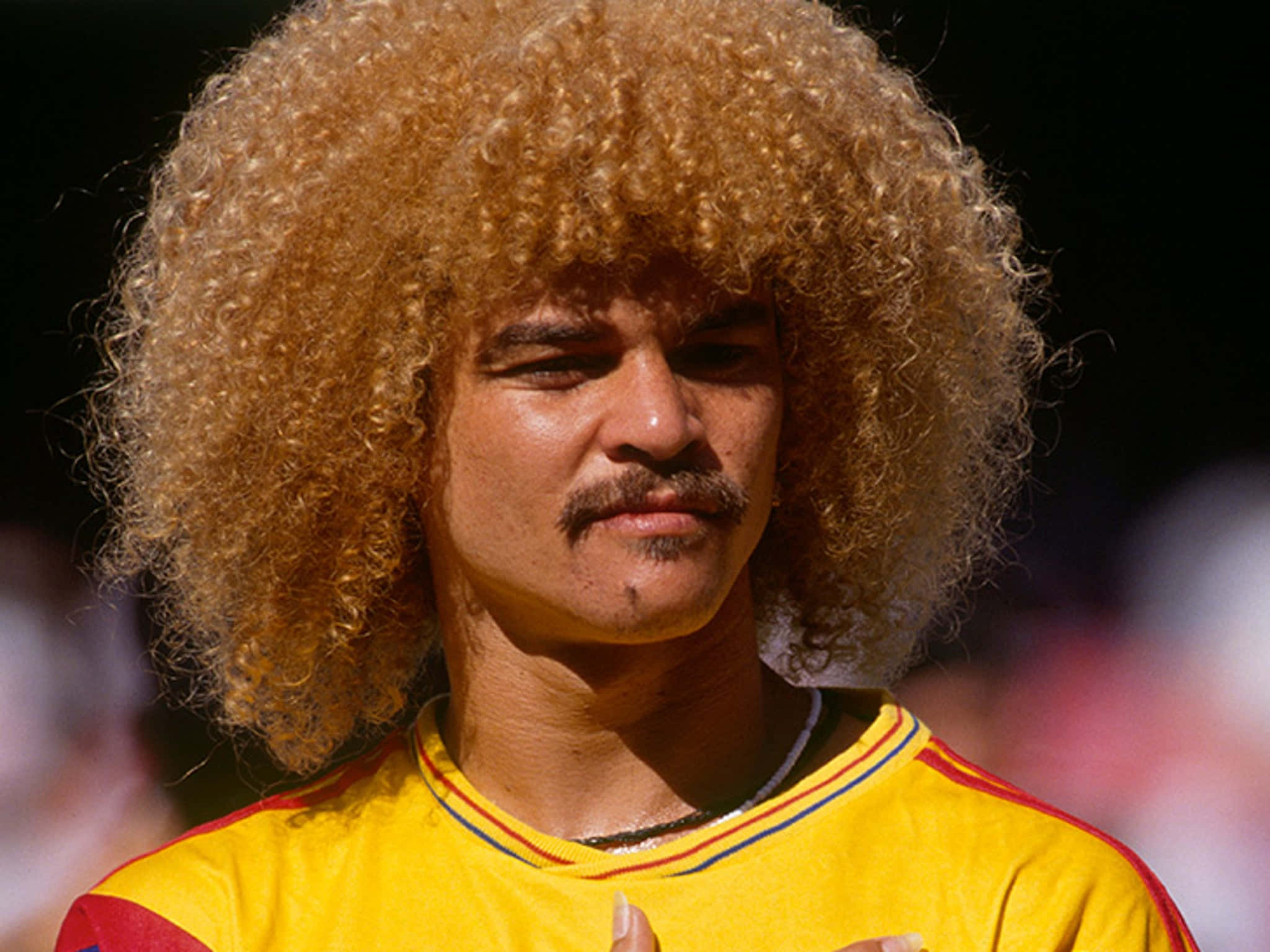
Carlos Valderrama
 Colombia
association football player•association football coach
Also known as: El Pibe, Carlos Alberto Valderrama Palacio
Birthday
September 2, 1961
Birth Sign
Virgo
Birthplace
Santa Marta, Colombia
Age
65 years old
Height
5 ft 10 in (178 cm)
About
Carlos Alberto Valderrama Palacio is a Colombian former professional footballer widely regarded as one of the greatest South American players of all time. Born on September 2, 1961, in Santa Marta, he became the face of Colombian football during its golden era with his signature blonde afro and unparalleled playmaking ability. Named by Pelé in the FIFA 100 list of the world's best living players in 2004, Valderrama won the South American Footballer of the Year award twice, in 1987 and 1993.
He captained the Colombian national team to three FIFA World Cups between 1990 and 1998, earning 111 caps in the process. His career extended beyond Europe and South America when he joined Major League Soccer in its inaugural 1996 season, playing for the Tampa Bay Mutiny, Miami Fusion, and Colorado Rapids. He was named to the MLS All-Time Best XI in 2005. Today, he works as a commentator and youth development advocate.
Early Life & Background
Carlos Valderrama grew up in Santa Marta, a coastal city on Colombia's Caribbean coast, where he was born into a working-class family. Like many talented Latin American youths of his generation, he spent countless hours playing street football, developing the close control and vision that would define his style. These informal games on dirt pitches taught him to navigate tight spaces and read the game with an intuitive sense that formal training often misses.
His dedication to the sport led him to leave school early to pursue football full-time. At age 18, he joined Deportivo Cali in 1979, marking the start of his professional journey. The club provided a structured environment where his natural flair could be honed against more competitive opposition. During these formative years, he established a reputation for technical precision and a unique approach to passing that set him apart from his peers.
Before achieving international fame, Valderrama endured the grind of local leagues and regional tournaments. He faced stiff competition within Colombia's top division but persisted through relentless work ethic. His breakthrough came not through a single moment of discovery but through consistent performance that caught the eye of scouts looking for talent capable of representing Colombia on the global stage.
Career Growth
Valderrama's rise began in earnest after joining Deportivo Cali, where he won multiple league titles and established himself as a star midfielder. In 1987, he made history by moving to France to play for Montpellier HSC, becoming the first Colombian to compete in Ligue 1. His time in Europe was marked by immediate success, earning him the title of South American Footballer of the Year that same year.
He returned to Colombia briefly before moving to Spain to play for Real Valladolid and Atlético Madrid. Although his stints there were less dominant than his earlier years, he maintained his status as a key playmaker. His international career reached its peak during the 1990 World Cup in Italy, where his performance against West Germany introduced Colombian football to the world stage. He captained the team in three World Cups: 1990, 1994, and 1998.
In 1996, Valderrama joined Major League Soccer with the Tampa Bay Mutiny, becoming one of the league's most recognizable stars. Over 13 seasons, he played for the Mutiny, Miami Fusion, and Colorado Rapids, retiring in 2006. His presence helped popularize soccer in the United States, drawing crowds and media attention previously unseen in the fledgling league. After retirement, he transitioned into coaching and broadcasting, serving as a commentator for Fútbol de Primera.
Career Timeline
Public Image & Style
Valderrama is portrayed in the media as a gentleman, a leader, and a symbol of Colombian pride. His signature afro and elegant playing style have made him an enduring image of football artistry. He is known for his humility and dedication to youth development, often visiting schools and communities in Colombia to inspire young players.
His public appearances are characterized by warmth and engagement with fans. He avoids controversy, focusing instead on promoting the sport and fostering goodwill. This consistent demeanor has earned him respect across generations and cultures.
Fame & Fandom (iFAMOUS Rankings)
While there is no formal fandom name documented in official records, Valderrama's supporters are collectively referred to as "Los Amigos de El Pibe" in informal contexts. His fanbase is deeply passionate, united by nostalgia and national pride. Notable fan campaigns include birthday tributes on social media, charity drives in his name, and efforts to preserve his legacy through memorabilia collections. Fans often gather at his public appearances, creating a vibrant atmosphere that reflects his enduring popularity.
In the global fame landscape, Valderrama's legacy is recognized, though he does not currently hold a placement in iFANN's published rankings as of October 2026. The Global Fame Engine has evaluated him, but he remains unranked in both the Global Top 1,000 and any Top-100 scope list. He is not featured on the September 2026 iFAMOUS Rankings flagship list. This absence from the rankings is a neutral fact, not a reflection of his cultural footprint, as his iconic hair and pinpoint passes have made him a lasting symbol of Colombian football.
Interesting Facts and Legends
Valderrama's golden afro was not merely a fashion statement; it served a practical purpose by keeping his hair out of his eyes during intense matches. He famously refused to cut his hair even when advised by coaches, insisting it was part of his identity. His no-look pass against West Germany in 1990 remains a staple in football documentaries as a moment of pure genius.
Despite his massive fame, he never owned a luxury car collection, preferring modest vehicles and focusing his resources on philanthropy. He is fluent in Spanish, French, and English, a skillset developed during his time living in multiple countries. Fans often recount stories of opposing players trying to pull his hair during tackles, only to be rebuffed by its resilience, a tale now considered part of his legend.
Notable Quotes
“Football is not just a game; it is a way of life.”
“We played with our hearts, and that is what matters.”
“My hair is part of me, and I will never cut it.”
Family & Personal Life
Carlos Valderrama has maintained a relatively private personal life compared to his public persona. He is married to María Eugenia Valencia, whom he wed in 1989. The couple has three children: Carlos Jr., Valentina, and Camila. There are no widely reported affairs or high-profile romantic relationships outside of his marriage.
Valderrama and his wife have remained together for decades, with no public record of separation or divorce. As of 2026, he lives in Colombia, occasionally traveling for promotional events and legacy matches. He has spoken publicly about the importance of family values and often credits his wife for her support throughout his career.
Notable Connections
Relationships & Dating History
Carlos Valderrama has maintained a stable and private personal life. He married María Eugenia Valencia in 1989, and the couple has remained together ever since. They have three children: Carlos Jr., Valentina, and Camila. There are no widely reported affairs, engagements, or high-profile romantic relationships outside of his marriage.
As of 2026, Valderrama is married and lives in Colombia. He and his wife have navigated the demands of his international career while keeping their family life grounded. Their long-standing relationship stands in contrast to the often turbulent dating histories of other high-profile athletes.
- MarriedMaría Eugenia Valencia1989 - presentCurrentMet before his rise to fame; married in 1989; three children together.
Salary, Net Worth In 2026
$15 Million
iFANN Editorial Team estimate
iFANN currently estimates Carlos Valderrama's net worth at approximately $15 million. This figure reflects his long-playing career in Europe and MLS, lucrative endorsement deals with major brands like Adidas and Nike, real estate investments in Colombia and Florida, and post-retirement ventures such as commentary work and speaking engagements.
His wealth stems from diverse income streams that have grown steadily over recent years. Unlike some athletes who face financial downturns, Valderrama has maintained steady growth through diversified investments. He owns a chain of football academies in Colombia, which contribute significantly to his income. His strategic approach to finances ensures that his earnings continue to accumulate well into 2026.
Awards Won (5)
Carlos Valderrama won the South American Footballer of the Year award twice, in 1987 and 1993. He was included in the FIFA 100 list by Pelé in 2004 and named to the MLS All-Time Best XI in 2005. Additionally, he received the Order of the Condor of the Andes, a high national honor in Colombia.
1993 · Individual
Atlético Junior
1987 · Individual
Colombia / Montpellier
2004 · Honour
Pelé's List
Known For
Colombia National Team
1990 · Captain
Montpellier HSC
1987 · Midfielder
Tampa Bay Mutiny
1996 · Midfielder
Keywords
Sources
Quick Facts
- Profession
- association football player, association football coach
- Born
- September 2, 1961
- Birthplace
- Santa Marta, Colombia
- Gender
- Male
- Birth Sign
- Virgo
- Height
- 5 ft 10 in (178 cm)
Personal Details
- Full Name
- Carlos Alberto Valderrama Palacio
- Height
- 5 ft 10 in (178 cm)
- Spouse
- María Eugenia Valencia
- Children
- Carlos Jr., Valentina, Camila
- Education
- Santa Marta local schools
Frequently Asked Questions
How old is Carlos Valderrama?
What is Carlos Valderrama's net worth?
Did Carlos Valderrama win any major awards?
Is Carlos Valderrama still active in football?
Who is Carlos Valderrama married to?
Similar People
Join the community
fans discussing