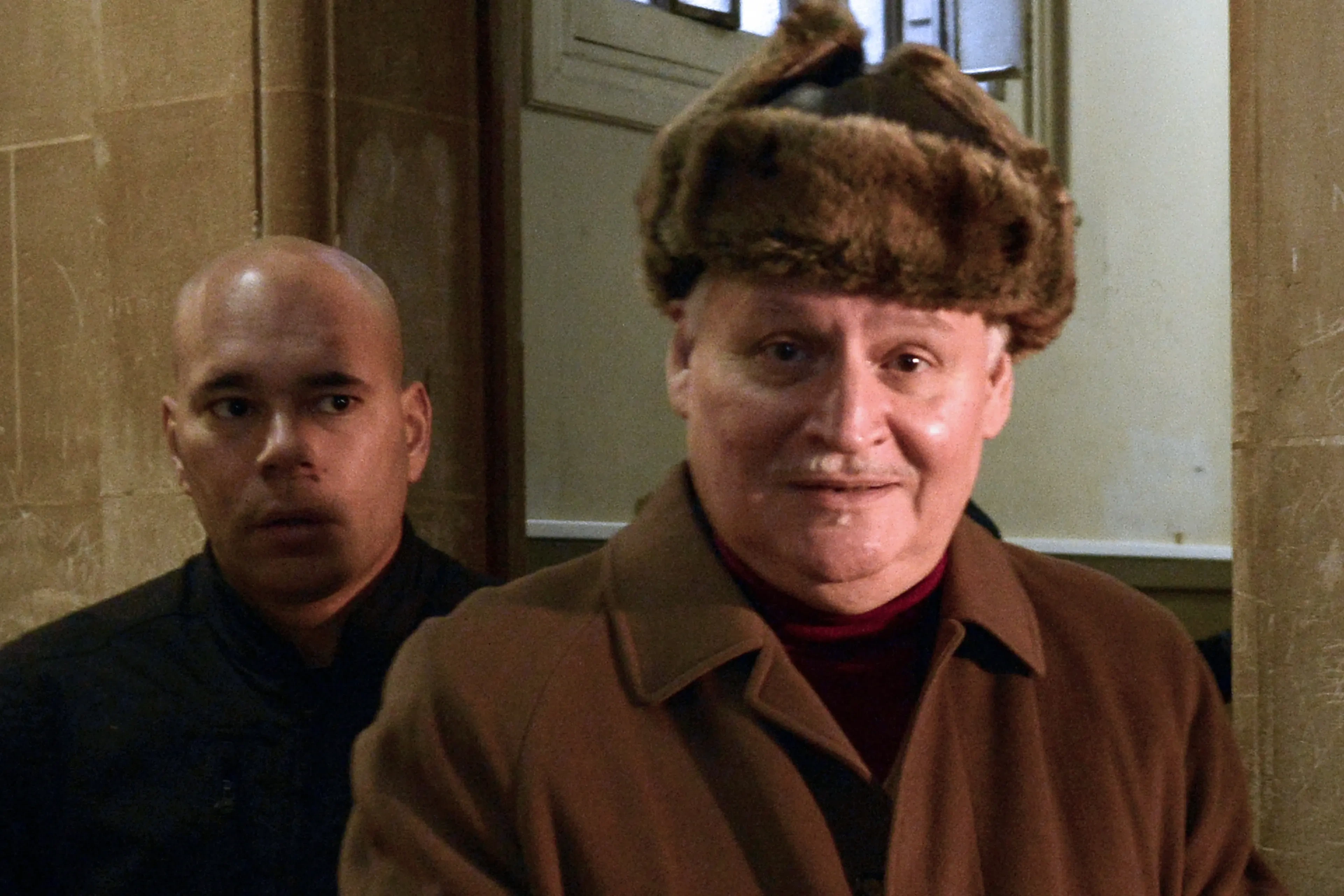
Carlos the Jackal
 Venezuela
Also known as: Ilich Ramirez Sanchez, Carlos
Birthday
October 12, 1949
Birth Sign
Libra
Birthplace
Caracas, Venezuela
Age
77 years old
About
Ilich Ramírez Sánchez, known around the world as Carlos the Jackal, is a Venezuelan-born terrorist and revolutionary who became one of the most wanted fugitives of the Cold War era. For over a decade, from 1973 to 1985, he orchestrated bombings, assassinations, and hostage crises across Europe and the Middle East, most famously the 1975 raid on the OPEC headquarters in Vienna. That operation, which left three dead and took more than 60 hostages, made his name synonymous with international terror.
Today, Carlos sits in a French maximum-security prison, serving three consecutive life sentences. Since his capture in Sudan in 1994, he has been convicted for the murders of two French intelligence agents and a Lebanese informant, for a 1974 grenade attack in Paris, and for a bombing campaign in France that killed 11 people. His wife, Isabelle Coutant-Peyre, a French lawyer who married him in prison, continues to maintain his innocence and act as his defense attorney.
Despite his incarceration, Carlos retains a dark celebrity. The 2010 film Carlos dramatized his life, and in 2026, journalist Joby Warrick published a major biography, The Jackal, while Fox Nation released a docuseries hosted by Jack Carr. These works keep his story in the public eye, a testament to how a single man's violence can leave a permanent mark on history.
Early Life & Background
Carlos was born into privilege in Caracas, Venezuela, on October 12, 1949. His father, José Altagracia Ramírez Navas, was a wealthy lawyer with a fervent Marxist ideology. He named his three sons Vladimir, Ilich, and Lenin after the Soviet leader, a decision that shaped Carlos's identity from birth. Growing up in an affluent household, Carlos attended elite schools, but his father's revolutionary politics dominated the family dinner table.
His formal education took him to the University of Paris and later to Patrice Lumumba University in Moscow, where he reportedly forged connections with Palestinian militant groups. By the early 1970s, Carlos had joined the Popular Front for the Liberation of Palestine (PFLP) and received guerrilla training in Jordan and Yemen. His first known operation came in 1973: a failed assassination attempt on British businessman Joseph Sieff in London. He followed that with a grenade attack on an Israeli bank in London in January 1974, and in August of the same year, he attacked the Le Drugstore in Paris, killing two and wounding dozens. These early strikes established his ruthlessness, but he remained largely unknown to the public.
His father's influence, his time in Moscow, and his immersion in the Palestinian cause all converged to forge a man ready to commit violence on a global stage. The stage was set for the operation that would define his life.
Career Growth
Carlos's defining moment came on December 21, 1975, when he led a six-person commando team in a raid on the OPEC headquarters in Vienna. The operation killed three people and took more than 60 hostages, including 11 oil ministers. The terrorists demanded a statement supporting the Palestinian cause and secured passage to Algiers, Libya, and finally Baghdad. The raid made Carlos an international household name and earned him the nickname "Carlos the Jackal," reportedly coined by a journalist who found a copy of Frederick Forsyth's novel The Day of the Jackal at his London apartment.
After the OPEC raid, Carlos continued his violent campaign. In 1982, his partner Magdalena Kopp was arrested in Paris, and Carlos orchestrated a series of bombings across France between 1982 and 1983 that killed 11 people and injured more than 100. These attacks targeted trains, offices, and public spaces, aimed at pressuring French authorities to release Kopp.
Carlos reportedly received support from intelligence agencies, including the Stasi and the KGB, and hid in Budapest during the Cold War. His operational period ended in the mid-1980s, but he evaded capture for nearly a decade. On August 14, 1994, French agents finally caught him in Khartoum, Sudan, where he had been living under Sudanese protection. Since then, he has faced a series of trials: in 1997, he was convicted and sentenced to life for the 1975 murders of two French agents and a Lebanese informant; in 2011, for the 1982–83 bombings; and in 2017, for the 1974 Paris drugstore attack. He now serves three life sentences in France.
Career Timeline
Public Image & Style
Carlos the Jackal occupies a unique space in the public imagination. He is a convicted terrorist, yet his name carries a dark celebrity that has inspired books, films, and documentaries. The 2010 film Carlos and the 2026 biography by Joby Warrick, The Jackal, continue to fuel fascination. Media portrayals range from a "sadistic terrorist who loved the high life" to "an icky loser," reflecting a complex public image. He has no official fandom, but his notoriety attracts significant public interest, as evidenced by high Wikipedia traffic across multiple languages. His wife's unwavering support and his own calculated prison interviews keep him in the spotlight, a figure both reviled and strangely compelling.
Fame & Fandom (iFAMOUS Rankings)
Carlos the Jackal commands a unique, morbid celebrity that defies traditional fandom. Unlike pop stars or athletes, he has no organized fanbase, no birthday billboards, and no supporters rallying for his release. His audience consists entirely of true crime enthusiasts, historians, and journalists dissecting a legacy built on violence rather than charisma. There is no formal name for this collective; it is a cult of infamy where interest stems from the audacity of his crimes rather than affection. The mythology surrounding him relies on verified historical spectacles: the 1975 OPEC hostage crisis in Vienna, where he held oil ministers captive and executed three hostages, cemented his status as the world's first celebrity terrorist. His moniker itself became legendary after a journalist found Frederick Forsyth's novel *The Day of the Jackal* at his London hideout, a story that stuck because it perfectly captured his cold-blooded persona. For decades, his ability to evade capture across Europe and Africa fueled global fascination until his 1994 arrest in Sudan. Even now, prison interviews reveal a vain man obsessed with Italian suits and loafers, adding a layer of narcissistic irony to his brutal history. Despite the darkness of his actions, his notoriety remains potent enough to drive biographies and films like *Carlos*. This enduring reach places him firmly within specific cultural metrics. He stands as the 7th most famous person from Venezuela and ranks as the 20th most famous person in True Crime. These placements reflect his persistent grip on global attention.
Interesting Facts and Legends
Ilich Ramírez Sánchez was born with a politically charged family structure; his father named him Ilich after Vladimir Lenin, while his brothers were named Vladimir and Lenin. The infamous nickname 'Carlos the Jackal' originated when a journalist discovered a copy of Frederick Forsyth's novel *The Day of the Jackal* at his London hideout. During the planning of the 1975 OPEC raid, Carlos reportedly received approximately $20 million from Libyan leader Muammar Gaddafi. His operational success relied heavily on intelligence support from both the East German Stasi and the Soviet KGB. In a 2026 interview, Carlos claimed he was the first-ever foreigner to join the Palestinian struggle. His personal life took an unusual turn when his wife, Isabelle Coutant-Peyre, married him in 2001 while he was already serving a life sentence. Cultural legends often highlight the 1975 OPEC hostage crisis in Vienna, where he held 30 oil ministers for two days before executing three hostages, establishing a new paradigm for media-focused terrorism. Another enduring story involves his self-mythologizing; he adopted the 'Jackal' persona because he felt it suited his role as a killer for hire, eventually making the alias more famous than his real name. His decades-long elusiveness also forms part of his lore, as he operated across three continents using false passports until his capture in Khartoum in 1994.
Notable Quotes
“I was the first-ever foreigner to join the Palestinian struggle.”
“The goal was to abduct and execute the oil ministers of Iran and Saudi Arabia.”
Family & Personal Life
Carlos's father, José Altagracia Ramírez Navas, was a wealthy Marxist lawyer who instilled revolutionary fervor in his sons, naming them Vladimir, Ilich, and Lenin. His mother's name is not widely documented. Carlos has at least one daughter, Elina Ramírez Sánchez, from his first marriage to Magdalena Kopp. He married his second wife, Isabelle Coutant-Peyre, in 2001 while in prison. Coutant-Peyre, a prominent French lawyer, has been his defense attorney and a vocal supporter, maintaining his innocence in many charges. The couple has remained married through his multiple convictions. Carlos's family life has been marked by his imprisonment, with his wife visiting him regularly and advocating for him publicly.
Notable Connections
Carlos's life intersects with several notable figures. His first wife, Magdalena Kopp, was a German revolutionary whose arrest triggered his bombing campaign in France. His second wife, Isabelle Coutant-Peyre, is a French lawyer who has defended him in court. Libyan leader Muammar Gaddafi reportedly funded the OPEC operation. Jack Carr, a former Navy SEAL, hosted the 2026 Fox Nation docuseries about him. Journalist Joby Warrick authored the 2026 biography The Jackal.
Relationships & Dating History
Carlos's personal life has been marked by two significant marriages. His first wife was Magdalena Kopp, a German revolutionary he met in the late 1970s. They married and had a daughter, Elina. Kopp was arrested in Paris in 1982 while carrying explosives, and her imprisonment directly triggered Carlos's bombing campaign against France. The marriage eventually ended, and Kopp later distanced herself from his activities.
His second wife is Isabelle Coutant-Peyre, a prominent French lawyer who first met Carlos in 1994 and married him in 2001 while he was in prison. She has served as his defense attorney in multiple trials and has remained a vocal supporter, maintaining that he is innocent of many charges. The marriage has persisted through his multiple convictions and life sentences.
Before his marriage to Kopp, Carlos reportedly had relationships with several women connected to the revolutionary underground, though details are less documented. As of 2026, Carlos remains married to Isabelle Coutant-Peyre, who continues to advocate for him publicly.
- MarriedMagdalena Kopp1978 - 1990German revolutionary; her arrest in 1982 triggered Carlos's bombing campaign in France.
- MarriedIsabelle Coutant-Peyre2001 - presentCurrentFrench lawyer and defense attorney; married Carlos while he was in prison.
Salary, Net Worth In 2026
$0
iFANN Editorial Team estimate
Carlos the Jackal remains a convicted prisoner serving multiple life sentences in a French maximum-security facility. Per iFANN's editorial analysis, his current net worth is estimated at $0. This figure reflects the reality that since his imprisonment in 1994, he has had no legitimate income sources or access to assets. During his active years as a revolutionary operative, his wealth was derived entirely from payments for terrorist operations. Most notably, he received a reported $20 million fee from Muammar Gaddafi specifically for orchestrating the OPEC raid in Vienna. Any financial standing prior to his capture is considered speculative and unverified by public records. As of 2026, he remains incarcerated with no known estate or liquid assets to value.
Awards & Accolades
View 1 records, honours and achievementsKnown For
OPEC headquarters raid
1975 · Mastermind
1982–1983 France bombings
1983 · Perpetrator
1974 Paris drugstore attack
1974 · Perpetrator
Keywords
Sources
Quick Facts
- Profession
- Terrorist, Revolutionary
- Born
- October 12, 1949
- Birthplace
- Caracas, Venezuela
- Gender
- Male
- Spouse
- Isabelle Coutant-Peyre (m. 2001), Magdalena Kopp (m. ?–?)
- Birth Sign
- Libra
- Children
- Elina Ramírez Sánchez
- Status
- Imprisoned in France
Personal Details
- Full Name
- Ilich Ramírez Sánchez
- Spouse
- Isabelle Coutant-Peyre (m. 2001), Magdalena Kopp (m. ?–?)
- Children
- Elina Ramírez Sánchez
- Education
- University of Paris, Patrice Lumumba University (Moscow)
Frequently Asked Questions
Is Carlos the Jackal still alive?
What did Carlos the Jackal do?
How was Carlos the Jackal caught?
Who is Carlos the Jackal's wife?
How many life sentences does Carlos the Jackal have?
Similar People
Join the community
fans discussing